Confidence in public service continues to waver—especially among voters who clearly identify to the right. A new survey shows that fewer than half in this group now trust SVT’s reporting. Despite the sharp decline, both researchers and SVT management play down the significance.
A new survey from the SOM Institute indicates that trust in SVT’s content has dropped significantly among voters who describe themselves as “clearly to the right.” In just one year, the proportion stating they have “very or quite a lot of trust” decreased from 57 percent in 2024 to 46 percent in 2025.
This means that, for the first time, trust has fallen below the 50 percent mark in this group—a symbolically important threshold. The decline isn’t unique to SVT, but is also visible for other established TV actors such as TV4.
READ ALSO: SVT scandals continue to stack up – SD demands the culture committee summon management
Meanwhile, trust levels remain steady among left-wing voters and those who see themselves “somewhat to the right,” reinforcing the image of a growing political divide in views on public service and suggesting that criticism of a political bias in output may have merit.
Researchers Point Outwards Rather Than Inwards
According to Ulrika Andersson at the SOM Institute at the University of Gothenburg, the development is about changes in the media landscape rather than a problem with SVT’s content itself.
– The [right-leaning media] have established themselves and become more accepted, for example, as they have received media support. This group that is clearly to the right has found their home in media suited to them. As a result, they probably also view the old media more critically, she speculates.
READ ALSO: SVT’s language: ‘Right-wing extremist’ mentioned 79 times more often than ‘left-wing extremist’
This explanation, in practice, shifts the responsibility for decreasing trust largely away from public service itself—despite long-standing criticism of perceived political bias from precisely this voter group.
This criticism has existed long before the media Andersson refers to came into being. The common explanation for the emergence of such outlets is instead as a reaction to earlier media’s left-leaning bias.
SVT’s CEO Proud—Has “Sky-High” Trust
SVT CEO Anne Lagercrantz also does not draw any self-critical conclusions from the figures, describing the picture as more “complex.”
– The picture is actually more divided. Looking at the parties, trust in SVT is increasing among liberals, staying the same among Moderates and Sweden Democrats, decreasing among Christian Democrats and Left Party supporters.
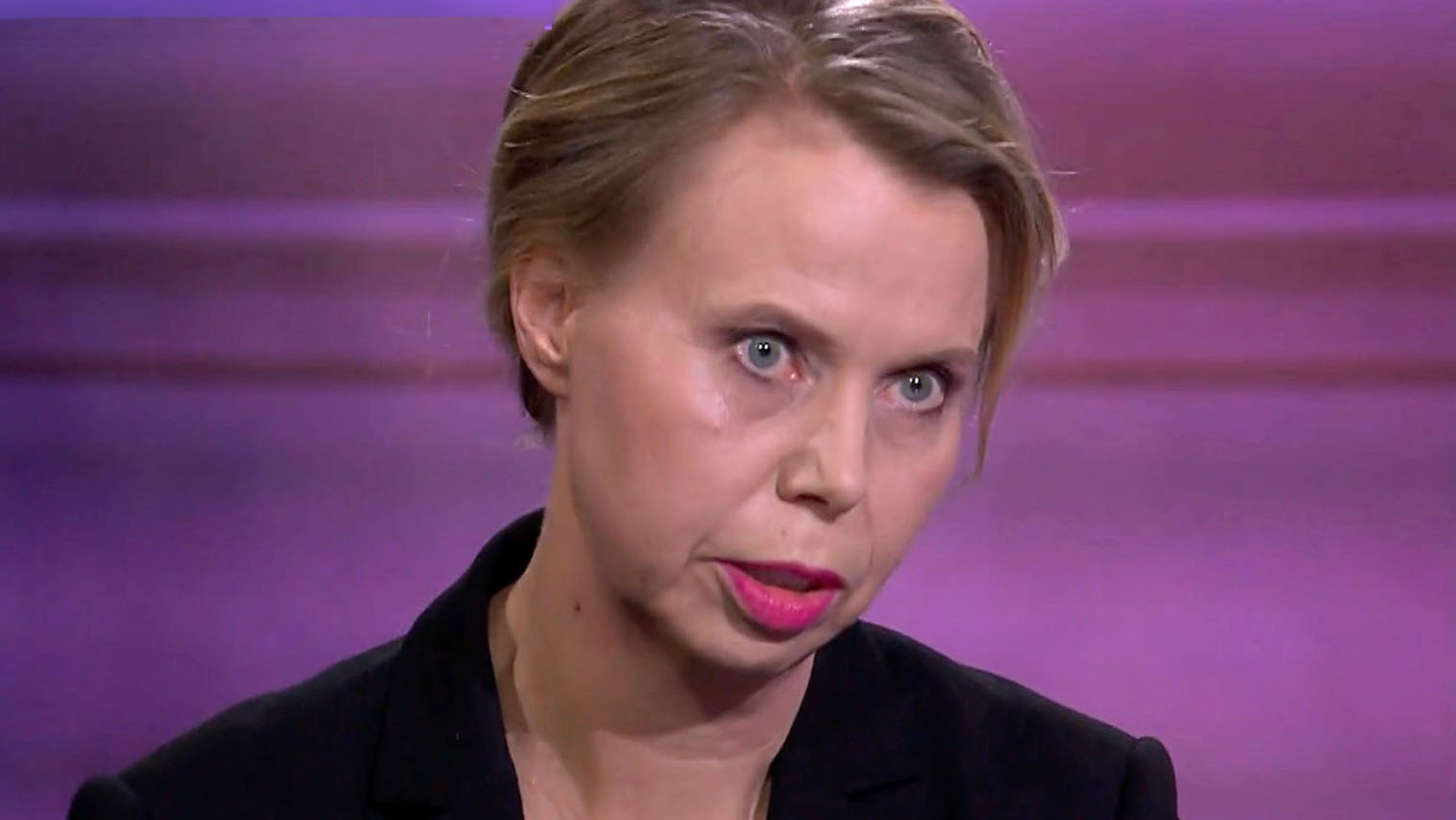
When confronted with the fact that trust is clearly declining on the right, she instead points to a broader societal trend.
– This is a trend we have seen throughout society since around 2010. Voters leaning further right trust SVT and all media houses less, as well as institutions like health care, the military, and the royal court. But what pleases me is that we still remain at the top—we have sky-high trust both in Sweden and internationally.
READ ALSO: SVT’s vegetarian reporter offended when Lamotte asks for a receipt – “What’s the problem?”
The fact that trust is unevenly distributed and the trend is strengthening does not, according to Lagercrantz, call for self-examination. A growing portion of the audience is turning its back on public service but is still compelled to remain paying customers through taxes.
Political Reshuffling Affects the Numbers
Another factor highlighted is alleged identification changes among voters. The group identifying as “clearly to the right” has changed over time, not least due to increased support for the Sweden Democrats, Ulrika Andersson believes.
The hypothesis is partly contradicted by the fact that the Sweden Democrats themselves place their party at the center, between the traditional left and right blocs, though through cooperation with the conservative government in the most recent parliamentary term, many perceive them as having moved further right.
The SOM Institute’s surveys, conducted annually since 1986, are based on responses from tens of thousands of Swedes and are seen as a major indicator of opinion trends.
READ ALSO: State Radio’s self-image: “We have the Swedish people with us”