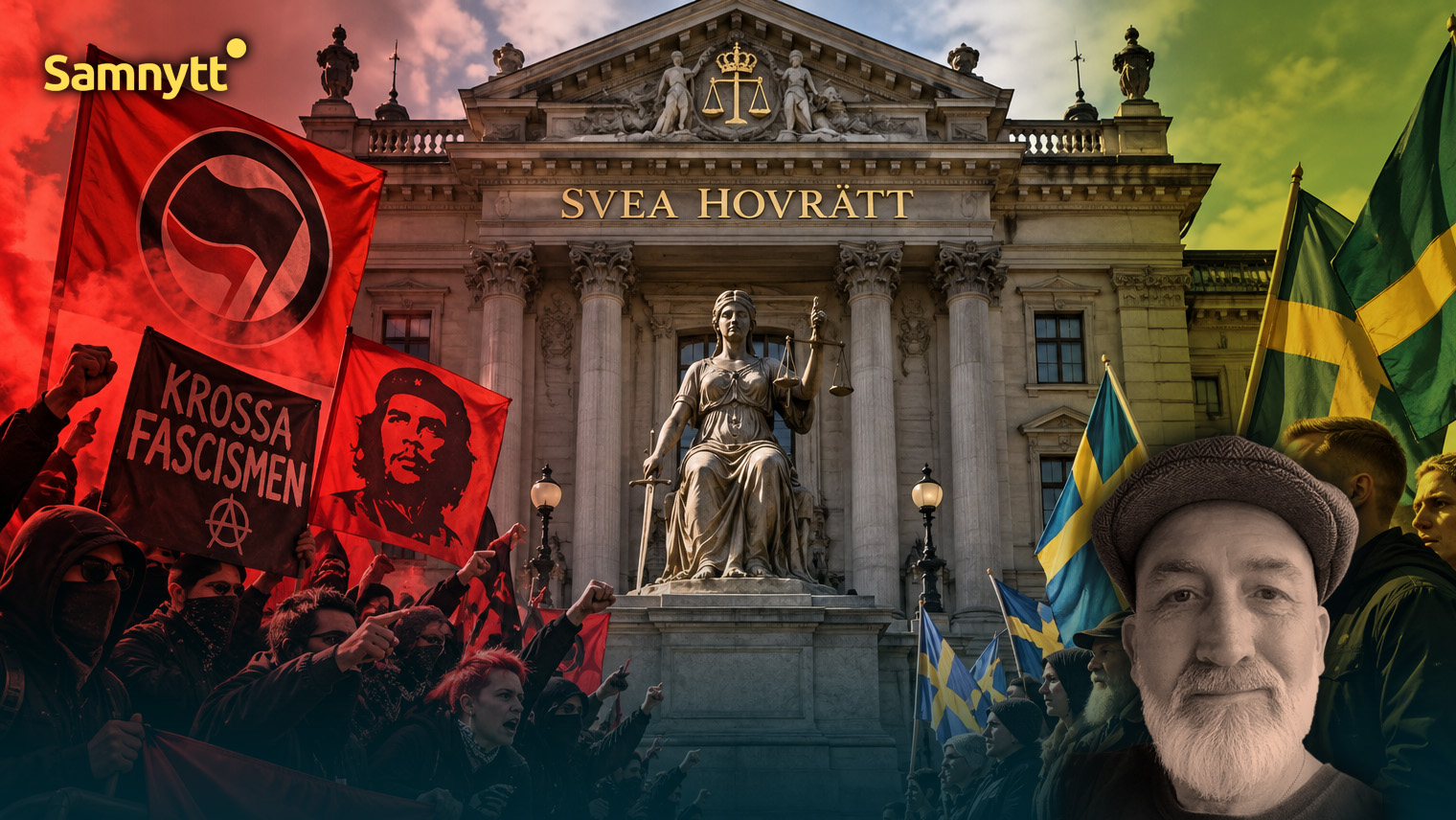
NEWS COLUMN • There is something deeply peculiar about a judicial system where political parties appoint lay judges who are then expected to leave their political convictions outside the courtroom. The verdict following the attack on Nick Alinia shows why this issue can no longer be dismissed as theoretical. When the legally trained judge wanted to convict the man who kneed Alinia in the head, she was overruled by three politically appointed lay judges – one of whom was nominated by the Left Party and has a background with Expo. The issue concerns not just a single verdict, but the trust we can have in a system where politically profiled individuals are given the power to pass judgment in politically charged cases.
Swedish lay judges are a peculiar creation. They are judges, and their votes carry equal weight as the professionally trained judge when deciding the outcome of a case.
However, lay judges don’t need to be lawyers and are nominated by political parties. Yet we are all expected to believe that their political inclinations, as if by magic, disappear when they enter the courtroom.
Most of the time, this probably works just fine. But sometimes a case comes up where the whole construction is put to the test – and the Nick Alinia case is one such example.
A Knee to the Head
The incident took place on May Day in Stockholm. Ossian Klominek had approached Alinia, spoken heatedly and insultingly, calling him among other things “Nazi dwarf”, “Nazi” and “fucking cunt”. He then slapped Alinia’s mobile phone out of his hand.
After the incident, Klominek ran away. Alinia and his companions followed, performed a citizen’s arrest, and Ossian ended up on the ground while Alinia called 112 and tried to get the police there.
Then Ossian’s father, Andreas Klominek, arrived. What happened next is not speculation from Nick Alinia or a political interpretation of a blurry video clip.
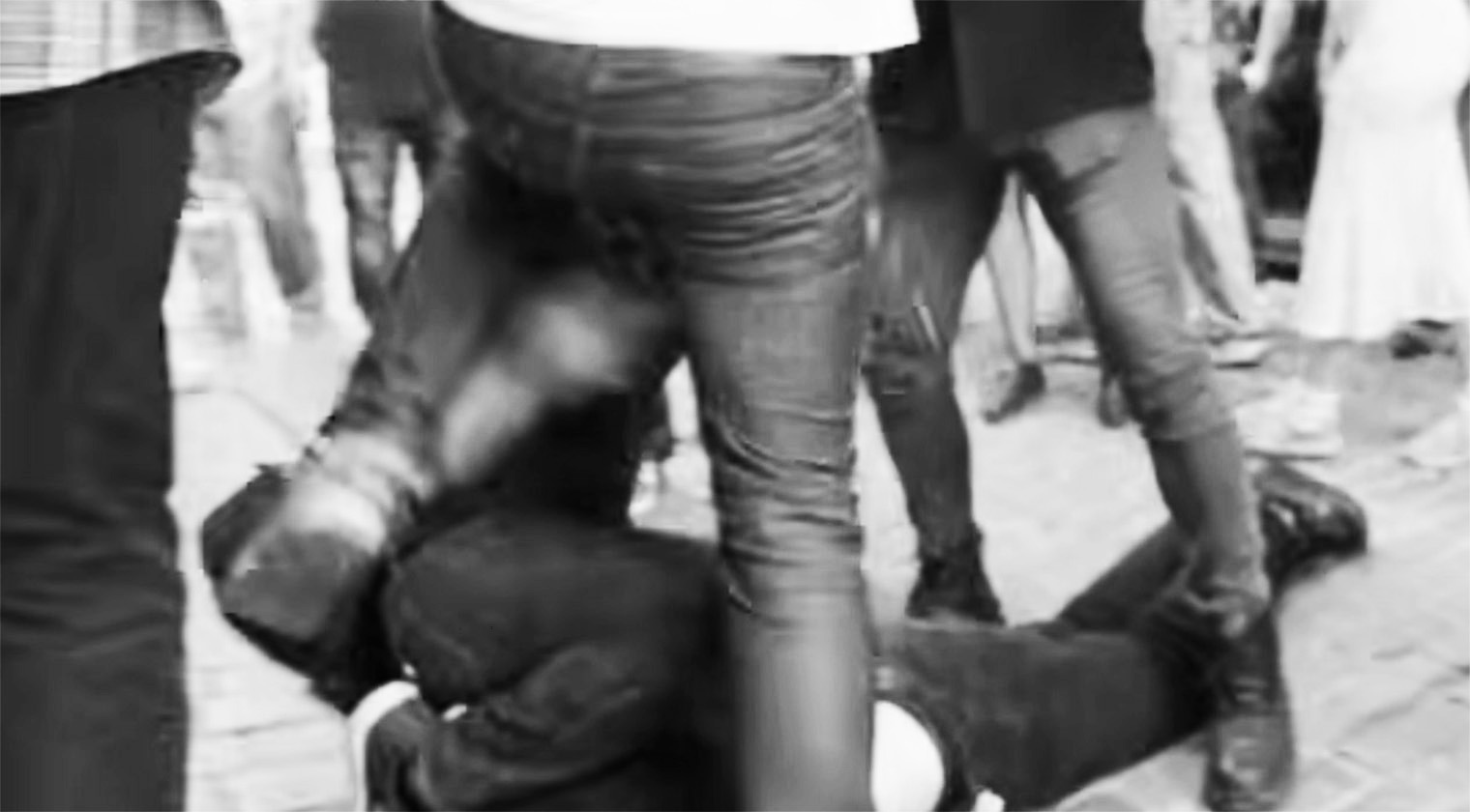
The district court established that Andreas Klominek made two attacks on Alinia, and the second ended with his knee striking Alinia’s head. Witness testimony and video supported this sequence of events, and Alinia sought medical care for tenderness and bruising around the nose and a concussion.
The district court further notes that Klominek must have realized his actions would cause pain and injury, or at the very least was indifferent to it.
The wording in the verdict is unusually clear: it is “established beyond reasonable doubt” that Andreas Klominek committed assault. That should reasonably have been the end of the story. Instead, that’s where it starts to get interesting.
SEE ALSO: S-lay judge after Expo verdict: “I won’t discuss it with you”
The Hands Were Occupied
Andreas Klominek was acquitted. To reach this conclusion, the majority of lay judges relied on so-called putative self-defense – that is, that Klominek may have imagined his son was being subjected to a criminal attack.
Klominek described the hold Alinia used to keep the son on the ground as a “George Floyd hold” and claimed he perceived it as dangerous.
The hands were thus occupied, holding a beer bottle, so the lower body had to step in – and the result was a knee to the face and a concussion. Three lay judges accepted this reasoning. The legally trained judge did not.
Jonas Andersson
The majority then writes that regardless of whether Ossian was actually assaulted and regardless of whether the hold was dangerous for him, it appeared as if the father himself perceived the situation as an ongoing criminal assault.
Then comes my personal favorite among the grounds for judgment. Klominek explained that he could not use his hands to push away Alinia because he was holding things in them.
SEE ALSO: Expo woman and S-politician acquit left-wing extremist for knee-attack on Nick Alinia
The majority accepts the explanation and writes that it therefore was not “clearly indefensible” to try to fend off Alinia with the lower body, even though Klominek simultaneously kneed Alinia in the face.
The hands were thus occupied, holding a beer bottle, so the lower body had to step in – and the result was a knee to the face and a concussion. Three lay judges accepted this reasoning. The legally trained judge did not.
The District Judge Wanted to Convict
District Judge Céline Holmberg dissented and wanted to convict Andreas Klominek for assault. Her reasoning is much less fanciful.
Holmberg first notes that Ossian Klominek had indeed committed harassment against Alinia and was apprehended after fleeing the scene.
Since prison is within the sentencing range for harassment, Alinia had the right to carry out a citizen’s arrest and to use the force necessary for the arrest.
The video footage also shows that Ossian was able to lie on the ground and talk. He shouted, among other things, that Alinia would get good “content” and that the others were “protecting a Nazi”, which according to Holmberg argues against the hold posing any immediate danger to him.

Alinia thus did not subject Ossian to a criminal assault. There was therefore no actual situation requiring self-defense.
Someone Shouts “Nazis”
That leaves the imagined assault. Here Holmberg’s account of what actually happened when Andreas Klominek arrived becomes particularly interesting.
Quensel also has a background that is hard to ignore, particularly in this case. She has worked at Expo, an organization whose activities include monitoring alleged far-right and nationalist environments – and where Nick Alinia is specifically singled out.
Jonas Andersson
The situation, according to her, was calm. Klominek made no attempt to check if his son was okay, did not ask what had happened, and instead began by asking whose “decision” it was to intervene.
Then someone shouted that the people restraining his son were not police but “Nazis”. At that point, Andreas Klominek immediately attacked Nick Alinia.
The district judge finds that Klominek was at least indifferent to the risk that his understanding of the situation was incorrect. Thus, the putative self-defense falls, and her conclusion is that he should be convicted of assault. But Céline Holmberg was outvoted. The three lay judges acquitted Klominek.
Social Democrats and an Expo Woman
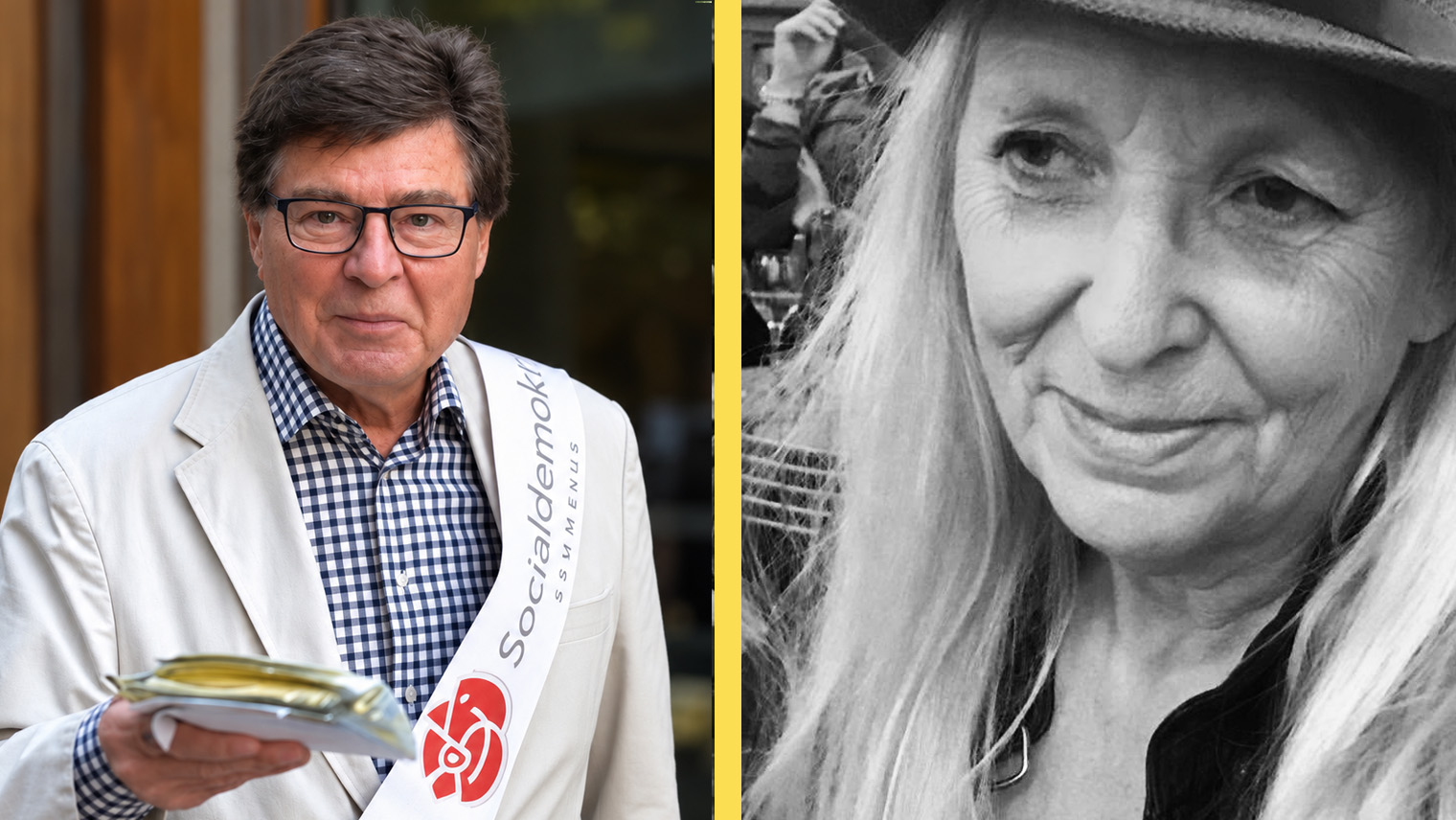
So who were these three lay judges? Yvonne Bernhardsson and Jan-Åke Porseryd were nominated by the Social Democrats, while Anna-Sofia Quensel was nominated by the Left Party.
Quensel also has a background that is hard to ignore, particularly in this case. She has worked at Expo, an organization whose activities include monitoring alleged far-right and nationalist environments – and where Nick Alinia is specifically singled out.
On the other side in the courtroom was Nick Alinia, a journalist and prominent right-wing commentator who often finds himself in exactly the type of political conflicts that Expo covers.
The violent incident also occurred in a political context, where Alinia was called “Nazi”, and where the attack by the father, according to the dissenting judge, came immediately after someone once more shouted “Nazis”.
That does not mean that Anna-Sofia Quensel consciously judged according to her political beliefs – even though it is certainly impossible to ignore, because it is her friend from the left-extremist barricades being acquitted.
But I don’t know that for sure, and neither does Nick Alinia. But actually, that is not the most important question. The interesting question is why a state governed by the rule of law would put itself in a situation where such suspicion can arise at all.
Trust is the Whole Point
After the verdict, Alinia himself has strongly reacted to the lay judges’ political and organizational ties and has raised the issue of political motives and conflict of interest. The question is relevant even if it is never possible to prove that a particular political opinion actually affected a specific stance.
Disqualification rules exist not only for situations where one can later prove that a judge consciously favored one side. They exist also so that people who stand trial can trust the court is impartial.
The Swedish Courts make this clear – lay judges cannot judge in cases where there is, or may be, doubt about their impartiality.
The lay judge also has personal responsibility, before every case, to consider the risk of a conflict of interest and to raise the issue if he or she is unsure. And here comes the really tricky part. For Sweden has already tested pretty much the same principle – only then, it was a Sweden Democrat on the judicial bench.
When the Lay Judge was a Sweden Democrat
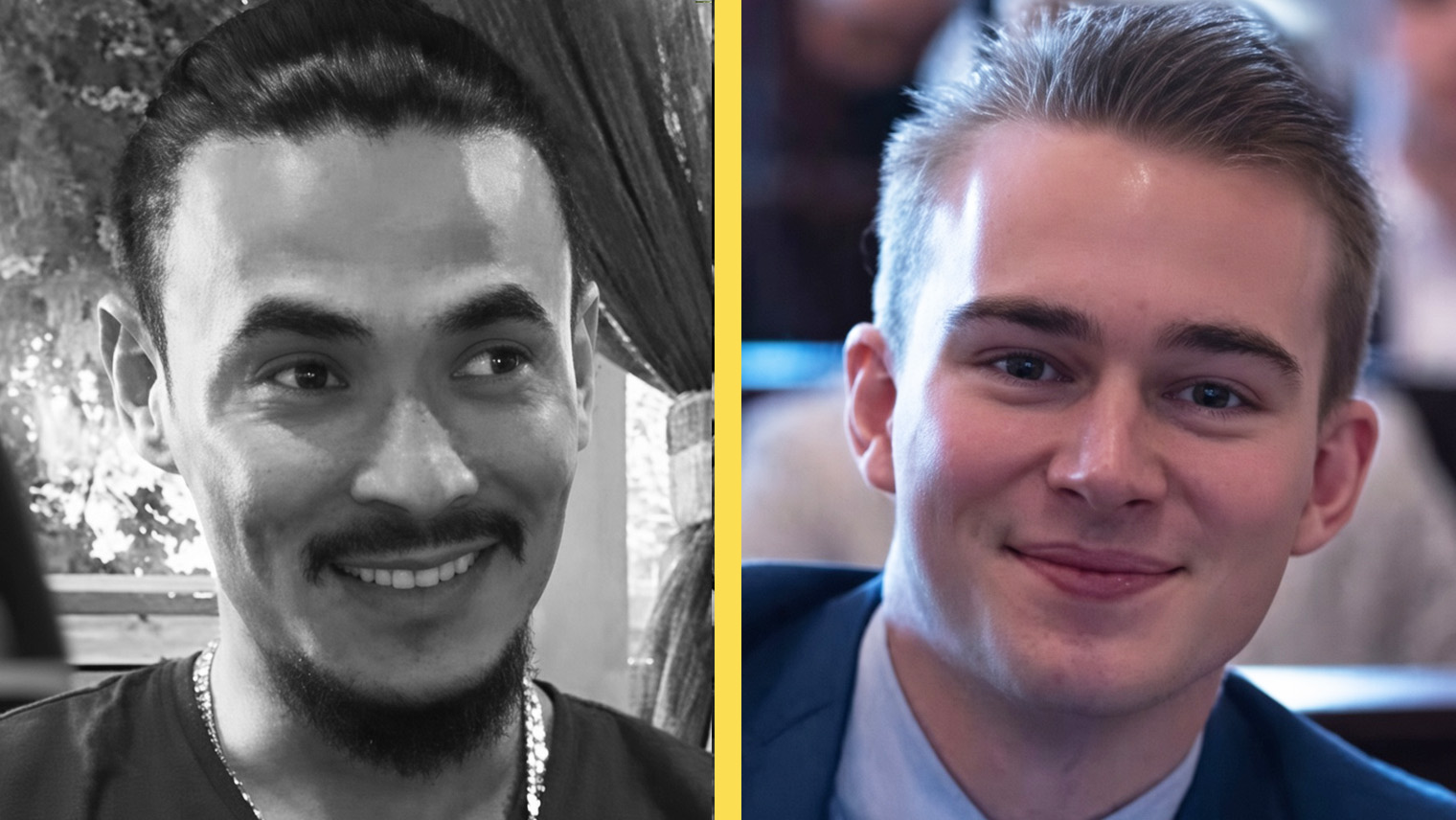
Afghan Hanif Jafari had a migration case tried in court. The legally trained judge wanted to let him stay in Sweden, while the three lay judges – all Sweden Democrats – outvoted the judge and decided on deportation.
Then the media started scrutinizing the lay judges. One of them, Ludvig Andersson, had posted anti-immigration opinions on social media.
Moreover, this is not an ordinary bar brawl. The entire event is politically charged – Ossian Klominek calls Alinia a “Nazi”, someone else shouts “Nazis”, the father attacks and Alinia gets kneed in the head.
Jonas Andersson
The Migration Court of Appeal found that the circumstances could undermine confidence in his impartiality. Jafari was thus deemed not to have had a fair trial and the case had to be retried.
The crucial point here is that no one needed to get inside Andersson’s head to prove that he voted for deportation because he was a Sweden Democrat. What mattered was whether there were circumstances that could undermine confidence in his impartiality.
Of course, this is exactly how a state governed by the rule of law should reason. But then we have a problem when the political color is swapped.
In the Jafari case, the judge wanted to let an Afghan man stay. Three SD lay judges overruled the judge and decided on deportation, while one of them had campaigned against immigration.
SEE ALSO: SD lay judge fired from court – campaigned for his party in social media
In the Alinia case, the legally trained judge wanted to convict a man who had provenly kneed a prominent right-wing commentator in the head. Three politically appointed lay judges overruled her and acquitted, two nominated by the Social Democrats and the third by the Left Party and who had worked at Expo.
Moreover, this is not an ordinary bar brawl. The whole event is politically charged – Ossian Klominek calls Alinia “Nazi”, someone else shouts “Nazis”, the father attacks, and Alinia gets kneed in the head.
The judge wants to convict the perpetrator, while the lay judges acquit through reasoning about imagined self-defense, where even Klominek’s occupied hands become part of the explanation for why it was not clearly indefensible to use the lower body.
If the first situation could undermine confidence in the court’s impartiality, it’s at least reasonable to ask why the second could not do the same.
The Problem is the Lay Judge System
Here, I think we need to stop focusing solely on Anna-Sofia Quensel, because the problem is bigger than her. It is the construction itself. The Swedish Courts explicitly describe the assignment of lay judge as non-political.
SEE ALSO: Leftist outrage when SD judge deports Afghan who lied about his age
Lay judges must not promote political views in court or let personal values influence them but must, like legally trained judges, follow the law and be objective and impartial.
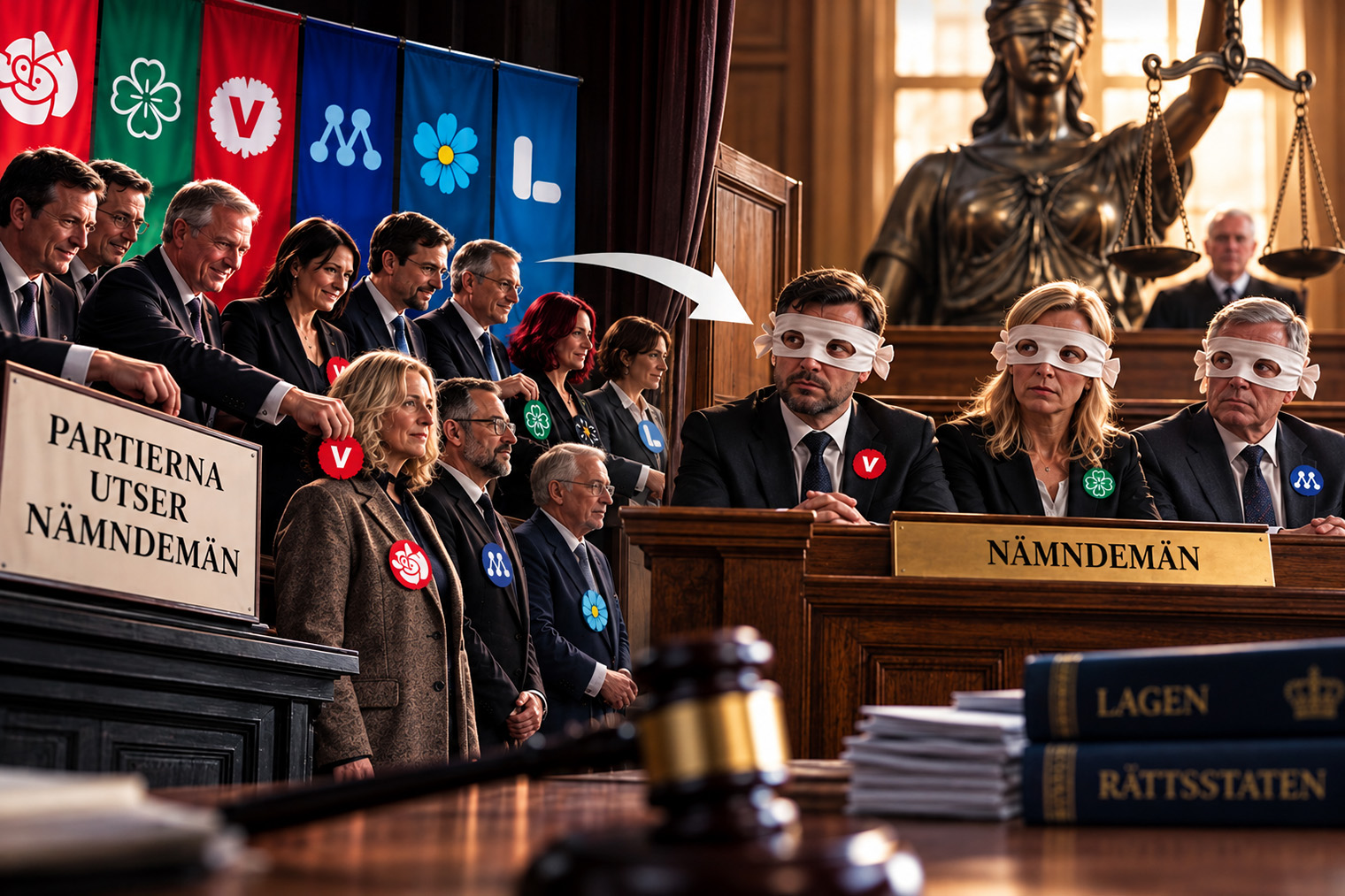
But who nominates the lay judges? The political parties.
But the same sensitivity must certainly apply when political and ideological links go in the other direction. Otherwise, it is no longer about a principle of impartiality, but about who happens to have the ‘right’ opinions.
Jonas Andersson
We have thus created a system where political parties choose people who are granted judicial power over others, after which everyone is expected to assume that party politics disappears when the court chairman opens the hearing.
It is a construction that practically invites crises of confidence when politically charged cases come before people with a clear history on one side of the conflict line.
The Swedish Courts themselves point out that the assignment is non-political despite the party-political nomination. There is not even a formal requirement for party membership, but recruitment mainly takes place through party circles.
SEE ALSO: New chance for Afghan who lied about age when trial is redone
There is also a strange asymmetry here. When an SD-lay judge advocates about immigration and then judges in a migration case, the system recognizes the problem.
But the same sensitivity must certainly apply when political and ideological links go in the other direction. Otherwise, it is no longer about a principle of impartiality, but about who happens to have the ‘right’ opinions.
The simplest way to test this is to reverse the situation. Imagine a well-known leftist journalist is attacked by a right-wing activist, gets kneed in the head, and suffers a concussion.
The district court finds that the assault is proven beyond reasonable doubt and the legally trained judge wants to convict. But the three lay judges acquit the perpetrator, and it turns out one of them is nominated by AfS and previously worked professionally for an organization that tracks left-wing extremism.
Switch V for SD, Expo for its ideological opposite, and the right-wing commentator for a left-wing journalist. If your opinion on conflict of interest and impartiality suddenly changes when you do, you’re no longer defending a principle of justice – you’re defending your team.
Jonas Andersson
Does anyone seriously believe that Expo, SVT, Sveriges Radio and the country’s leading editorial pages would just shrug it off? I don’t think so – nor do I think they should.
SEE ALSO: Ernstberger after prison sentence: “The Swedish judiciary is politicized”
There would be a perfectly legitimate question about public confidence in the impartiality of the court. That is exactly the same question that should be asked now.
Justice Must Stand the Mirror Test
I don’t know whether Anna-Sofia Quensel let her political views influence the verdict, and I don’t have to know to see the problem, even if I, like anyone with a functioning brain, understand that it is so. But a functioning state governed by the rule of law must withstand a very simple mirror test.
Switch V for SD, Expo for its ideological opposite, and the right-wing commentator for a left-wing journalist. If your opinion on conflict of interest and impartiality suddenly changes when you do, you’re no longer defending a principle of justice – you’re defending your team.
This is precisely why the Nick Alinia verdict is about more than a knee to the head in Mälartorget. It concerns whom we allow to sit on the other side of the judicial bench and what trust citizens can have in that person.
Justice must not only be done, but also be recognizable as such. Otherwise, citizens will eventually criticize more than the verdict – he or she will also lose faith in the judges. And then we are no longer a state governed by the rule of law.