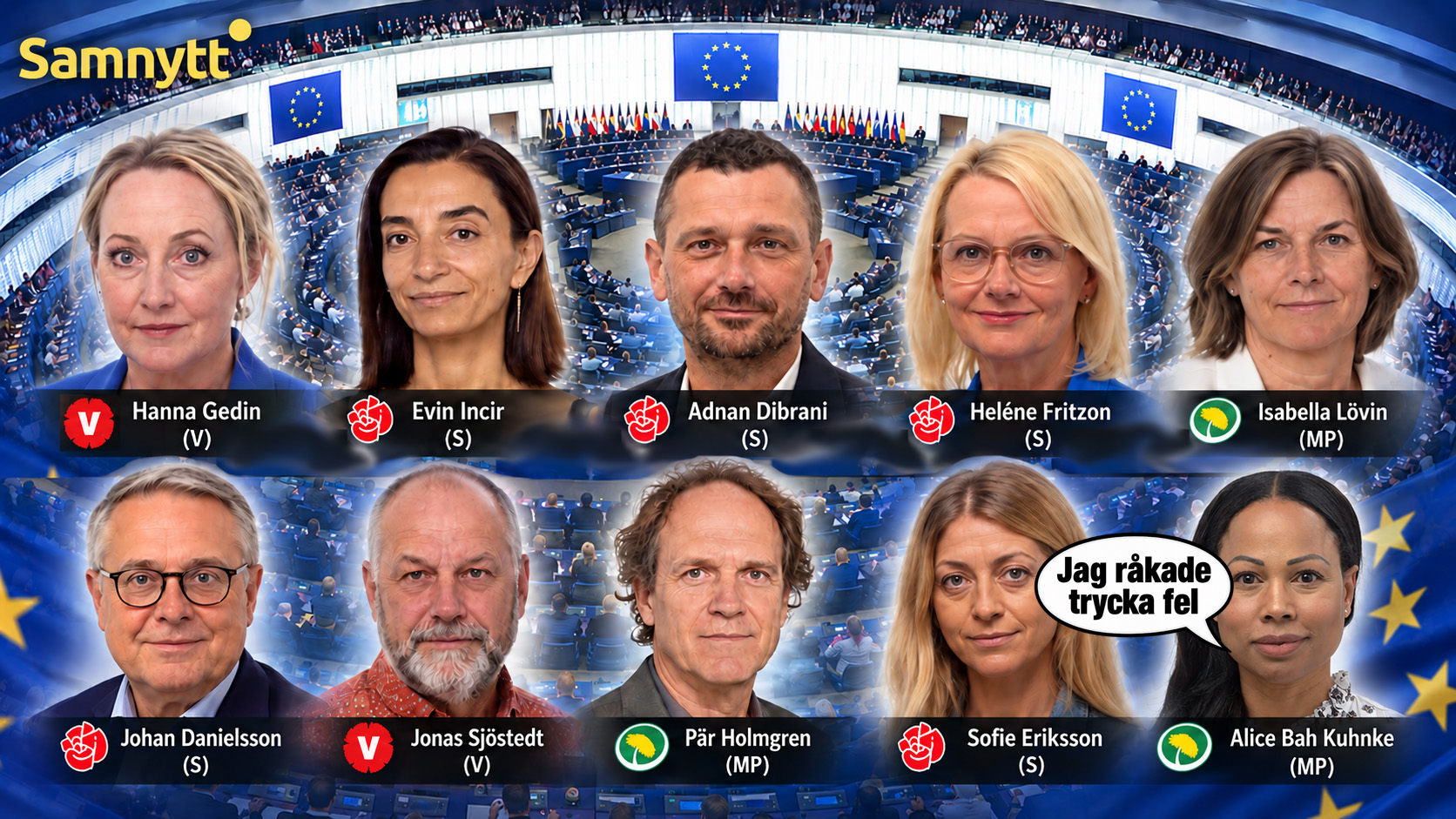
When Swedish Social Democrats, Left Party members, and Green Party members voted against the European Parliament’s resolution on Islamist infiltration and the financing of Muslim Brotherhood networks, it was not primarily about the resolution’s actual content. According to S MEP Evin Incir, the party did not want to end up on the same side as Germany’s AfD. The Green Party also defends its no by claiming the resolution “casts suspicion on Muslims.” Terrorism researcher Magnus Ranstorp has sharply criticized their argumentation, accusing the red-greens of dismissing extensive European intelligence work. Alice Bah Kuhnke (Green Party), who went against her party’s line and voted yes, now claims she pressed the wrong button.
Last week, the European Parliament passed, by a wide majority, a resolution calling for strong action against Islamist infiltration of European social institutions and tighter control over EU funds to organizations linked to the Muslim Brotherhood. 381 members voted for, 167 against, and 15 abstained. Among the Swedish MEPs, all five Social Democrats and both Left Party members voted no, as did two out of three Green Party members.
The newspaper Fokus has contacted the nine Swedish MEPs who voted no, to ask why they opposed the resolution. The answers indicate that the resistance was not so much about the substance of the motion. For the Social Democrats, distancing themselves from the German right wing was a central reason.
Did Not Want to Be on the Same Side as AfD
Social Democrat Evin Incir, representing the entire Swedish S delegation, asserts that the party has zero tolerance for extremism, including religious extremism. However, she claims that the resolution contains “speculative assertions and sweeping accusations” that are insufficiently substantiated.
When Fokus asks her to specify these objections, she instead redirects attention to which political parties supported the proposal. That appears to be the real sticking point.
– Unlike the Moderate and Christian Democrat groups, including the liberal group, we do not intend to join forces with far-right parties like Alternative for Germany.
However, the adopted resolution was not a joint initiative from AfD and the conservative groups. It was initiated by the Conservative and Christian Democrat EPP group, which includes Sweden’s Moderates and Christian Democrats. It gained support from, among others, the liberal Renew group and groups further to the right, including ESN, which counts AfD as a member.
AfD voting in favor did not mean EPP and AfD drew up the resolution together. Thus, it is not correct that the Swedish Social Democrats “joined forces” with German AfD. The Social Democratic argument raises the question: should a proposal be judged by its content or by which parties choose to support it?
At the same time, Germany’s Social Democratic Party is in a difficult political spot after very poor election results, while AfD has grown to become the country’s largest party according to current polls. Distancing themselves from AfD has become a core strategy of the German left, now echoed by their Swedish sister party.
Ranstorp: “Astounding”
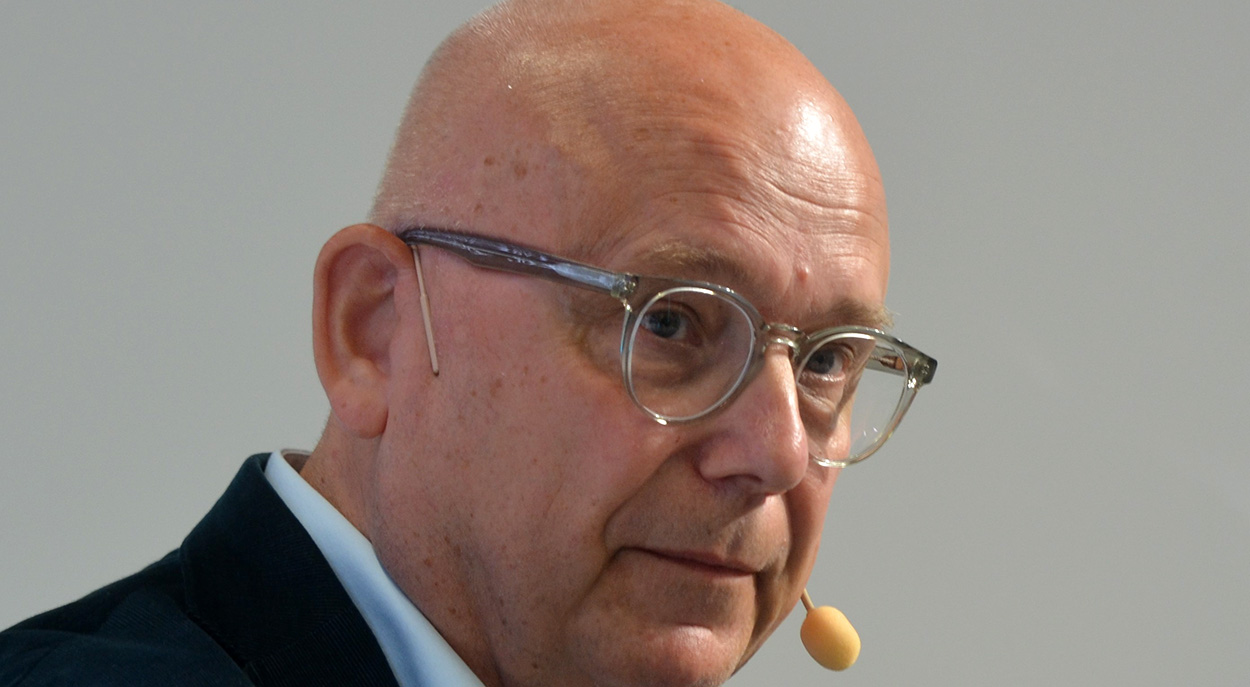
Terrorism researcher Magnus Ranstorp, who is also a special investigator for the Swedish state inquiry into religious radicalization with a focus on political Islam and Islamism, is sharply critical of Incir’s reasoning. He believes that the Social Democrats’ objections overlook the extensive mapping of Islamist networks carried out for years by European security and intelligence agencies.
– Evin Incir’s talk of “speculations and sweeping accusations” is an astounding dismissal of years of European intelligence work. Security services have mapped the Muslim Brotherhood’s networks, identified organizations, and warned of institutional influence, he told Fokus.
A central part of the resolution concerns what in English is called islamist entryism, roughly, Islamist infiltration. The term refers to how Islamist organizations may attempt to gain political and institutional influence by establishing themselves within democratic organizations, civil society, and public institutions.
According to the resolution, there is reason to pay special attention to organizations that outwardly work for democratic rights and anti-discrimination while simultaneously being suspected of advancing Islamist political aims. This is one of the passages Evin Incir objects to.
She is against describing anti-discrimination efforts as a possible “Trojan horse” for radicalization and argues that such language belongs more with the far right than in the European Parliament’s political work. But Ranstorp counters that this is precisely the method European security services have warned about – that Islamist networks use legitimate rights issues as a means of gaining influence.
The resolution explicitly distinguishes between Islam as a religion and Islamism as a political ideology. It also emphasizes that Muslims should be protected from discrimination. The real challenge, according to the resolution, is drawing a line between religion and politics – a distinction many Muslims do not themselves make and which is not supported in religious scripture.
Incir’s Previous Contacts with Controversial Muslim Organization
Fokus also draws attention to Evin Incir’s previous dealings with the European Muslim youth organization FEMYSO. The organization was named in a 2025 French government report as part of the Muslim Brotherhood’s European network.
FEMYSO itself denies such connections and has also publicly condemned the recently adopted resolution. According to Fokus, Incir participated in a 2020 seminar co-organized by FEMYSO. Two years later, a FEMYSO representative met with her in connection with the European Parliament’s work against racism.
FEMYSO itself has reported on the meeting and stated that its representative conveyed requests or demands regarding the content of an upcoming parliamentary report. This is not firm evidence that Incir shares the group’s ideological aims, but these contacts are relevant to highlight against the current debate on Islamist organizations’ potential influence over EU institutions in general and the Muslim Brotherhood in particular.
When Fokus asks about her relationship to FEMYSO, Incir denies having or having had any personal contact with the group. She instead refers to her work in the European Parliament’s cross-party anti-racism group. Incir also states that, in principle, she does not oppose stricter controls over how EU funds are used.
However, she says such scrutiny must be based on clear criteria and concrete proof, which she claims is lacking in the current resolution. An overwhelming majority of the other Swedish MEPs and the parliament as a whole disagreed with her assessment. Incir also did not present any concrete alternative to the resolution that the Social Democrats voted down.
Green Party: Risks Casting Suspicion on Muslims
The Green Party’s Pär Holmgren – who has previously said that democracy may need to be replaced with a green dictatorship if climate work lags behind – defends his no by arguing that the resolution draws overly far-reaching conclusions about Muslim organizations.
He believes some of the statements risk blurring the line between legitimate activities within the Muslim civil society and organizations actually pushing Islamist political agendas. Like Incir, Holmgren assures that the Green Party supports efforts against Islamism, anti-Semitism, and violent extremism.
According to him, the party is also positive about increased oversight of EU funding, but believes scrutiny should be applied evenly to all organizations and not specifically targeted at Muslim ones. This contrasts with the resolution, which is expressly about political Islamism and Muslim Brotherhood networks, not Muslim organizations in general.
Alice Bah Kuhnke: “I Pressed the Wrong Button”
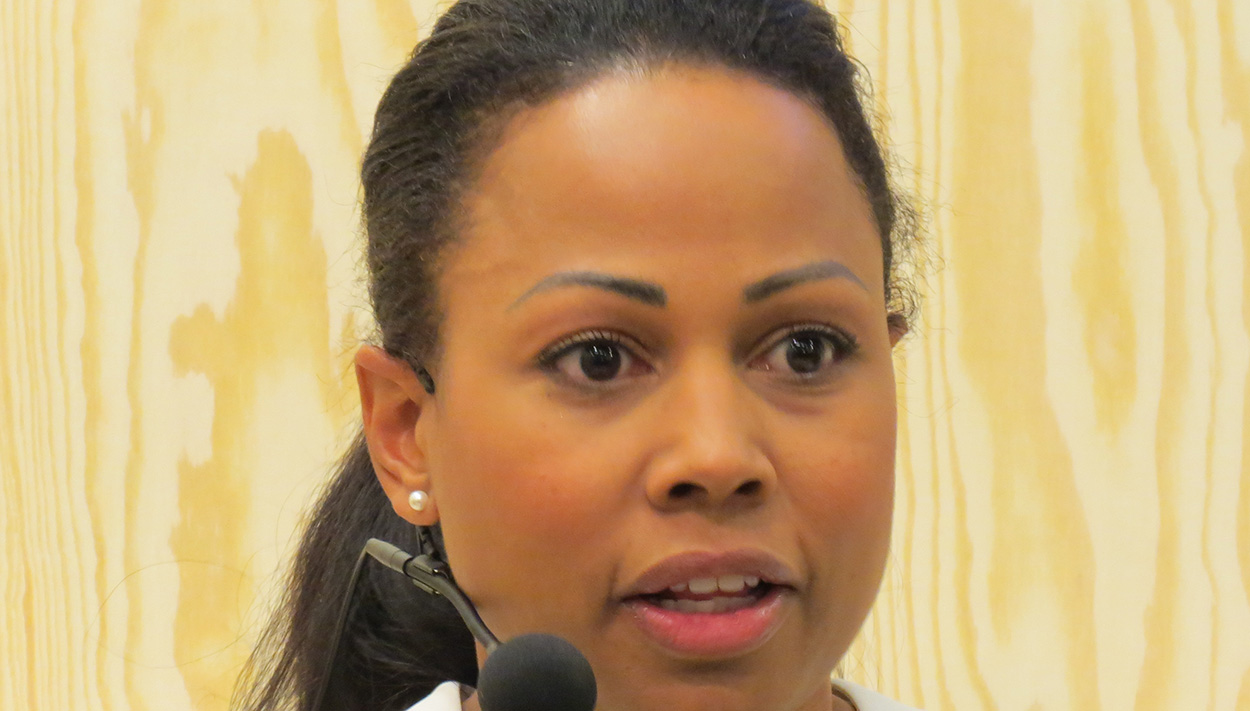
The Swedish Green Party delegation was not united in the vote. While Holmgren and Isabella Lövin voted no, Alice Bah Kuhnke was registered as voting yes. According to the Green Party’s press office, Bah Kuhnke’s yes vote was actually a mistake – she pressed the wrong button.
Both Left Party MEPs, Jonas Sjöstedt and Hanna Gedin, also voted against the resolution. Sjöstedt declined to comment on his position to Fokus.
Demands Answers on How to Stop Islamist Infiltration
One of the resolution’s most important sections concerns the oversight of European taxpayers’ money. The European Parliament wants the EU Commission and member states to tighten scrutiny of which organizations receive financial support and how the funds are used.
The purpose is to prevent EU funds from ending up with organizations engaged in Islamist influence or connected to networks working against democratic rights and freedoms. The resolution also calls on the Council of Ministers to examine opportunities to terrorist-list individuals and organizations with links to the Muslim Brotherhood, given the legal criteria are met.
The decision is not binding legislation but a political position. It does not automatically label organizations as terrorists or immediately revoke EU funding.
Magnus Ranstorp nevertheless considers the resolution an important step to protect European democratic institutions from Islamist influence. He is particularly critical that the Social Democrats rejected the initiative without also presenting their own concrete proposals.
– It is not enough to simply vote no when Europe’s democratic institutions need protection against undue influence, Magnus Ranstorp told Fokus.
The question remaining after the red-green parliamentary groups’ explanations is not just why they voted against the resolution, but also what concrete measures they themselves are prepared to support to stop Islamist infiltration and prevent European taxpayer funds from financing such subversive activity.