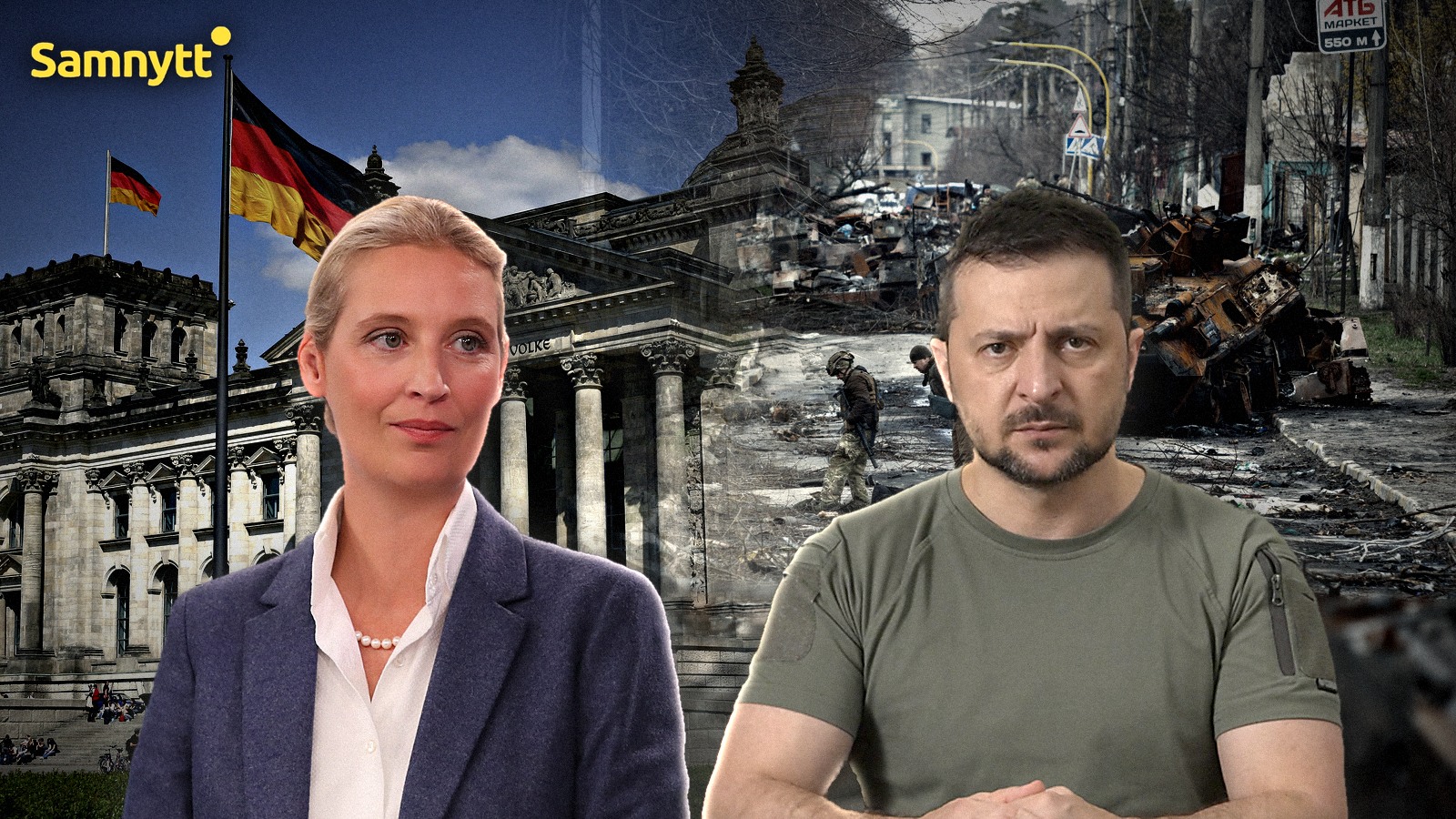
Germany will stop supporting Ukraine militarily and economically, and instead put pressure on President Volodymyr Zelenskyy to end the war with Russia. This is the plan put forward by Alice Weidel, party leader of the national conservative Alternative for Germany (AfD), should her party—which according to polls is currently the largest in the country—come to power. According to Weidel, Ukraine has already lost the war and it is impossible to defeat Russia militarily.
It is in an interview with the British magazine The Economist that AfD leader Alice Weidel questions Germany’s continued support for Ukraine, as the war now enters its fifth year.
Weidel wants to see a comprehensive shift in German policy toward both Ukraine and Russia. She argues that German support for Ukraine should stop, and that the government should instead work for a peace settlement with Russia.
According to her and the party, the war is partly a result of the West having ignored Russian security interests for a long time, something she believes has contributed to deepening the conflict.
Furthermore, AfD argues that it is pointless to continue supporting Ukraine’s war effort since she believes the country lacks the conditions to defeat the Russian military. The AfD leader describes Ukraine as “too small” to win the war and claims the country has “already lost.”
– Ukraine cannot win against Russia. It is impossible.
READ ALSO: Kristersson to Trump: Ukraine is existentially important to Sweden
Alice Weidel therefore believes that Germany should use its influence to put pressure on Ukraine’s President Volodymyr Zelenskyy to accept an agreement that can end the fighting. Weidel was asked by the British journalist whether it is not right to support a democratic country such as Ukraine.
– Don’t you think it is reasonable for Germany and other Western European countries to support a democratic country that is trying to defend itself against this open aggression?
This is, however, an idea that the AfD leader does not agree with. She points out among other things that Ukraine’s President Volodymyr Zelenskyy has remained in power for almost two and a half years after his regular five-year term expired in May 2024 and that no new presidential election has yet been held.
– Not really, says Alice Weidel with a sigh, and continues:
– As democratic as it can be right now. They don’t hold elections anymore, and that’s why the American president is demanding a new presidential election.
This is something the journalist doesn’t quite accept, quickly—almost heatedly—arguing that Ukraine cannot hold elections because the country is at war.
– They’re not holding elections right now because the country is at war and under martial law, the journalist interjects as the AfD leader speaks.
Wants to put “Germany first” – the war isn’t that
Alice Weidel wants German foreign policy to be based more on the country’s own national interests.
– I have to assess every foreign policy decision that Germany makes based on whether it is in our national interest or not. Prolonging the war and the measures that the German government is now taking pose a huge risk for our country, she says, and continues:
– I think it is wrong to continue financing a war that has already been lost. Ukraine cannot win against Russia, it’s impossible.
She advocates a policy she describes as putting Germany first, where foreign policy commitments are reconsidered and evaluated based on their benefit to Germany itself.
Weidel also warns that Germany’s continued support for Ukraine risks dragging the country even deeper into the conflict with Russia. She believes that a prolonged war might result in Germany itself becoming a target, and that current policy thereby endangers the safety of the German population.
– We have already spent over 100 billion. No other country has put so much money into this. At the same time, we are heavily in debt. I put my own country’s interests first, she says, and continues:
– For me, it’s Germany first, and this war is not in our national interest. It is also very dangerous for our national security.
READ ALSO: US and Russia discuss restart of Russian gas to Europe
As a role model, she refers to, among others, American President Donald Trump’s relationship with Russia, including the most recent deals regarding diesel.
Doesn’t buy the media reports
Weidel is unwilling to accept the Economist journalist’s narrative that Russia is a direct threat to Germany. During the interview, she is asked about a suspected drone attack at Leipzig airport, which the German government has accused Russia of being behind. The AfD leader, however, questions these claims and says she has seen no evidence of Russian involvement.
READ ALSO: AfD: Zelenskyy should pay for the Nord Stream attacks
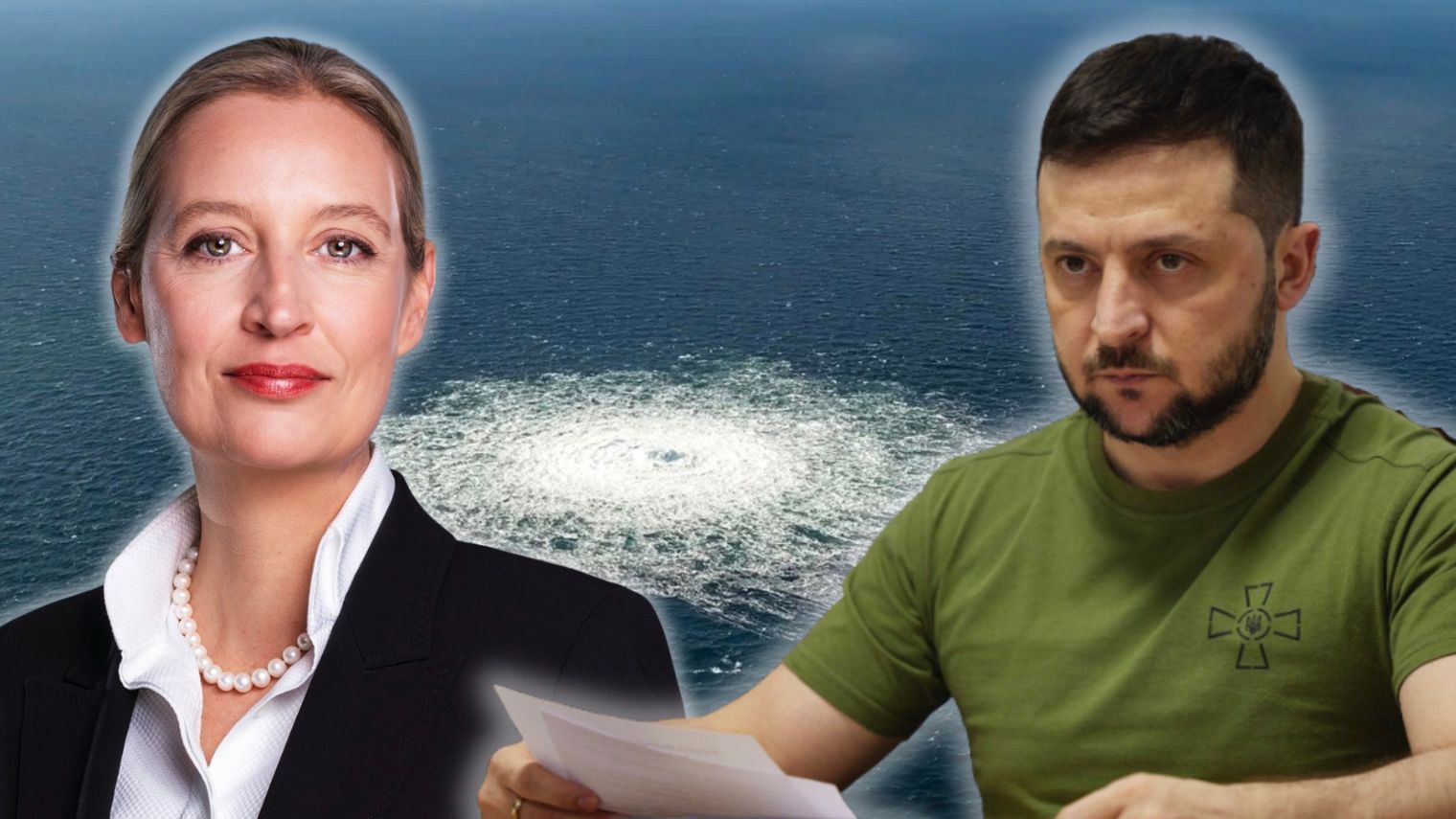
Instead, she directs attention to the sabotage of the Nord Stream gas pipelines, in which Ukrainian actors are suspected of being involved and where the legal process has now picked up pace.
Points to cause of Ukraine war
Even when the conversation turns to whether Russia’s President Vladimir Putin wants to end the war, Weidel chooses to direct attention toward Ukraine.
When asked if there are any concrete signs that the Russian president seeks peace, she instead questions the Ukrainian president’s attitude toward negotiations.
The AfD leader clarifies that Russia was the attacking party when the invasion began in February 2022. At the same time, she emphasizes that the war must be seen in light of several decades of relations between the West and Russia.
READ ALSO: Researcher: Swedish media and politicians mislead with propaganda about the Ukraine war
According to Weidel, Western countries have long overlooked Russia’s security interests, something she believes has contributed to the current conflict. She therefore thinks these interests must be taken more seriously and given more room in future diplomatic negotiations.
This is a stance that clearly differs from the current German government’s policy, where support for Ukraine’s defense against the Russian invasion has been a central part of its foreign and security policy. The same approach has characterized most other EU countries, where military, economic, and diplomatic support for Ukraine has been combined with sanctions against Russia.

Ukrainians, Syrians, Afghans and others should go home
Weidel’s view of the Ukraine war also affects her migration policy proposals. In the interview, the AfD leader says that over one million Ukrainians currently in Germany should return to their home country once the war ends.
The return of Ukrainian refugees is part of a much broader migration policy involving repatriation, which Weidel wants to implement if AfD gets government influence.
READ ALSO: Report: Europe or the Middle East?
She also believes that all Syrian citizens should return to Syria, claiming that the civil war there is over. Afghan citizens are likewise to be subject to wide-ranging repatriation measures.
She estimates that a total of four to five million people would need to leave Germany. At the same time, she emphasizes that the door will remain open for qualified labor migration should AfD come to power.
@theeconomist Refugees “have to go back to their country” says Alice Weidel, the co-leader of the Alternative for Germany party. She explains to The Economist’s editor-in-chief, Zanny Minton Beddoes, why she thinks Afghan, Syrian and Ukrainian refugees should leave Germany. Click the link to watch the full interview. #Germany#AliceWeidel#Migration ♬ original sound – The Economist
Germany’s economic engine should demand changes in the EU
In addition to foreign and migration policy, Weidel offers extensive criticism of the German government’s economic policy. She describes herself as liberal-conservative and warns that the state’s increasing expenditures and debt may have serious consequences for the country’s finances. In her assessment, Germany’s interest costs will double within three years if the current trend continues.
To address the problems, she wants to make major cuts in areas such as energy subsidies, international aid, and social benefits. According to Weidel, the savings will make room for both tax cuts and reduced government debt.
READ ALSO: AFD: Germany’s economy is collapsing
When it comes to the euro cooperation, Weidel downplays the idea that AfD is a party that wants Germany—considered Europe’s economic engine—to leave the common currency. She dismisses this as a misconception, despite the party’s election platform before the last election effectively supporting Germany’s exit from the euro system.
Instead, she says she wants to implement major changes in how the currency union works, chiefly by limiting the European Central Bank’s ability to finance highly indebted member states.
Will not back down or change as a party
The interview comes at a time when AfD is enjoying a historically strong position in the polls nationally and in several states. The party has established a clear lead in opinion polls and appears to have a chance for the first time to take over the government in a German state, Saxony-Anhalt.
READ ALSO: AfD leads the polls in another state
A crucial question for the party’s future is whether the established German parties will continue to maintain the so-called firewall, Brandmauer, which means they refuse to cooperate with AfD.
Weidel believes that this approach leads to voters who support right-wing policies in practice being forced to accept governments that pursue more left-wing policies—all just to keep AfD from power.
However, she shows little willingness to compromise with other parties herself to enable a future government coalition. Instead, she argues that the Christian Democratic CDU, led by Chancellor Friedrich Merz, must adapt to AfD’s political demands and warns that otherwise AfD risks losing its relevance.
READ ALSO: Åkesson’s message on immigration policy: “There’s not much more to do”