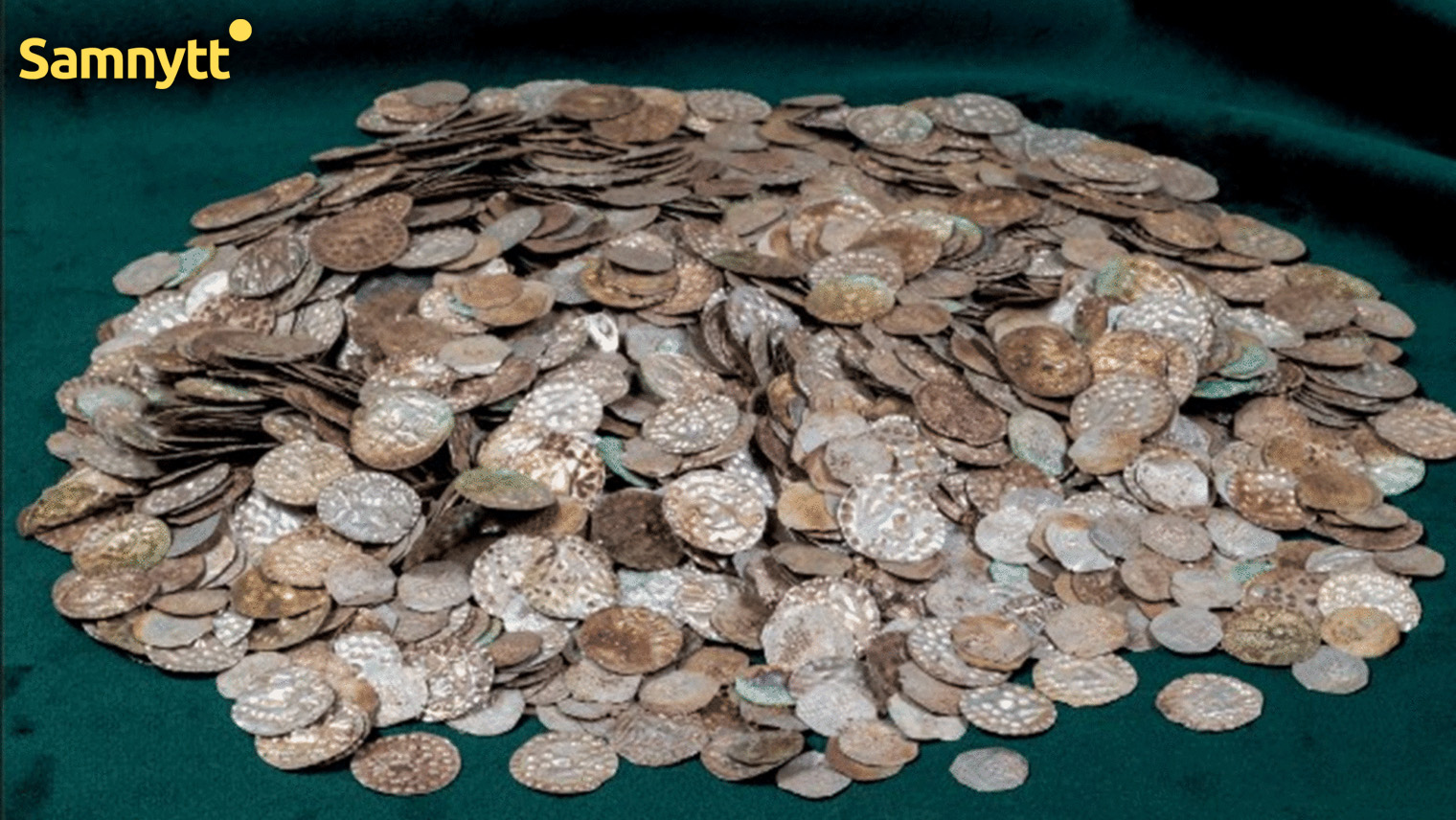
The person who discovered the so-called Hörningsholm Hoard in Södertälje Municipality will receive four million kronor in compensation. This decision was made by the Swedish National Heritage Board after the find was assessed to have immense cultural and historical value. The hoard, discovered in August 2025, contains over 24,000 silver coins and is already considered the largest coin hoard ever found in Sweden.
The treasure was uncovered at Hörningsholm on Mörkö, south of Stockholm, during the late summer of last year. The find consists of approximately 24,100 silver coins and an additional 144 objects from the Viking Age and early Middle Ages. Among the objects are jewelry, gilded items, and a small number of gold objects.
ALSO READ: Viking Woman Conquered America 500 Years Before Columbus
According to the Swedish National Heritage Board, the hoard is unusually well-preserved and contains several extremely rare coins, including so-called bishop’s coins.
May Provide New Knowledge About Sweden’s Early History
The authority considers the discovery to have exceptional research value since it may yield new insights into trade, economy, and societal structure during a period when written sources are scarce.
A large portion of the coins originate from Gotland, which played a central role in Baltic Sea trade during the period. The rest were minted in Svealand. The hoard is believed to have been buried around the year 1200.
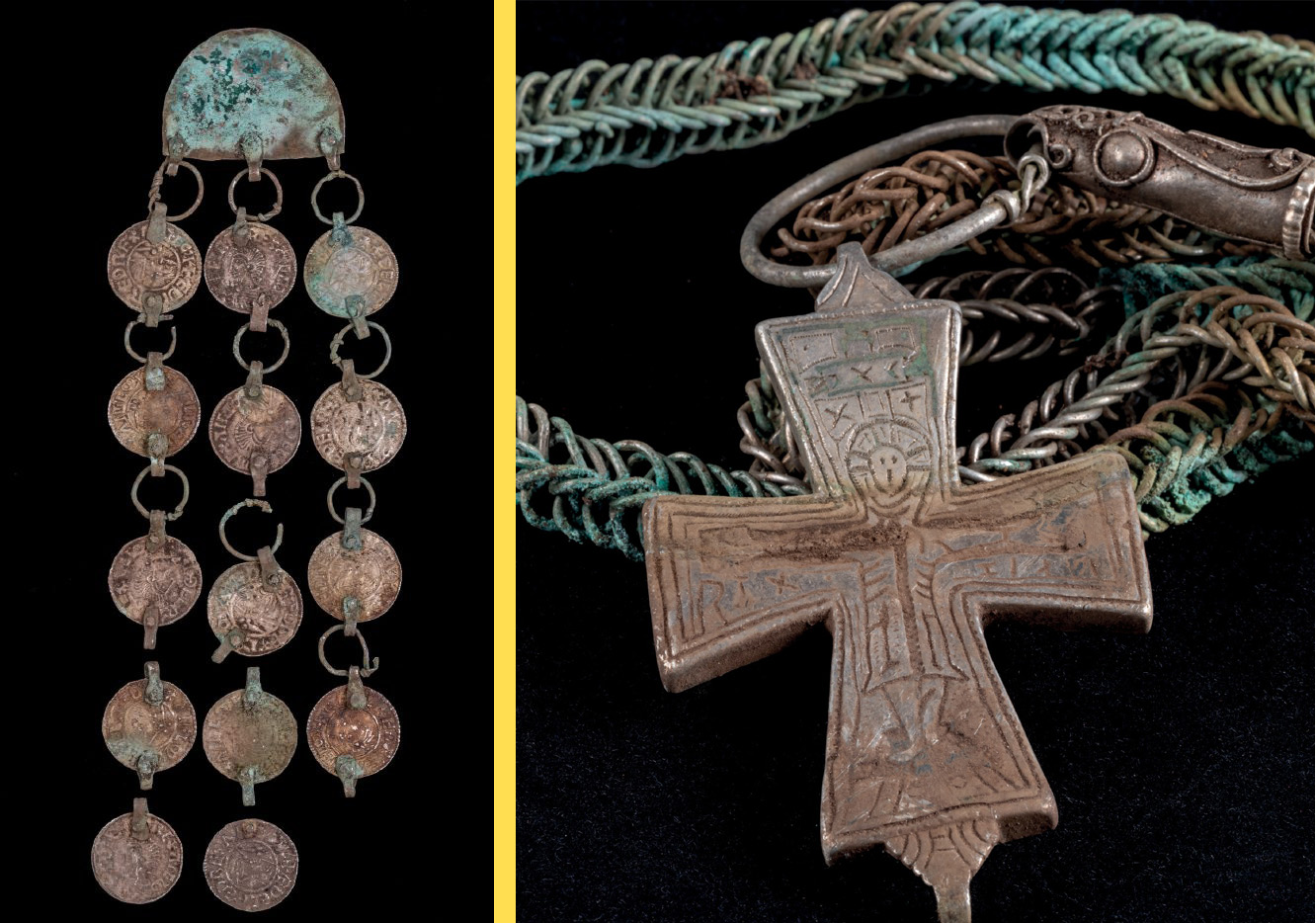
Archaeologists also describe the combination of objects from both the Viking Age and early Middle Ages as unusual. Among the most notable finds is a so-called enkolpion—a reliquary cross that, during the Middle Ages, was worn by high-ranking members of the church, mainly bishops.
Found at a Strategic Waterway
Hörningsholm is located at an important passage along the historical waterway toward Södertälje and Stockholm. The area has previously yielded several significant finds, including gold rings and older silver hoards.

Researchers believe that the site may have functioned as an important stop for ships during the Viking Age and early Middle Ages. Treasures like this are sometimes thought to have been buried by merchants or crews wanting to conceal their wealth.
“Reasonable and Responsible Level of Compensation”
The Swedish National Heritage Board emphasizes that the finder followed the law by promptly reporting the discovery to the county administrative board. Senior Antiquarian Magnus Larsson stated that compensation must be fair but not so high that it risks encouraging illegal treasure hunting.
ALSO READ: Archaeologist Explains: The Amulet Rings May Have Given Vikings Battle Luck
The treasure will now be taken care of by the state and is expected to be displayed in a museum at a later date.