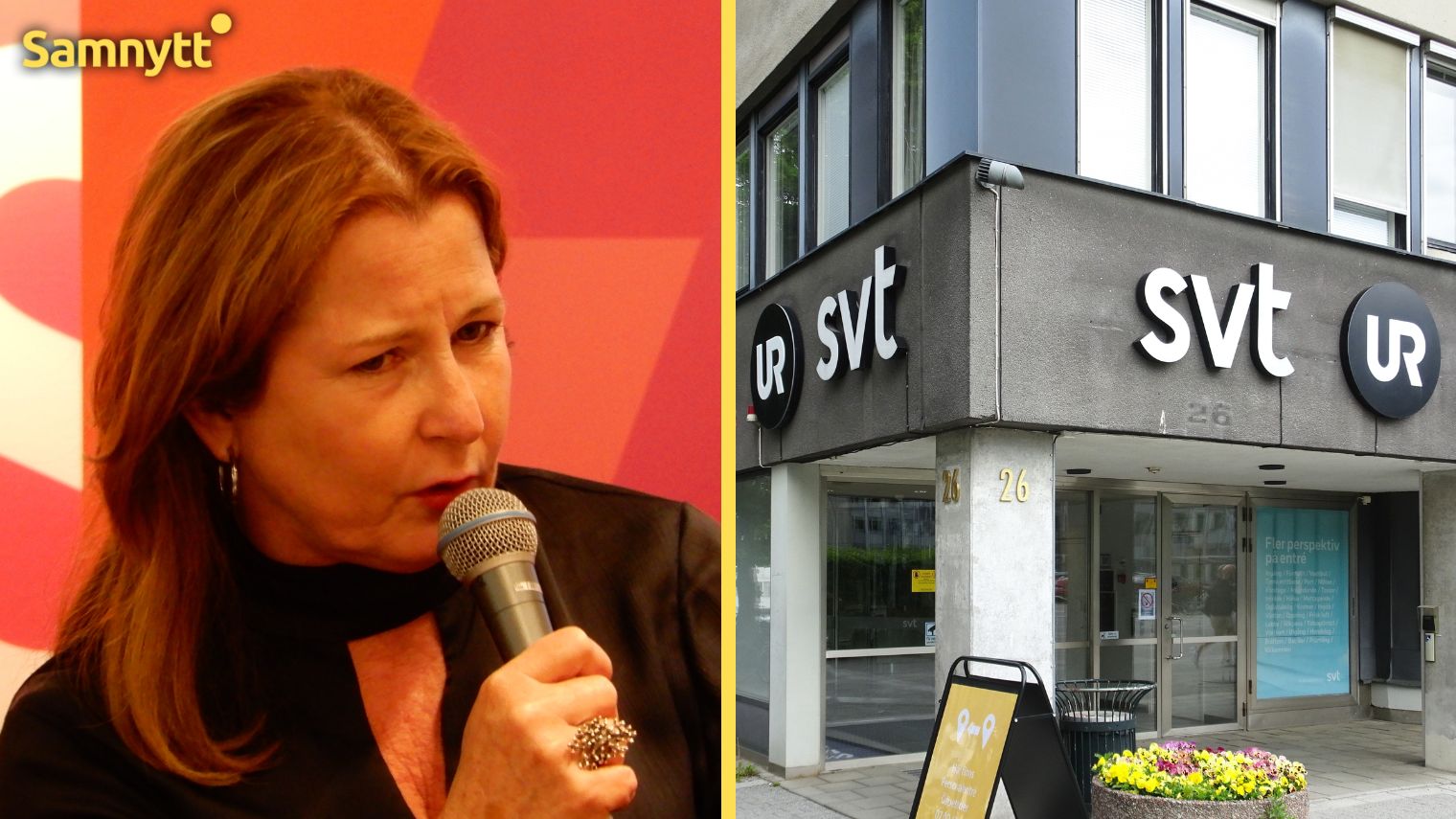
Swedish Television (SVT) is currently experiencing a turbulent period, as several well-known personalities, presenters, and executives have decided to leave the company in a short span of time. The departures coincide with SVT implementing an extensive savings package with major cutbacks, a move that has caused internal unrest and sparked a public debate about the broadcaster’s future direction.
In recent weeks, several of SVT’s most recognized faces have announced that they are leaving their positions. Among them are presenter Karin Magnusson, foreign correspondent Bengt Norborg, and cultural figure Kristofer Lundström. SVT’s Head of Programs Michael Kucera, as well as the Melodifestivalen project manager Anders Wistbacka, have also stepped down from their roles.
The main reason is SVT’s major cost-saving program. Earlier this year, the company announced that around SEK 355 million must be saved by 2026. In total, 141 positions are being eliminated, and a large number of employees have been offered severance packages. At the same time, several programs are being put on hold and parts of operations are being restructured.
Several of those leaving have also expressed concerns about developments within public service. Bengt Norborg has publicly criticized SVT, claiming it is moving toward faster, shorter news formats at the expense of in-depth journalism and strong visual storytelling. Kristofer Lundström and Karin Magnusson have also described feeling that the business is changing direction in a way that no longer suits them.
SEE ALSO: Major cutbacks and reductions at SVT
Other personalities describe their decisions instead as an opportunity to try something new after many years with the company. Michael Kucera, who has worked at SVT for nearly three decades, has, for example, announced together with Agenda project manager Kajsa Gudmundson that they plan to start their own business after their departures.
SVT’s management has concurrently tried to downplay the image of a crisis. Head of News and Sports Anna Careborg has said that the company will still invest in in-depth journalism but must also evolve to meet the audience’s changing media habits. CEO Anne Lagercrantz has also commented on the departures, calling them painful but necessary in times when traditional TV is losing viewers and the entire media industry is changing rapidly.
The many high-profile exits have attracted significant attention both within and outside the media industry. Critics argue that SVT risks losing experience and journalistic expertise when professionals with decades of experience leave at the same time. Management, on the other hand, emphasizes that the changes are necessary to secure the future of the public service company in an increasingly digital and competitive media landscape.
“Societal Fabric”
Some of those who have left have come together in an open letter to SVT published over the weekend. Among the signatories are Erika Bjerström, former foreign correspondent; Anna Hedenmo, former presenter; and Folke Rydén, former foreign correspondent.
They offer sharp criticism of the developments taking place within the company following the major savings demands. They argue that SVT risks weakening its journalistic mission by reducing investment in self-produced reports and in-depth journalism.
SEE ALSO: SVT profile’s smuggled Syrian threatened hotel worker and threw stones
The criticism specifically targets plans to merge programs like Aktuellt and Agenda, as well as the prioritization of cheaper studio formats and shorter digital content over longer investigations and foreign reports. The contributors warn that public service may lose what makes its operations unique: on-the-ground, independent journalism. They describe the developments as a “historic mistake” and contend that journalism should come closer to reality in an increasingly complex world, not farther away.
The text concludes by asserting that public service is ultimately about, among other things, “societal fabric”:
Right now, SVT News risks going down the wrong path. Therefore, we urge SVT’s leadership to take the public service mission with the utmost seriousness. Ultimately, it is a question of democracy, knowledge, and societal fabric.
SEE ALSO: SVT seizes the opportunity—demands further billions in taxes