
COLUMN • The left has long understood the value of sticking together, even when internal divisions are enormous. On the right, however, we sometimes seem more concerned with identifying heretics in our own ranks than with recognizing who our actual opponents are. The right doesn’t need to think the same way, but it must learn to stand united—without falling into either the conspiracies currently splintering the American right or the Swedish anxiousness about the red lines drawn by DN, SVT, and the old media hegemony. Otherwise, we will continue doing our opponents’ work for them.
There are few things the left does better than sticking together. They can despise each other, fight each other internally, and champion ideas that ought to be impossible to combine.
Yet they mostly seem to know exactly who the political enemy is. Today it’s the Western world, or white men, or Jews, or lately even everyone who enjoys nature and a healthy lifestyle (yes, even those are now being labeled far-right extremists).
Then they unite with each other—and nowadays also with terrorists, Islamists, radical feminists, LGBTQ activists, and antisemites across the world. United by hatred.
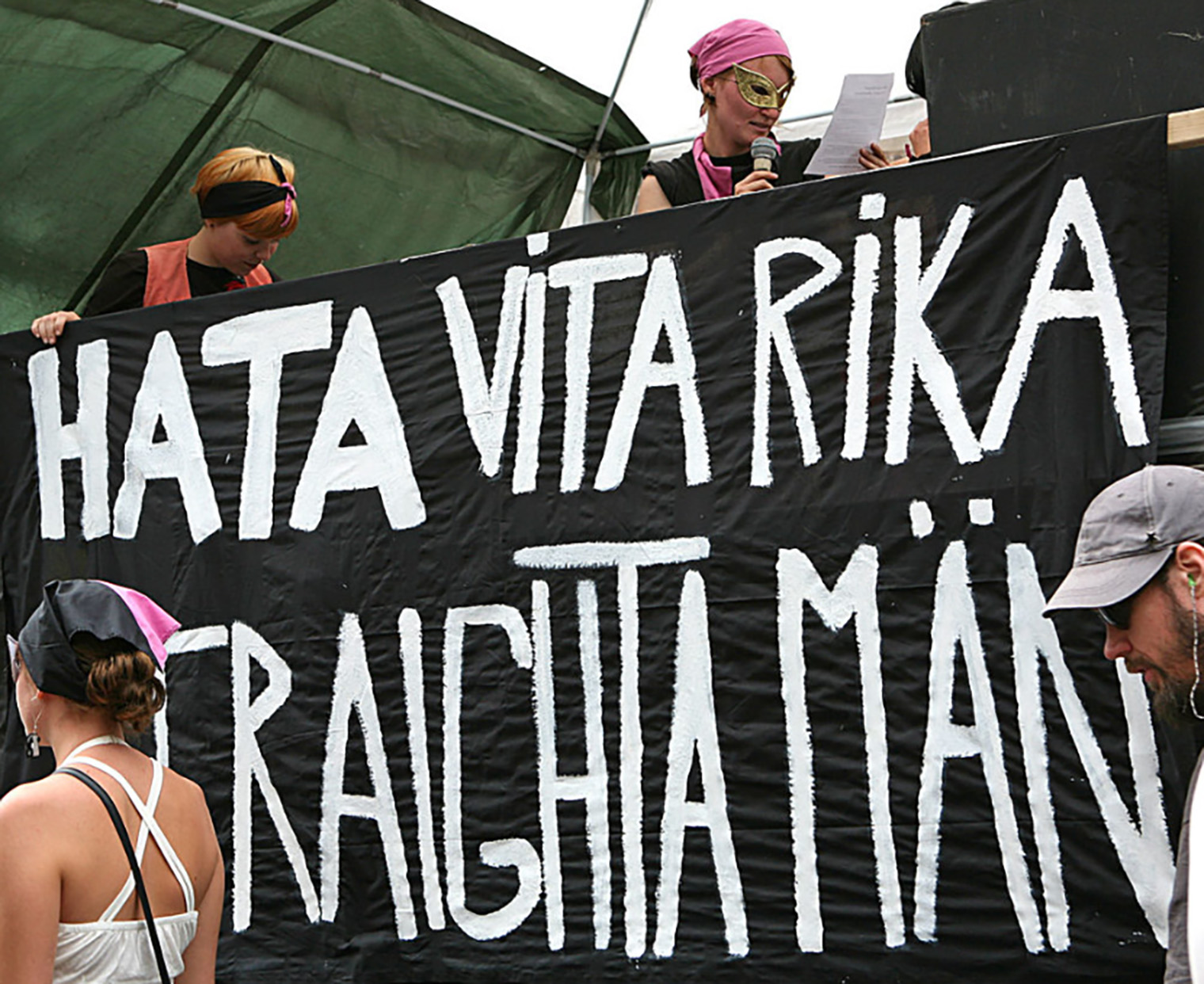
On the right, it doesn’t work that way. There, a dissent on a single issue can be enough for someone to be considered impossible to deal with.
It can be about Israel, Ukraine, Donald Trump, migration, or merely that someone has interviewed or socialized with the wrong person.
Then it becomes a problem. An unease. Something that rings false in the punch glass on the veranda, something that makes the Timbro editors turn their tweed jackets away with strained faces.
READ ALSO: They built the hate machine—now they cry about the tone
If there is anything the right needs to learn in the coming years, it is to stick together—which is not at all the same as thinking alike.
When the Right Loses its Way
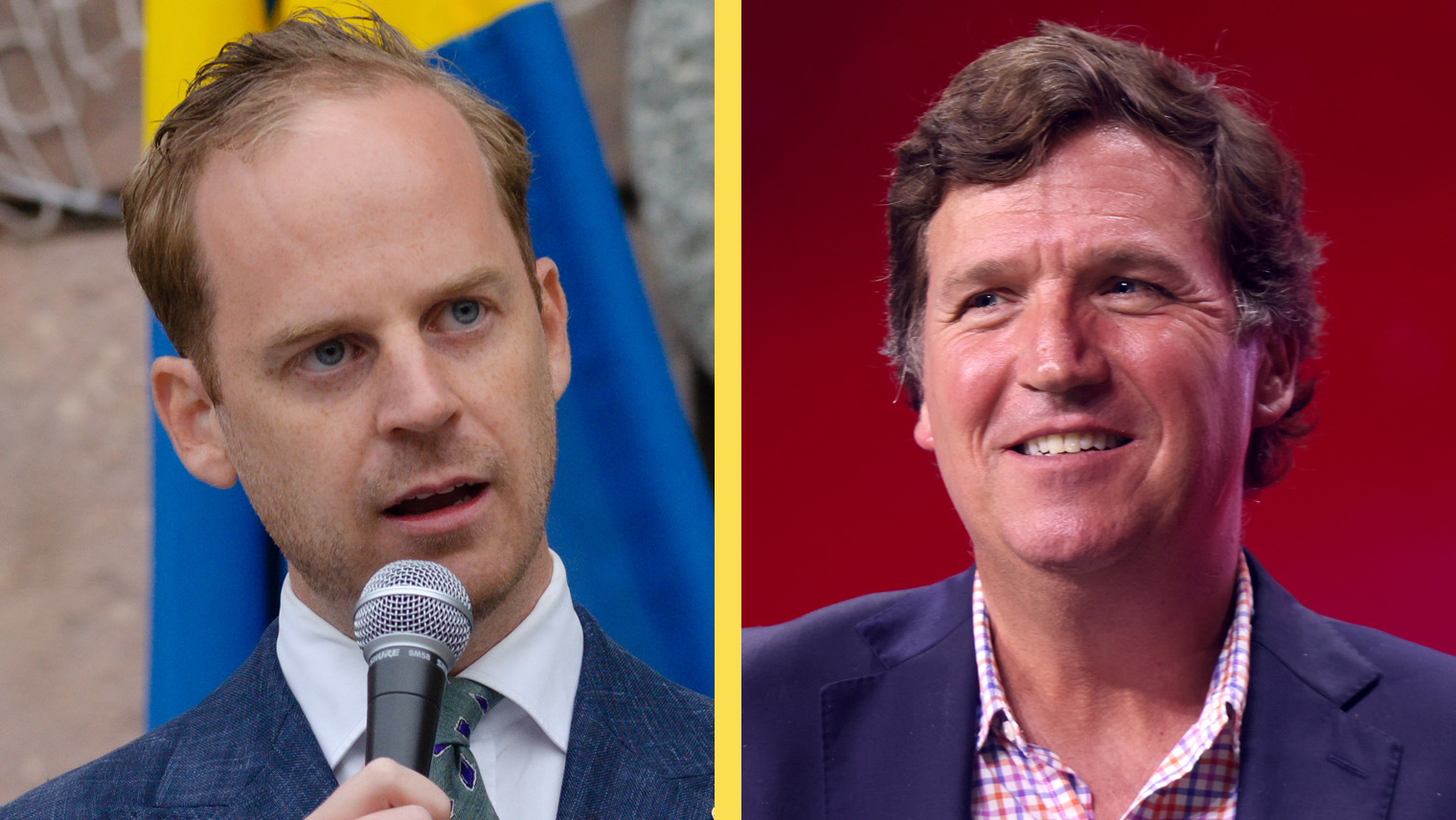
In the USA, we are now seeing just how bad things can go in the other direction. People like Tucker Carlson and Candace Owens have found themselves in the midst of an increasingly heated conflict on the American right centered around Israel, Jews, and antisemitism.
My position is crystal clear. I support both Israel and the Jewish people’s right to their own country, the land where they are the indigenous people—as it’s so beautifully called in English. In the same way, I support the Swedish people’s right to their own country. Our only land on earth that’s the land of the Swedes. The land called Sweden.
Jonas Andersson
Parts of this environment also seem to have rediscovered the old and convenient shortcut for those who find the world too complicated. Behind money, wars, the media, and politicians, in the end, you find Jews or ‘Zionists’ as the explanation for nearly everything.
READ ALSO: Andersson keeps the door closed to “far-right” SD – but open for terror-linked V
Jews or ‘white men’ are of course the root of all evil. Sigh, how tiresome this is getting.
Of course, it’s entirely possible to criticize Israel, Benjamin Netanyahu, Zionism, or the U.S. support for Israel. But there’s a clear difference between criticizing a state, a government, or a political ideology, and starting to blame the world’s problems on an ethnic or religious group.
READ ALSO: New V-candidates revealed—Hamas, Jew-hatred, and Putin continue to shake the party
The latter is not particularly sophisticated system critique. It’s more a way of avoiding analyzing complicated political and economic relationships.
My position is crystal clear. I support both Israel and the Jewish people’s right to their own country, the land where they are the indigenous people—as it’s so beautifully called in English.
Just as I support the Swedish people’s right to their own country. Our only land on earth that’s the land of the Swedes. The land called Sweden.
READ ALSO: Arab Jew-hatred in Sweden during the Sydney terror: “What a terrorist—a hero”
Similar Tendencies in Sweden
This conflict is present in Sweden too. Alternative for Sweden’s Gustav Kasselstrand has, for example, made Israel and Zionism a prominent political issue and during the campaign spoke of “Zionist subjugation” and “global Zionism”.
I don’t agree with him. But my thinking that Kasselstrand is wrong on one issue doesn’t mean that everything else he says is automatically wrong, that I must pretend he doesn’t exist, or that I need to ask Dagens Nyheter if I’m still allowed to talk to him.
This leads to what I believe is a much bigger problem on the Swedish right—anxiousness. Who am I allowed to speak to, whose podcast can I appear on, in which newspaper can I write, and who can I defend without being suspected myself?
There are still people on the right who seem to believe that some form of respectability certificate awaits them, so long as they manage to stay on the right side of enough red lines. There isn’t.
Wolodarski and the National Yardstick
This is also why the debate about Johan Lundberg’s new book Rikslikaren (The National Yardstick) is interesting. Lundberg scrutinizes Dagens Nyheter’s agenda-setting journalism and how selection, framing, and the interplay between different sections of the newspaper affect the perspectives readers have on society.
Johan Lundberg himself summarizes his fundamental thesis as journalists shaping people’s perception of reality. I believe you can add that they also to a great extent shape people’s perceptions of one another. Unfortunately.
Jonas Andersson
Peter Wolodarski has responded sharply. He accuses Lundberg of, among other things, selective quoting and distortion, and emphasizes that DN may make mistakes, but the paper works within a humanist Enlightenment tradition and strives to get as close to the truth as possible.
Read that again:
“That DN operates in a humanist Enlightenment tradition and strives to get as close to the truth as possible.”
I nearly spat out my breakfast laughing when I read the sentence.
READ ALSO: Ekeroth: The ballot box shattered the myth – that’s why Peter Wolodarski is outraged
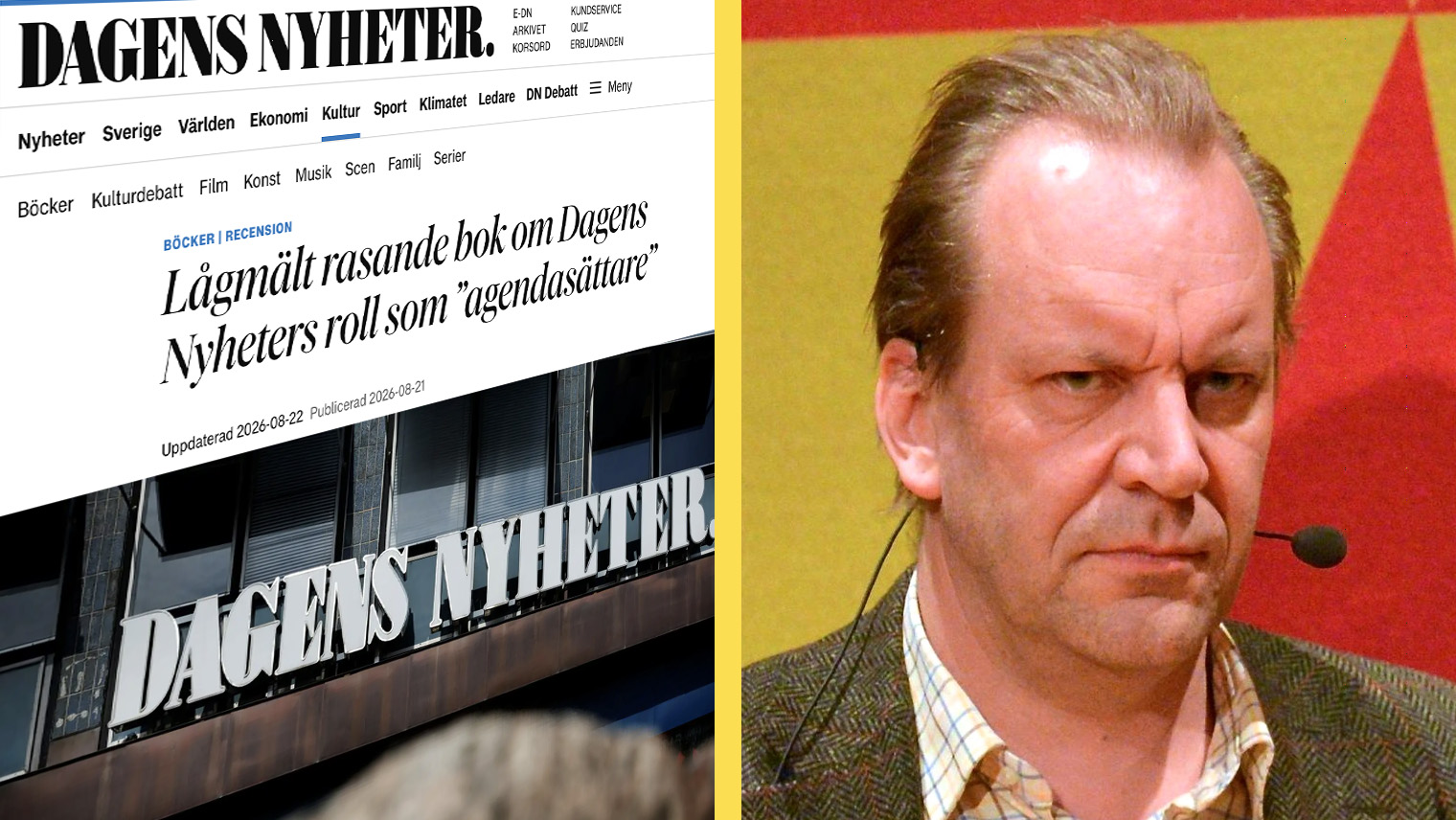
But the interesting thing here isn’t to try to prove that Wolodarski or anyone else at DN goes to work every morning intending to deceive the Swedish people. No such conspiracy is needed for media to wield huge ideological influence.
It’s enough that people in the same environment share roughly the same notions of what is important, good, evil, progressive, reactionary, and decent. Journalism is, after all, always a selection from reality, not reality itself.
READ ALSO: Peter Wolodarski apologizes for op-ed that was published “by mistake” – receives criticism
What do you cover, and what do you leave out? Who is seen as an expert and who is presented as an extremist? Which societal problems get hundreds of articles, and which are treated as isolated incidents?
Johan Lundberg himself summarizes his fundamental thesis as journalists shaping people’s perception of reality. I believe you can add that they also to a great extent shape people’s perceptions of one another. Unfortunately.
The Power to Decide Who Is Decent
This may be the most important power still held by the old media hegemony. It isn’t just about deciding which issues can be discussed, but also about who is deemed a respectable participant in that discussion.
A person doesn’t necessarily have to be refuted. Words like “controversial,” “far-right,” or “conspiracy theorist” suffice, or the especially useful phrase that someone “has connections to” someone else—the old, tiresome “guilt by association,” which has become DN’s flagship over the past 20 years.
READ ALSO: Wolodarski risks yet another libel suit—DN exposed an innocent person as a racist
From there, a chain can be constructed almost endlessly. Someone knows another person who appeared in the same podcast as someone else, who in turn wrote something stupid on Facebook eight years ago.
The problem is that people become afraid of this mechanism. The journalist refrains from calling up the interesting person, the researcher chooses another subject, the entrepreneur goes silent, and the politician speaks so carefully that it’s barely possible to discern what he actually thinks.
Eventually, no opinion police are needed. People have learned to police themselves. That is the truly scary part.
Here, I think the right has made a fundamental mistake. We have, to far too great an extent, accepted our political opponents’ right to draw boundaries, and then spent a huge amount of our energy reassuring ourselves that we are on the right side of them.
Jonas Andersson
I have personal experience of how absurd this logic of association can become. When I started working as an Art Director for the Sweden Democrats around 2015, I was called an antisemite by both Ivar Arpi and Jens Ganman—not because of anything antisemitic I had written or said, but simply because I worked for SD.
READ ALSO: SD is not the party in Sweden Jews should worry about, Willy Silberstein
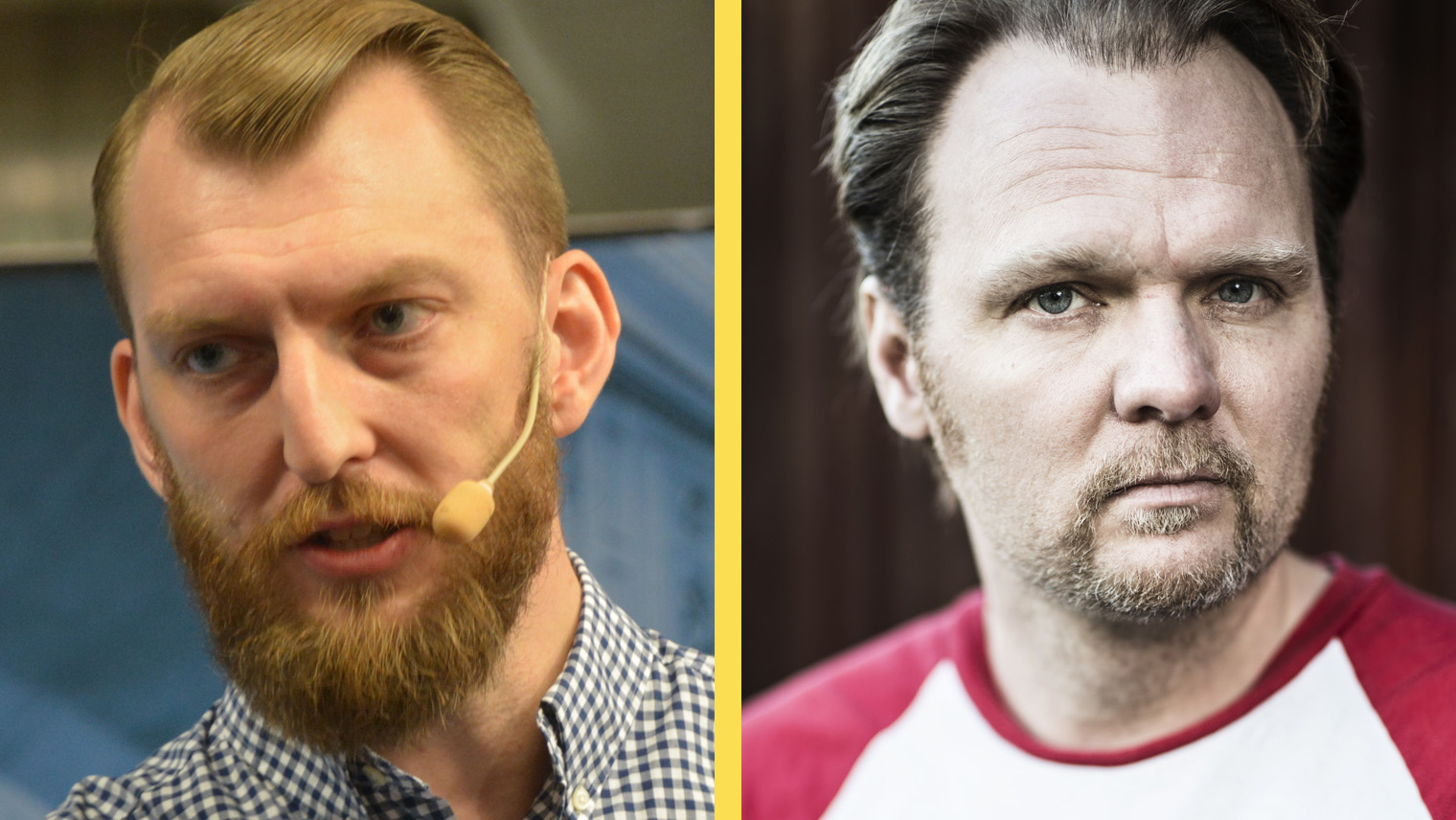
This, despite the fact that I was already one of the most outspokenly pro-Israel writers on the Swedish right. The accusation thus had less to do with what I actually thought than with whom I chose to work for, and is a good illustration of how guilt by association actually works in practice.
These foolishnesses I have long since left behind me emotionally, but it’s important to remember as an example.
The Right Has Accepted the Rules of the Game
We have, to a far too great degree, accepted our political opponents’ right to draw the boundaries, and then spent a great deal of our energy making sure we are on the right side of them ourselves.
I do not need Dagens Nyheter’s approval to interview someone, nor do I need SVT’s blessing to read a book. Nor do I need to share all of a person’s opinions just because I think they are right about a particular issue.
READ ALSO: SVT’s CEO praises public service—wants a “shared reality”
I can think Tucker Carlson is right on one thing and completely wrong on another. I can agree with Gustav Kasselstrand on migration and at the same time think his reasoning on Zionism goes horribly wrong.
Even if I allow myself to use the F-word where it’s called for. When it comes to craziness and malicious attacks.
Similarly, one can appreciate parts of Donald Trump’s confrontation with the American establishment and criticize him on other issues. It really shouldn’t be more complicated than that.
In the other ditch lies the anxious Swedish right. It does not dare to speak with the wrong person, constantly looks over its shoulder, and sometimes puts more effort into distancing itself from people on its own side than fighting the ideas it claims to oppose.
Jonas Andersson
A liberal can talk to a national conservative, a Sweden Democrat to a Moderate, and a critic of immigration to a Muslim. A friend of Israel can talk to someone who is sharply critical of Israel’s government without either having to fully adopt the other’s worldview.
Yes, as long as hatred’s elixir has not managed to poison the brains of those involved.
READ ALSO: Ekeroth: “SVT manipulates—and calls it public service”
Two Ditches
There are two ditches here. In one is the part of the American right so absorbed in rebelling against the establishment that the rebellion itself sometimes becomes an end in itself.
If mainstream media says A, B must be true, and if someone is condemned by the establishment, that person must therefore be interesting. From there, it is not a big leap to begin searching for hidden power structures to explain everything, and sooner or later, the Jews tend to show up.
In the other ditch is the anxious Swedish right. It dares not talk to the wrong person, is always glancing over its shoulder, and sometimes spends more energy distancing itself from people on its own side than on countering the ideas it claims to oppose.
One extreme sees Jewish conspiracies everywhere. The other sees potential DN headlines everywhere. Neither is particularly useful.
We Must Be Able to Stick Together
I want to see a right that can accommodate conservatives, liberals, national conservatives, and libertarians without pretending the differences between them don’t exist.
The right does not need to march in step, and we definitely do not need to think alike. But if we spend more energy cleaning house for the left than furthering our own political and cultural discussion, others will continue to set the playing field.
Jonas Andersson
We must be able to discuss Israel without making Jews the explanation for all the world’s evil and discuss migration without demanding that everyone uses precisely the same vocabulary. Yet, at the same time actually be able to say F off to Jew-haters and to those who call us who want to preserve Sweden racists.
We should also be able to say that someone is right on one issue and wrong on the next. Most of all, the right must stop being so scared of associations. For perhaps the left’s most effective weapon has not been to convince us it was right. It has been to convince us that we always have to prove to them that we are respectable.
READ ALSO: Timbro economist will vote for the Green Party—”Being pro-Sweden more dangerous than socialism”
Sticking together does not mean staying silent about stupidity on your own side. It does not mean accepting antisemitism, lies, or conspiracy theories just because they come from someone on the right.
On the contrary, nonsense should be criticized. But arguments should meet arguments, lies with facts, and bad ideas with better ones, rather than building a system where people are politically contaminated by association.
READ ALSO: Timbro campaigns for prayer calls in Sweden
The right does not need to march in step, and we definitely do not need to think alike. But if we spend more energy cleaning house for the left than furthering our own political and cultural discussion, others will continue to set the playing field.
We must be able to argue among ourselves and still understand that in many of the major questions, we have shared interests. This isn’t conformity, but rather political maturity.
And at some point, the right above all must stop asking Peter Wolodarski for permission.