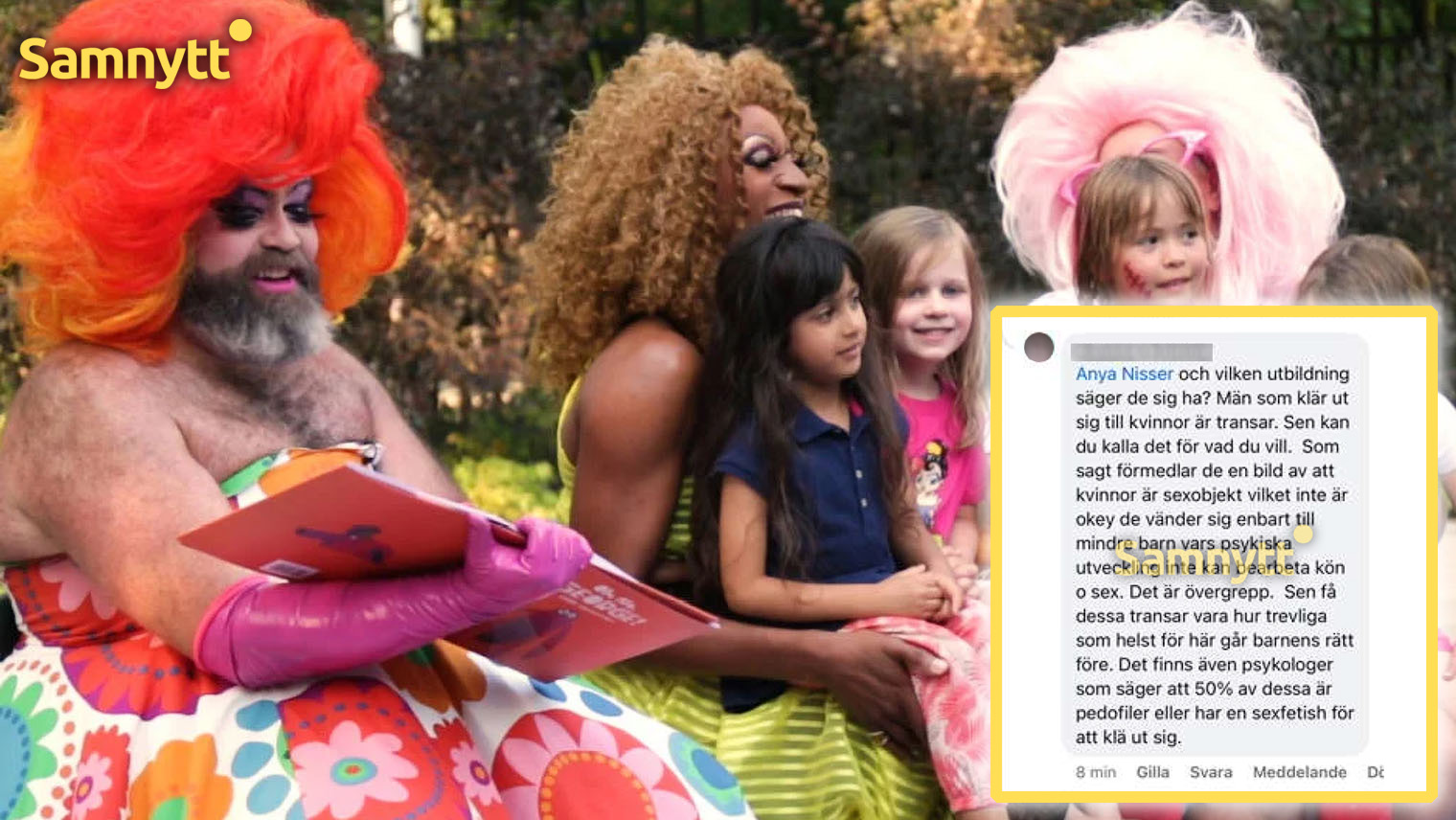
A woman in her 60s has been charged with incitement to hatred against a group due to a series of critical Facebook comments about drag performers reading stories to small children. Among other things, she wrote about a “trans agenda,” “psychological abuse,” and a “spectacle dressed as sex workers.” The police investigation also shows that some questions from the police moved from clarifying her intentions to arguing against her reasoning. The complaint was filed by Petter Wallenberg, founder of the drag group Bland Drakar och Dragqueens, who claims he has so far reported around 300 people to the police.
The indictment at Attunda District Court concerns comments posted on the Facebook page for Bland Drakar och Dragqueens on July 7 and 8 last year. The woman, who lives in Vallentuna north of Stockholm and has previously been a local politician for the Sweden Democrats, denies any wrongdoing.
However, the prosecutor has chosen to base several formulations used by her as the grounds for the indictment. Among other things, she wrote: “Spectacles dressed as female sex workers are not the image of womanhood we should teach our children.”
She also wrote that it was “disgusting to force a trans agenda on small children” and questioned why the drag performers do not instead read at nursing homes or for other adults. “Dressing up, often as sex workers, and targeting small children gives off pedophile warning signals,” she continued.
The group denies that they intend to signal sex work with their costumes. At the same time, stage names such as “Shameless Wine Whore” and similar occur.
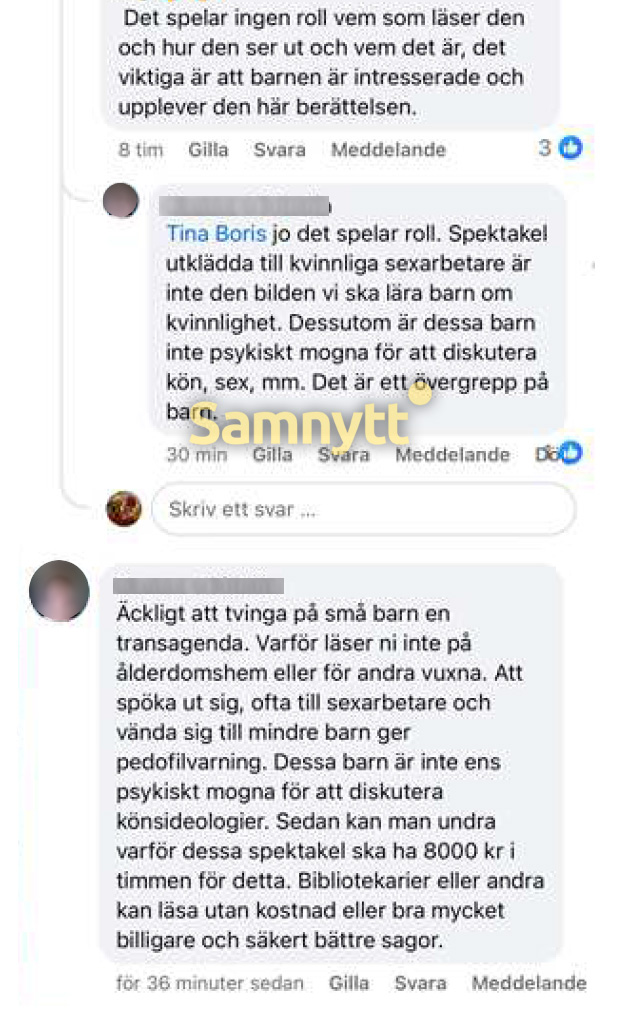
The prosecutor considers that the woman, through her comments, expressed contempt for the group of men in women’s clothing with reference to “cross-gender identity and/or expression.” The fact that the comments were posted on a public Facebook account is cited as proof of their dissemination.
Included via Cross-Gender Expression
Formally, neither “drag queens” nor men dressed as women constitute a special group in the legal sense—except under hate crime legislation. The legal construct is instead that, since 2019, the hate speech clause also includes statements referring to cross-gender identity or expression.
This is the provision the prosecutor invokes in the present case. Chapter 16, Section 8 of the Swedish Penal Code prohibits disseminated statements that, among other things, express contempt with reference to cross-gender identity or expression. The penalty for crimes of normal severity is imprisonment for up to two years. Where the line is drawn between strongly worded criticism of drag activities aimed at children and criminal contempt is thus a central question when the case is tried.
“It’s About the Perspective of Children”
The preliminary investigation protocol provides a much more detailed picture of the woman’s own explanation than the indictment suggests. She repeatedly emphasizes that her objection concerns the target group of the activity—small children—rather than drag artists or trans people themselves.
– I really have nothing against them as people. I have had colleagues and such who were trans. Lived as women and men. It’s not about that. They can live exactly as they want. I don’t have opinions on that. My opinions are about the children’s perspective, she says in police questioning.
She argues that the activity raises questions about children’s maturity, and she wonders why similar performances are not more often directed toward teenagers or adults, where issues of gender and sexuality, according to her, could be discussed differently.
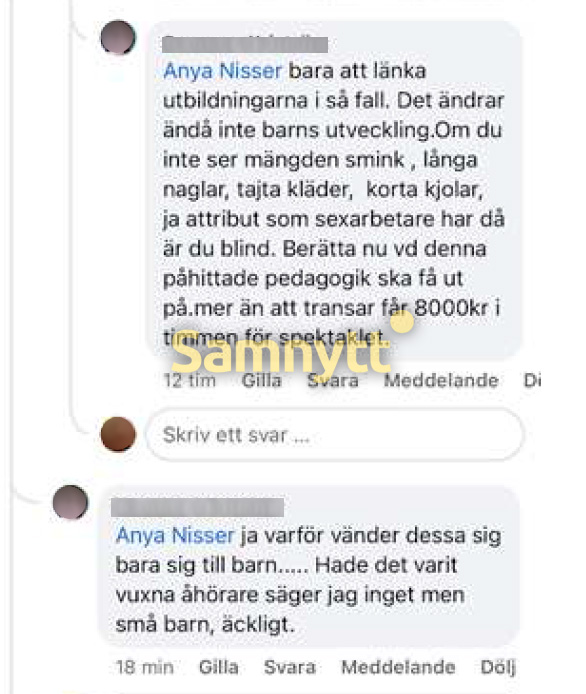
When police ask what she meant by the phrase “disgusting to force a trans agenda on small children,” she replies:
– It has become like an agenda that small children should go there. I have never seen them go to a nursing home. I have never seen them go to a secondary school. Why don’t they do that?
She continues by saying that 15–16-year-olds may have their own thoughts about sexuality and therefore could be a more relevant target group than young children.
Police Argue Against Her
The interview also contains several passages where the assistant interrogator not only asks questions about the woman’s intent but also argues against her views. When the woman asks why the activity is directed at small children, the interrogator responds, for example:
– I understand. But I think that, as you yourself have said, they are reading stories. And maybe 15–16-year-olds aren’t the right audience for that. Or?
SEE ALSO: Crime to dislike drag shows for kids – pensioner convicted of incitement to hatred
When the woman objects to the female image she believes the drag artists communicate, the police also ask whether she really believes that a story hour can affect children:
– Most women that children see in society look like you and me. But do you really think that meeting one or two drag queens at a story hour would affect their perception of womanhood?
– Yes, I believe it can, the woman replies.
The interview shows that the police, in several places, test and question the factual basis behind the woman’s criticism—not just what she wrote and intended with her statements.
“Freedom of Speech Means You Have a Right to Be Offended”
The woman herself emphasizes freedom of speech when asked about her attitude towards the suspected offense. She says that comments on social media are often written quickly and in context, and that different people can interpret the same wording differently.
– I know I can be fairly direct in my language. But that does not mean I have the same intentions others interpret from it.

She then adds:
– Freedom of speech means that you do actually have the right to be offended. I am also offended. I don’t appreciate everything others say but that’s just how society works. We must be very careful with our freedom of speech.
In a supplementary interview on March 27, the woman again denies any crime, saying that her intention was never to offend anyone. The purpose of her comments, she claims, was to “question children’s rights”.
“Pedophile Warning” a Central Formulation
The statements about pedophilia may be more legally problematic for the woman. In one comment, she wrote that “50% of these are pedophiles or have a sex fetish for dressing up.” In the interview, she says she found that claim by googling but no longer remembers the source. She simultaneously distances herself from having accused the actual performers of being pedophiles:
– I do not know if they are pedophiles or not and I truly hope they are not.
Regarding the term “pedophile warning,” she says she did not claim that anyone in the group actually is a pedophile. It will be up to the court to assess the comments as a whole and determine whether they constitute criticism of an activity or cross the line into contempt against a protected group, which is criminalized under the hate speech law.
Wallenberg: Compares Words to the “N-Word”
The complainant is Petter Wallenberg, trans activist and founder/director of Bland Drakar och Dragqueens. In police interviews, he describes the woman’s comments as “grossly offensive” and “grossly sexualized accusations.” He is particularly upset by her use of the word “transar,” which he calls a severely derogatory term.
– It is as unacceptable as the n-word [negro, editor’s note] for Black people, says Wallenberg, according to the police interview transcript. He further states that the group’s activities contain nothing referencing sex and describes linking LGBTQ people with abuse against children as “classic homophobic hate tactics.”
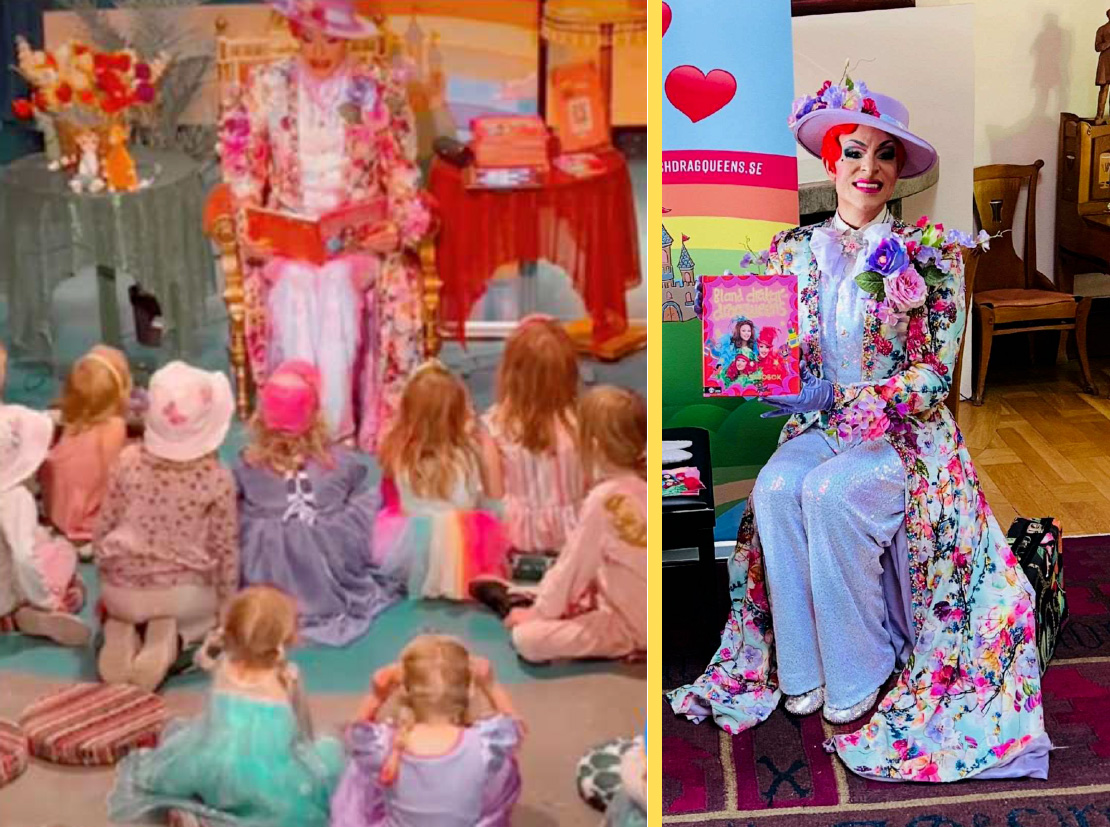
The investigation also includes an information leaflet which Wallenberg himself sent to the police. There, Bland Drakar och Dragqueens describe their work as theater, music, pedagogy, and literature with themes like friendship, courage, and compassion.
Has Reported About 300 People to the Police
The current indictment is far from the first stemming from the heated debate around drag performers reading for children. Wallenberg told Mitt i that he has reported roughly 300 people to the police for statements about the activity. According to him, around 20 of these complaints have resulted in convictions for hate speech.
This also means that the overwhelming majority of complaints have involved acts protected by freedom of speech and opinion. Nonetheless, it is unpleasant to be the subject of a police report and criminal investigation, which can create fear of participating in public debate—a silence that constitutes a democratic problem.
Wallenberg, however, describes the criticism as a whole – including the 280 reported cases not found to be criminal – as a “digital lynch mob,” and claims that “far-right forces” are behind what he sees as “organized hate storms.” At the same time, he acknowledges that the criticism has, in recent years, spread to “much broader circles” than before.
SEE ALSO: Commented on Samnytt article about dragqueens – prosecuted for opinion crime
This also reflects the larger conflict surrounding the activity. Critics question, among other things, why drag as an art form should be introduced to small children, and where the line is drawn between discussion of gender roles and sexuality and normal children’s culture.
Bland Drakar och Dragqueens, for their part, describe their activities as children’s theater and literature with messages about, for example, friendship, courage, and the right to express oneself as one wishes. At the same time, it is not the usual fairy tales that are read to the children, but versions of Cinderella, Hansel and Gretel, and Little Red Riding Hood, fundamentally rewritten by Petter Wallenberg and others connected to the group.
The fact that Wallenberg systematically reports critical comments can be seen by critics as a way to put judicial pressure on the debate. Wallenberg himself portrays the reports as an attempt to stop what he considers to be criminal anti-LGBTQ hate rhetoric.
Which statements are coarse, distasteful, or provocative but still legal—and which cross the line into criminal contempt—is ultimately a question for the courts. In this case, the prosecutor has decided to let Attunda District Court draw the line. The woman denies any crime.