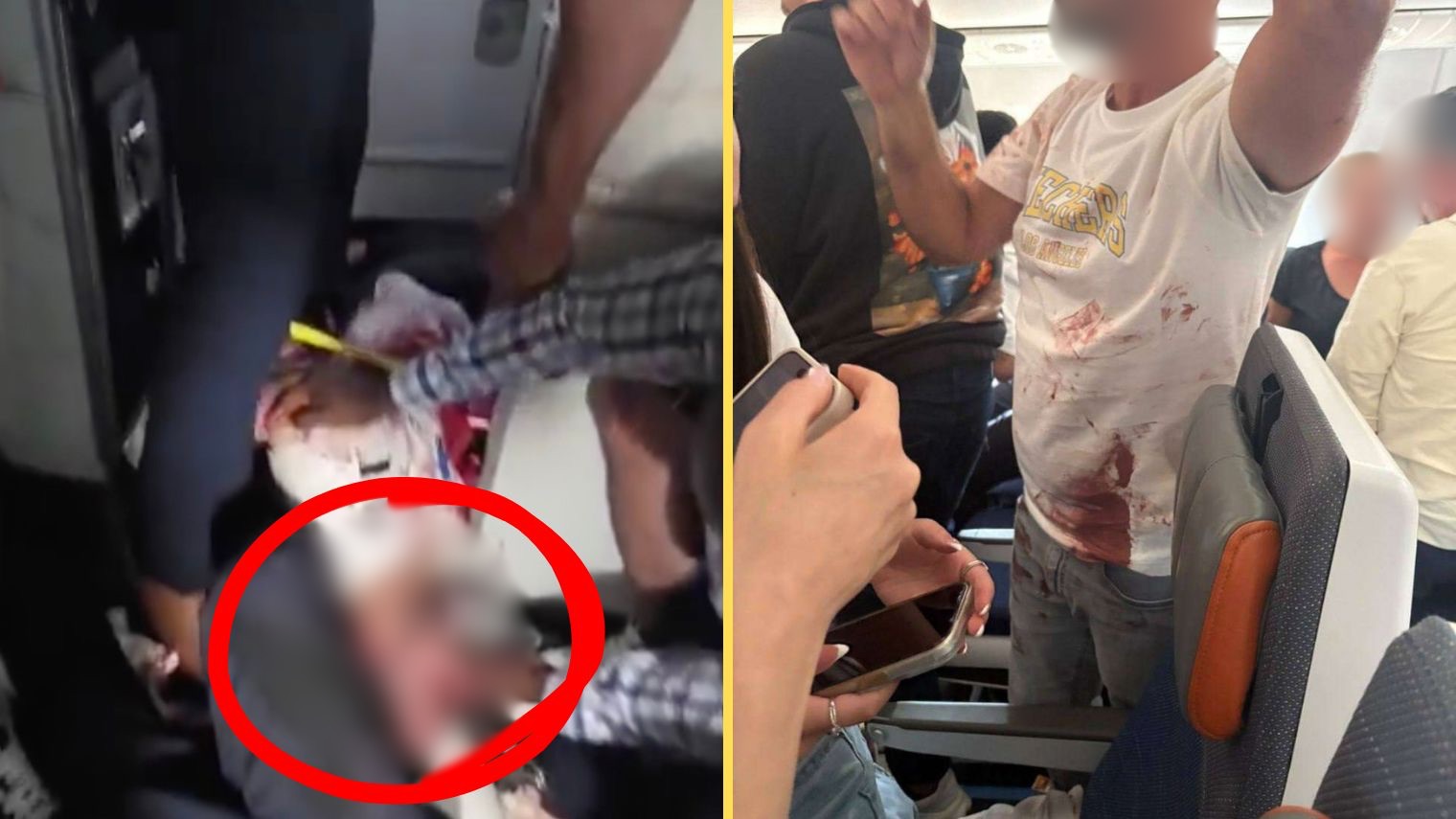
An aircraft en route from Dubai to Tel Aviv was forced to divert and land in Saudi Arabia on Wednesday after a violent altercation onboard. The plane, carrying about 174 people, had sent out distress signals during the flight which raised suspicions of a hijacking. At the same time, the aircraft began to rapidly lose altitude. In less than half a minute, it descended approximately 4,000–4,300 meters before the situation onboard was brought under control and the plane was diverted toward Saudi Arabia.
The flight, FZ1073, had departed from Dubai International Airport and was en route to Ben Gurion Airport outside Tel Aviv when the drama unfolded. According to Israeli media reports, 174 people were onboard, including 27 children.
Israel Hayom reports that the captain is from the United Arab Emirates and the first officer is from Oman. If accurate, this means that both regular pilots came from Arab Gulf states. The person suspected of initiating the attack is the first officer from Oman.
One of the pilots is said to have been attacked with a knife while the other tried to take control of the situation. Several Israeli passengers moved toward the cockpit, and two additional pilots, traveling as passengers, are said to have intervened.
Video clips and images from the onboard drama are circulating on social media. Among the footage are images purportedly showing one of the injured pilots with bloodied clothing after the knife attack, as well as shots from the cabin taken during the chaotic incident.
Footage taken by a passenger aboard the flydubai flight from Dubai to Tel Aviv after the plane took a rapid plunge. pic.twitter.com/O3vd5644pL
— Emanuel (Mannie) Fabian (@manniefabian) September 30, 2026
The airline itself did not specify an exact passenger count in its first statement but confirmed that an incident took place during the flight and that after the diversion, the plane landed safely in Tabuk. All passengers are reported to be safe.
The aircraft first sent out transponder code 7700, used to signal a general emergency. A few minutes later, the code changed to 7500, the internationally used signal for unlawful interference or hijacking.
The signal then reverted to 7700. For Israeli authorities, this meant that the situation initially had to be treated as a potential hijacking attempt.
The Israeli Air Force raised its alert level and scrambled fighter jets while authorities tried to determine what was happening onboard. Prime Minister Benjamin Netanyahu also convened security consultations with defense and security officials. Israeli airspace was temporarily closed and reopened after the plane landed safely in Saudi Arabia.
The rapid loss of altitude made the situation even more dramatic. Flight data shows the aircraft went from high cruising altitude to much lower altitude in a very short time.
The exact figures vary depending on which flight data is used, but it’s approximately 14,000 feet, or just over 4,000 meters. The plane then continued to Saudi Arabia and landed at Prince Sultan bin Abdulaziz Airport in Tabuk.
Squawk Switch! (FlyDubai Boeing 737 MAX Diversion to Tabuk)
Follow for more! ????
Map via flightradar24 ????️
Original Commentary by Pete the Irish Pilot ????️#aviation #FlyDubai #Boeing737MAX #Diversion #AvGeek pic.twitter.com/1leCjF2zl1— Pete the Irish Pilot (@peteirishpilot) September 30, 2026
Russian and Ukrainian pilots took over the aircraft
Witness testimonies from the cabin describe a very chaotic situation. Passengers reportedly heard screams from the cockpit as the airplane began descending sharply.
One person who spoke to the media is Yasmin Abu Kasis, whose daughter Miriam was onboard. She recounted that her daughter heard screams and saw a man with a knife force a pilot to the floor. According to her story, there was blood everywhere.
Another passenger said that Israeli travelers at the front of the cabin moved toward the cockpit when they realized something was wrong and the aircraft began to lose altitude. According to the passenger, the group managed to overpower the person who had attacked the pilot and then brought two other pilots into the cockpit.
The two extra pilots who entered the cockpit were traveling as regular passengers and were not part of the plane’s regular crew. According to Israel Hayom, one was Russian and the other Ukrainian. When the situation in the cockpit escalated, they reportedly intervened and, together with other passengers, helped subdue the attacking pilot and regain control of the aircraft.
The pilot who was stabbed is reported to have been seriously injured. An Israeli dentist who was onboard is said, according to a witness, to have treated him and kept him alive. After landing, the airport authority in Saudi Arabia confirmed that both the captain and first officer had been injured and taken to hospital but did not provide a detailed description of how the injuries occurred.
Unclear what happened in the cockpit
The Jerusalem Post and Israel Hayom have reported on Israeli security assessments which view the incident as potentially much more serious and are investigating the possibility that the suspected pilot attempted to hijack the plane and perhaps crash it.
Reuters, on the other hand, reported that an Israeli official stated it was not considered a hijacking but another type of incident, and that it was a physical fight between the pilots.
It is still unclear what triggered the conflict, who initiated the violence, or why the transponder code was changed to 7500.
The most far-reaching Israeli assessment is that a terror attack may have been averted. Times of Israel cited information that a senior Israeli official believed that, without the two extra pilots, the situation could have developed into something comparable to a terrorist act.
After landing, efforts began to get the passengers back to Israel. Flydubai plans to send a new aircraft to Saudi Arabia to transport them onward to Tel Aviv.