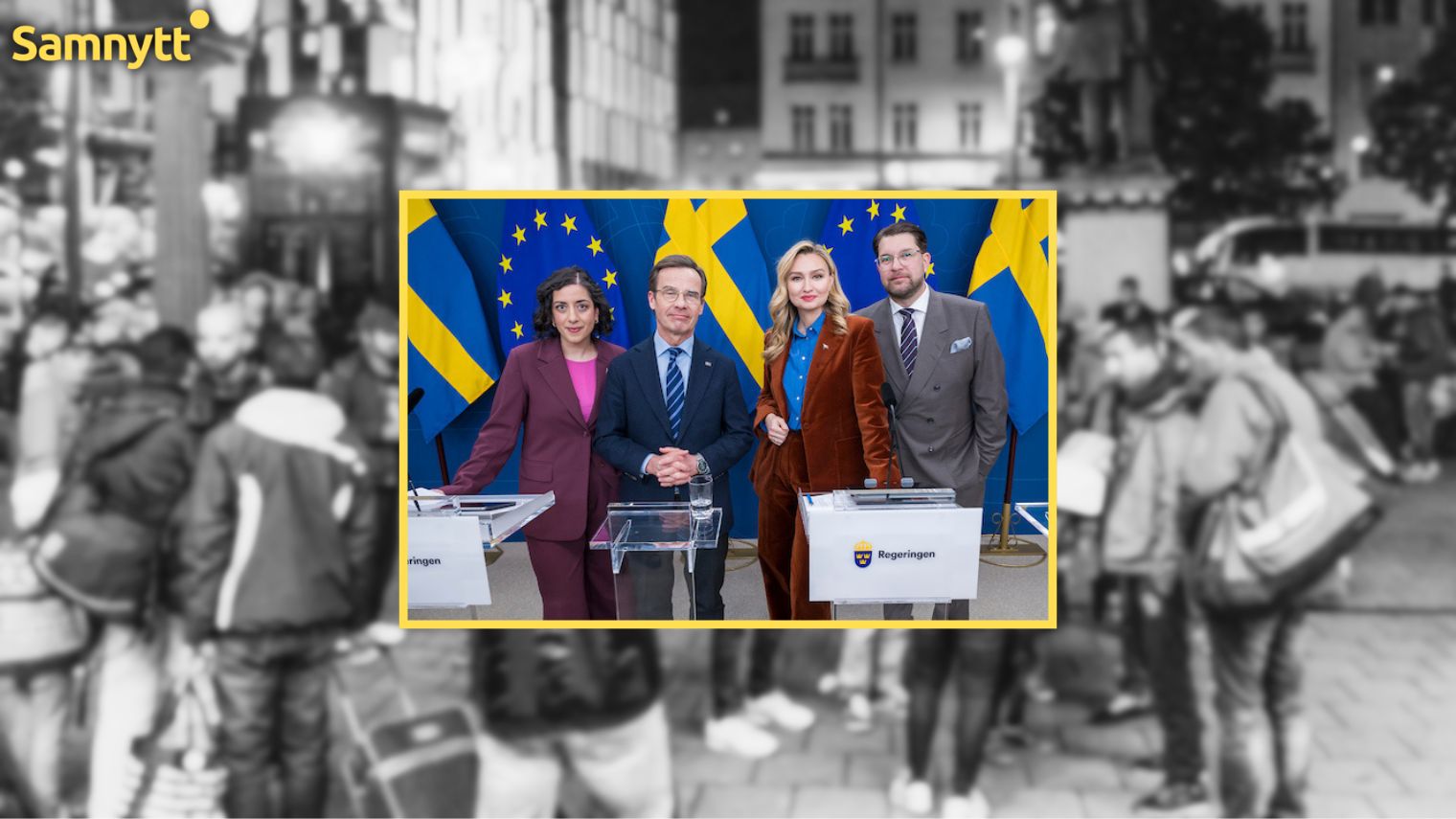
As of July 13, the new information duty applies, which means that six government agencies – the Public Employment Service, the Social Insurance Agency, the Prison and Probation Service, the Enforcement Authority, the Pensions Agency, and the Tax Agency – must, on their own initiative, provide information to the Police Authority when there is reason to believe that a person is staying in Sweden without legal right.
Minister for Migration Johan Forssell (M) defends the reform, saying that the state must have control over who is present in the country.
– We need to know who is in the country, he told TV4.
Forssell emphasizes that this is not about creating a “society of informers” but about allowing authorities to cooperate to implement made decisions. He points out that a large number of people live in the so-called shadow society after having their asylum applications or deportation decisions rejected, and argues that the authorities must be able to share information in order for these decisions to be enforced.
READ ALSO: Aftonbladet Encourages Crime: “Refuse to Follow Information Duty”
He also stresses that those who have been ordered to leave Sweden are obliged to do so.
– If you receive a decision that you must leave the country, you must follow it. Following Swedish laws in Sweden is not optional.
Refusing to Follow the Law
At the same time, there is criticism about how the reform will work in practice. The trade union Akademikerförbundet SSR’s chairperson, Heike Erkers, warns that the information duty may undermine the public’s trust in authorities and describes it as a step towards a “society of informers”.
– We are convinced that our members will behave differently in cooperation with these authorities and choose not to share everything, instead waiting until the person has left the room, she told state radio.
Critics argue that people may refrain from contacting authorities out of fear that their information will be passed on to the police or Migration Agency.
There are also concerns among the relevant authorities about how the rules will be applied in practice. Questions raised include when suspicion is strong enough for the duty to provide information to arise, how staff will be trained, and how the new duty should be weighed against other confidentiality legislation.
The authorities have worked during the spring to develop internal routines ahead of the law’s entry into force.

Combating the Shadow Society
The information duty was one of the most debated parts of the Tidö parties’ migration policy. The Sweden Democrats wanted healthcare, schools, and social services to also be included, while the government, after widespread criticism, chose to exempt these areas.
The reform is part of a larger package of measures aimed at reducing the shadow society, improving information exchange between authorities, and increasing the number of enforced deportations.
More New Laws
At the same time as the information duty comes into force, several of the most comprehensive changes to Swedish migration law in decades are being implemented. From July 13, a new and expanded character requirement is also introduced, which means that the Migration Agency will be able to more often deny or revoke residence permits due to deficiencies in a foreigner’s character.
In assessments, not only criminality but also other serious misconduct can be considered, such as repeated violations of authority decisions or other circumstances that are deemed evidence that the person is not living in an honest and responsible way.
Another significant change is that the possibility of permanent residence permits for persons with asylum-related residence permits is now abolished. Instead, the main rule is that anyone granted protection in Sweden will be given temporary residence permits that must be reviewed. Those who have already applied for permanent residence but have not yet received a decision will instead be considered for an extended temporary residence permit.
This change is part of the government’s work to adapt the Swedish rules to the EU’s migration and asylum pact and to reduce asylum-related immigration.
The government has described the reform package as part of creating a more long-term restrictive migration policy. Minister for Migration Johan Forssell has previously said that those who commit crimes or otherwise misbehave have “forfeited Swedish hospitality” and that Sweden should not be a community without demands.
READ ALSO: Weakened Information Duty Makes Teachers’ Union Celebrate: “Victory”