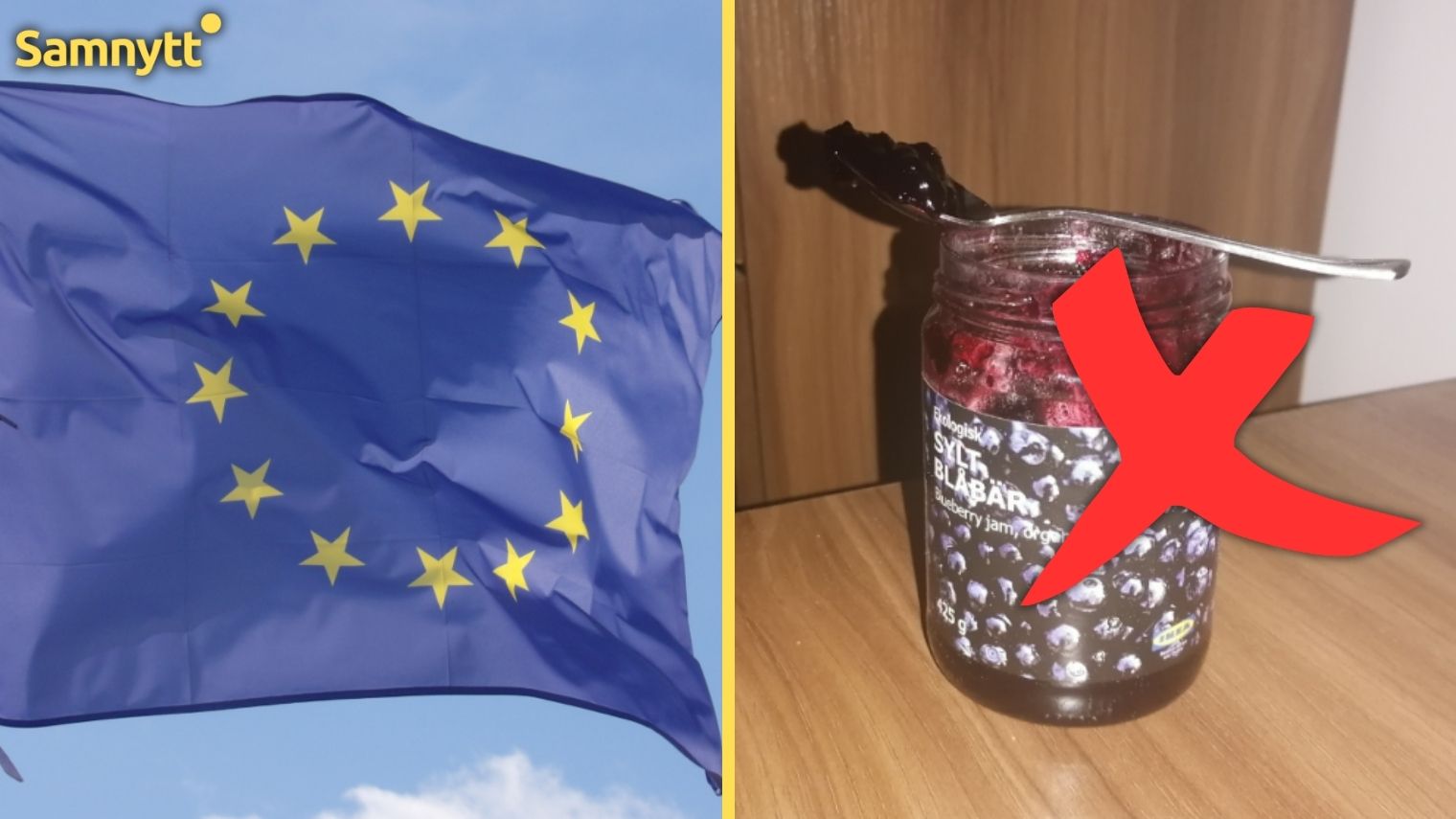
A jar containing strawberries, sugar, and other ingredients can look exactly the same as before. But as of this summer, it can no longer be called jam. The reason is new EU regulations that raise the requirement for fruit and berry content. For some Swedish products, the solution is a far less appetizing name: “Preparation.”
This change is yet another example of how the EU’s common regulatory framework affects things that have long been taken for granted in everyday life. From June 14, new Swedish regulations will take effect, implementing the EU’s updated rules for jam, jelly, and marmalade. The main rule raises the requirement from 350 to 450 grams of fruit or berries per kilo of finished product.
The consequence is now noticeable in Swedish stores and large kitchens. Products that previously could be sold as jam but do not meet the new threshold must use a different designation. In the Swedish food industry, “preparation” has been chosen as the common term.
READ ALSO: EU rules may sharply raise the price of snus
This means that a product which consumers still perceive as jam may instead be labeled, for example, “lingonberry preparation” or “raspberry preparation.”
For Orkla Foods Sweden, the change is concrete. The company states that around 100 products are affected by the new rules. Most already meet the requirement, while some recipes have been changed so the products can continue to be called jam. Eleven products, however, have been given new names, including lingonberry preparation and raspberry preparation.

Promoting Fruit Cultivation
The EU’s motivations include promoting fruit cultivation, reducing the amount of free sugars, and making the rules clearer for consumers. But the result is also a new detailed regulation for one of Europe’s most everyday food products.
This means it is not the recipe for Swedish breakfast that the EU has banned, but rather the very word “jam” that has gained new legal conditions. And for anyone standing in front of store shelves wondering why the old jam is now suddenly called “preparation,” the explanation is simple: it contains too little fruit or berries to still be called jam under the EU’s new rules.
READ ALSO: New EU rules strike at small e-retailers