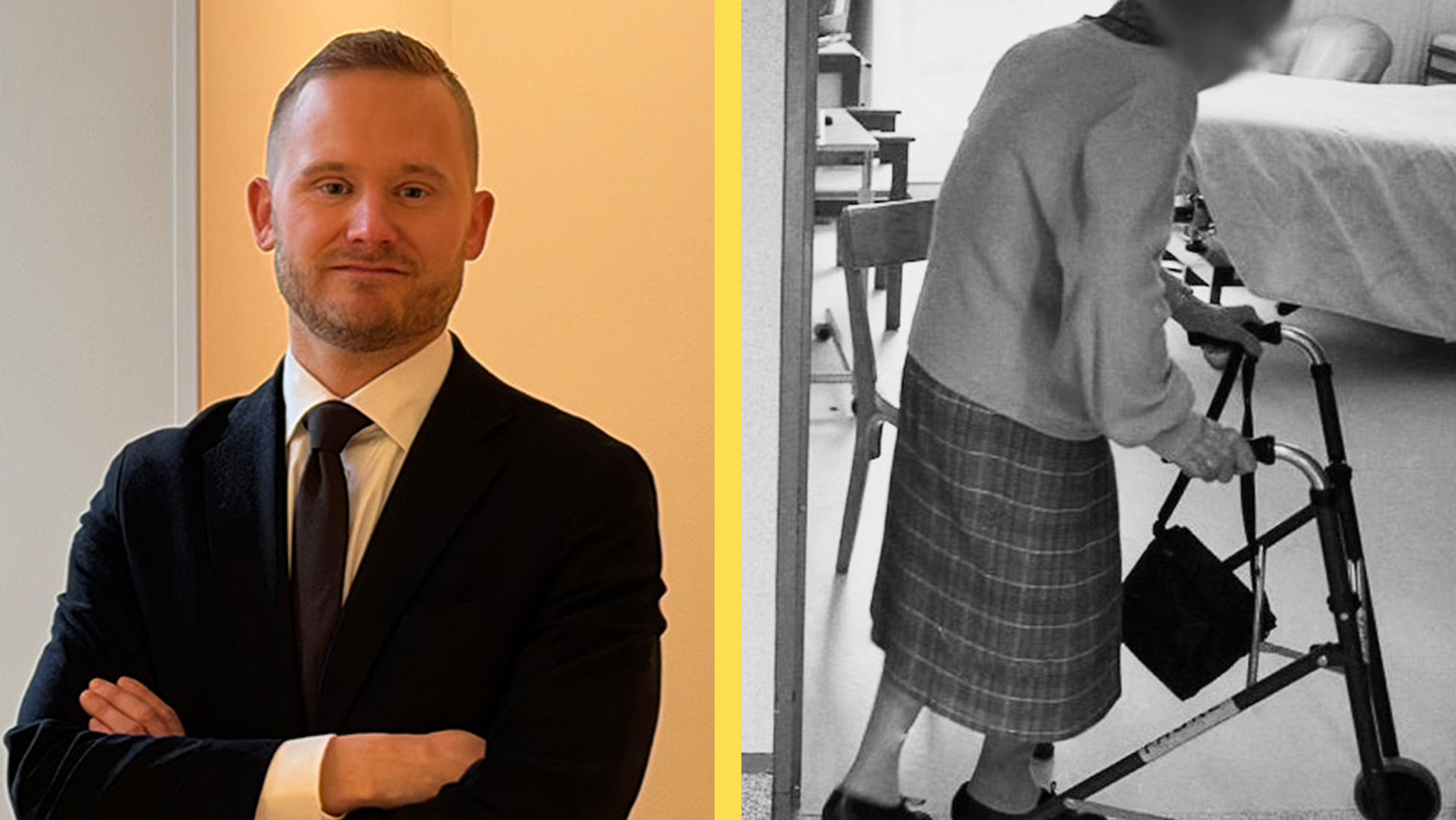
Jessica Stegrud has made elderly care one of her most important issues ahead of the election. For the Sweden Democrats’ social policy spokesperson, the issue is also deeply personal. Long before she entered politics herself, she witnessed how her mother, who suffered from Alzheimer’s, became dependent on a home care service where staff sometimes could not even communicate with her in Swedish – experiences Stegrud says contributed to her entering politics.
Jessica Stegrud, born in 1970, is a Member of Parliament for the Sweden Democrats and represents the southern electoral district of Skåne County. She was elected to the European Parliament in 2019 and served there until 2022, when she joined the Swedish Parliament.
Initially, Stegrud worked in the Industry Committee with, among other things, energy and business policy, and since March 2025 she has been a member of the Social Affairs Committee, where elderly care has become one of the issues she has focused on.
Her mother suffered from Alzheimer’s and was dependent on home care. When Stegrud came home to visit her, she could encounter staff who couldn’t communicate with her mother in Swedish.
– She had people coming from home care who didn’t know a word of Swedish.
Stegrud particularly remembers one incident where a woman from the home care service tried to get her confused mother to shower, without them being able to understand each other.
It wasn’t an isolated incident, she says, but one of several occurrences that eventually prompted her to react politically.
– What I’ve described is actually the way I got into politics.
How could the responsible politicians, both on the left and right, allow this to happen within elderly care?
– Yes, it was politicians from both the right and the left. Everyone was convinced that immigration was good and that we should be a humanitarian superpower. I really don’t know, because I’m not that far from reality. She continues:
– You should really ask them. But I think they had invested very heavily in the idea that diversity is good, that it’s a win-win, for lots of simple jobs. But that’s just not true.
She heard politicians describe the large migration wave as an asset for, among other things, care. New arrivals would be able to fill gaps in the labor market, and elderly care was pointed out as a sector where many could get their first job.
READ ALSO: Astrid, 86, injured by home care staff with poor Swedish – can never return home
She especially opposes the notion that work in elderly care would be a “simple job.”
– They’ve crossed all boundaries when it comes to lowering qualifications and thus the status of the profession.
An Integration Project – and a Vicious Cycle
Stegrud describes the development as the result of several political decisions reinforcing each other – extensive migration, labor market measures for people far from the labor market, subsidized employment, squeezed wages, and too low competence requirements.
Those who are qualified and skilled can’t take it, because they have to take such a big responsibility when people can’t speak Swedish in the department and so on. This also affects the work environment. Ultimately, it’s not a pleasant work environment. It’s a vicious cycle. This has been degraded and simply turned into an integration project.
Jessica Stegrud (SD)
She notes that people who lacked both language skills and education were also those farthest from the labor market – and thus became the focus of various efforts to get them into employment. One such workplace has been elderly care.
– We are stuck in a vicious cycle.
READ ALSO: Daughter of demented 98-year-old: “Mother died in agony – staff wanted her to learn Arabic”
When staff lacking adequate language skills are brought in, more experienced colleagues, according to Stegrud, are forced to bear an ever-increasing responsibility. Eventually, they too may tire and quit.
– Those who are qualified and skilled can’t take it, because they have to take such a big responsibility when people can’t speak Swedish in the department and so on. This also affects the work environment.
– Ultimately, it’s not a pleasant work environment. It’s a vicious cycle. This has been degraded and simply turned into an integration project.
READ ALSO: Home care’s gang-affiliated Eritrean raped 82-year-old in her home – avoids deportation
At the same time, Stegrud says that there is no comprehensive mapping of language problems and describes much of the information she receives as anecdotal. But the number of stories, according to her, is extensive – both from relatives and from people who themselves work in elderly care.
Points to Wage Dumping
The picture also includes economic incentives. Stegrud agrees that access to people far from the regular labor market has contributed to wage dumping.
At the same time, various labor market measures have meant that employers, in some cases, have been able to receive parts of payroll costs subsidized.
– Absolutely wage dumping, that’s been the case.
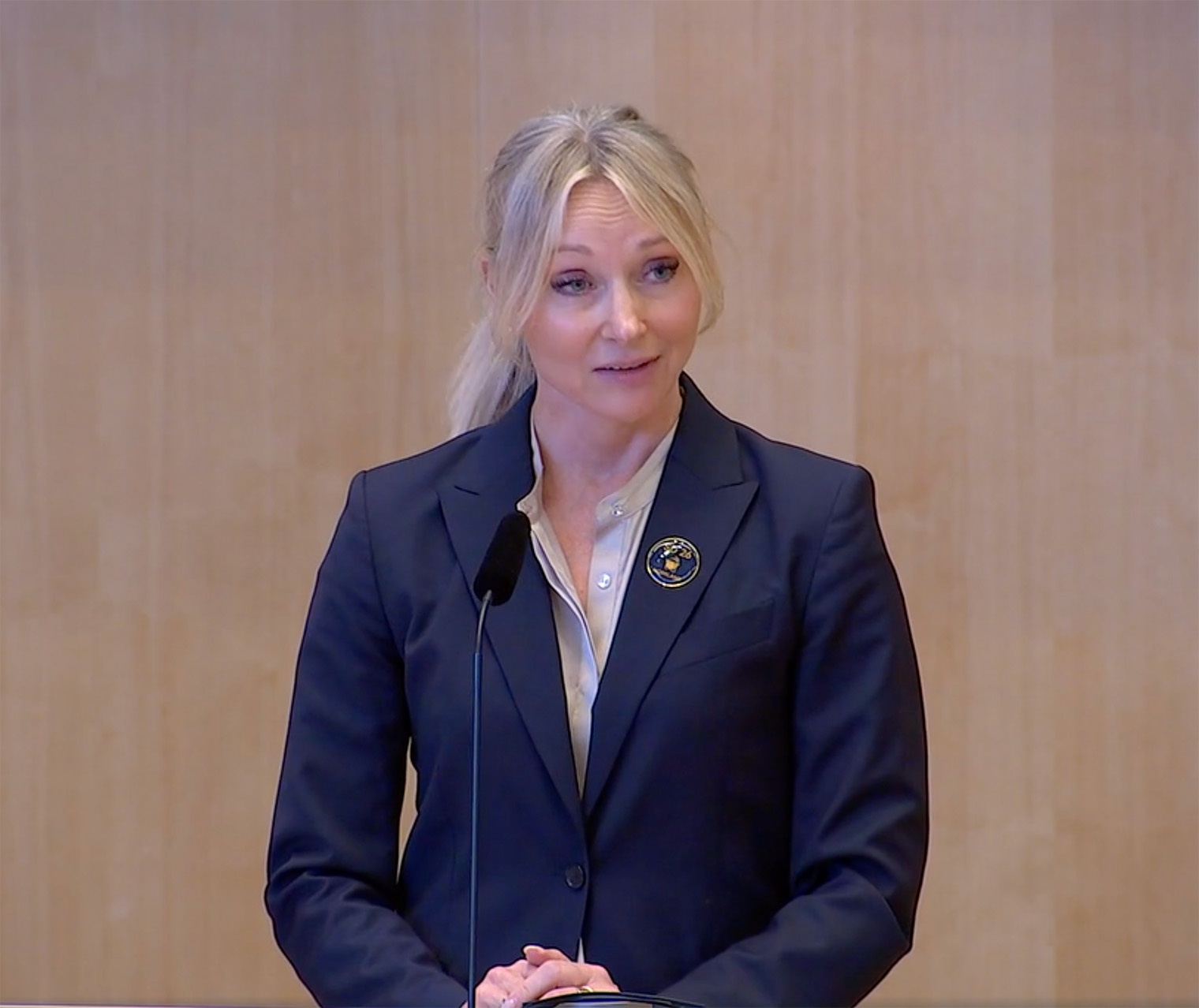
Stegrud, however, does not want to make this issue a conflict between privately and municipally run elderly care.
READ ALSO: Doctor lashes out at government’s exception: “Elderly care is used for wage dumping”
She says she has received reports of serious problems from both systems. Stegrud summarizes:
– I think it’s a mix of so many things. It’s almost like The Perfect Storm. Of liberalization, labor market measures, a belief in diversity and integration. She continues:
– But in the end, it costs a lot of money to bring in a lot of people who are not productive.
Wants to Toughen Language Requirements
Since July 1, new regulations on the Swedish language have applied within elderly care. For Stegrud, this is an important step – but far from the endpoint.
– Now we’ve introduced language requirements. But it’s quite a soft language requirement.
The reason the rules weren’t made much stricter from the start, she says, is due to the current situation. Stegrud says that about a third of the staff don’t reach the level required by a much sharper requirement. Demanding full language proficiency from one day to the next would therefore have dramatic consequences.
– If we had said from day one, July 1 when it came into force: “Now everyone must have this level of Swedish”, well then 30 percent would have had to leave.
– And that goes without saying, that’s not sustainable.
You can do anything through legislation, if you have the majority for it. But what we’re after primarily is a broader mapping, not least when it comes to sexual assaults in elderly care. We want to introduce an accident commission.
Jessica Stegrud (SD)
Today’s model therefore means that the employer is responsible for ensuring staff acquire the necessary language skills. But Stegrud makes it clear that the Sweden Democrats wanted to go further – and want to try to do so in the next mandate period.
– We want to be much tougher in our negotiations. We want much stricter wording.
She mentions, for example, clearer time limits for how long an employee may work without meeting the language requirement. At the same time, she emphasizes that the situation can’t be changed overnight.
– This is at least a five-year plan.
Higher Demands – and Better Pay
Language requirements are not enough. To bring back more qualified staff to elderly care, requirements must be raised while working conditions improve, Stegrud believes.
– You have to raise the requirements to attract the right people.

She also believes that experience and skills must show more clearly on the paycheck. Today, someone who has worked for two decades, built up great experience, and takes extensive responsibility may, according to Stegrud, have a salary development that doesn’t correspond to the effort.
– We want to see wage development among those who actually pull the load.
She also wants to see higher requirements for managers within the care sector.
– Many managers today don’t have the right qualifications either.
READ ALSO: INTERVIEW: Sweden Democrats want life sentences for rapes against the elderly
Additionally, there’s the work environment. Stegrud wants to get away from minute-by-minute management and give competent staff more influence over their work. The goal is not just to recruit people – but to make skilled employees want to stay.
“We Cannot Have Clan Governance”
Samnytt has previously reported on managers within elderly care who have seemed to hire people from their own family or clan. How do you comment on this?
– That’s exactly how it is.
How should it be addressed?
– I know that some companies already ten years ago introduced rules, when they saw clans coming in – that they limited the employment of relatives. I think that’s a good policy.
READ ALSO: Christer, 76, on life in the retirement home: “If you criticize, you’re called racist”
She also says she has received similar information from elderly care in, among other places, Malmö and Gothenburg.
– I think that is very common.
Could legislation become relevant to address this problem?
– You can do anything through legislation, if you have a majority for it. But what we’re after primarily is a broader mapping, not least when it comes to sexual assaults in elderly care. We want to introduce an accident commission.
READ ALSO: Politician lashes out at Malmö city after assault on 94-year-old: “Complicit in rape”
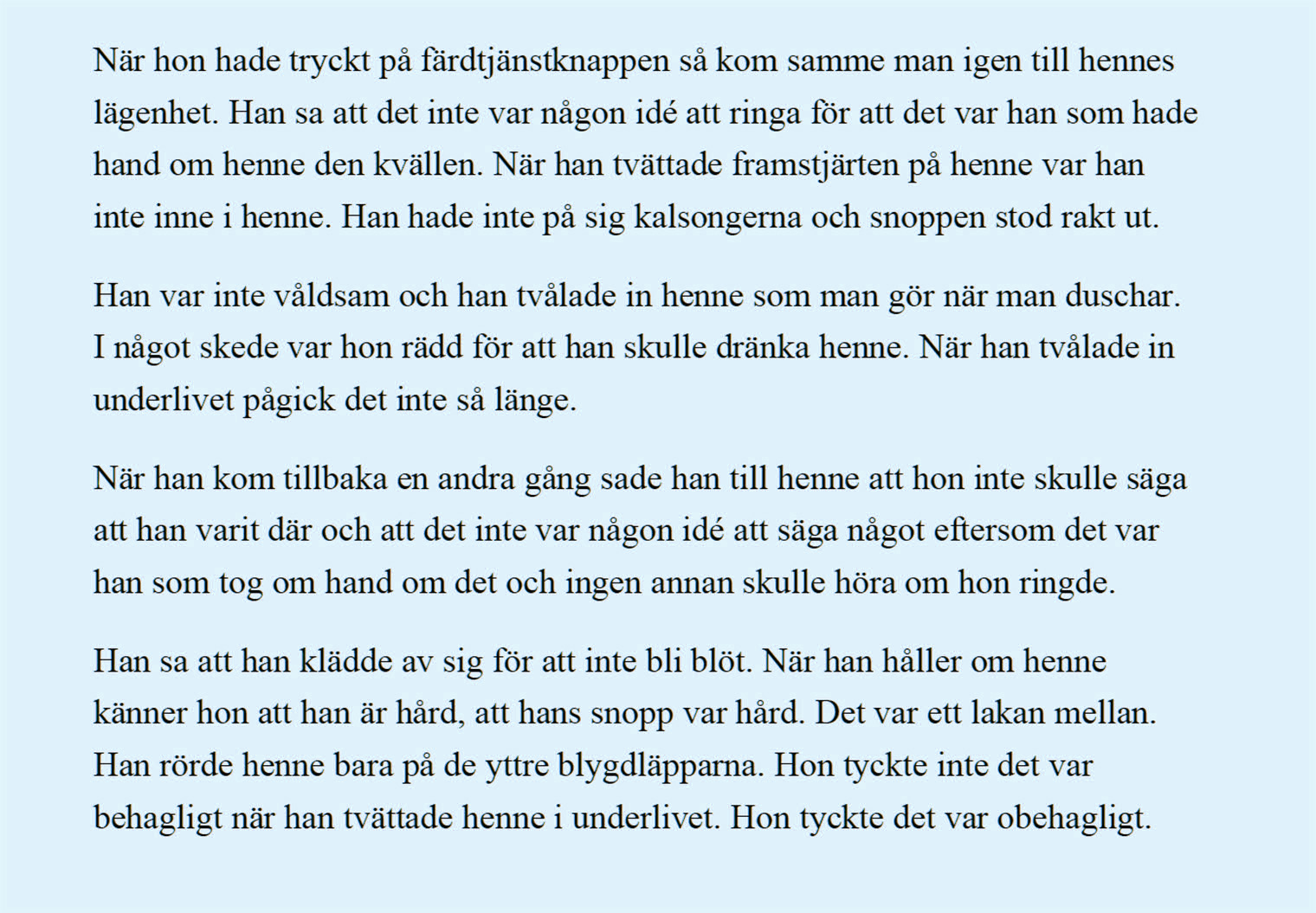
– We are the party that raises these issues, that there are problems – and this is yet another problem in elderly care. She continues:
– I’m glad you bring it up. I get many anecdotal reports about exactly this and what it looks like. It’s madness, really. It’s gone so far, this rot in some places, the corruption.
READ ALSO: Home care in the new Sweden: Sexual assaults at night and “haram” to drink light beer
She also mentions personal assistance as an area where similar problems can occur and where people who are completely dependent on others risk finding themselves in a particularly vulnerable position.
If a survey shows that family and clan structures are a widespread problem, Stegrud is prepared to consider legislation.
– If it were up to me, of course I would regulate against that. It’s a form of cronyism that is not good. We cannot have clan governance in elderly care.
“It’s Going to Be a Close Call”
When the conversation leaves elderly care and turns to the election, Stegrud is cautiously optimistic. Her own experience out among voters does not quite match the picture she sees in the polls.
– I’m experiencing a lot of positivity. When I walk in town, it’s high fives all the time.
That same morning, she had received positive reactions on the train. Stegrud is unsure whether the Sweden Democrats have actually gained significantly more supporters or if people have simply become more willing to openly show their sympathies.
– I don’t know if there are a lot more, or if many are just much more open now, daring to voice their opinions. But it feels like we’re on a roll.
She believes the election will be much closer than the polls suggest.
– I think it’s going to be much, much closer than it looks in the opinion polls. But it’s going to be a close call.
READ ALSO: Ekeroth: M, KD, and L are asleep while foreign votes decide the 2026 election
She does not count on a landslide victory for any bloc.
– I think it’s going to be very close.
At the same time, Stegrud says that the Social Democrats are running a massive campaign ahead of the election. She claims to notice how the party’s message is appearing through a range of channels, including sites that, according to her, can appear to be independent and objective, and claims that even influencers have been mobilized in the campaign.
– It’s massive, she says.
Warns of a Sharp Left Turn
Stegrud becomes much gloomier when discussing what could happen if there is a change of government.
When Samnytt recently interviewed SD’s deputy party leader Henrik Vinge, he warned of the most left-wing government ever. Do you agree with that?
– Yes, I actually do.
It’s so fundamental. It’s so badly managed. The thought of those blunderers taking over again, and increasing immigration and thinking they can just raise taxes… yes, it actually makes you scared of the dark.
Jessica Stegrud (SD)
She believes that the current mandate period has meant Sweden has started moving in the right direction and is worried that this progress could be reversed.
– Now we’ve finally got it moving in the right direction. But now you just feel – are we going to mess this up?
READ ALSO: SD leadership warns of S victory: “The most left-wing government ever”
Stegrud says that her years in parliament have given her insight into what she sees as fundamental system failures. She mentions, among other things, energy policy, SiS and Ivo, and points out that measures she considers obvious – for example, language requirements in elderly care – have not existed for a long time.
– It’s so fundamental. It’s so badly managed. Stegrud continues:
– The thought of those blunderers taking over again, and increasing immigration and thinking they can just raise taxes… yes, it actually makes you scared of the dark.
“It’s Like a Sect”
The conversation then turns to a much larger discussion about the political left, schools, and the climate issue. Stegrud talks about young people she has met during the election campaign who asked why the Sweden Democrats “hate homosexuals” or want to restrict abortion rights. She believes that the youth have been fed an incorrect image of the party.
– It’s still like they’re being fed with that.
Stegrud uses the word “indoctrination” and points particularly to schools.
At the same time, she thinks that especially young men have increasingly started seeking information from other sources.
– It’s young guys who are the hope. They understand differently. Thanks to YouTube and such, you can get information from elsewhere.
The climate movement is, for Stegrud, another example of what she sees as a reality-disconnected political development. She reacts strongly to the rhetoric about the climate as an issue of the planet’s survival.
– They walk around and think this is the big issue of our time, they talk about the end of the planet.
They talk about me being bought by the fossil fuel lobby. Are you crazy? I saw how the wind power lobby was there. Who benefits most in the world from us switching to wind power? Well, it’s China and Russia. Everyone benefits except us.
Jessica Stegrud (SD)
Stegrud rejects the idea that Sweden, for example through higher fuel prices, could avert a global catastrophe. At the same time, she feels that much more immediate societal problems are pushed into the background.
– That their children are exposed to insecurity, or that we’re going to get poorer and poorer, you name it. They’re so far from reality – it’s like a sect.
READ ALSO: Mass immigration, feminism and chaos – how the Swedish school was crushed
Stegrud also brings up SVT’s party leader interview with Jimmie Åkesson and reacts to how the newspaper ETC was presented on the show. When the newspaper was quoted, SVT described it as “independent red-green”, something Stegrud strongly reacts to and says says something about public service’s own viewpoint.
READ ALSO: SVT whitewashes far-left ETC during Åkesson’s interview: “Independent red-green”
She is also critical of the interview itself and believes that Åkesson isn’t given the opportunity to calmly explain what the Sweden Democrats have achieved during the mandate period and what the party wants to do moving forward.
Instead, she argues, the focus is on, among other things, Richard Jomshof’s criticism of Islam and the climate issue.
READ ALSO: Dagerlind: The dark red history of ETC
Points to Foreign Interests
Stegrud has previously worked on energy issues both in the European Parliament and in the Parliament’s Industry Committee. When the conversation turns to which forces are behind the European energy transition, she points to the extensive lobbying she claims to have seen during her time in Brussels.
She rejects accusations that critics of the green transition are acting on behalf of fossil interests.
– They talk about me being bought by the fossil lobby. Are you crazy? I saw how the wind power lobby was there.
Stegrud also discusses foreign financial interests behind the European energy transition. She mentions China and other major powers, and believes that Europe’s move to wind power creates big winners outside the EU.
– Who benefits most in the world from us switching to wind power? Well, it’s China and Russia. Everyone benefits except us.
READ ALSO: Wind power industry attacks alternative media: Spreads Russian disinformation that wind power is bad
The conversation also turns to the possibility that foreign powers may be interested in funding organizations and political movements that contribute to destabilizing Western countries.
Stegrud says she believes such influence occurs internationally, but at the same time emphasizes that she does not claim that Swedish climate demonstrators are funded in that way.
– I don’t think that’s happening in Sweden yet. Abroad, I think it happens a lot.
For Stegrud, this reasoning is connected to the bigger issue being decided in the election – which direction Sweden will take after four years of the Tidö Agreement.
From elderly care and migration to energy policy, schools, and the economy, she sees a choice between continuing the change of course that the Sweden Democrats have helped bring about – or returning to the policies she believes created many of the problems in the first place.