The Sweden Democrats’ election result was one of the big surprises in this year’s parliamentary election. The party drops to around 17.6 percent and thus loses its position as the second-largest party. According to an analysis of election data, one possible explanation is that voter turnout decreased especially in areas where the Sweden Democrats (SD) have traditionally had strong support.
The left-wing radical researcher Tobias Hübinette, who has analyzed data from SVT’s exit poll Valu, also points to very large differences between different voter groups. The results show, among other things, a clear political dividing line between voters with a Swedish versus a non-European background.
If only voters with a Swedish background had voted, the Tidö parties would have received about 51 percent according to Valu, while the opposition would have gotten 48 percent. Among voters with a non-European background, the relationship was the opposite: the opposition would have received about 67 percent, and the Tidö parties about 29 percent.
There are also major gender differences. Women voted significantly more for the opposition parties, while men more strongly supported the Tidö parties. If only women had voted, the opposition would have received 57 percent against 42 percent for the Tidö parties. Among men, the corresponding numbers were 55 and 41 percent respectively.
READ ALSO: What is behind the Sweden Democrats’ drop?
There is also a clear geographical divide. In urban Sweden, the opposition would have won with 52 percent against 48 for the Tidö parties according to Valu. In rural areas and small towns, the situation was reversed, with 51 percent for the Tidö parties and 47 percent for the opposition.
Similar differences appear between age groups and social classes. Younger voters leaned more towards the Tidö parties, while older voters supported the opposition to a greater extent. The working class also had a different party-political profile compared to the middle class.
Decreased turnout
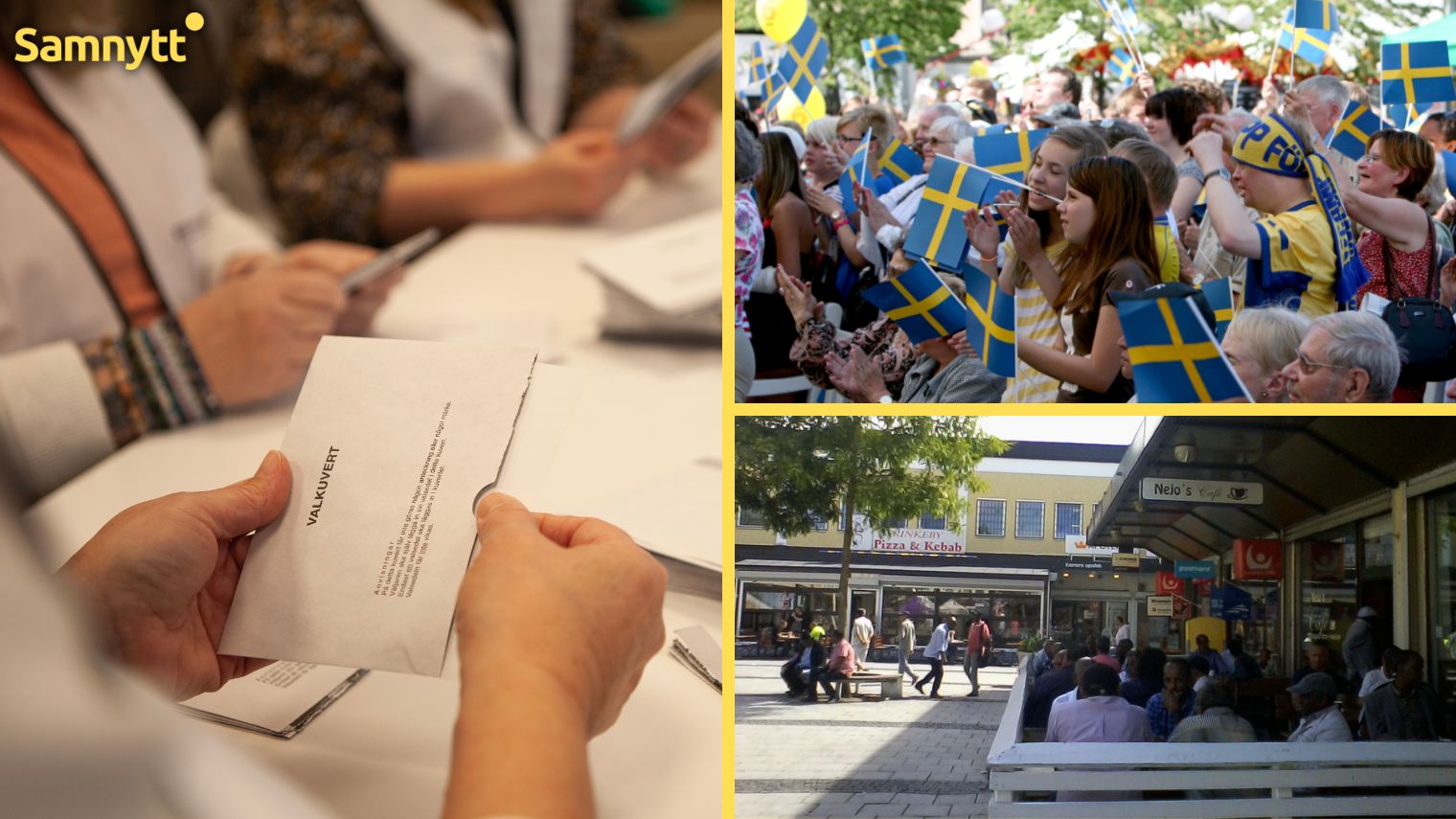
A central factor in explaining SD’s election results may be voter turnout itself. Overall turnout dropped by nearly four percentage points, but according to the analysis, the decline was significantly greater in several municipalities and areas where SD was strong in the 2022 election. In some places, the decrease was 5–10 percentage points or even more.
At the same time, turnout increased sharply in several so-called million program areas. In particularly vulnerable areas, turnout in total is said to have increased by about six percentage points, and in some places by more than ten percentage points. The changed turnout may thus have been highly significant in an election where only a few seats separate the blocs.
Hübinette also points out that some of the voters who previously voted for SD may have turned to smaller parties on the right. At the same time, there remains a much more fundamental question for SD: how much of the loss is due to voters switching parties, and how much is simply a result of people choosing not to vote.
With only three seats, according to the preliminary results, separating the blocs, changes in turnout and voter composition may have had an unusually large impact on the balance of power after the election. The final numbers, including late votes and votes from abroad, are expected later in the week.
“Unlikely”
Even though many votes, including up to 270,000 from Swedes abroad, remain to be counted, it likely won’t be enough for the Tidö parties to claim victory. That’s the opinion of Gustav Karreskog Rehbinder, mathematician at the Institute for Futures Studies.
– We can say that the last seat, whether it ends up being 176 or 175 for the red-greens, is fairly uncertain. That seat has fluctuated a bit during the count and could end up with the Left Party, Social Democrats, or Moderates. However, it is unlikely that it would go all the way for the Tidö side to win and pick up another two seats, he told TV4.
According to Karreskog Rehbinder, the Wednesday votes would have to differ significantly from how the rest of the country has voted in order to change anything between the blocs.
– The truth is that we know pretty little about exactly who these votes belong to, apart from the fact that they were delivered late. That’s also why it’s hard to know exactly where they will go. If it turns out that a lot of advance votes have been delayed in areas that are particularly strong for the Tidö side, then it could shift the result. But then it would need to be a lot of votes, maybe an extra 100,000 in very strong areas for them. If nothing unexpected happens, the opposition will take this.
READ ALSO: The year when votes from abroad decided the election