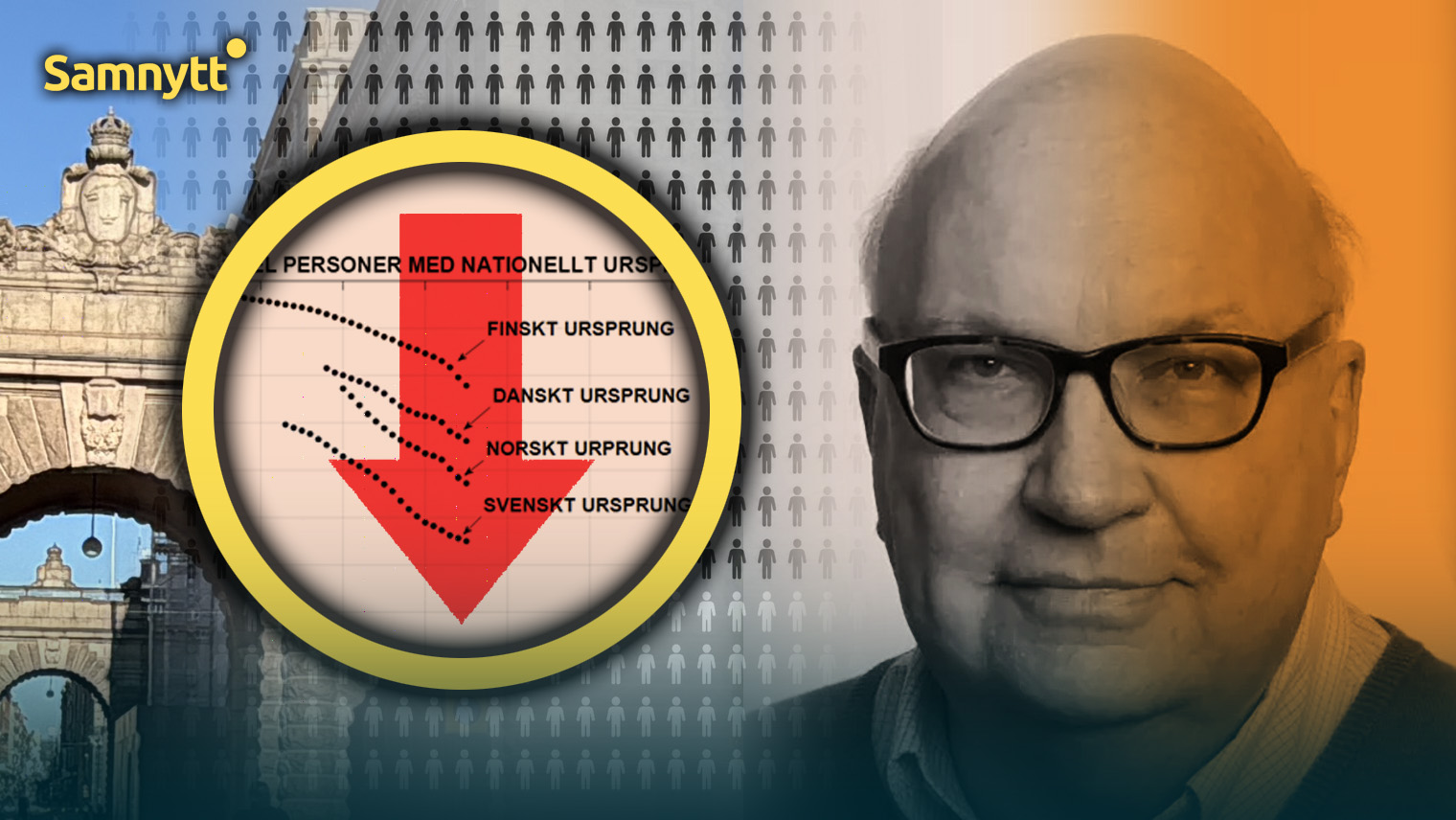
The Swedish government has implemented extensive tightening in migration policy. But according to Finnish researcher and mathematics professor Kyösti Tarvainen, the effects so far are far too small to change the country’s long-term demographic development. In a letter to members of the Swedish parliament, he argues that while immigration restrictions slow the development, they do not stop it. His conclusion is far-reaching: if Sweden wants to preserve its current population composition, re-migration is required. He further develops his reasoning in an interview with Samnytt.
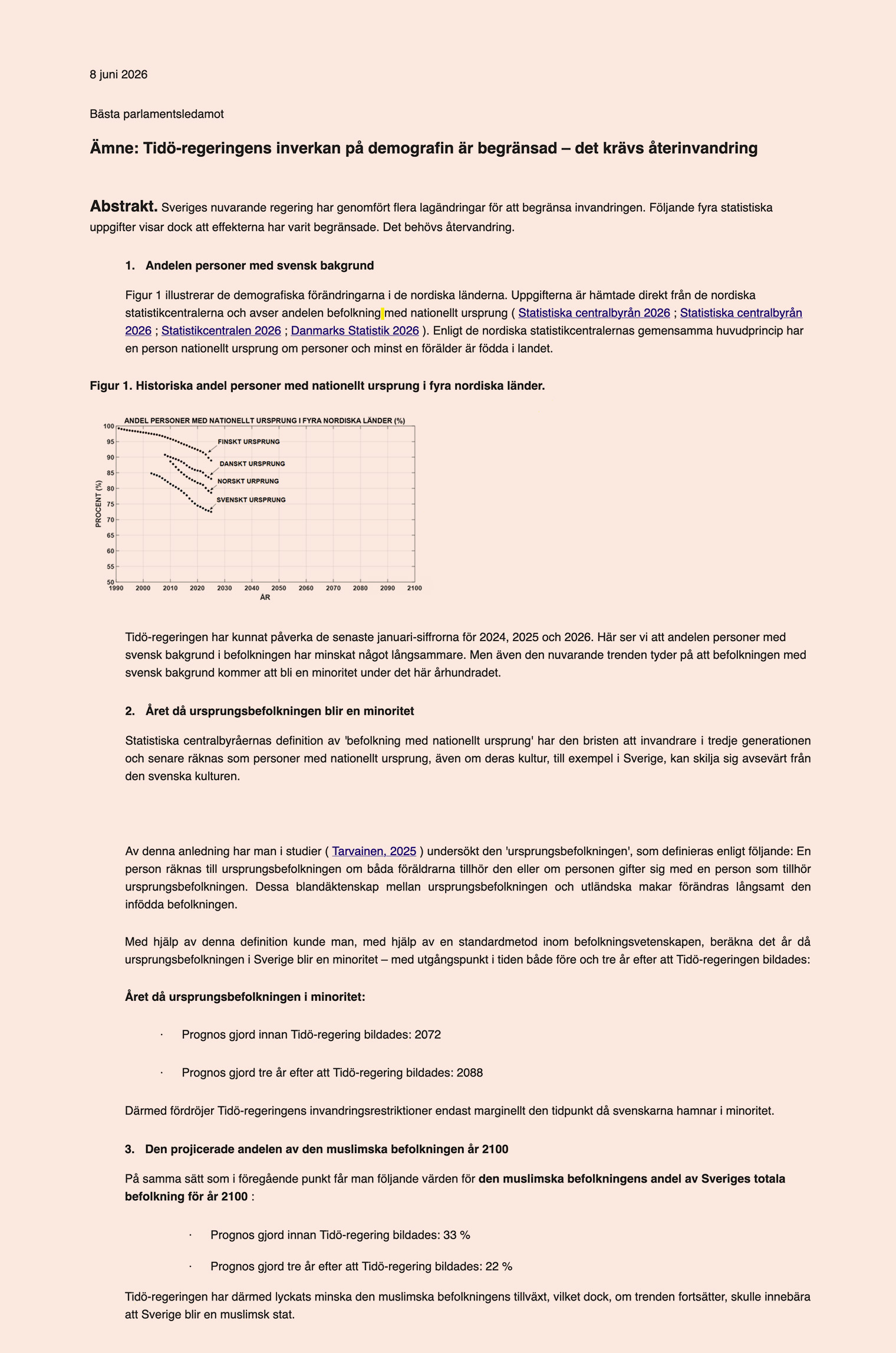
On June 8, Kyösti Tarvainen sent an extensive letter to Swedish members of parliament, see image below. There he summarizes several of his own demographic analyses and compares Sweden’s development with other Nordic countries.
According to Tarvainen, the Tidö government has had a certain effect on migration and population development, but not enough to change the long-term trends.
READ ALSO: The Demographic Powder Keg: Researcher Warns of Civil War in Sweden’s Future
When Samnytt asks why he chose to send the letter now, he points to the fact that—for the first time in a long while—Sweden has a government that actively tries to change migration policy.
The Swedish government is good, but they aren’t doing enough. We’re on our way to becoming a minority in our own Nordic countries and Islam is on the verge of taking over.
Demography Professor Kyösti Tarvainen in Helsinki
“There is now a new government that is very active in migration issues. Especially Minister for Migration Johan Forssell (M), who is very active, intelligent, and skilled. But the situation is still similar to Denmark, where over a hundred migration restrictions have been implemented. Despite this, the share of the indigenous population continues to decrease,” says Tarvainen, and continues:
“The Swedish government is good, but they aren’t doing enough. We’re on our way to becoming a minority in our own Nordic countries and Islam is about to take over.”
READ ALSO: The Professor’s Dark Prediction: Swedes a Minority Within a Few Decades
“They Don’t Grasp the Scale of the Problem”
In his letter, Tarvainen argues that the Swedish population with national roots continues to shrink as a proportion of the total population, despite reforms carried out in recent years.
Even if the Swedish Tidö government has now begun to act, do you mean they don’t grasp the scope of the problem?
“Yes, that’s exactly the case.”
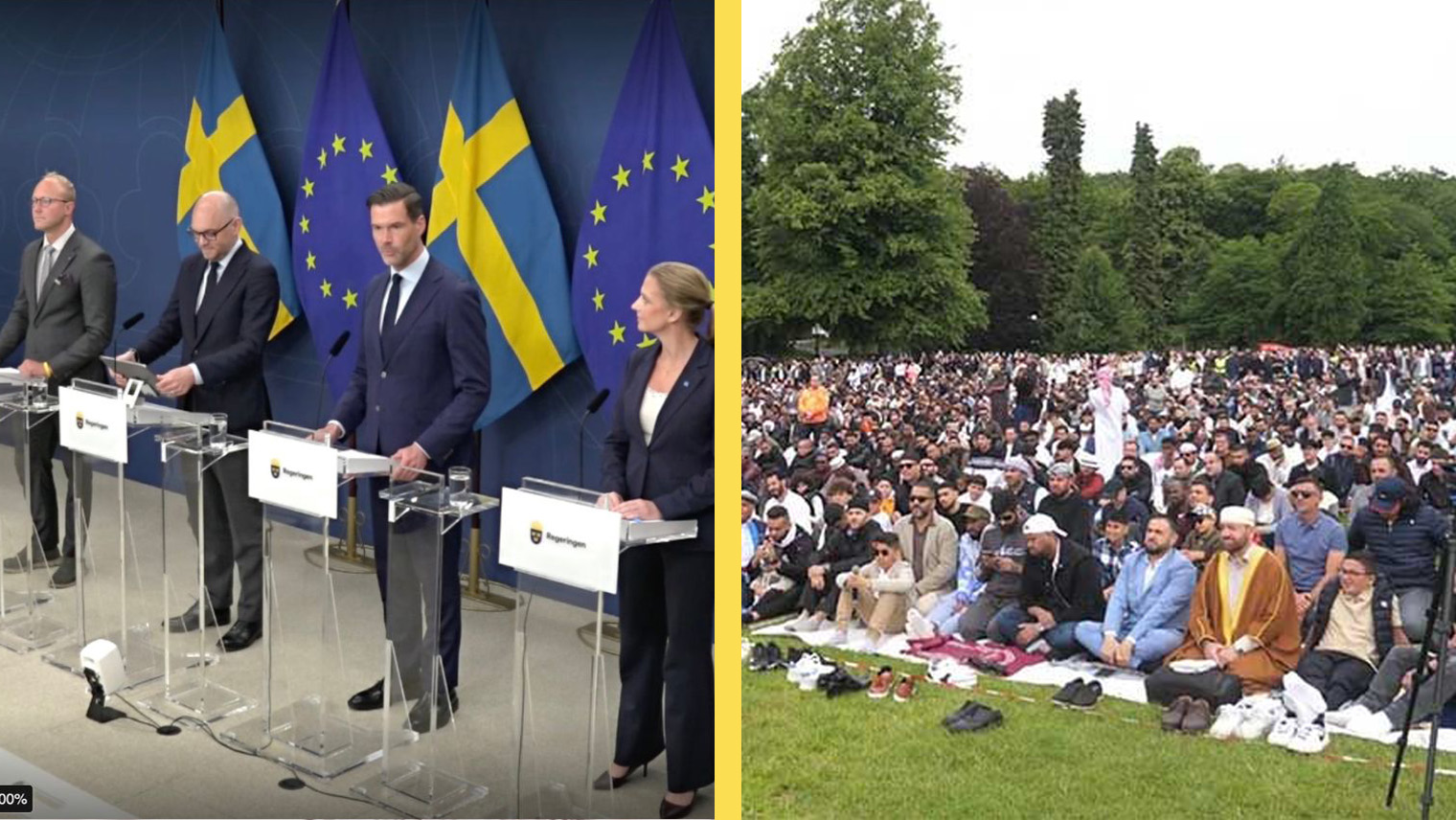
What is the single most important message you want to convey to Swedish politicians through your letter?
“It’s that we now see something that has been observed in many European countries—that this problem can only be solved through re-migration. We have to admit that we made a mistake.” He continues:
“Everyone wanted to help refugees and so on, but we didn’t realize how enormous the demographic changes would be. Now immigrants bring spouses and relatives here, and the development continues all the time. We must stop this, and re-migration is the only solution.”
READ ALSO: Researcher: Migration and Culture Europe’s Biggest Problem—Not Low Fertility
Even in the UK, parties like Reform UK, and perhaps especially Restore UK, led by Rupert Lowe, have now put forward sharp proposals on re-migration, how do you comment on that?
“Yes, it is happening—and the situation in Britain is even worse.”
READ ALSO: New British Party Promises Mass Deportations
The most promising development is that the number of new citizenships has decreased. When requirements tighten, it sends a signal to foreigners considering moving to Sweden. It becomes less attractive to come here if it’s harder to get citizenship and access all benefits.
Demographic researcher Kyösti Tarvainen in Helsinki
Would you say we have the same problem as the UK, but they’re a little ahead of us?
“Yes, that’s the case.”
Get 50% off today
123 083 33 50
Sees Citizenship Policy as the Most Significant Change
Tarvainen also admits that the current Swedish government actually has achieved some results.
Where do you see the clearest results from the Tidö government?
“The most promising development is that the number of new citizenships has decreased. When requirements tighten, it sends a signal to foreigners considering moving to Sweden. It becomes less attractive to come here if it’s harder to get citizenship and access all benefits,” he says.
Even if net immigration dropped to zero, Swedes would, according to my calculations, still become a minority. Therefore, it isn’t enough to just stop new immigration.
Demographic researcher Kyösti Tarvainen in Helsinki
At the same time, he notes that even a scenario with completely halted immigration would not be enough.
“Even if net immigration became zero, Swedes would, according to my calculations, still become a minority. Therefore, it’s not enough to just stop new immigration.”
READ ALSO: Timbuktu: “Time and Demographics Are on Our Side”
How would you comment on the possibility that Sweden could have a leftist government after September, based on what we’ve discussed?
“Yes, this is extremely serious. But at the same time I don’t see a new influx of migrants. But it doesn’t matter. They don’t need to do anything. The number of people with a foreign background will still increase through new generations born in Sweden.”
Do you think the left-wing parties will discuss the topic of re-migration?
“No, I’m afraid they won’t.”
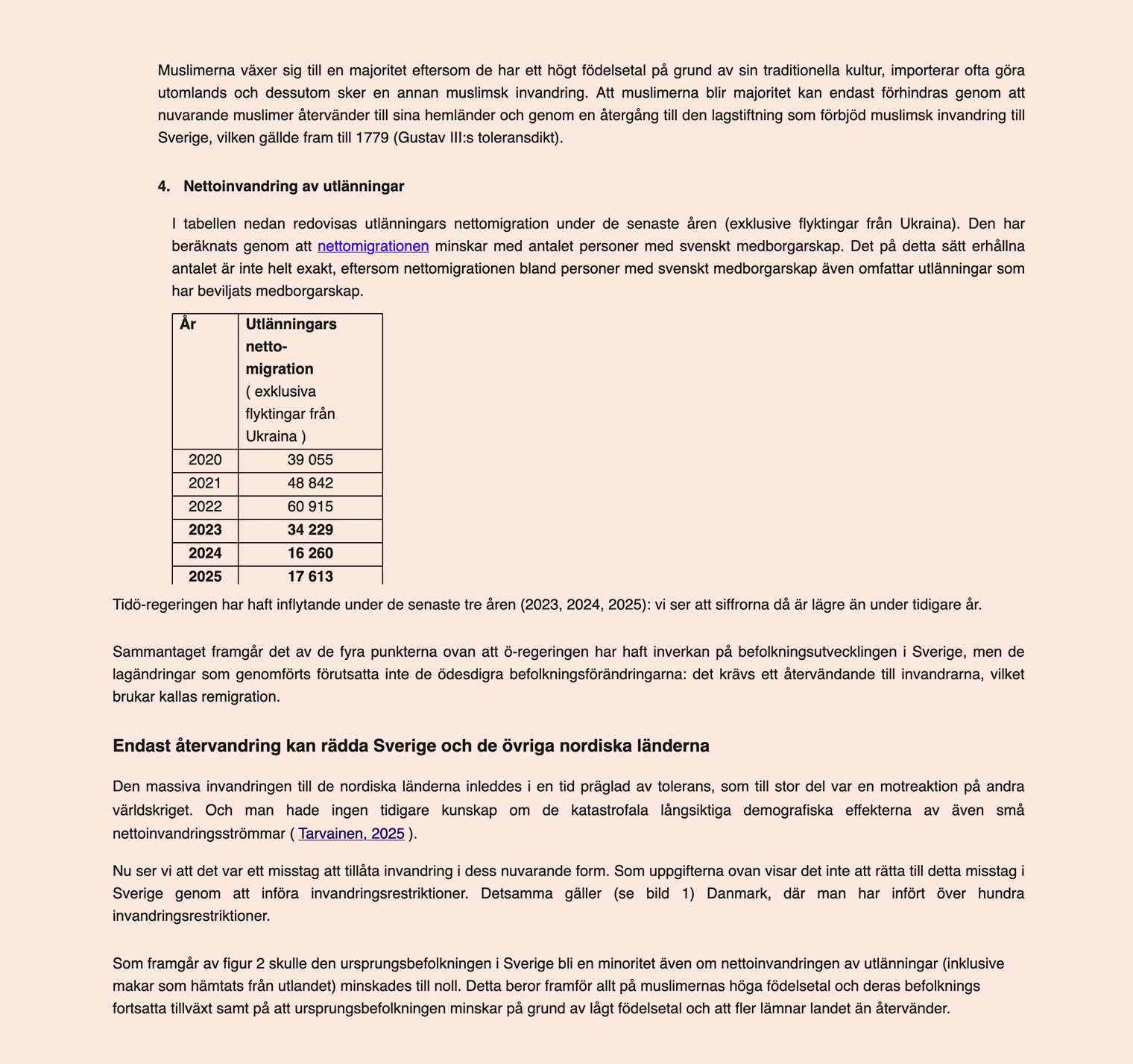
Here is Tarvainen’s letter to the Swedish parliament, first part:
Sweden Worst Affected in the Nordics
For a long time, Tarvainen has compared demographic development in the Nordic countries. According to him, Sweden is the country that has changed fastest.
When Samnytt asks how he views the situation in the Nordics, he describes Sweden as the most vulnerable country, although at the same time he believes that the Swedish government in recent years has moved in the right direction.
He also points out that Norway has long had little economic incentive to pursue more restrictive policies.
“Norway has had large oil revenues and few economic problems. Therefore, resistance to immigration has been weaker. But I think even Norway is beginning to wake up now. Re-migration has become a hot topic in Europe,” he says.
How differently has Iceland handled this compared to the other Nordic countries?
“Yes, I know a bit about it. They also have some immigrants, but not many Muslims. The Muslim population isn’t as large as in the other Scandinavian countries. Many immigrants, for example, come from Poland.”
Tarvainen does not describe Iceland as a demographic problem case as serious as Sweden. According to him, the island has significant immigration, but it’s more from Europeans, and since the Muslim population is much smaller than in the rest of the Nordics, he doesn’t see any immediate demographic or cultural problems.
READ ALSO: Elon Musk Backs Muslim on Population Replacement in Scandinavia: “His math checks out”
Is it—the way you see it—the Muslim immigration that is the biggest problem?
“Yes, that’s the case. I began my demographic studies because of Muslim immigration. It is by far the toughest issue, but it’s a fact.”
According to Tarvainen, one of the most underestimated consequences of the demographic development is also that the average IQ level in the population risks falling.
He believes that this could, in the long run, have economic and societal consequences by affecting everything from innovation ability to productivity and prosperity.
READ ALSO: Has Low IQ – Gets Only Six Months in Prison for Raping Teen Girl
At the same time, he emphasizes that Sweden still benefits from a large group of highly educated and technically qualified people, which according to him dampens the effects in the short term.
Because it was our mistake to allow and carry out this irresponsible migration, we have a responsibility to help those who return. We shouldn’t just pay the travel expenses but also help people start a new life in their countries of origin. They can live there. Hundreds of millions of people live and work in these countries. But they need help to be able to re-establish themselves. That’s something we should fund, because it was our mistake.
Demographic researcher Kyösti Tarvainen in Helsinki
“The European Peoples Are Waking Up”
In the interview, Tarvainen repeatedly returns to the fact that he believes the view on migration is beginning to change across Europe. He mentions increased debate within the EU, discussions in Germany, and statements from the American Trump administration about return programs.
Recently we saw new returnee regulations introduced in the EU and heard “Send them back!” in parliament; what’s your comment?
“Yes, it’s amazing. It’s a sign that the peoples of Europe are waking up. We’re now searching for new solutions,” he says.
READ ALSO: Left-liberal Anger Over EU’s New Re-migration Policy: “Incredibly Unpleasant”
According to Tarvainen, today’s discussion about external reception centers for asylum seekers is only a first step.
“The next step is re-migration. And after that, one must also discuss the international refugee conventions,” he states.
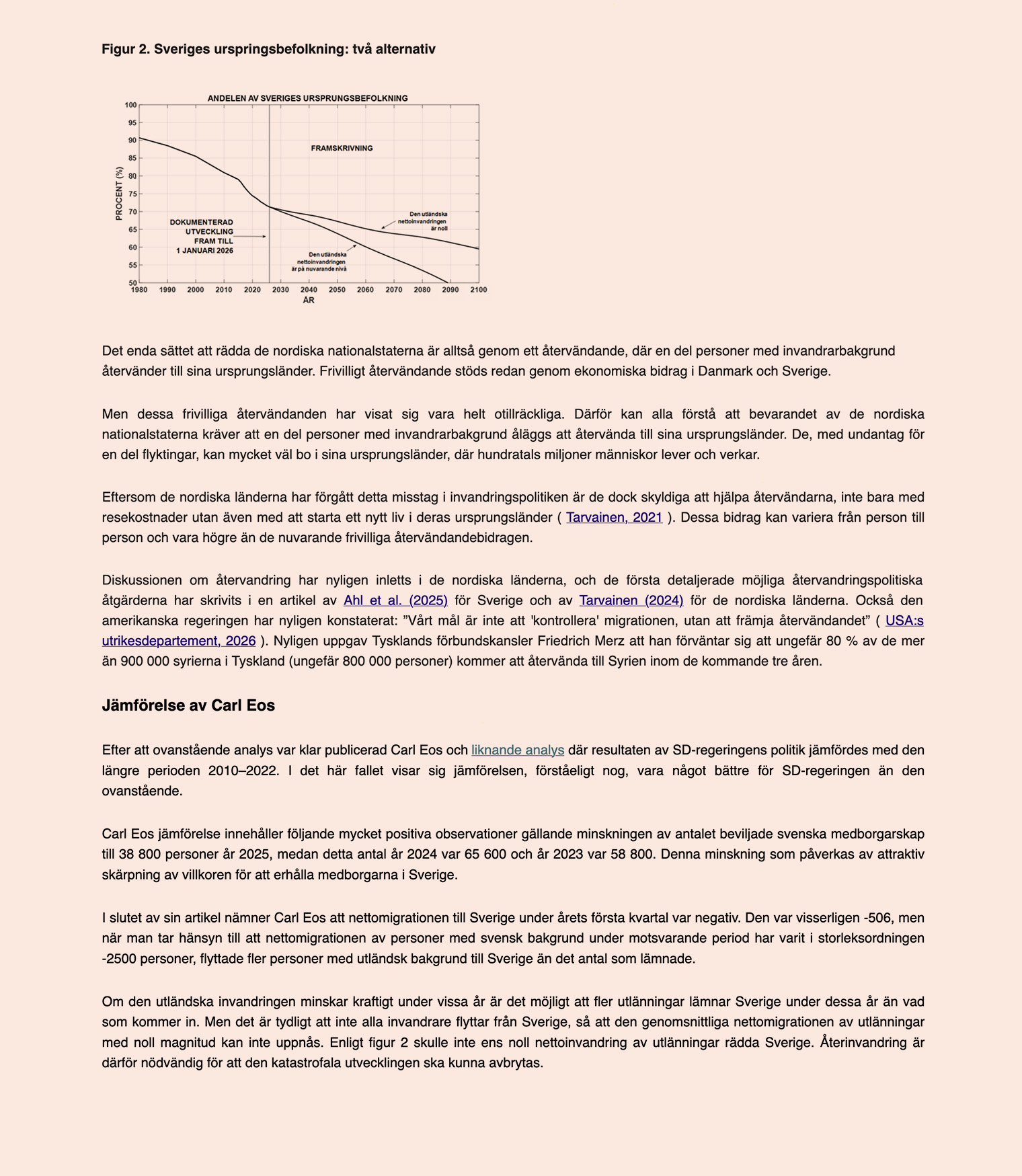
In his letter, Tarvainen also refers to an analysis by opinion former and debater Carl Eos, who has recently examined the effects of the Tidö government’s migration policy based on, among other things, statistics from Statistics Sweden (SCB).
Eos notes that population growth and net immigration have dropped sharply compared to 2010–2022, while the number of granted Swedish citizenships decreased significantly during 2025.
READ ALSO: Åkesson: Demographic Changes in Sweden Lead to a Population Replacement
Tarvainen describes Eos’s review as a relatively positive sign of the government’s policy, but at the same time means that, according to his own forecasts, the development is still not sufficient to change Sweden’s demographic direction in the long term.
Carl Eos’s analysis, “How Immigration Has Been Reduced With the SD Government,” is available to read at Riks.
Some argue that we have a window now to implement a humane re-migration policy, but that once that window closes, things will become much harsher. How do you see it?
“Because it was our mistake to allow and carry out this irresponsible migration, we have a responsibility to help those who return. We shouldn’t just pay the travel costs but also help people to start a new life in their countries of origin,” he says and continues:
“They can live there. Hundreds of millions of people live and work in these countries. But they need help to re-establish themselves. This is something we should fund, because it’s our mistake.”
Do you see a risk that future policies around return will be non-humane and much more drastic?
“No, I don’t see such a risk.”
At the same time, he also says that Europe is a powder keg right now and that almost anything can happen.
Warns of Future Conflicts
Towards the end of the interview, Tarvainen is asked about the increasing polarization in Europe and whether he sees a risk for future conflicts if the migration issue remains unresolved.
The government has made many good legal changes, but they are not sufficient to prevent Swedes from becoming a minority.
Demographic researcher Kyösti Tarvainen in Helsinki
He rejects the idea that the development necessarily has to become violent, but at the same time argues that the reason for discussing re-migration is to avoid more dramatic scenarios in the future.
“Yes, exactly. That’s why the issue must be addressed now, before it’s too late,” he says.
If he had to summarize his message to the Swedish parliament in one sentence, it would be as follows:
“The government has made many good legal changes, but they are not sufficient to prevent Swedes from becoming a minority.”
READ ALSO: Andersson: “Time to Mobilize Around the Next Demographic Fateful Issue”
This is also the conclusion running through the entire letter to parliament. Tarvainen sees the migration policy shift of recent years as a step in the right direction—but far from sufficient.
According to the Finnish professor of demography, Sweden no longer has a choice between different forms of immigration policy. The question, rather, is whether the country is prepared to discuss re-migration as a political tool or not.
Get 50% off today
123 083 33 50