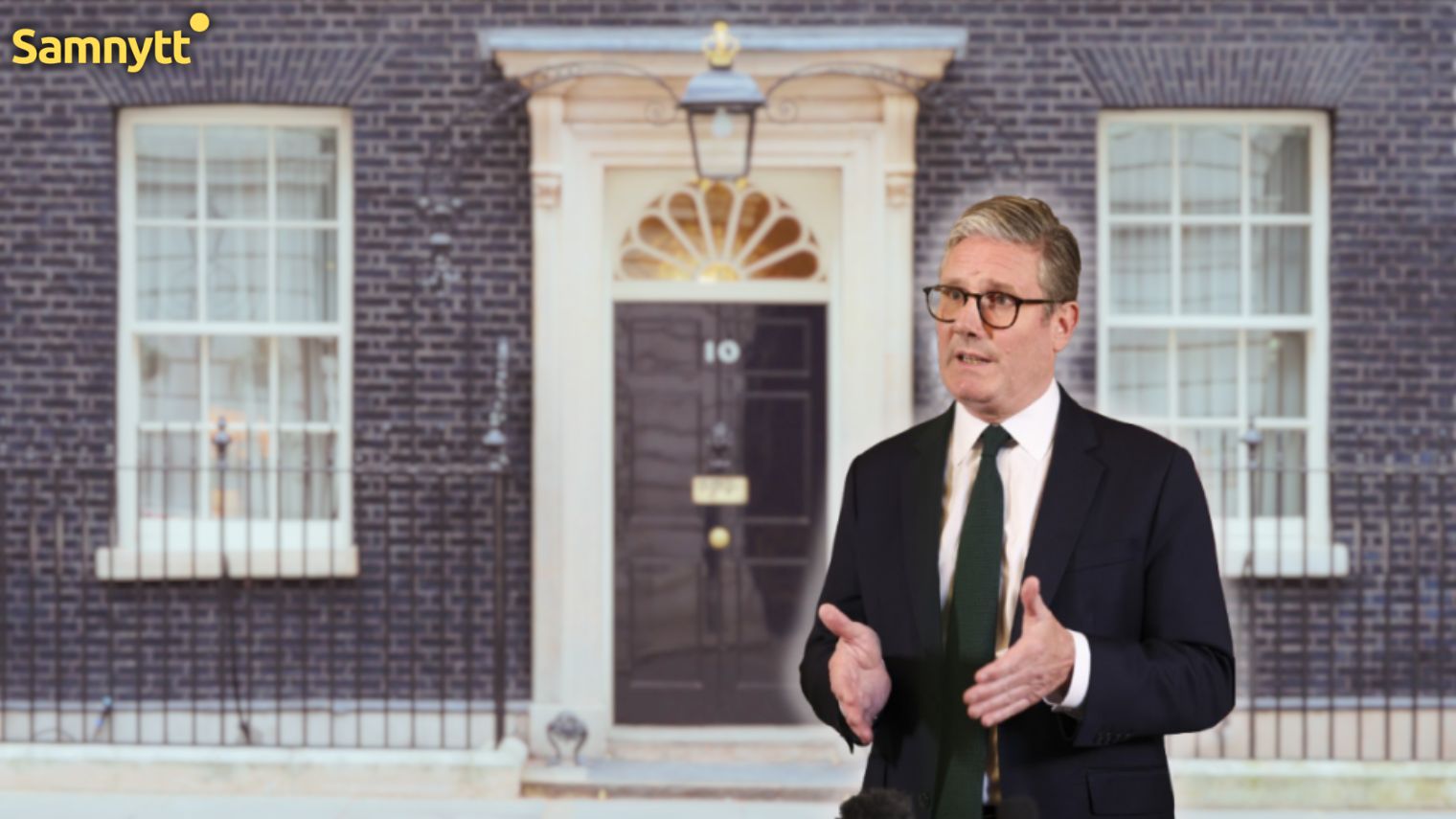
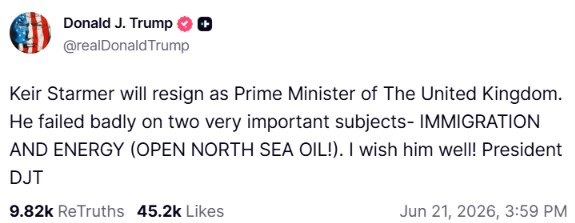
This weekend, rumors emerged that the UK’s extremely unpopular Prime Minister Keir Starmer would resign, something that was reinforced when Donald Trump posted on his platform, Truth Social, describing it as a fact. On Monday, the official announcement came.
“Keir Starmer will resign as the UK’s Prime Minister,” Donald Trump wrote in a post on Sunday.
According to the former US president, immigration and energy were what brought Starmer down. At the same time, he wished him good luck.
It was after growing internal criticism and rising support for rival Andy Burnham that speculation about Starmer’s resignation picked up over the weekend. The background is a longer period of weak polling numbers for Labour and increasing dissatisfaction within the party.
The pressure increased further after Andy Burnham recently secured a seat in the British Parliament, which, according to commentators, opened the door to a possible leadership challenge. Reports indicate that about a quarter of Labour MPs have publicly demanded that Starmer either resign or present a timetable for his departure.
Several media outlets describe Burnham as the most likely successor if Starmer leaves office. Health Minister Wes Streeting has also been mentioned as a possible candidate in a future leadership contest.
Starmer’s resignation means the UK will have its seventh prime minister in just over a decade.
Took over in 2020
Keir Starmer is a lawyer by training and worked for many years as a prosecutor. Between 2008 and 2013, he was head of the British Crown Prosecution Service and was subsequently knighted for his contributions to the judicial system, earning him the title “Sir”.
He was elected to the British Parliament in 2015 and took over the leadership of the Labour Party in 2020 after the defeat under Jeremy Corbyn. As Labour leader, Starmer worked to move the party towards the political center and to rebuild trust after years of internal strife.
In the July 2024 general election, Labour won a landslide victory with 411 seats after 14 years of Conservative rule, making Starmer the UK’s Prime Minister.
Despite the major election victory, Starmer struggled to retain voter support. His popularity fell sharply in the first months in office, and several polls in 2025 and 2026 showed very negative approval ratings.
According to several polling institutes, his net approval rating was between minus 46 and minus 57 percent, and some polls described him as one of the most unpopular British prime ministers in modern times. Dissatisfaction with the economy, cost of living, healthcare, and perceived broken promises are often mentioned as reasons for the decline.
At a press conference on Monday morning, Starmer officially announced his resignation as Prime Minister and Labour leader.
Watch live: My statement. https://t.co/MX7ga3FRGq
— Keir Starmer (@Keir_Starmer) June 22, 2026