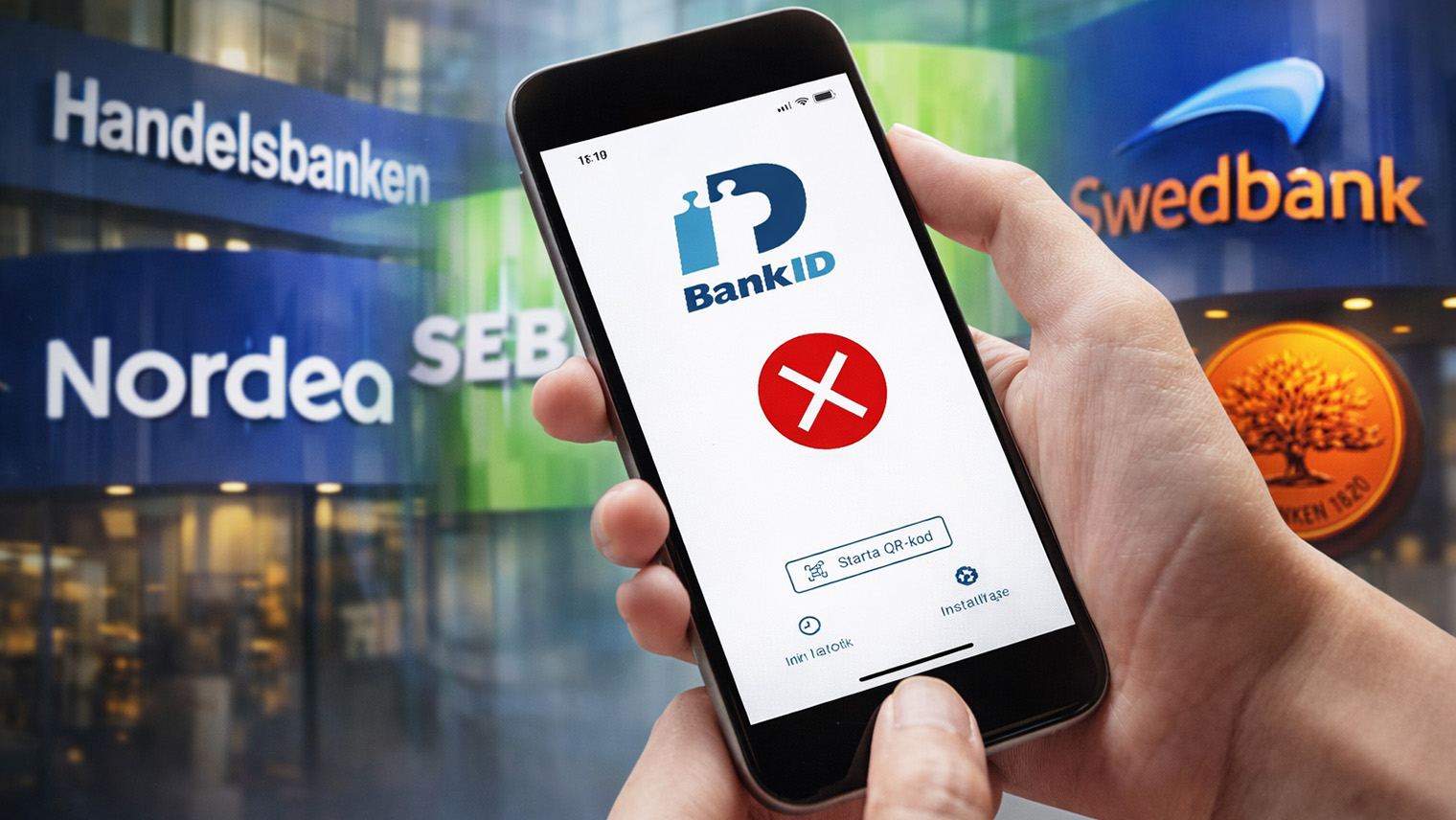
If your BankID is blocked by your bank, there are very limited opportunities to have the decision reviewed by an independent body. To challenge the block, the customer may have to sue the bank in court. However, such a process involves significant financial risks.
BankID is now used for everything from banking transactions and payments to communication with authorities and healthcare. Losing access to the e-identification can therefore have major consequences for the individual.
Despite this, those who have their BankID blocked cannot have the decision reviewed by the National Board for Consumer Disputes (ARN). The authority can handle disputes regarding access to payment accounts with basic features, but BankID is not covered by these rules.
According to the Swedish Consumers’ Banking and Finance Bureau, blocked BankID is a common complaint. Many affected individuals feel frustrated that there is no opportunity for an independent review.
Referred to Court
The Swedish Bankers’ Association refers customers who want to challenge a block decision legally to the courts. But initiating proceedings against your bank can be both complicated and expensive.
Fredrik Jörgensen, a lawyer at Rättsakuten, explains to Dagens Nyheter that a customer could question whether the bank had sufficient reason for the block, or if the measure was disproportionate.
READ ALSO: 78-year-old was defrauded of 30,000 SEK — then the bank blocked her BankID for a year
At the same time, banks have broad discretion to block BankID if there are suspicions of fraud or security risks. Even individuals who have themselves been victims of fraud may be denied a new BankID for an extended period.
According to Jörgensen, the bank should, in such cases, be able to explain why the person is still considered a security risk.
High Costs
Fredrik Nordquist, a lawyer at the Swedish Consumers’ Banking and Finance Bureau, notes that many consumers are reluctant to go to court due to the risk of costs.
Since a blocked BankID normally cannot be reactivated, a potential lawsuit is essentially about the bank’s obligation to issue a new one. The party who loses a regular civil case can be required to pay both their own and the bank’s legal costs.
READ ALSO: FEATURE: Michael was banned from the banking system – ‘Slow state violation’