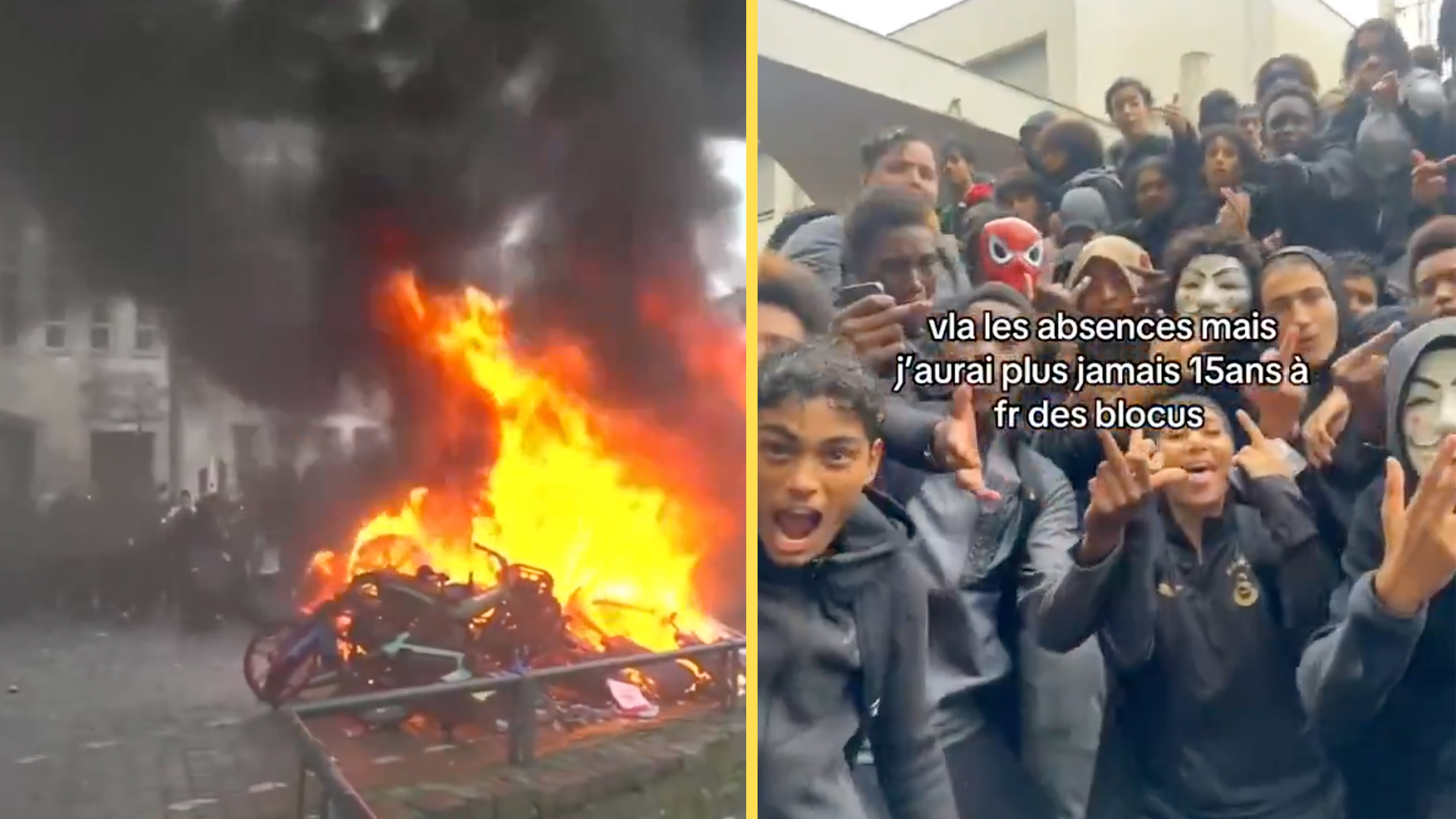
The riots in France continue with arson attacks on schools, assaults on police, and thousands of arrests. The unrest has now spread to neighboring Belgium, as more and more voices warn of civil war and point to mass immigration and failed integration as root causes.
The violence has been ongoing since mid-September. It began as school blockades in the Paris region with demands for more teachers and better school facilities, but has since spread across the country and escalated into riots where groups of young people have attacked police, set fires, and vandalized property.
According to French Europe 1, a total of 6,877 people had been taken into police custody as of October 11. More than 700 police officers and gendarmes are reported to have been injured, while schools have been targeted by arson and vandalism and shops looted. The arrest figures cover the entire period of protests and do not mean all detainees have been convicted of crimes.
The violence has become so widespread that even the French Ministry of Justice refers to it as “violences urbaines”—urban violence or suburban riots. In a press release on October 5, the ministry described serious attacks on both police officers and school staff, as well as extensive damage to school buildings and public property. The cost of repairs was already estimated at several million euros at that time.
Schools Set on Fire – Police Attacked
In early October, hundreds of French schools were affected by blockades that in many cases turned into riots. In Paris, Marseille, Lyon, and several other cities, police have undertaken extensive operations to restore order.
On October 6, 488 people were arrested during a single day of demonstrations, while 43 police and gendarmes were reported injured. According to Euronews, a total of 891 high schools were affected that day.
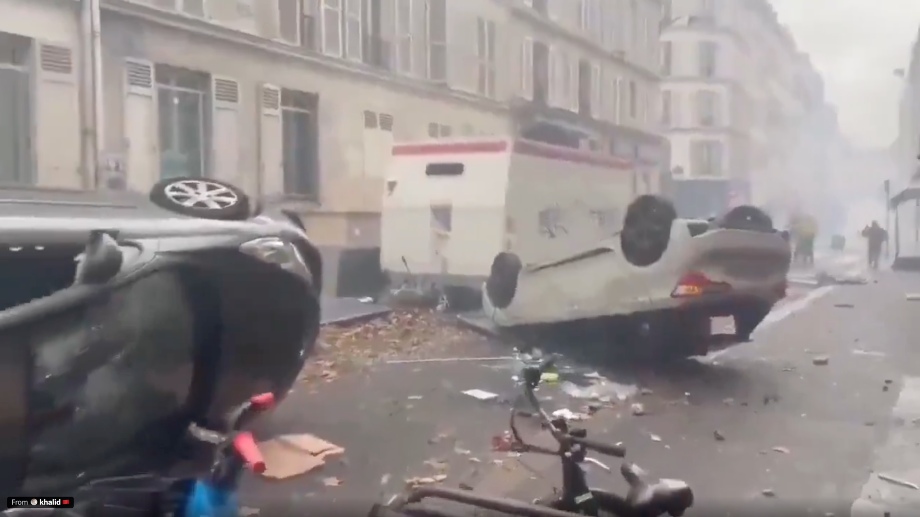
The riots have also continued throughout the past week. At Hélène Boucher High School in Paris, police used tear gas to disperse youths who had barricaded the school building. According to AP, over 6,600 people had been arrested as of October 8, and hundreds of schools were still affected.
The violence has not only targeted police. Schools, shops, and other property have also come under attack, prompting authorities to warn that individuals unconnected to the original student demands are exploiting the situation.
Violent Riots Also in Belgium
The riots have found counterparts in neighboring Belgium, where the city of Liège in particular has experienced extensive violence during student protests.
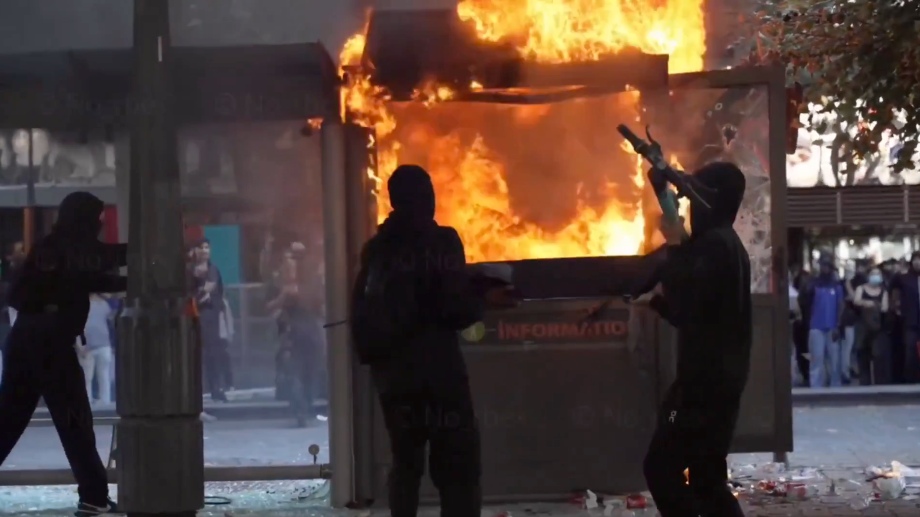
In early October, hundreds of young people gathered to protest education reforms and budget cuts. The protests in several cases turned into riots with broken shop windows, burning garbage bins and e-scooters, and attacks on police.
According to Belgian The Brussels Times, police and emergency services were forced to intervene in Liège on October 6, after youths smashed windows at a school, set objects on fire, and threw firecrackers. The police used tear gas to disperse the crowds.
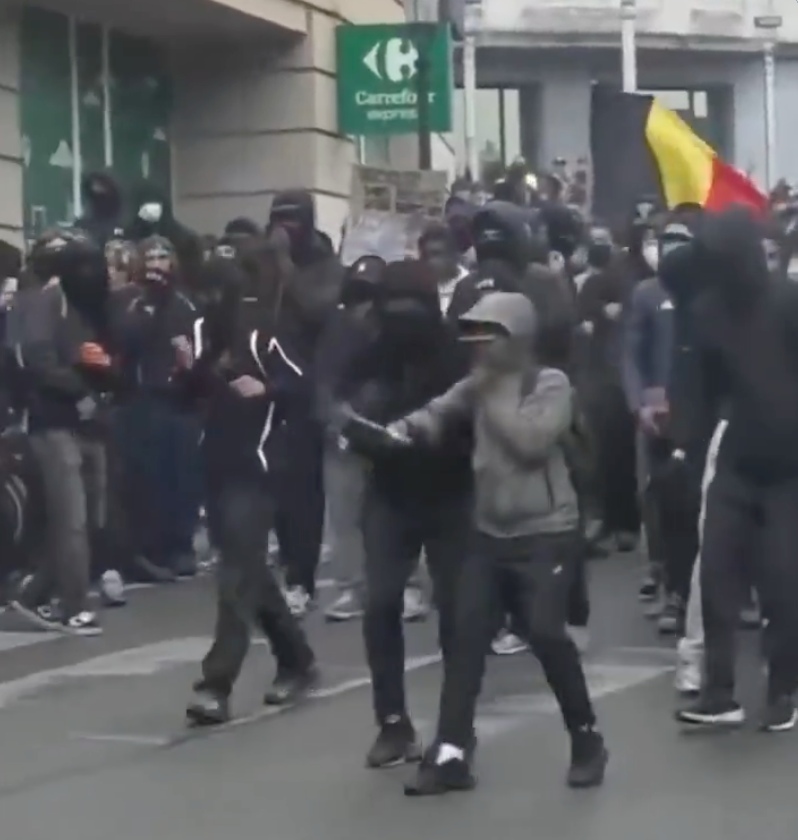
On October 7, the riots continued and more than a hundred people were arrested during the protests. Young people also attacked shops and police, while city authorities tried to limit gatherings.
The Belgian protest wave has partly different underlying causes than the French one. In the French-speaking part of Belgium, students are mainly protesting budget cuts of 500 million euros by 2029 and increased university fees.
However, authorities have noted similarities in how the violence has developed. On October 8, Belgium’s Interior Minister Bernard Quintin went further and accused groups with links to the far-left Antifa environment of exploiting the protests.
– We know there is an Antifa-type movement active in Liège, he said according to The Brussels Times.
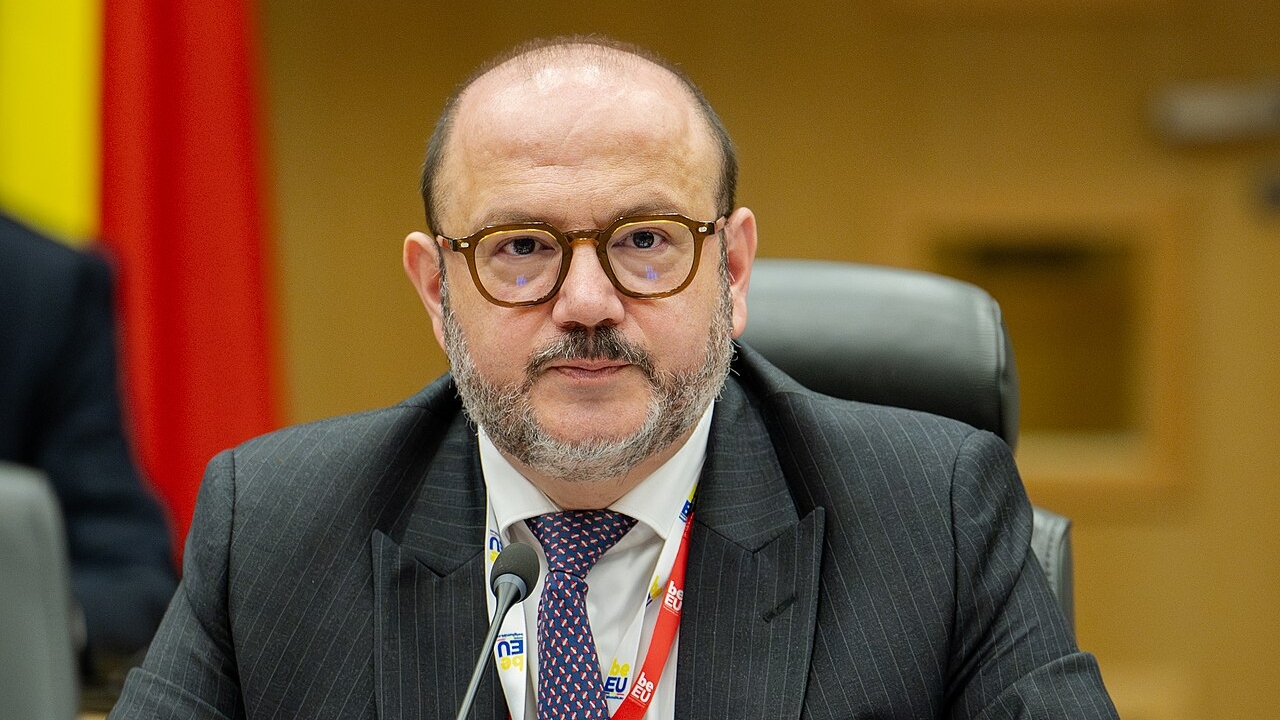
The minister accused adult activists of manipulating children to spread violent political messages. The local police chief at the same time reported that more and more of those involved in the riots had no connection to the schools.
Violence also broke out in Brussels on October 9 during a large demonstration against the government’s economic policy. Masked individuals set objects on fire and attacked the police with stones and fireworks, leading the police to use water cannons and tear gas. According to AP, the violent group had no established organizational link to the main demonstration.
The Belgian riots thus reflect a parallel development to events in France. No joint organization behind the violence in the two countries has been established.
French Politician: “The Beginning of Civil War”
The ongoing riots have led several French politicians and social commentators to warn that the conflict is about much more than school politics.
On Sunday, October 11, Nicolas Dupont-Aignan, leader of the national-conservative party Debout la France and former presidential candidate, issued a warning that the country risks civil war.
– This is no longer a high school movement, it is the start of urban riots and civil war, he said in an interview with Europe 1, CNews, and Les Echos. The statement is documented in the broadcast interview.
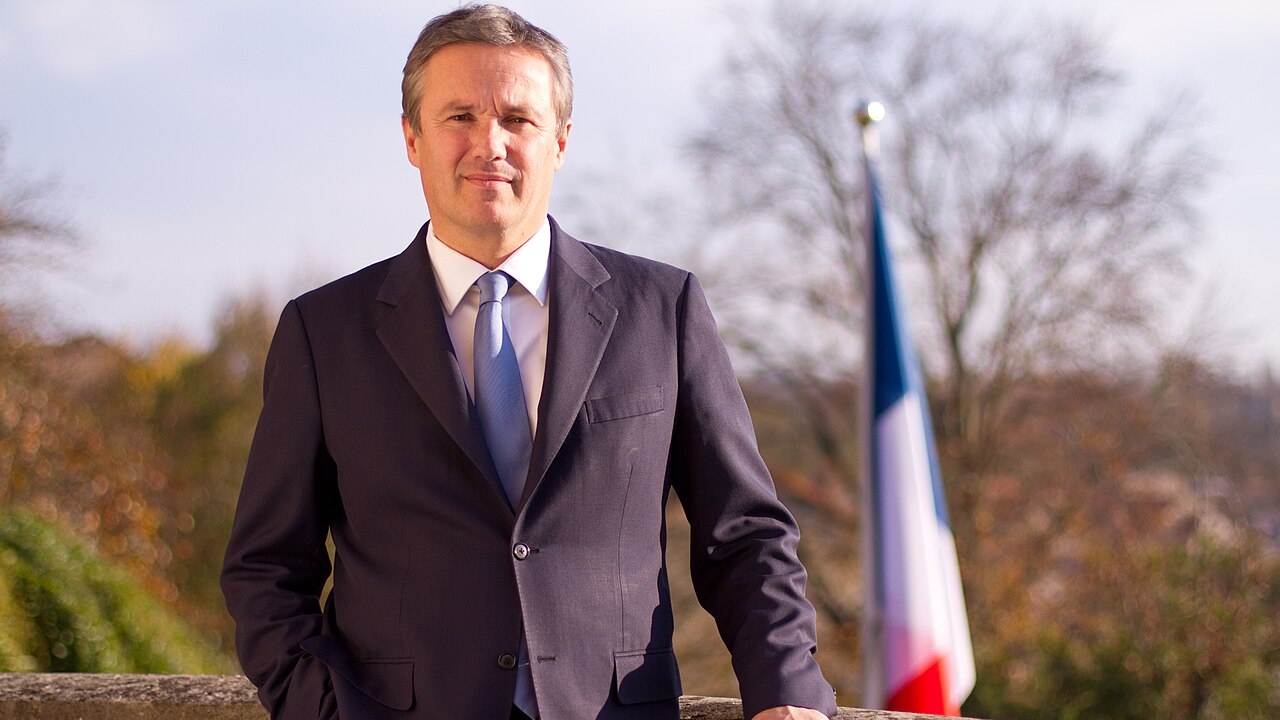
Dupont-Aignan accused the government of allowing the violence to escalate, even though according to him it had been possible to stop the school blockades at an early stage.
– I think the government let the fire start, he said.
He referred to his own municipality, Yerres, where as mayor he instructed the municipal police to monitor schools early and prevent blockades. According to Dupont-Aignan, police intervened against nine people, which he cited as an example that determined action could have prevented greater violence.
He stressed that problems in schools do not justify riots and destruction.
Zemmour: “Two Frances Stand Against Each Other”
Reconquête party leader Éric Zemmour, who is running in the 2027 presidential election, points to immigration as the core of the conflict. In a post he writes that in just one week “the two Frances that now stand against each other on our soil” have become visible.
– The other France has for several days now shown a completely different face during the high school students’ demonstrations, always demanding, even vengeful and often violent: another France, largely African, Arab, Muslim, waving Algerian, Moroccan, or Palestinian flags, Zemmour writes.
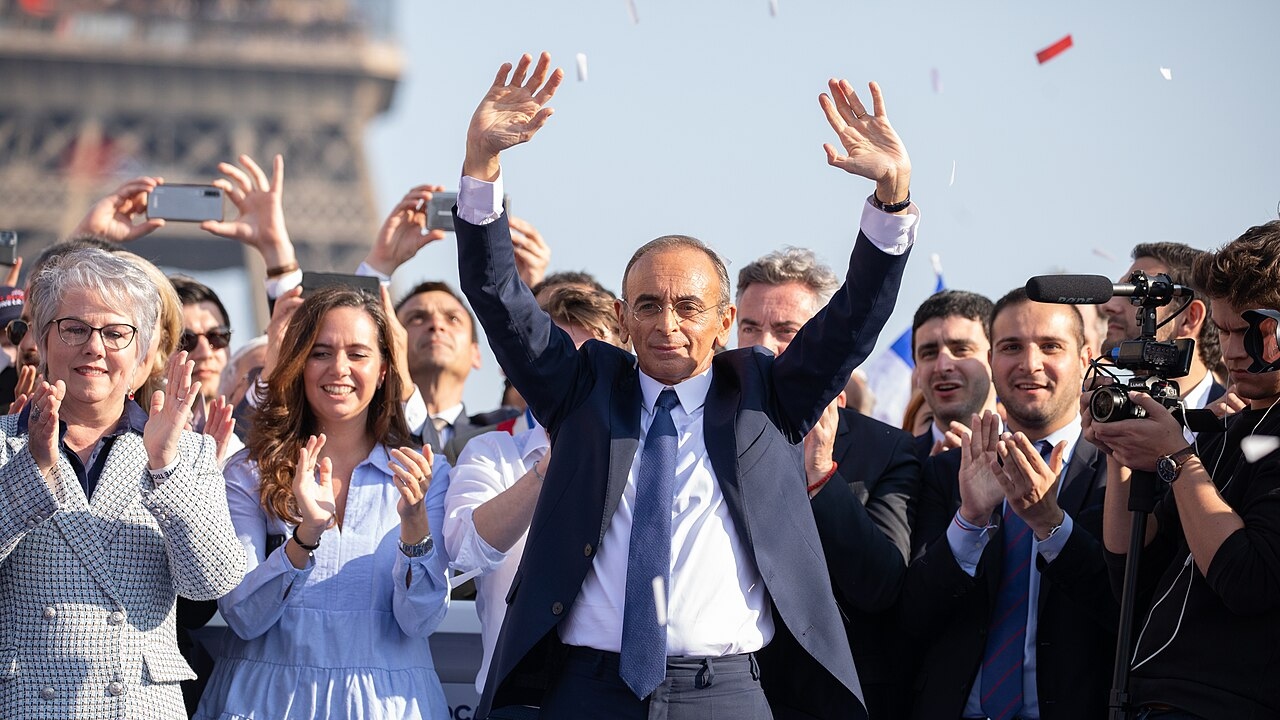
– Eternal France versus the new France, that’s the showdown in the 2027 presidential election, he continues.
According to Revue française, Zemmour also called for those who set fire to schools to be harshly punished and for their parents to pay for the damages, “even if it means taking it from their social benefits”.
Laure Lavalette, spokesperson for the Rassemblement National, said in an interview with CNews on October 1 that “there are two Frances clashing”.
RN leader Jordan Bardella wrote on X on October 2 that all of France had seen “images of teachers, firefighters, and police lynched outside burning high schools” and called it “barbaric behavior”.
French author Charles Rojzman writes in the journal Causeur about foreign flags in the marches and youths in Beaugency filmed singing a rap song praising the terrorist Mohamed Merah and the Bataclan attack. The prosecutor in Orléans has opened a preliminary investigation into glorification of terrorism. Rojzman describes signs of a “French-style intifada” and questions whether the school movement for some may be a dress rehearsal for civil war.
Trump Blames Mass Immigration and Islam
US President Donald Trump has also commented on the riots and directly linked them to France’s immigration policy. On October 6, Trump wrote on Truth Social that the events are not primarily about the education system, but about immigration and Islam.
– What is happening in France is nothing but uncontrolled mass immigration, he wrote according to AFP.
Trump further claimed that the riots are about Islam trying to take over the country, rather than the state of the schools.
Meanwhile, several conservative commentators have questioned whether school policy can explain the violent attacks on police, emergency services, and public institutions.
One such commentator is American author and social commentator Jens Heycke, who in an analysis on October 3, described the events as the result of several decades of failed integration and appeasement of violent groups.
Heycke points among other things to photos and videos of riot participants carrying Algerian and Palestinian flags. He argues that such displays, together with attacks on French institutions, indicate identity conflicts that go deeper than dissatisfaction with the school system.
In his analysis, he describes immigration policy, segregation, high youth unemployment, and a lack of assimilation as factors behind the recurring riots in France.
Far Left Accused of Exploiting the Protests
Another contentious issue concerns the role of the far left in France’s protest wave.
La France insoumise, LFI, led by Jean-Luc Mélenchon, has expressed strong support for the student movement. Critics accuse the party of contributing to political radicalization of the protests, while party representatives emphasize youth’s right to protest against deteriorating education conditions.
At a political meeting in Clermont-Ferrand on October 11, Mélenchon praised the youth mobilization and suggested that the voting age should be lowered to 16. According to AP, he described the protests as an expression of the political maturity of young people.
The party has simultaneously criticized police actions and demanded that the government listen to students’ demands. No responsibility for organizing the violent riots has been established.
In Belgium, however, the country’s interior minister has explicitly pointed the finger at far-left groups as actors behind parts of the violence, further fueling the debate over whether the school protests are being exploited by political groups with other agendas.
New Riots Feared
Despite thousands of arrests and extensive police operations, the French riots have not ended. A new day of actions is planned for Tuesday, October 13, and the Yellow Vests have called for demonstrations on Saturday, October 17.
For President Emmanuel Macron’s government, the developments constitute an increasing political burden ahead of the 2027 presidential election. The opposition accuses the government of having lost control over law and order.
That similar riots have now also hit Belgium has given the debate an international dimension.