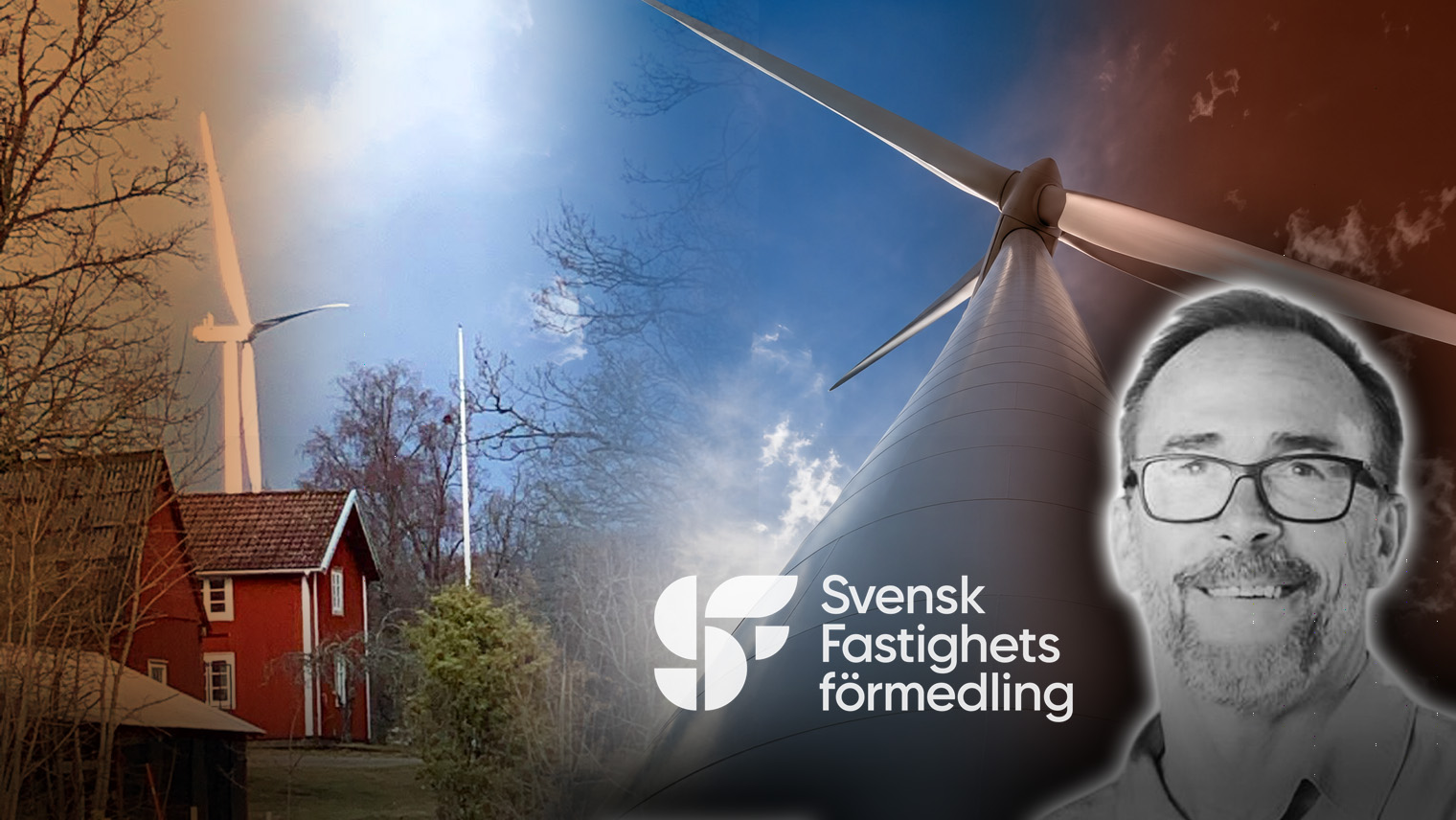
A few years ago, the holiday home outside Västervik was valued at around 1.4 million kronor. Then the 200-meter-high wind turbines came to Lervik. When the house was put up for sale, many prospective buyers had lost interest, there was no bidding, and the final price stalled at just under a million. Real estate agent Anders Gustafsson, who himself handled the sale, estimates the decrease in value to be about 40 percent.
Samnytt recently reported on the residents around the Lervik wind farm outside Hjorted in the Västervik municipality. Seven 200-meter-high wind turbines have been erected in the area, and several locals testified about noise, flashing lights, and a living environment fundamentally changed.
Kjell-Åke Arvidsson has five of the turbines within a kilometer of his childhood farm. The closest stands about 650 meters from the house. At the time, he did not want to estimate the loss in percentage, but said the property value was “obviously” affected.
Now, Samnytt has gone further and spoken with two real estate agents about what actually happens to the value of homes located near wind turbines. And in Lervik, there is a concrete example.
Many Prospective Buyers Walked Away
Anders Gustafsson is a real estate agent at Svensk Fastighetsförmedling in Västervik and has personally handled a property in Lervik. He points out it’s difficult to assign a general percentage to the impact of wind turbines – but there is no doubt in his mind that the impact is negative.
How is the value of a villa or farm actually affected when large wind turbines are built nearby?
– It’s hard to talk numbers, of course, but it definitely has a negative impact. Anyone who has ever been near one knows they make some noise, absolutely.
READ ALSO: Five Wind Turbine Giants Around Kjell-Åke’s Family Farm: “A Real Catastrophe”
The property Gustafsson handled was a simple summer cottage. Some years earlier, he had valued it at about 1.4 million kronor. When the house was later up for sale, after the wind turbines were built, the asking price was set at 1.1 million. The final price ended up being just below a million kronor.
– It pulled down the asking price by 300,000, and we still didn’t get quite a million.
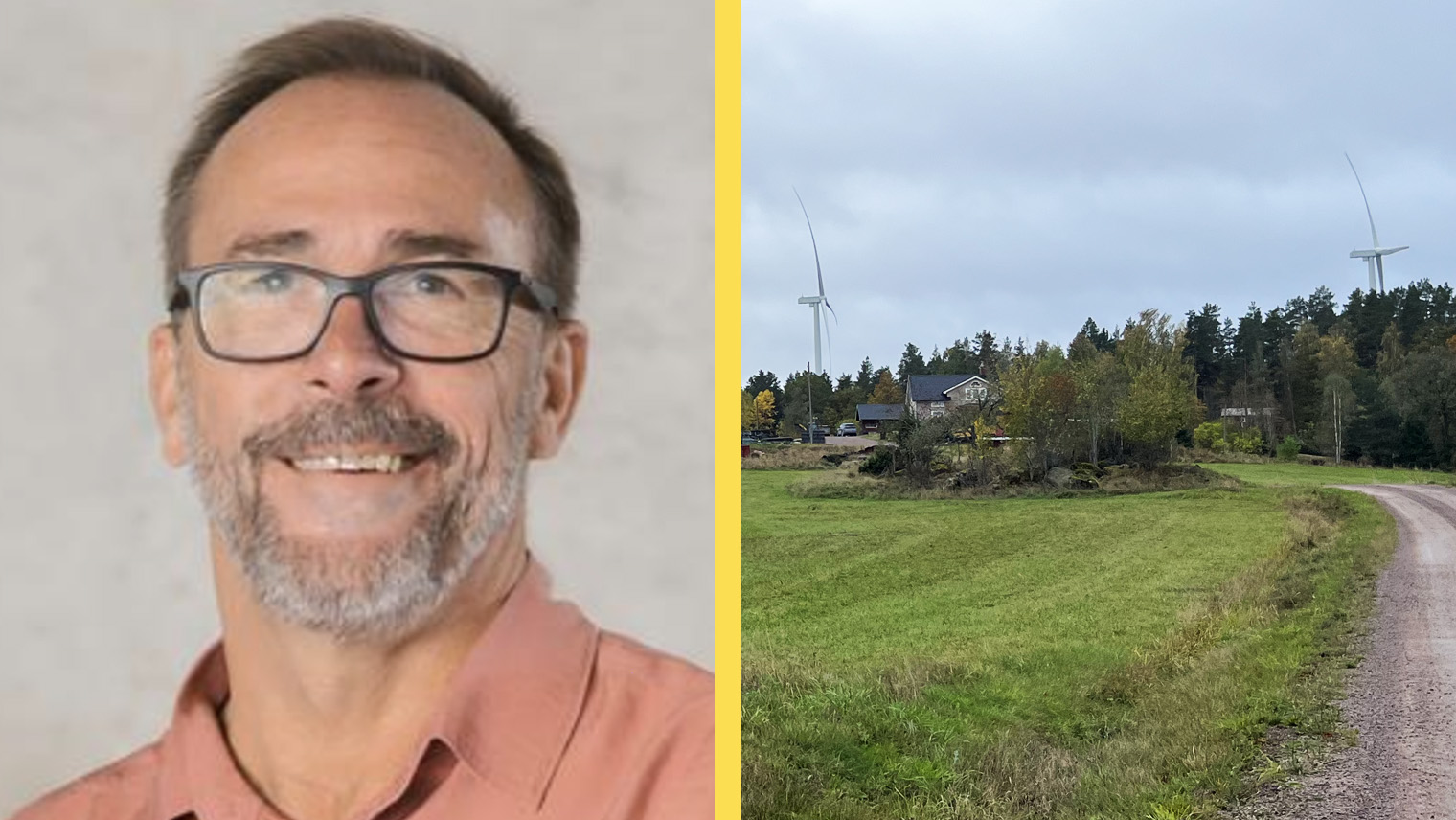
But the most striking part, according to Gustafsson, was not just the final price. Many prospective buyers didn’t even want to participate.
– There were quite a few who came to look but outright declined.
There was also never any bidding.
– There weren’t several people wanting to try and bid. It was just one person who made that offer, simply put.
Some potential buyers, Gustafsson says, never even made it to a viewing. They could spot the wind turbines in the photos or by checking out the area using map services and then decide to refrain from the property.
“We’re Around 40 Percent”
When Samnytt specifically asks Gustafsson about Kjell-Åke Arvidsson’s situation – five turbines within a kilometer and the closest about 650 meters away – it turns out that the property Gustafsson previously described is right in Lervik.
– That was exactly where I sold the house I was talking about.
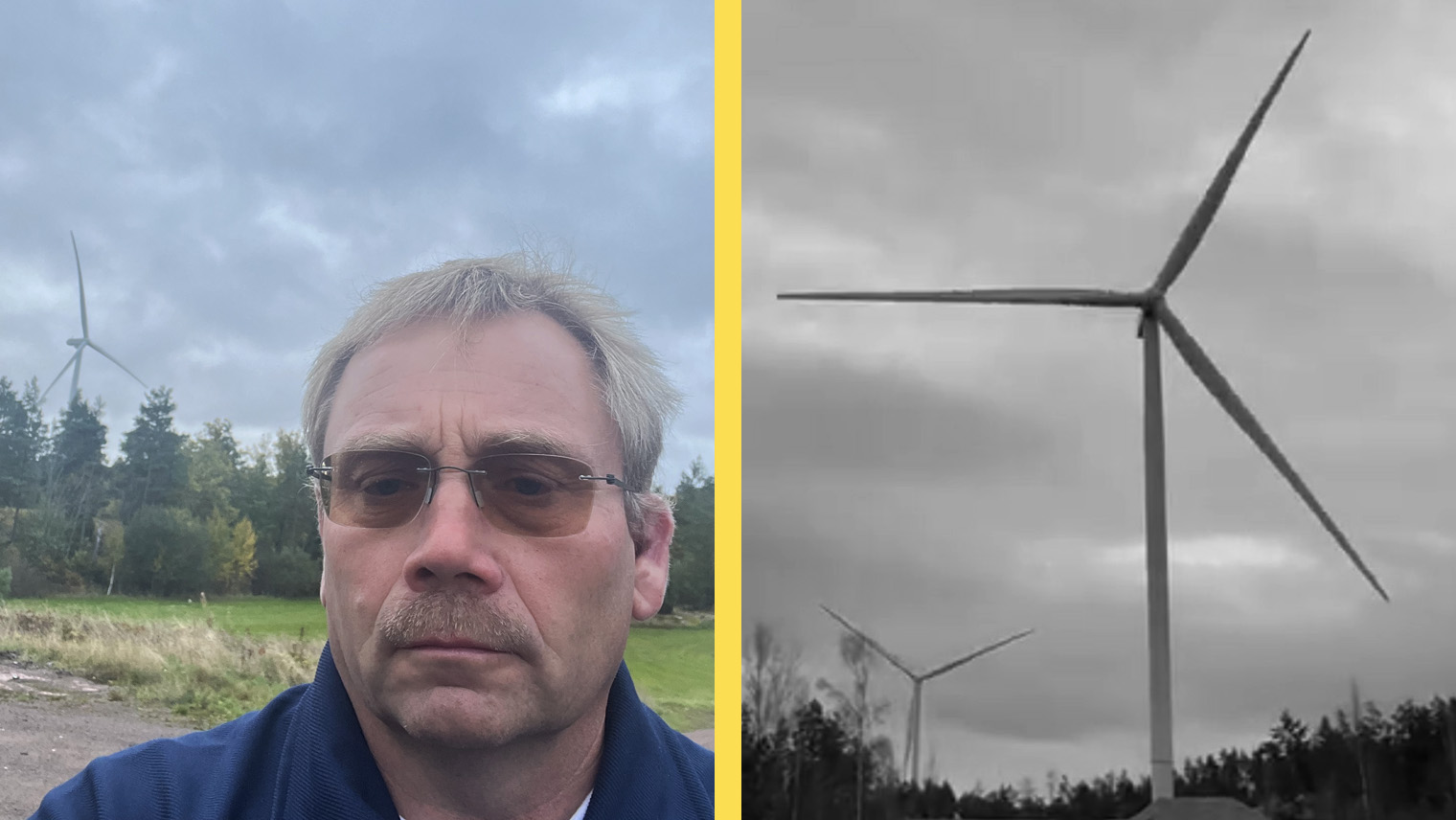
According to Gustafsson, a couple of the wind turbines could be seen from the property. They weren’t right next to the house, but they could be heard when the wind was right. He returns to the difference between the previous valuation of about 1.4 million and selling for just under a million.
What kind of loss in value are we talking about?
– That’s 40 percent.
40 percent?
– We’re in that vicinity, anyway.
This is a much larger effect than the average price drop identified in Swedish research. Professors Hans Westlund and Mats Wilhelmsson have analyzed over 600,000 Swedish property transactions between 2005 and 2018.
Their study shows a loss of value of about 10–15 percent for homes within two kilometers of wind turbines. The effect then decreases with distance. Gustafsson’s example simultaneously demonstrates why an average doesn’t necessarily reflect the outcome for an individual property.
READ ALSO: Professor Warns: Finnish Wind Power May Become Worthless – Sweden Is Heading in the Same Direction
Holiday Homes Particularly Vulnerable
Peter Jangeby, whom Samnytt interviewed in Lervik, reasoned in a similar way. He lives about 1.3 kilometers from the nearest turbine and has personally thought about moving.
– If I go out to the countryside to look at a house and I’m greeted by this sight, then I’ll just turn right around and go home.
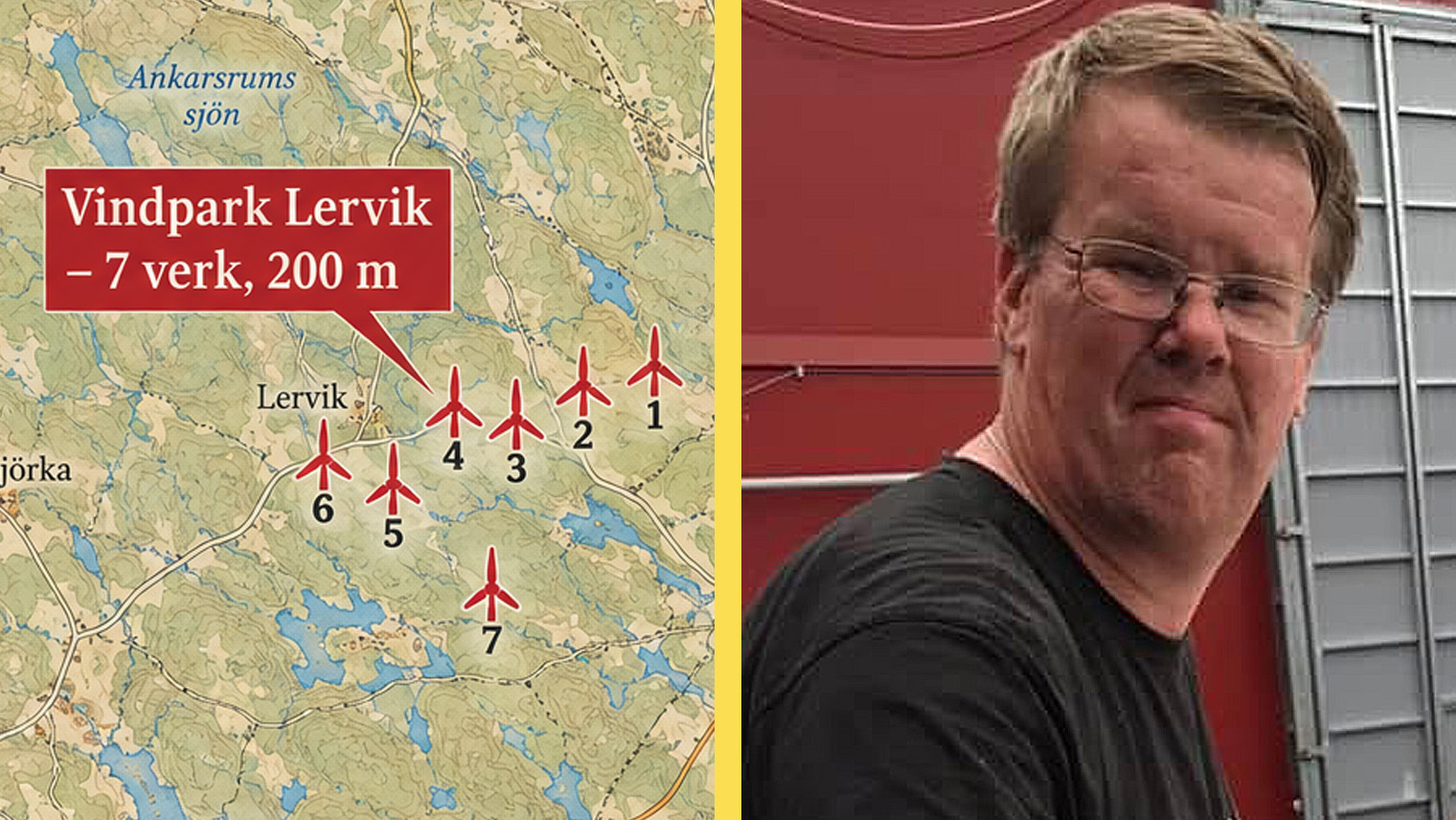
This is also the mechanism Gustafsson describes from his own sale. For holiday homes and cottages, the problem can become particularly significant, since people who seek out the countryside often do so precisely for the nature and tranquility.
Are those types of properties affected more than a regular villa?
– Yes, that’s absolutely the case. If you want to get out into the woods sometimes, pick mushrooms and berries, and have it as quiet as possible – then you’ll definitely choose something else.
Gustafsson also points to another problem – the uncertainty even before a wind farm is built.
– I find it hard to see that many people would put a couple of million into buying a house where there might one day be a wind farm, or where there’s a project ongoing, when you don’t know at all how much it will disturb you.
Once the turbines are up, at least buyers can go and form their own impression.
– Once they’re up, you have facts about how much they disturb. You can just listen.
READ ALSO: The Wind Turbine’s Noise Tormented the Village – Now It Will Be Torn Down
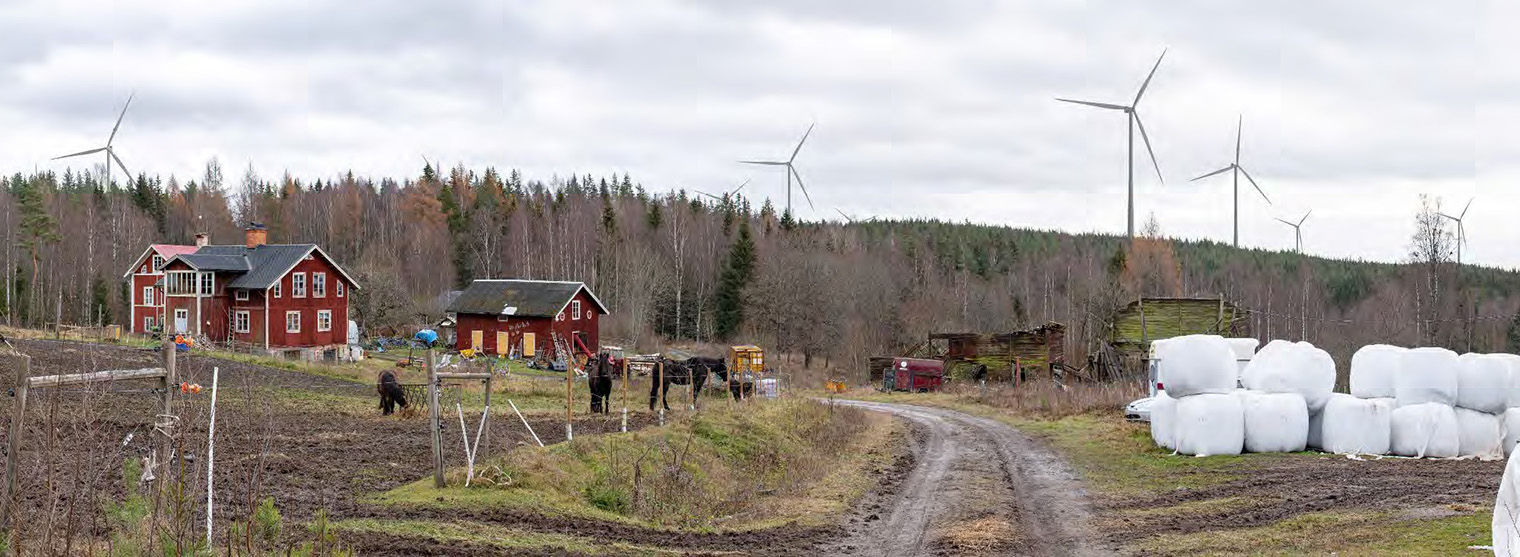
Gustafsson also points out that a daytime viewing doesn’t always give the full picture of how wind turbines affect the residential environment.
The red obstacle lights and the white ones flashing from the turbines at night are naturally not visible when prospective buyers visit in the daytime – even though these lights can be an impact that the future buyer will have to live with.
Real Estate Agent in Ludvika: “Significantly Harder to Sell”
Samnytt has also spoken with Mats Hansson, real estate agent at Fastighetsbyrån in Ludvika, working in the Ludvika and Smedjebacken markets. Hansson has long experience in real estate and deals with villas, holiday homes, and rural properties.
It becomes significantly harder to sell. Especially when it’s at the planning stage, then there’s a sort of cold shoulder. They don’t know if there will be wind power. What will it look like? How will it affect me?
Mats Hansson, real estate agent
Hansson also confirms that nearby wind turbines can affect property values, but he is significantly more cautious than Gustafsson about giving a general percentage figure.
– You can’t say it’s 10, 20, or 30 percent. You just can’t.
According to Hansson, factors like noise, lights, and distance play a big role. If the turbines are one or two kilometers away, he considers the impact is normally less, while about 500 meters can make a big difference.
Does the property become harder to sell?
– It becomes significantly harder to sell.
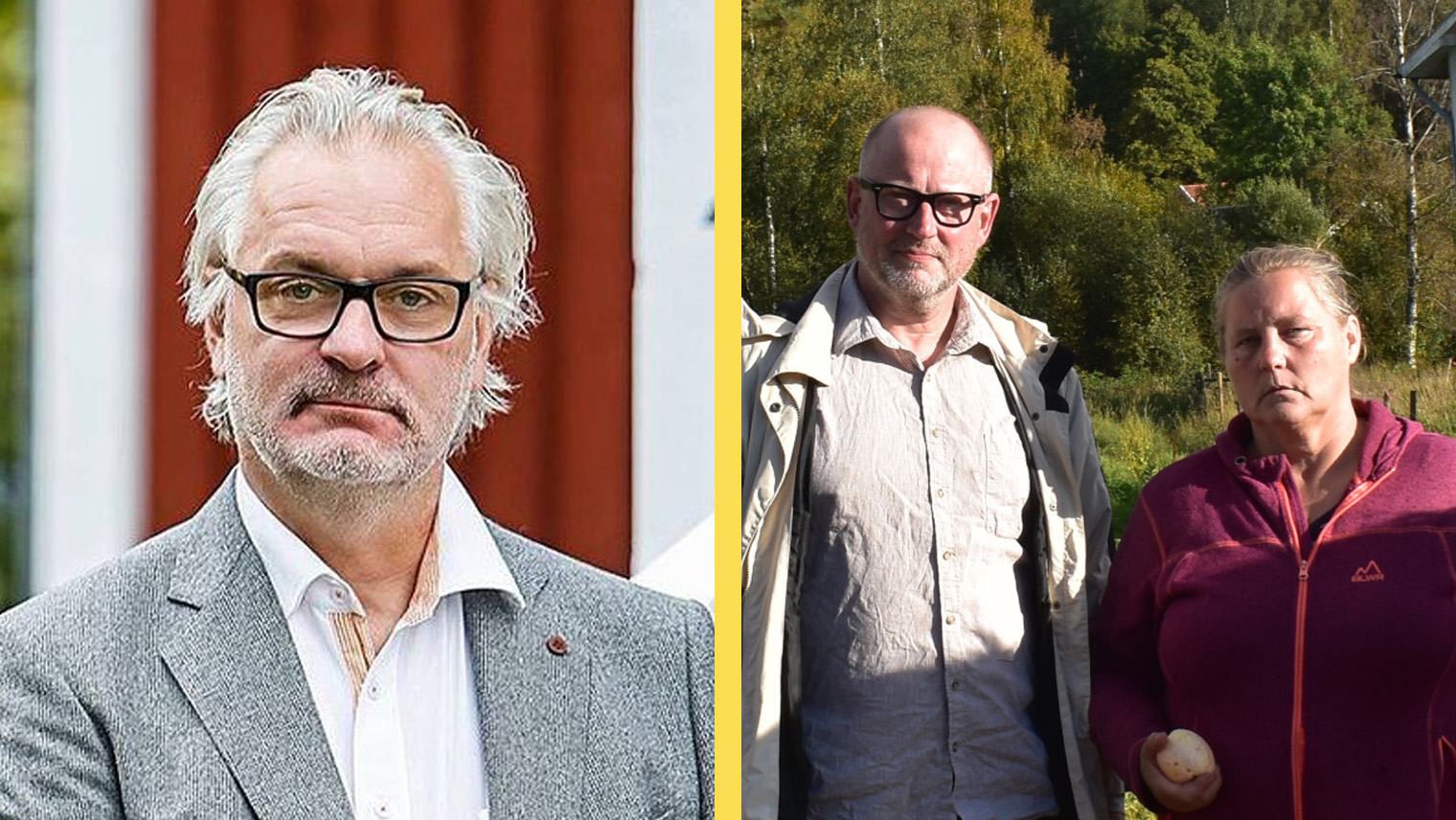
He says there are buyers who simply walk away. The period when a wind farm is still being planned can be especially problematic.
– Especially when it’s at the planning stage, then there’s a sort of cold shoulder given to it.
Potential buyers then neither know if the turbines will really be built, nor exactly how they will affect the home.
– They don’t know if there will be wind power. What will it look like? How will it affect me?
Value Halved for Sven and Görel
This problem isn’t new. Samnytt previously reported on Sven and Görel Willén in Resmoren in Smedjebacken municipality. When they bought their property, it was, according to the couple, valued at about three million kronor.
READ ALSO: The Threat from Wind Power Halved Sven and Görel’s House Value
When wind power was planned about a kilometer from the residence, a new valuation was done – and according to the couple, the value had then dropped to around 1.5 million kronor, a halving.
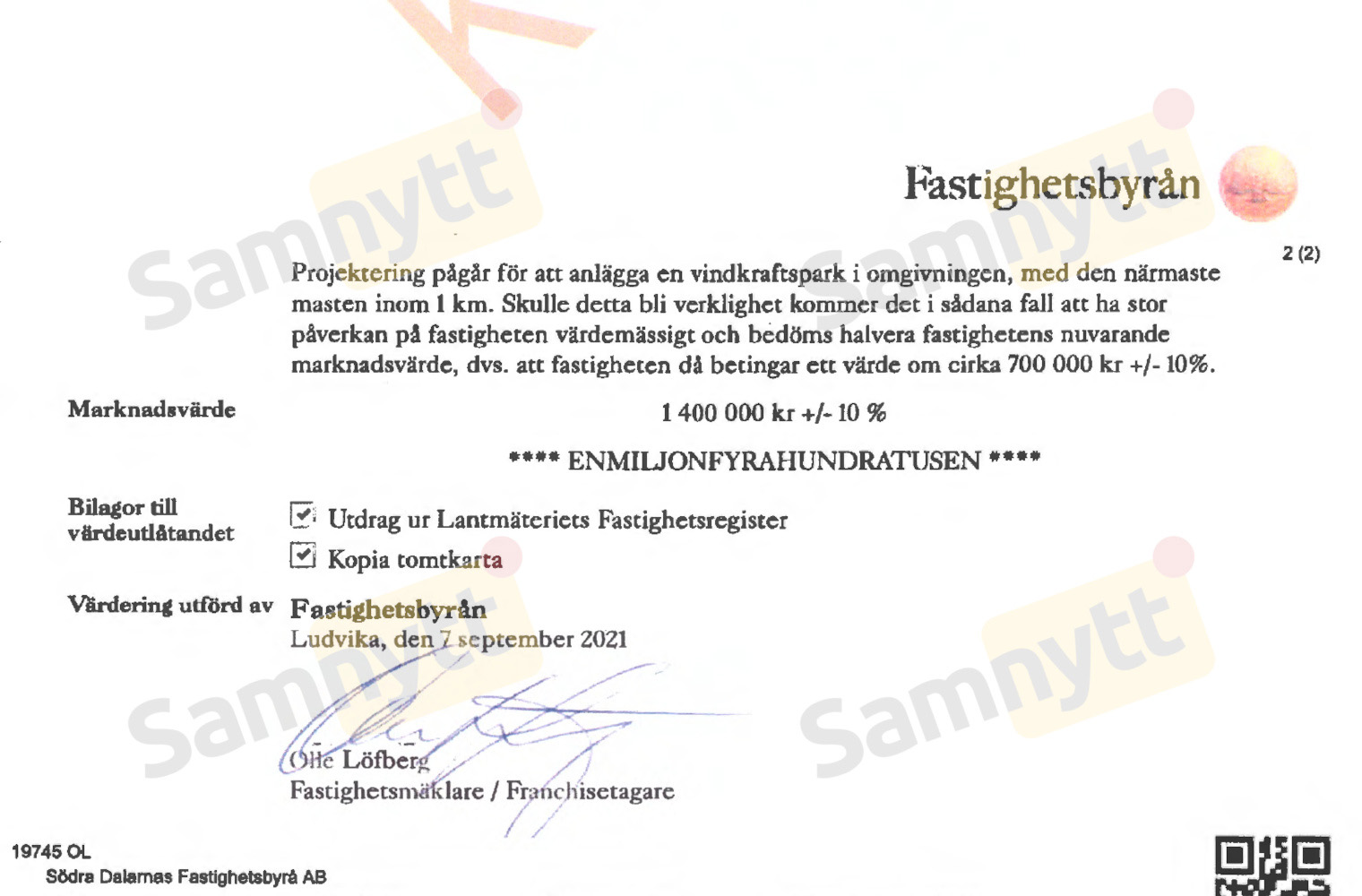
When we bring up the case with Hansson, he does not recognize such a dramatic change in value.
Have you heard of such dramatic impacts on value?
– No, I haven’t.
Therefore, he does not want to comment on the Willéns’ specific case. However, he is clear about the general trend. Hansson also believes that holiday homes may be especially sensitive since buyers are more likely seeking nature, views, and tranquility.
– It sounds completely logical.
READ ALSO: Wind Power Industry Attacks Alternative Media: Spreads Russian Disinformation that Wind Power is Bad
Who Pays?
Perhaps the most sensitive question is who ends up bearing the cost when a landowner leases land for wind power, while the value of neighboring properties is affected.
Hansson assesses that the loss in practice mainly falls on the property owner.
Who actually ends up bearing the financial loss?
– I believe the majority falls on the property owner.
Gustafsson points to the same issue. The business is done between the wind power company and the landowner who provides the land, while the consequences can spread to other nearby properties.
– The landowner who has the turbines on their land affects many smaller properties in the surrounding area.
Gustafsson also says he’s heard about compensation systems in other European countries and notes that the state does not pay any equivalent compensation directly to affected property owners in Sweden.
READ ALSO: Wind Power Progresses Slowly – Now Swedes Are to Be Bribed to Accept the Turbines
However, since July 1, 2026, there is a new Swedish system with wind power compensation for locals near new wind farm developments. It’s not the state that pays. The compensation comes from the wind power company and applies to owners of residential buildings within nine turbine heights.
They are huge. Really huge. Comparing them to the Eiffel Tower, that says something.
Anders Gustafsson, real estate agent
The compensation increases the closer the residence is to the turbine. The rules apply to new installations – mainly those whose environmental permits become legally binding after July 1, 2026, and certain installations that received municipal approval after November 6, 2025.
They therefore do not include any general right to compensation for everyone already living near Swedish wind turbines.
The Next Generation: 300 Meters
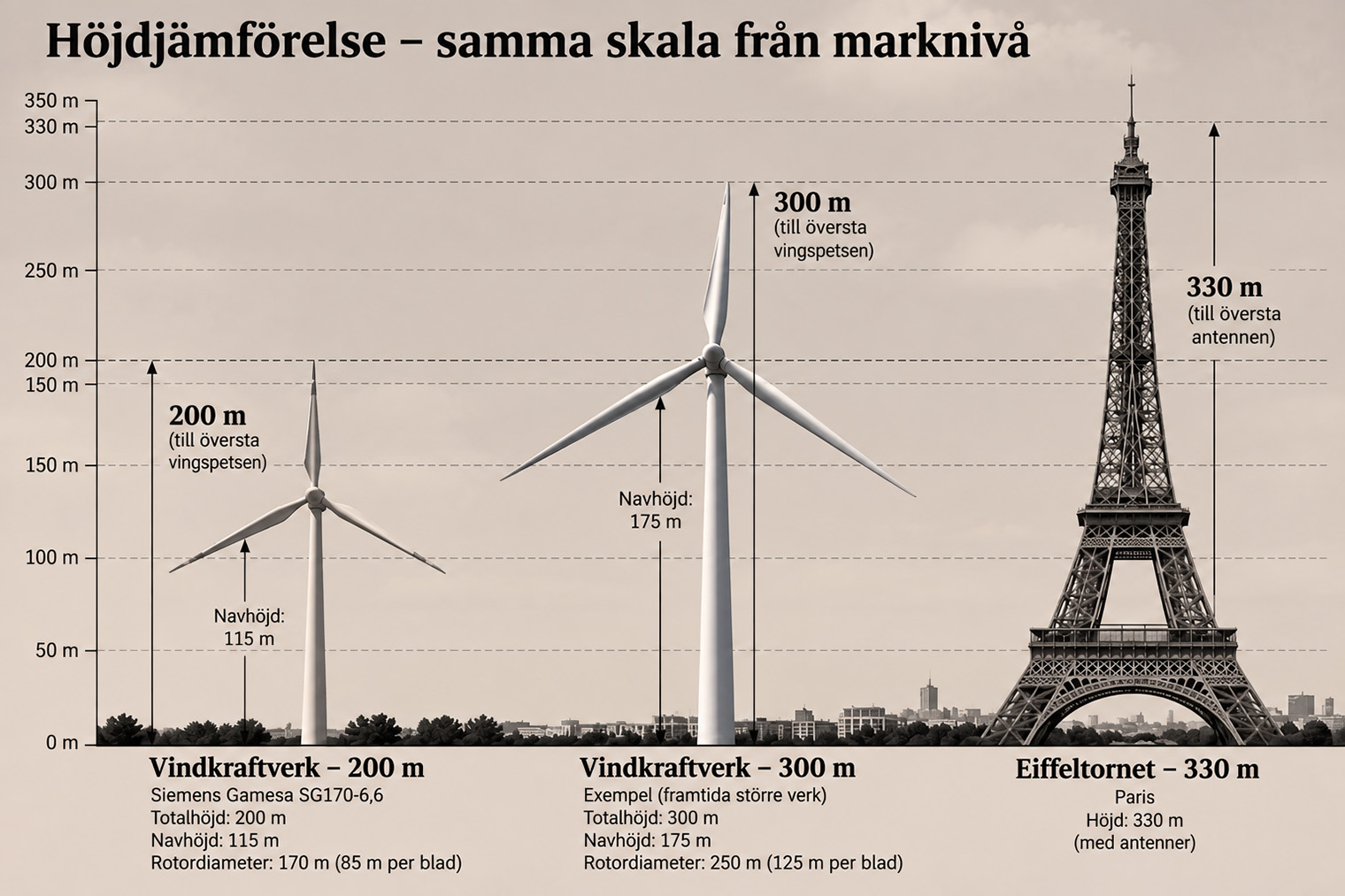
Meanwhile, wind turbines are getting taller. The seven turbines in Lervik are 200 meters from ground to the tip of the blade. But 300-meter turbines are no longer just a future speculation.
In July, the government granted permission for up to 85 wind turbines with a maximum total height of 300 meters at Hästliden in Markbygden outside Piteå.
When Samnytt asks Gustafsson about this development, he reacts to the dimensions.
– They are huge. Really huge. To compare with the Eiffel Tower [330 meters with the antenna, editor’s note], that says something.
What could even taller turbines mean?
Gustafsson does not want to put a figure on the value effect of 300-meter turbines. However, he states that taller turbines are visible over a larger area.
– They can be seen from a greater distance, of course. That probably affects more people.
There is thus no basis in the interview to claim that a 300-meter-high turbine would, for example, reduce a home’s value by 40 or 50 percent.
But Gustafsson’s own experience from Lervik shows what can happen even with today’s 200-meter turbines – prospective buyers disappear, bidding can fail to materialize, and the final price can end up far below a previous valuation.
The holiday home in Lervik had, a few years previously, been valued at around 1.4 million kronor. After the wind turbines were built, the value had nearly halved.
investigations?
Do you appreciate Samnytt? Show it with a subscription or donation.
DONATE VIA SWISH
123 083 33 50