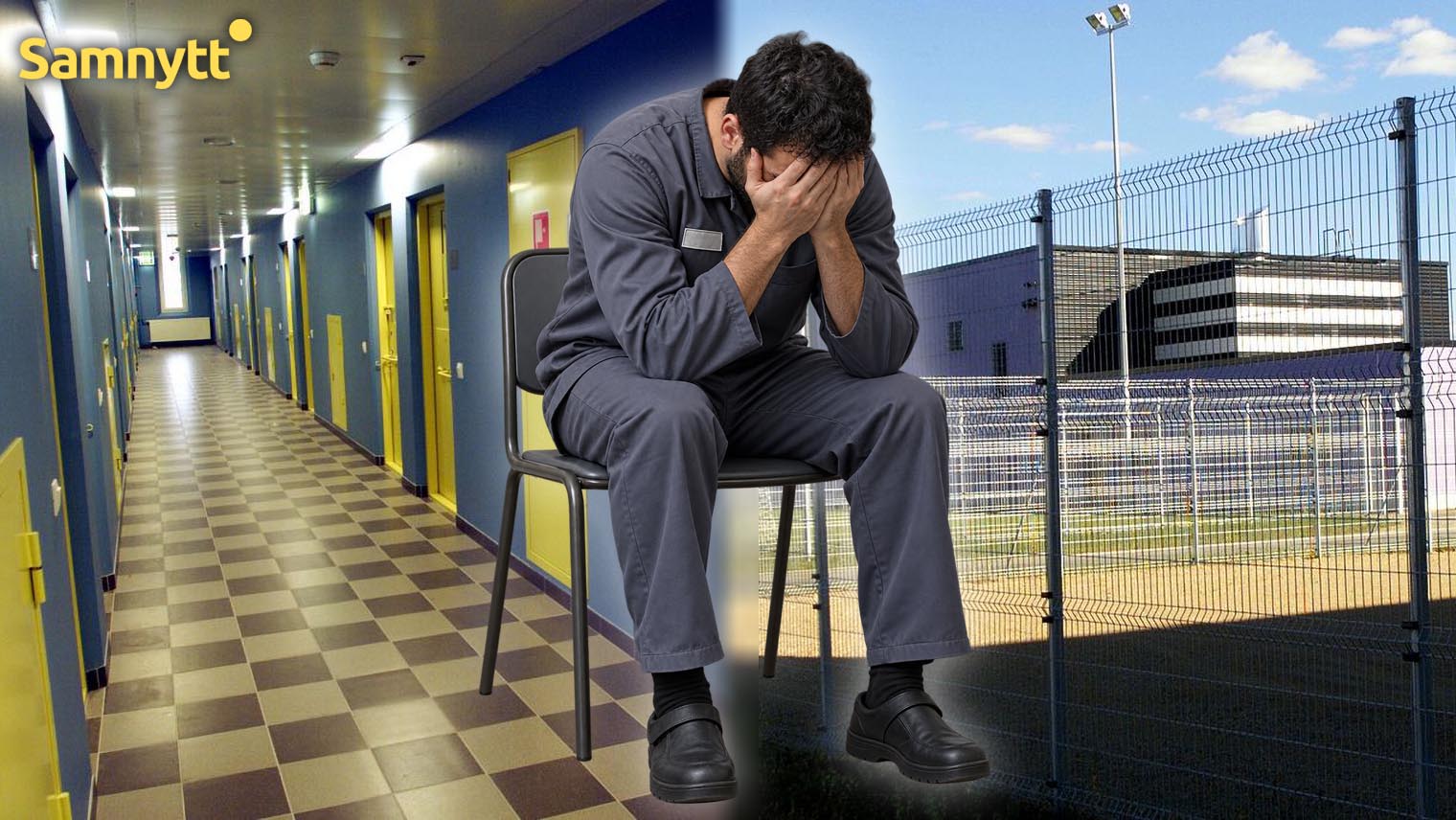
Serious criminals transferred from Sweden to prison in Estonia are dissatisfied with life behind bars. The food is too monotonous, the mattresses too thin, and the opportunities to use tablets too limited. In an open letter, the inmates demand the same conditions as in Swedish prisons. They also level accusations of racism against the staff.
It was to relieve the overburdened Swedish correctional system that the Tidö parties decided to start renting prison places abroad. In June 2025, Sweden and Estonia signed an agreement allowing for the placement of up to 600 Swedish prisoners at the Tartu prison.
The first inmates were transported across the Baltic Sea in August this year. These are adult men, many with immigrant backgrounds, who have been convicted in Sweden of, among other things, violent crimes, sexual offenses, and financial crime.
Those with extensive medical needs or particularly high security risks, such as links to organized crime, are not to be considered for transfer. However, what the government described as an important solution to the Swedish prison crisis has not been appreciated by all affected inmates.
In an extensive open letter published in the independent magazine Kriminalvårdsmagasinet, several of the Swedish prisoners now express deep dissatisfaction with the conditions in Tartu. Many have prior experience at Swedish facilities where the comfort level was significantly higher.
Chicken, Soup, and Too Little Fruit
A significant part of the complaints concern the food. The inmates complain about being served chicken at almost every meal and that the variation is too limited. According to the letter, lunch typically consists of some form of boiled stew, while dinner is soup. The vegetable selection is said to mainly consist of carrots, either boiled or grated. Fruit is only served three times a week, and then only apples.
The prisoners have therefore requested other options, such as beef, bananas, and oranges. But according to the letter, the Estonian staff have rejected these wishes, citing the costs.
READ ALSO: CONFIRMED: Criminals in Sweden Sent to Estonia – The Cost
Serving sizes are also a point of discontent. The inmates claim that staff weigh the food and that dinner portions can be limited to 350 grams. They fear that the one-sided diet will lead to nutritional deficiencies and negatively affect their mood.
Mattresses Too Thin and Not Enough Laundry
In other respects, the transferred prisoners believe prison life leaves much to be desired. The mattresses are reportedly only five centimeters thick, which they deem insufficient. Opportunities to wash clothes are limited, and according to the letter, each inmate receives only one towel, which can be washed together with bed linen every fourteen days.
There are also only three showers for inmates in each ward, which can accommodate up to 44 people with double occupancy. According to the prisoners, the common areas are sized for far fewer people than the wards can house. They also complain that staff enter the cells without knocking, that monitoring occurs at night, and that guards sometimes enter while they are showering.
Another source of irritation is that the tablets supplied do not work as expected. They cannot make voice calls, nor do the inmates have access to the tablets around the clock. They feel that the conditions differ too greatly from what they were used to in Swedish prisons.
Refused To Be Locked Up – Riot Squad Intervened
Another stumbling block is the daily lock-ins. Since September 23, the inmates, according to the letter, have been locked in their cells for one hour at lunch and another hour at dinner. This forces them to eat in their cells instead of in communal areas.
On one occasion, several inmates refused to comply with the instructions. According to their own account, the prison’s riot squad was then called in to return them to their cells.
READ ALSO: Swedish Prison Agreement with Estonia May Be Canceled: “You Have To Take Care of Your Own Trash”
The inmates question whether such routines comply with the agreement between Sweden and Estonia and demand to know which Swedish prisons use similar rules.
Accuse Staff of Racism
The letter also includes accusations of racism. Several inmates with foreign backgrounds—neither Estonian nor Swedish—claim to have been subjected to discriminatory treatment by Estonian security staff.
According to the letter, prisoners of certain ethnic or religious backgrounds have been questioned about connections to the terrorist organization ISIS, relatives’ involvement in the war in Syria, and how they would feel about sharing a cell with a Jew. They also claim that dark-skinned inmates have, in some situations, been treated differently than white inmates, including during searches and regarding access to CD players.
READ ALSO: Prisoners from Sweden Shocked in Estonia: Served Food in Dog Bowls
Furthermore, the staff are accused of having tried to prevent prisoners from contacting journalists. According to the letter writers, they were warned that media contacts could complicate communication with relatives and cause security problems between Sweden and Estonia.
These are claims by the inmates themselves. No independent evidence for the accusations of racism is presented in the letter.
Lack of Activities and Religious Imam Service
The prisoners are also unhappy that the promised work or other activities have not begun. According to them, the agreement provides for 30 hours of activities per week, but after more than a month at the facility, they had still not been offered work or other organized activities. According to the writers, this is a financial disadvantage, as they therefore miss out on pay that could be used for buying toiletries, coffee, and supplementary food.
They also complain about insufficient opportunities to practice their religion. They specifically mention the difficulty for Muslim inmates to get in touch with an imam. According to the letter, they have been told there is only one imam in all of Estonia, and that no imam visits the institution.
Family Contact Complicated
Another objection concerns the selection of prisoners sent to Estonia. The letter writers point out that those transferred had behaved well during their time at previous Swedish facilities.
As an example, they mention one man previously placed in Malmö who has a daughter two and a half years old. According to the letter, the man had regular visits from the child and her mother, but the ability to maintain contact has been significantly reduced after the move to Estonia.
He appealed his placement on the grounds of the child’s need for contact with her father, his ongoing rehabilitation, and the fact that he only had about 18 months left on his sentence. The appeal was rejected.
READ ALSO: Estonia Refuses to Accept Gang Criminals and Terrorists from Sweden
The inmates also bring up a case where a prisoner with extensive health problems was reportedly transferred to Tartu despite needing specialist care. Additionally, they accuse the Swedish Prison and Probation Service of changing information about certain inmates’ connections to criminal networks in order to facilitate placements in Estonia, even though the country does not wish to receive gang criminals. However, the letter provides no documentation to back up these claims either.
Demand Same Conditions as in Sweden
Throughout the letter, there is a recurring demand that prisoners convicted in Sweden and serving their sentences in Estonia should be treated the same as if they were in a Swedish prison. They object to the possibility that Estonian rules and routines could mean worse conditions compared to Sweden.
The writers want to know, among other things, how much money is allocated for food, why they have to pay for visitor rooms, and whether there are Swedish prisons with comparable mattresses, occupancy, and lock-in routines. They also demand that Swedish decision-makers be held accountable for the conditions described.
– We have committed crimes in Sweden, and we are entitled to the same rights and conditions as are provided at a Swedish facility.
That they committed crimes is thus not something the writers try to deny. However, they consider that the consequences of their crimes should not include a lower standard than that of the Swedish correctional service. Had they known beforehand that they would be shipped off to a less comfortable prison in Estonia, they may have thought twice before committing the crimes.
READ ALSO: Estonia Stops the Majority of Prisoners from Sweden
For the crime victims affected by the acts leading to these prison sentences, complaints about chicken stew, thin mattresses, and limited access to tablets may seem trivial. But the question of how far Sweden is obliged to guarantee Swedish prison conditions even when sentences are served abroad is a fundamental one.
The agreement with Estonia is based on the execution of sentences maintaining an equivalent standard, but does not mean all Swedish routines are automatically applied. The Estonian Department of Corrections is responsible for daily operations and Estonian law applies as a rule, with the exceptions and special provisions outlined in the agreement.
The letter was published in Kriminalvårdsmagasinet on October 16. No response from the Swedish or Estonian correctional authorities is included in the presented material.