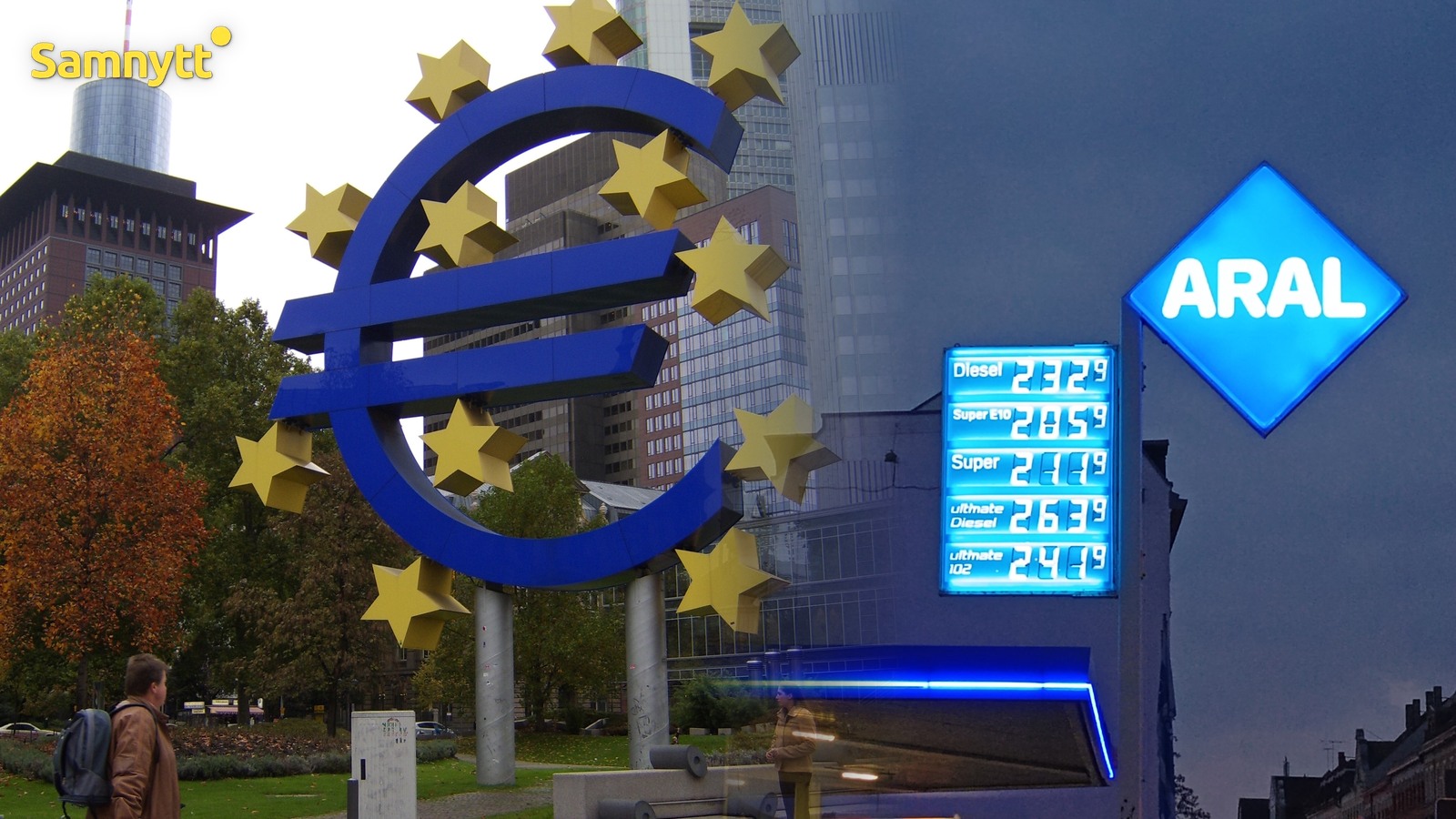
Inflation in the euro area rose to 3.8 percent in September, the highest level since autumn 2023. At the same time, Sweden had the lowest rate of price increases among all 27 member states, at 1.0 percent according to the EU’s comparable inflation metric. The rise is mainly driven by more expensive energy, while falling food prices have helped keep inflation down in Sweden.
According to Eurostat’s final figures, inflation rose from 3.2 percent in August, both in the euro area and in the EU as a whole. A year ago, inflation stood at 2.2 percent in the euro area and 2.6 percent in the EU. Inflation increased in 23 member states, remained unchanged in three, and declined in only one.
Energy prices in the euro area were 18.9 percent higher than a year ago and accounted for the largest part of inflation, at 1.7 percentage points. Services contributed 1.5 percentage points. Excluding energy, inflation was at 2.3 percent.
Romania had the highest inflation at 6.5 percent, followed by Lithuania at 6.1, and Bulgaria—which introduced the euro at the turn of the year—at 5.6 percent. Among the larger eurozone countries, Spain was at 5.0 percent, Italy at 4.2, France at 3.4, and Germany at 3.3 percent. After Sweden, Hungary and Denmark had the lowest inflation, at 2.1 percent each.
Cheaper Food but More Expensive Electricity and Fuel in Sweden
Inflation is also rising in Sweden, but from a low level. According to the harmonized HICP metric, it rose from 0.3 percent in August. A year ago, Sweden stood at 3.2 percent, which was then above the EU average.
Statistics Sweden’s figures show the same pattern. Electricity prices were 17 percent and fuel prices 20 percent higher than a year ago. At the same time, food was 6.5 percent cheaper, which alone lowered the rate of inflation by 0.8 percentage points. Dental care and public transportation have also become cheaper due to reforms in both areas.
Why the Figures Differ
The HICP is used to compare countries in the EU. The Riksbank, Sweden’s central bank, instead targets the CPIF, which according to Statistics Sweden rose from 0.7 to 1.5 percent in September. Excluding energy, CPIF inflation remained at 0.5 percent, showing how much of the increase is coming from electricity and fuel.