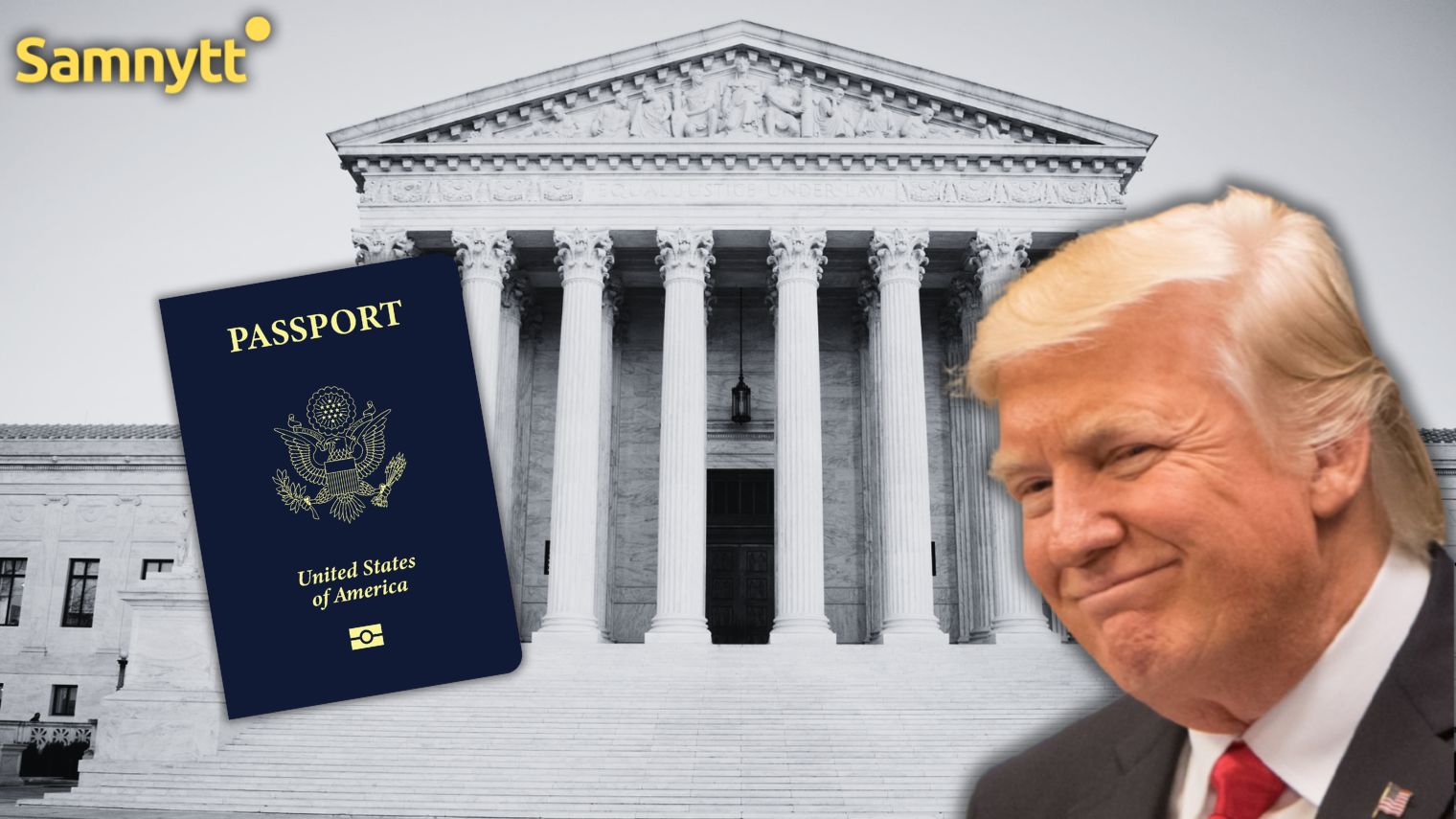
Donald Trump’s attempt to restrict automatic American citizenship has been stopped by the U.S. Supreme Court. In a much-discussed ruling, decided by a 6–3 vote, the Court held that the 14th Amendment continues to guarantee American citizenship to virtually all children born on U.S. soil—even if the parents are in the country illegally or only temporarily.
The ruling marks one of the most significant setbacks to Trump’s immigration agenda during his second term. Through an executive order, Trump had tried to change the long-standing interpretation of the Constitution’s so-called Citizenship Clause, arguing that children of people without legal right to be in the U.S. should not automatically become American citizens.
The issue of so-called birthright citizenship has long been a symbolic topic for the American anti-immigration right. Critics claim that the current system creates incentives for illegal immigration and so-called ‘birth tourism,’ where pregnant women travel to the U.S. so that their children can receive American citizenship.
READ ALSO: Europeans can flee multiculturalism and restricted freedom of expression to the USA
The Trump administration argued that the phrase ‘subject to the jurisdiction thereof’ in the 14th Amendment was never intended to cover people who are in the country illegally or only temporarily. However, the Court’s majority rejected that interpretation, referencing more than a century of established legal practice.
Chief Justice John Roberts wrote the majority opinion, emphasizing that the constitutional provision has a clear historical meaning that cannot be altered through an executive order. The decision builds on the leading case United States v. Wong Kim Ark from 1898, which has long established the American principle of citizenship by birth on U.S. territory.
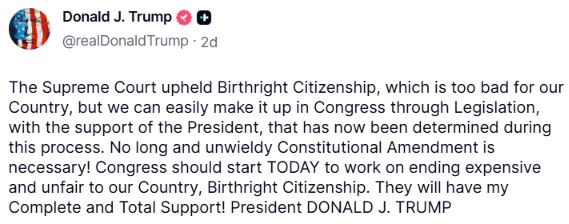
Trump: We can do it through Congress
Shortly after the ruling, Donald Trump indicated that he does not intend to abandon the issue. On Truth Social, he urged Congress to immediately begin work on new legislation to restrict birthright citizenship.
White House Deputy Chief of Staff Stephen Miller also strongly criticized the decision, calling it ‘one of the most destructive and outrageous decisions in Supreme Court history.’ He further wrote that ‘American citizenship is not the world’s birthright.’
Several conservative organizations are now instead calling for a constitutional amendment. However, such a process would require a two-thirds majority in Congress and subsequent approval by three-quarters of U.S. states—a very high political hurdle.
Could impact the immigration debate ahead of the midterms
Even though Trump lost in court, the issue is expected to play a major role in the ongoing American immigration debate. For several years, Republicans have pointed to automatic citizenship as a driving force behind illegal immigration, while opponents see the decision as a necessary defense of a constitutionally enshrined right.
The ruling means the constitutional order remains—but the political battle over who should be able to become an American citizen is far from over.
READ ALSO: Trump sets quota on the number of refugees with focus on white South Africans