
The government’s initiative to reduce Sweden’s climate emissions through projects in Ghana is now facing major headwinds. One of the largest climate compensation projects is being completely cancelled after no verifiable emission reductions could be demonstrated, while other parts of the same climate strategy are also questioned for lacking effect.
The Swedish Energy Agency has now chosen to halt a climate project in Ghana where Sweden, through international emissions trading, was to claim emission reductions from solar panel installations. After several years in operation, no actual emission reductions have been confirmed and the agency assesses that the timeline can no longer be maintained.
The project was intended to contribute up to 165,000 tons of reduced carbon dioxide emissions by 2030, but according to reviews, progress has been severely lacking. The Energy Agency also states that it cannot even confirm that solar panels have actually been installed to the planned extent.
The core of the arrangement is so-called international climate compensation, where Sweden invests in emission reductions abroad and then counts those reductions towards its own climate targets. Criticism has long focused on the difficulty of verifying real climate benefits and whether the projects are truly “additional”—that is, that they would not have happened anyway.
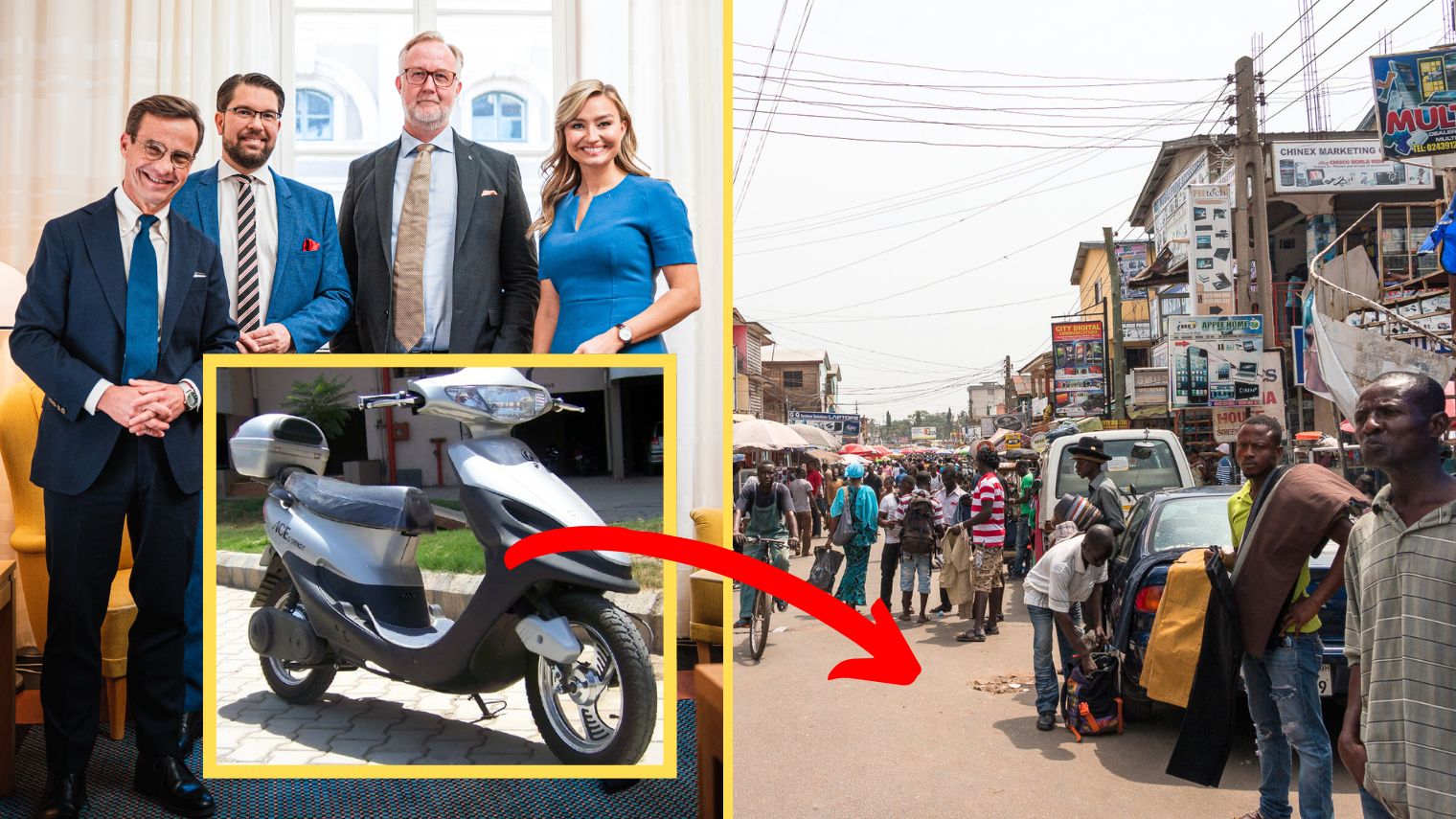
E-scooters for 109 Million Kronor
SEE ALSO: Red-green government buys negative emissions for 2 billion: “It costs to save the climate”
In parallel with the solar panel project, other climate efforts in Ghana have also attracted attention. Notably, this includes a government initiative of about 109 million kronor aimed at introducing tens of thousands of electric scooters in the country, with the goal of reducing emissions by replacing fossil-fuel vehicles.
This project has also been surrounded by criticism and uncertainty regarding its implementation and actual climate benefits. Previous investigations have shown that the rollout has proceeded more slowly than planned and that only a fraction of the promised vehicles have actually been delivered.
Big Ambitions – Meager Results
All in all, the developments point to a broader problem with Sweden’s strategy to buy emission reductions abroad: big ambitions on paper but recurrent difficulties in practice to deliver concrete and verifiable results.
For the government, the developments signify a sensitive setback for a model that has been presented as an effective tool for achieving climate goals but which is now, once again, under intense scrutiny regarding transparency, delivery, and actual climate benefit.
READ MORE: Tidö government’s climate initiative: 109 million kronor on e-scooters in Ghana