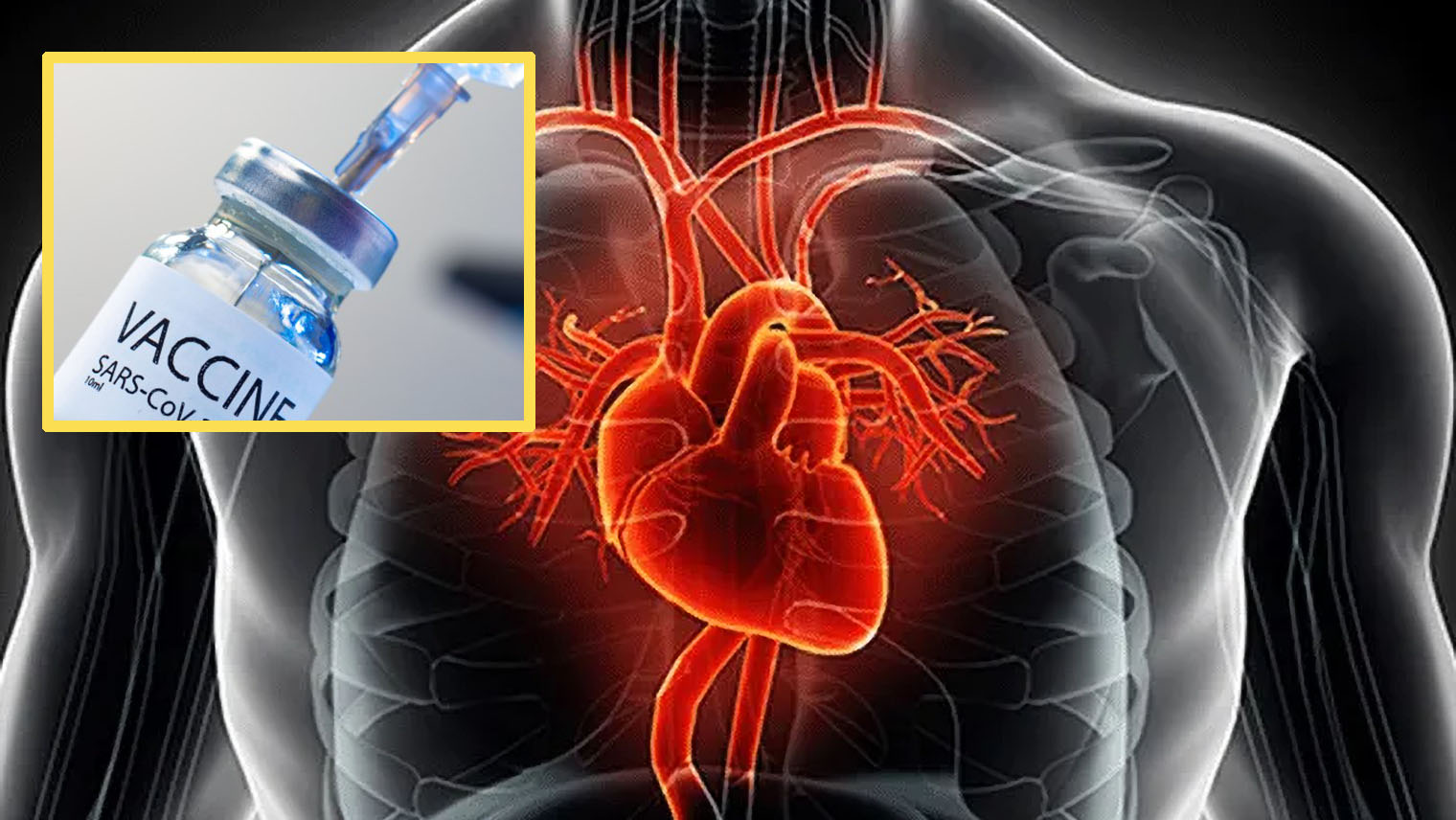
Researchers at Stanford have mapped a rapid, two-step immune reaction that may underlie the cases of myocarditis (inflammation of the heart muscle) observed after mRNA vaccination against COVID-19—primarily among young men. The study also points to a possible way to dampen the reaction. At the same time, the researchers emphasize that the risk of being affected is low—lower than the risk that COVID-19 itself can cause heart inflammation.
Myocarditis after mRNA vaccination is rare, but it has attracted significant attention since mass vaccinations began. The condition has mainly been reported in teenage boys and young men, often within 1–3 days after the second dose. Common symptoms include chest pain, shortness of breath, and palpitations.
According to the researchers, most cases resolve relatively quickly with supportive treatment—such as rest, observation, and anti-inflammatory therapy—while the heart recovers. This is reported by the Los Angeles Times.
Two Immune Substances Identified
In the new study, published in Science Translational Medicine, the researchers describe a two-stage process in the immune system: Macrophages (immune cells that act as early “first responders”) react to mRNA vaccines and release the signaling molecule CXCL10. This triggers T cells to increase production of interferon gamma (IFN-γ).
READ ALSO: Study: COVID Vaccine Causes Significantly Increased Risk of Heart Problems
Together, these substances can amplify inflammation and attract more immune cells to the heart tissue, where in certain individuals they can temporarily irritate or damage the heart muscle. The findings are based on analyses of patient samples as well as experiments in model systems, including tissue and animal models.
Myocarditis More Common After COVID-19 Than After Vaccination
The researchers state that the absolute risk after vaccination is low—in the order of a few thousand cases per billion doses, concentrated among young men. Previous data show that heart inflammation is significantly more common after a COVID infection than after vaccination.

The message from the research group is that this mechanism needs to be understood—not to create concern, but to better prevent and manage a rare but acknowledged side effect.
Soy Compound May Dampen the Reaction
In a more exploratory track, the researchers tested genistein, a soy-based compound with mild estrogen-like effects. In their models, genistein appeared to dampen parts of the inflammatory signaling and protect heart tissue.
READ ALSO: Serious Safety Warning May Be Introduced for COVID Vaccines in the USA
However, the researchers emphasize that this is not yet a clinical recommendation—the results come from experimental models, and the doses/formulations used in the lab differ from ordinary food or dietary supplements. More research is needed before it can be said if this could become a real preventive strategy.
Politicized Debate – Benefit Versus Side Effect
The myocarditis issue has become part of a polarized vaccine debate. Among critics of the experimental vaccines, it is often argued that “the cure is worse than the disease.” The researchers of this current study, however, state that mRNA vaccines have played a central role in reducing severe illness and death during the pandemic, and that the benefit at the population level has been much greater than the risk of rare complications.

With this new mapping, the researchers hope to contribute more factual knowledge: why the side effect occurs in certain people, and how it might, in the future, be mitigated without weakening the vaccine’s protective effect.
READ ALSO: