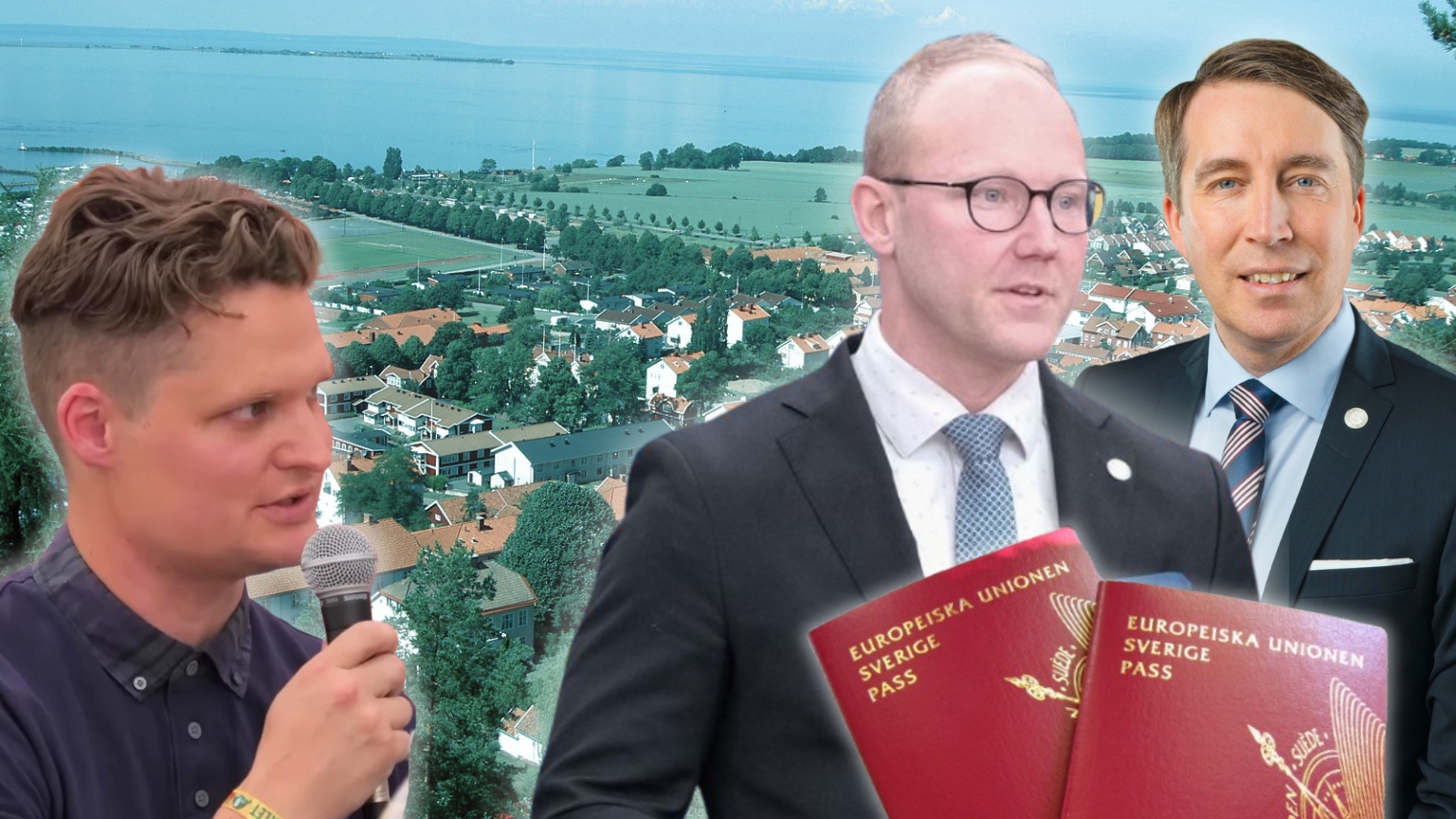
DEBATE • There are subjects that almost automatically trigger a particular kind of outrage in Swedish public debate. The question of who is really Swedish, and how the country’s demographics have changed, is one of them. As soon as someone talks about ethnicity, about the long-term position of the majority population, or about the cultural tensions that have followed with large-scale immigration, politically correct voices are raised crying racism, exclusion, and dangerous lines of division.
Yet these are exactly the questions that more and more Swedes, silently or aloud, have begun asking themselves. Not out of malice, but because of a growing sense of a fundamental shift in society. It is in this context that Ludvig Aspling’s statement in Dagens ETC belongs.
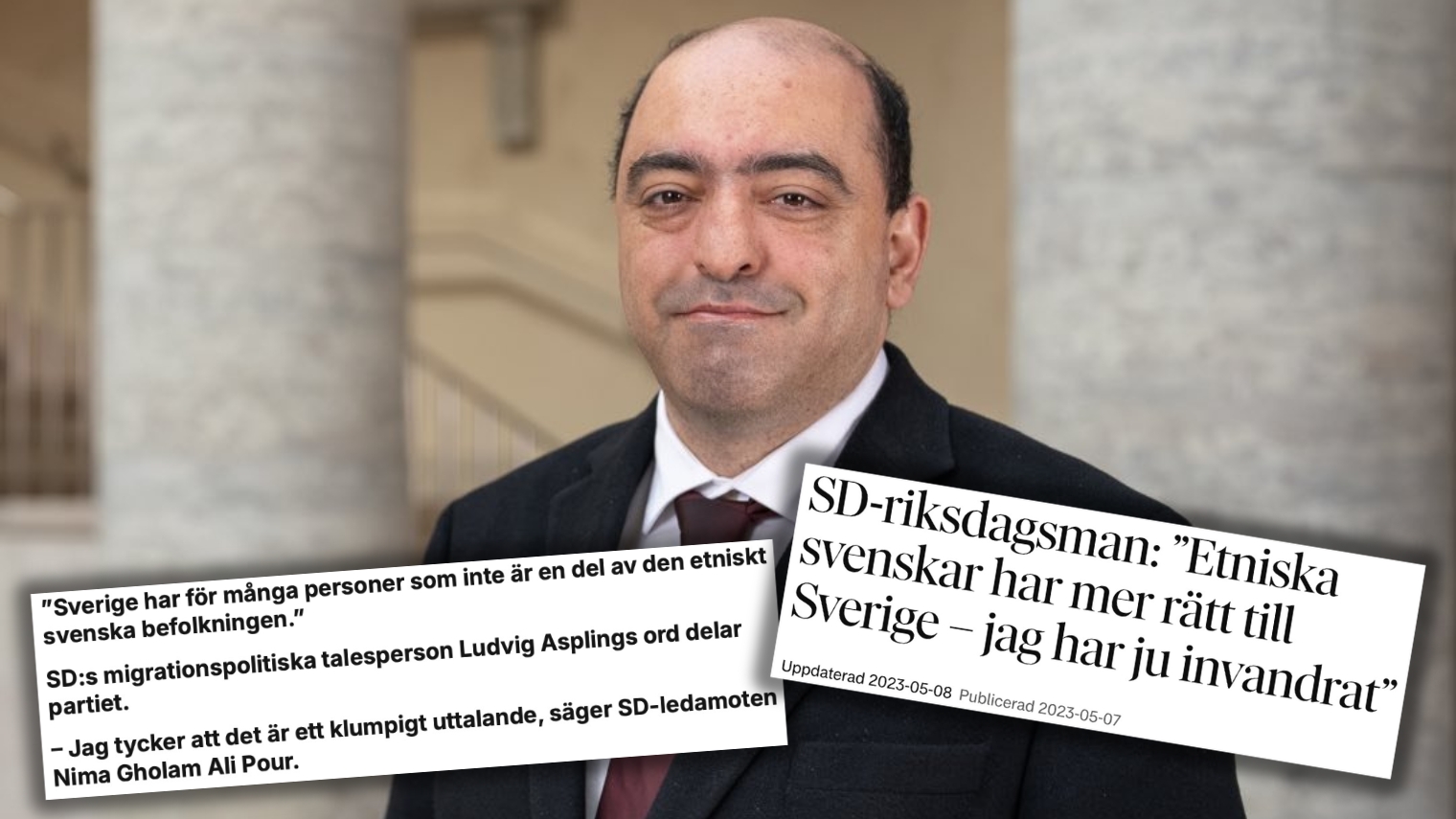
When he states that Sweden has far too many people who are not part of the ethnically Swedish population, and that this has created major problems, he is expressing something that many feel but few dare to speak openly about. Migration from culturally remote parts of the world must decrease, he argues. That is a conclusion strongly rooted in practical experience.
Within his own party, Nima Gholam Ali Pour has distanced himself and called the wording clumsy. He prefers to talk about the concrete consequences of immigration rather than the proportion of ethnic Swedes. This is an understandable position, coming from someone who himself came to Sweden as a child from Iran and who stands for an open view of Swedishness.
At the same time, he has previously said something much more straightforward. In an interview with Dagens Nyheter in 2023, he put it this way: “In my view, ethnic Swedes have more right to the country. I have immigrated.” This is a statement that shows that even he makes a distinction between ethnic Swedes and those who have immigrated.
Richard Jomshof has been even clearer. When the criticism against Aspling surfaced, and Ardalan Shekarabi (S) described the viewpoint as racist, Jomshof responded that Sweden belongs to Swedes. The Swedes have, over generations, built the country that now risks being fundamentally changed. To call this racism, he claims, is an expression of the hatred of Swedes that has taken root in parts of the political and media establishment.
Jomshof reminds us of the most fundamental point: we Swedes are Sweden’s indigenous population. Sweden is our home.
It is not enough, as party leader Jimmie Åkesson claims, to merely point to citizenship. He says: “What matters politically is that Swedishness is based on what citizenship you have.” But it is precisely politics that steers immigration – and thus the demographic development of the country.
To define Swedishness solely by a passport is thus problematic, since the same policies have, over a long period, fundamentally changed the composition of the population. Swedishness is more than a legal document. It is built on continuity, culture, shared history, and a sense of belonging that cannot be reduced to a passport.
This does not mean that the door should be closed to those who want to become part of what is Swedish. But we, like every other people, have the right to protect our own interests and the demographic and cultural cohesion that makes Sweden what it is. When the share of ethnic Swedes declines and we become a minority in parts of the country, and when crime and religious extremism largely follow immigration, we have a duty to point out the correlations.
Public service and large portions of the so-called mainstream media still treat these observations as dangerous. Left-liberal analyses are often reproduced without critical examination, while Swedes’ concerns are labeled as misinformation. Extensive remigration and clear assimilation requirements are depicted as something extreme. In fact, it is the only realistic path back to a Sweden built on togetherness.
To defend the status and culture of Swedes is to take responsibility. Aspling and Jomshof say what needs to be said. More must do the same.
Andreas Feymark
Think tank Heimr
Read more from Heimr think tank:
No Paradigm Shift – Continued Mass Immigration and Population Replacement
Conservative Border Control or Progressive Remigration Policy?