
The Sweden Democrats firmly reject the Moderate Party’s election pledge for a fast-track to Swedish citizenship for immigrants considered to be “well integrated.” In an interview with Samnytt, the party’s migration policy spokesperson Ludvig Aspling offers strong criticism of the proposal and warns of both security risks and an overly narrow view of integration. He also states that SD will not accept such a proposal in any potential future government negotiations.
Earlier this week, the Moderates presented an election promise that certain immigrants should be able to become Swedish citizens after only five years—despite the Tidö coalition recently tightening the main requirement to eight years’ residence in Sweden.
Migration Minister Johan Forssell (M) has argued that people who quickly learn Swedish, start businesses, or in other ways make valuable contributions to Sweden, should be eligible for earlier citizenship.
However, the Sweden Democrats do not share this view. When Samnytt asks Ludvig Aspling to comment on the Moderates’ announcement, he responds:
– This both contradicts the stricter rules recently introduced and also our view on the very concept of integration.
READ MORE: Moderates’ election pledge: Fast-track to citizenship for “well integrated”
“Integration cannot be measured by a mathematical formula”
Aspling believes the Moderates’ reasoning is based on an overly simplistic view of what integration means.
The Moderates argue that those who integrate quickly should be able to obtain citizenship earlier. Why don’t you agree?
– There are certain things that are fairly easy to measure, and this is what Johan Forssell is getting at here – that you could create some kind of mathematical formula whereby someone who has earned enough money and paid enough taxes gets a discount on citizenship.
– We see it from a different perspective. There is much more than economic activity that must be considered. Precisely because these things are hard to measure, the time factor becomes so important. That’s why we should not have any discount on citizenship.
– I also disagree with the idea that, for example, someone who has engaged in advocacy work should automatically be considered more important than others.
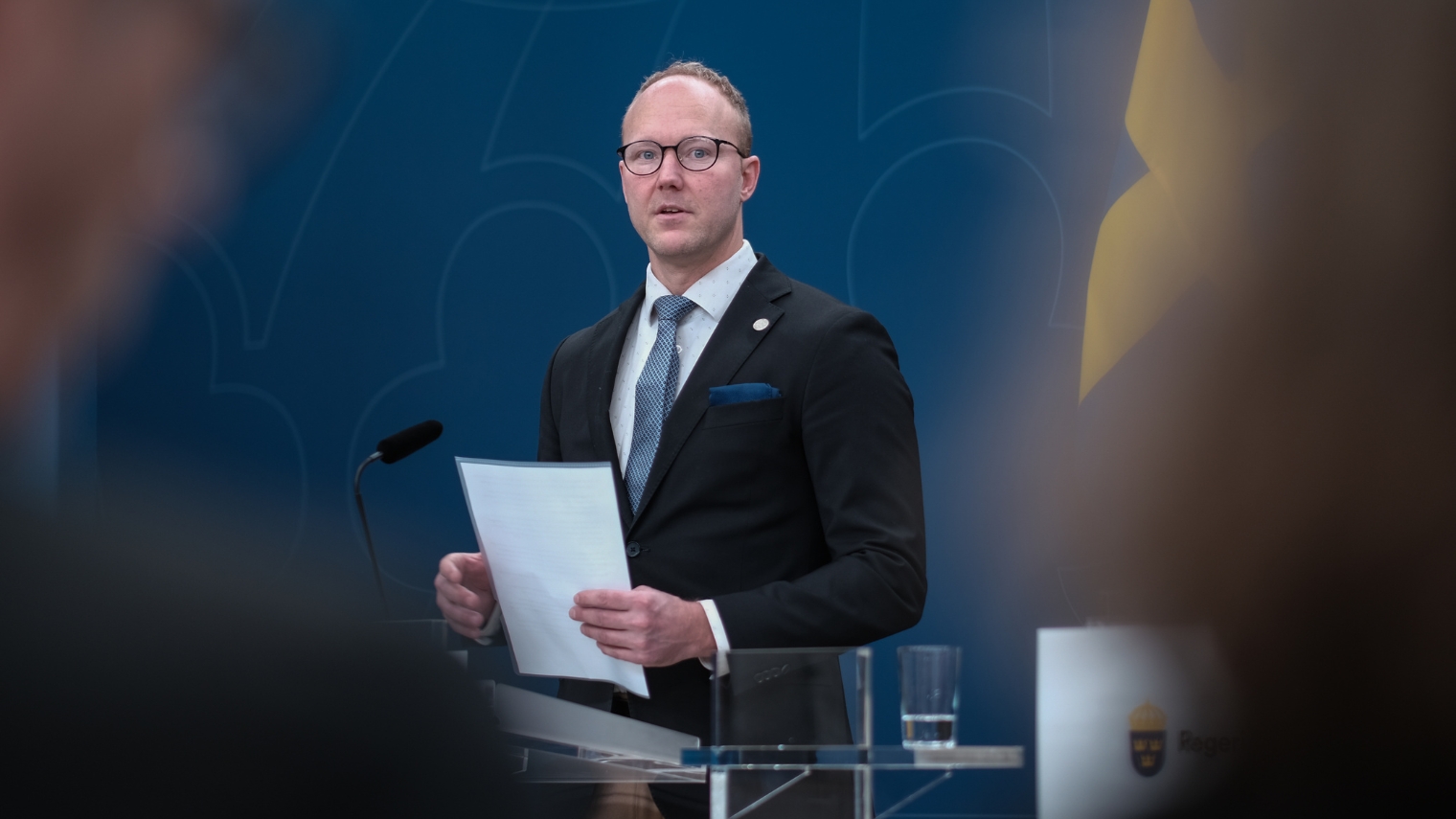
Warns of security risks
According to Aspling, the objections concern not only integration but also national security.
What risks do you see with a fast-track?
– Issues of conduct do not always manifest immediately. Neither do security problems. Imagine if a foreign state wants to exploit generous citizenship rules. Iran is already doing such things today. If you have resources behind you, it is quite easy to circumvent the rules.
– We know that both organized crime and hostile states have a very good understanding of our regulations and know how to exploit them. Such a system would definitely be exploited.
Aspling also argues that the Moderates’ reasoning—that Sweden risks losing well-integrated individuals if they have to wait a few more years—doesn’t hold up.
The Moderates highlight people who quickly establish themselves and, for example, work against honor-related oppression. Aren’t those reasonable exceptions?
– If a person is truly committed to fighting honor oppression or otherwise wants to contribute to Sweden, why couldn’t that person stay another three years? If someone actually wants to live in Sweden, there’s no reason to take that risk. We lose nothing by letting the main rule apply.

“A Moderate solo play”
Aspling also says that the Moderates’ proposal has never been part of the Tidö negotiations.
Has such a fast-track ever been discussed between the Tidö parties?
– No. The Moderates know that we would never agree to this. If there are new government negotiations, of course they can bring it up if they want, but this is nothing we will accept.
Revises criticism of Samnytt
The interview concludes with a question about an earlier statement by Migration Minister Johan Forssell. In June, Samnytt reported about a comment to Swedish Radio in which Forssell opened for possible exceptions from the new language requirements for citizenship for illiterate individuals.
READ MORE: Government opens for exceptions from citizenship requirements for illiterate people
After publication, Aspling criticized Samnytt and argued the reporting gave a false impression. Now, he nuances that criticism.
When we wrote about Forssell’s statement on possible exceptions for illiterate people, you criticized our article. Afterwards, you listened to the interview yourself. What’s your view today?
– That legislation had already been decided when Johan Forssell made the statement, so he had no opportunity to influence legal practice.
– I listened to the interview afterwards and I understand why you wrote what you did. It’s easy to get that impression. The journalist brought up a distressing case involving an illiterate person, and Forssell replied that there is an exception rule.
– But if you look at the rule, it applies to people with some kind of disability. Illiteracy is not counted as a disability in Sweden.
Aspling notes that Forssell’s wording in the Swedish Radio interview could very well be interpreted as if the exception rule also covered illiterate people, despite the fact that current legislation does not.
READ MORE: Ludvig Aspling: SD voters have not been fundamentally deceived