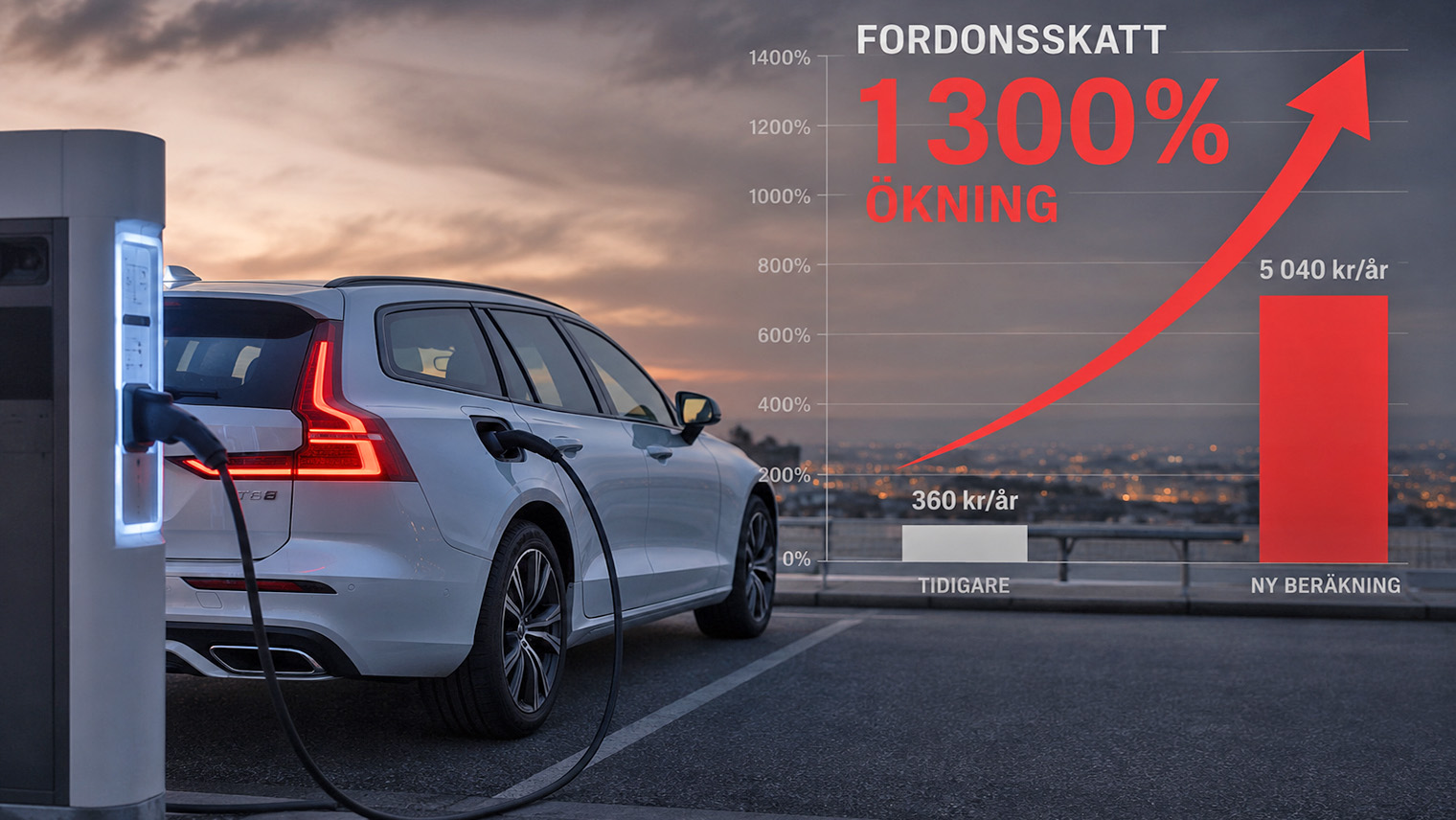
New EU rules for calculating the carbon dioxide emissions of plug-in hybrids are expected to have major consequences for Swedish vehicle taxes. For certain new models, the tax could increase by over 1,300 percent as of the turn of the year 2026/2027, while cars that are already registered will not be affected.
Anyone planning to buy a new plug-in hybrid after the turn of the year may have to anticipate significantly higher vehicle taxes than today. The reason is that the EU is introducing a stricter method for calculating the official carbon dioxide emissions of plug-in hybrids.
The change is based on the union’s assessment that many plug-in hybrids are in practice driven more on gasoline than what previous calculation models assumed. This is reported by Carup.
The consequence is that several models will receive higher official emission values, which, in turn, may push them over the threshold for Sweden’s malus tax during the car’s first three years.
According to Mobility Sweden, this means that some plug-in hybrids will face a much higher vehicle tax, while models with longer electric range can in many cases avoid major increases.
Big Differences Between Models
Vehicle economist Ronny Svensson at Ynnor warns that the new calculation method may make it harder for consumers to compare different plug-in hybrids. Two cars with similar purchase prices may have several thousand kronor difference in annual tax, solely depending on the carbon dioxide value assigned by the new EU rules.
READ ALSO: Motorists Furious Over Proposed Kilometer Tax on Electric Cars
However, the change only applies to new cars registered after the rules come into effect. Those who already own a plug-in hybrid or register it before the turn of the year will not be affected by the new calculation rules, according to Mobility Sweden.
Small Batteries Risk Highest Taxes
The biggest effects are expected to hit plug-in hybrids with smaller batteries and shorter electric range. Mobility Sweden estimates that models capable of about five to six miles (8–10 km) on electric power risk facing the largest increases, while cars with an electric range of about ten to fourteen miles (16–22 km) can more often keep a low tax rate despite higher calculated emissions.
READ ALSO: New Tax for Car Owners Aims to Boost State Coffers as Heavily Taxed Fossil Fuels Are Phased Out
The differences can be significant. A plug-in hybrid that previously had an official emission value of about 48 grams of carbon dioxide per kilometer can, after the new calculation method, end up at around 82 grams.
This would mean that the annual vehicle tax rises from today’s 360 kronor to about 3,500 kronor during the first three years. For some models, the tax is said to be able to exceed 5,000 kronor per year, which corresponds to an increase of more than 1,300 percent.
The new rules are therefore expected to make ownership of certain plug-in hybrids significantly more expensive and may also affect the attractiveness of these cars on the used car market.