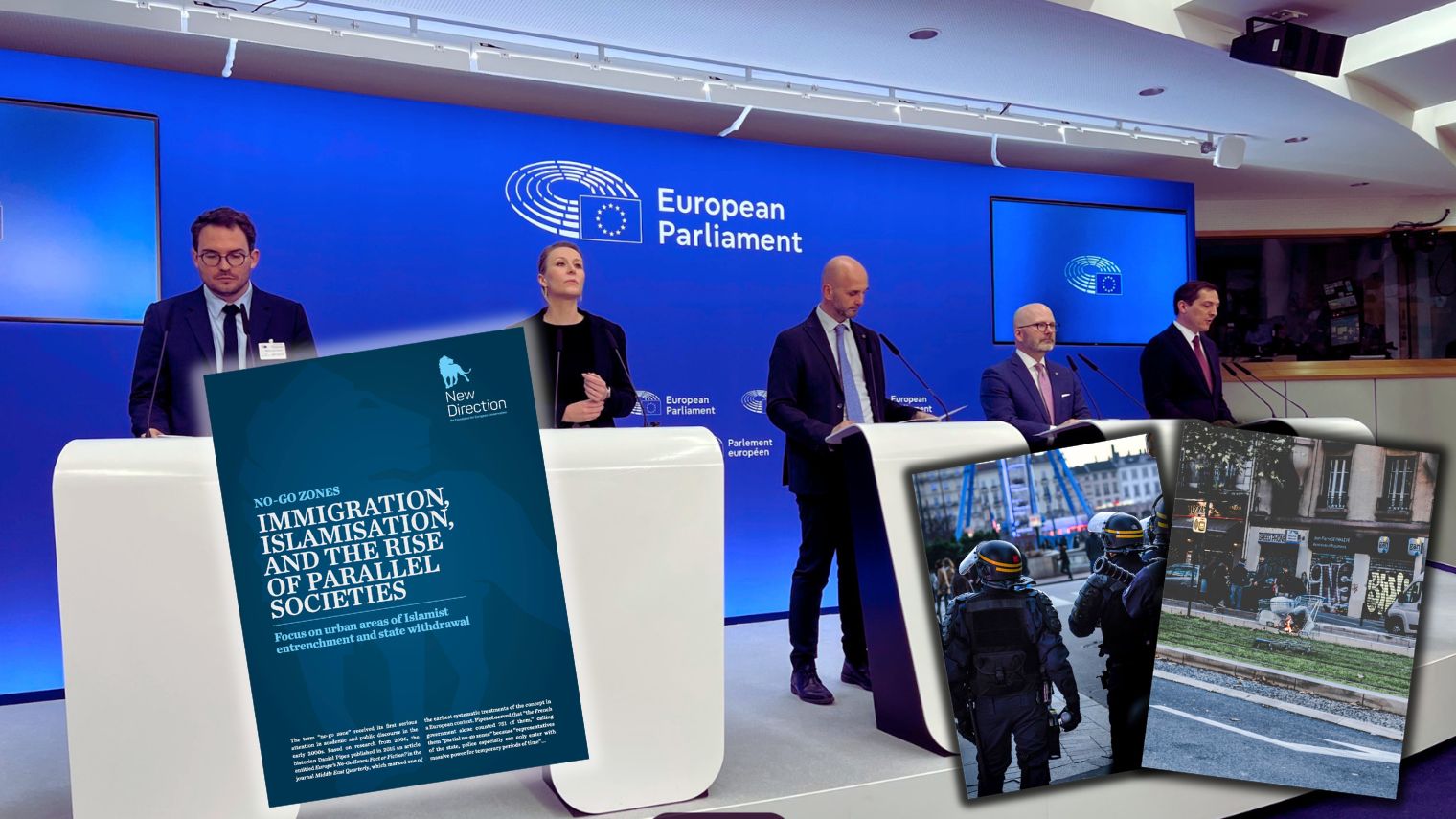
On Wednesday, the Sweden Democrats’ group in the European Parliament, ECR, held a press conference on their new report about so-called no-go zones in Europe. The report also contains a series of recommendations for political action.
At the press event, the ECR’s report entitled “NO-GO Zones, Immigration, Islamization, and the Rise of Parallel Societies” was launched by SD’s MEP Charlie Weimers together with his group colleagues—including Nicola Procaccini from the Italian conservative ruling party Fratelli d’Italia, Marion Maréchal from the French national conservative party Identité-Libertés, and report author Maxime Hemery-Aymar.
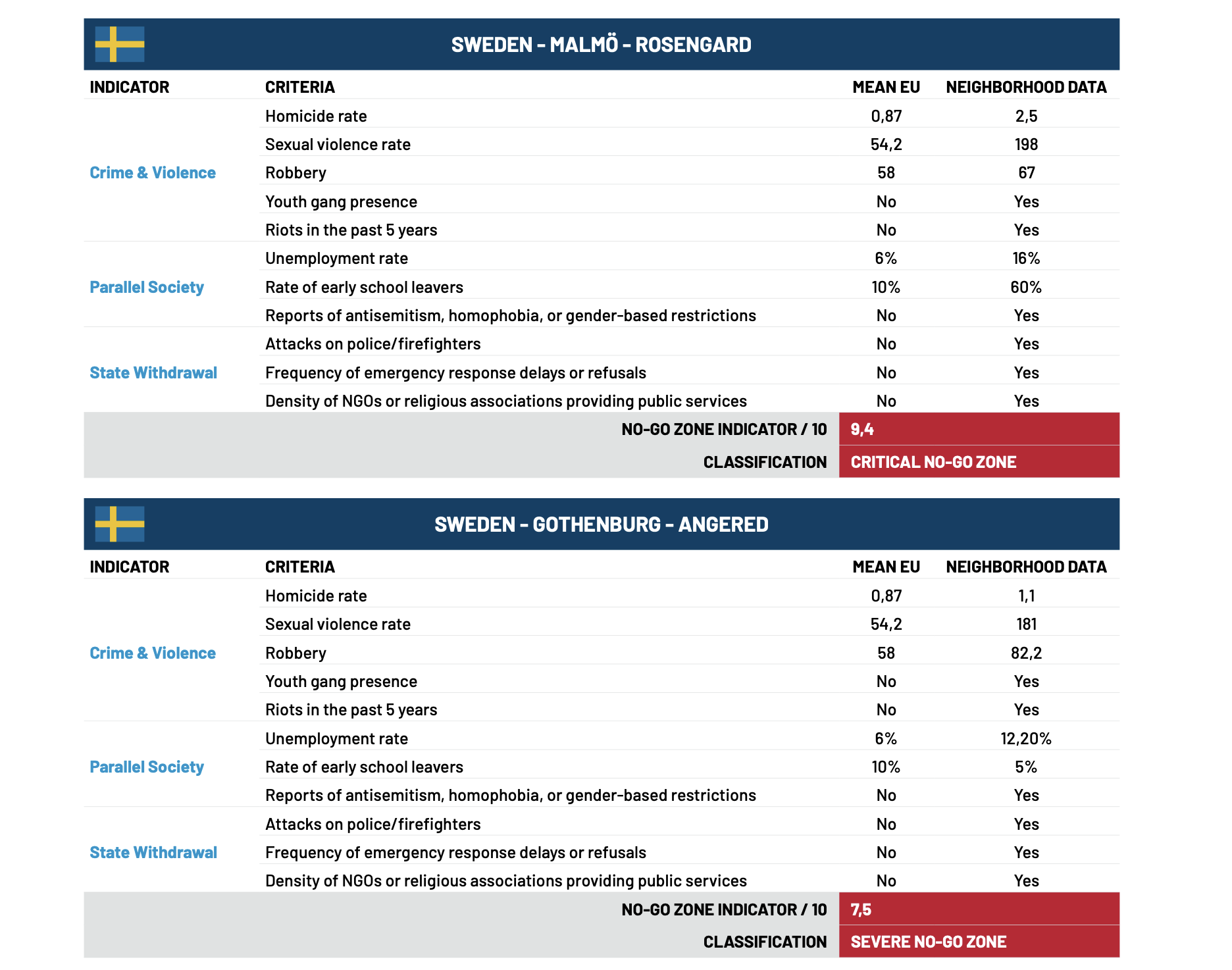
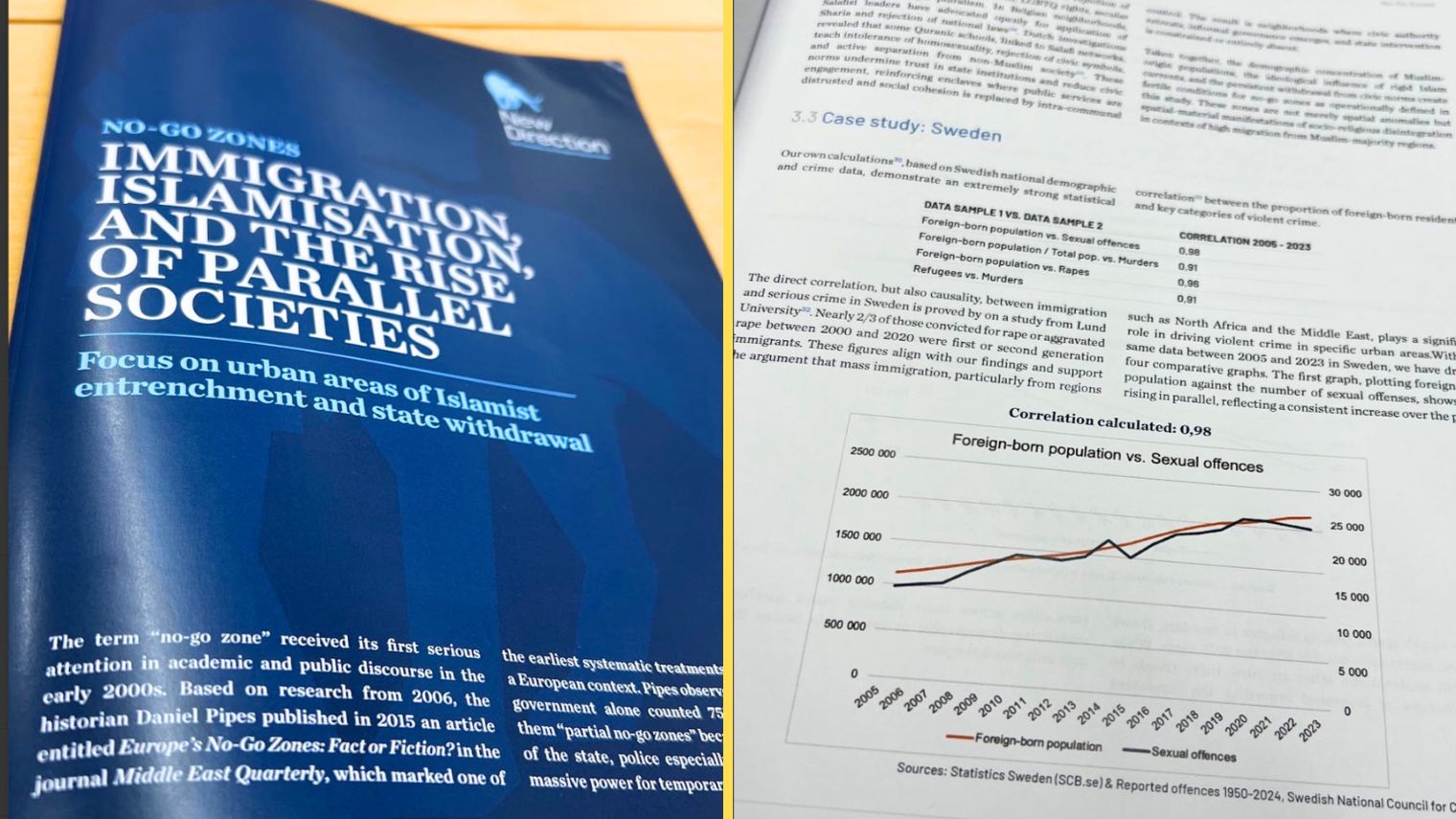
The study, based on comparative data from several EU countries, shows recurring patterns of territorial fragmentation, weakened state control, and the emergence of parallel norms in some urban areas.
The report particularly highlights poor integration and persistent cultural differences as contributing factors. In some cases, the rise of Islamist parallel societies is also pointed out, which challenge the rule of law’s equal treatment and shared societal norms.
Against the backdrop of growing concern over social cohesion, safety, and democratic stability in Europe, possible measures are now being discussed to restore the authority of the state and ensure the same rules and values apply throughout society.
Proposals to Address the Situation
The report presents far-reaching proposals to address the emergence of parallel societies in Europe—with several measures targeting migration, citizenship, and crime prevention.
Among the suggestions is a significant reduction in immigration, with family reunification migration specifically identified as a problem. The report also proposes that certain cities should completely halt the reception of new arrivals and introduce geographic quotas to counteract ethnic segregation.
Furthermore, stricter citizenship rules are proposed, where automatic paths to citizenship should be abolished and replaced with requirements for language, integration, and self-sufficiency. In some cases, the possibility of revoking citizenship for people who commit serious crimes is also highlighted.
Another central aspect is increased deportations. According to the report, the parties want to see significantly more expulsions of both illegal immigrants and those who commit crimes, as well as a tougher conditionality on residence permits.
To regain control in vulnerable areas, a significant increase in police presence is suggested, along with tougher penalties and financial measures against criminal networks. At the same time, measures against Islamism are raised, such as a ban on foreign funding of mosques and state supervision of imam education.
The full report can be read here.
The Issue of Italy’s Position
During a short Q&A afterwards, the Italian representative Nicola Procaccini from Fratelli d’Italia, Giorgia Meloni’s party, received a question from Samnytt’s reporter, Kent Ekeroth, about Meloni’s statements in support of continued immigration.
Meloni certainly wants to prevent migrants from attempting to cross the Mediterranean. At the same time, Meloni has claimed that her government is open to bringing in more people through legal channels because “Europe and Italy need immigration.”
READ MORE: Meloni opens up to more migration: ‘Europe and Italy need immigration’
Nicola Procaccini answered that the party makes a distinction between legal and illegal immigration and said that “Italy needs labor” due to its demographic problems.
See the press conference here: