
COLUMN • There are moments in politics that act as watershed moments. Not between right and left. Not between city and countryside, but between reality and illusion. Such a moment arises when a leading politician asks a question that in practice presupposes that basic relationships do not exist, that the laws of physics do not apply. When reasoning breaks with what elsewhere is considered elementary – that electrification requires electricity production. And that electricity production requires stable systems.
The Green Party spokesperson Amanda Lind has recently been one of the most prominent voices in Swedish climate and energy policy from the social democratic government alternative.
Among other things, she has criticized the Tidö government’s climate policy, claiming that Sweden is moving away from its climate goals, while pushing for rapid electrification and strong support for the conversion of the transport sector.
ALSO READ: Green Party: Defeat Iran and Putin with More Electric Cars
In this political vision, electrification appears as the obvious solution. More electric cars, more electric-driven industry, more electrified societal functions. A transition that, in green party theory, should lead to reduced emissions and a modernized energy system.
The problem arises when the question of where the electricity is supposed to come from is reduced to a detail. Or when the connection between energy demand and production capacity is treated as an ideological rather than a technical issue.
“What Does Electrification Have to Do with Nuclear Power?”
In a much-discussed debate on SVT, Amanda Lind (Green Party) faced off with the Sweden Democrats’ party leader Jimmie Åkesson — a meeting that exposed the energy policy rift in Swedish politics in its most naked form. It was not only a discussion about different energy sources, but about the very view of reality.
ALSO READ: EU: Closing Nuclear Power Was a Mistake
Åkesson repeatedly pointed to the need for stable and controllable electricity production in a society that must rapidly electrify. Lind held firm to her stance on the necessity of the transition, but without clearly acknowledging the role that nuclear power plays in the equation.
The result was a debate where the difference was not primarily in the end goal — but in the relationship to physics, economics, common sense — and to utopias and delusions. At one point in the debate, Lind interrupted Åkesson with the exclamation:
“What does electrification have to do with nuclear power? That’s absurd!”
For many viewers, it seemed less like a political exchange of views and more like a collision between two different ways of understanding how a modern society actually functions.
Politics as an Unrealistic Project
Energy policy is basically not a matter of values. It is an engineering question, an economic question, and ultimately a question of civilization. Societies cannot be electrified with rhetoric. They require power plants, grid capacity, and long-term planning.
When the state cannot secure something as fundamental as a stable electricity supply, every grand vision for the future becomes hollow. What was sold as idealism has in retrospect become the most costly political mistakes in modern Swedish history.
Jonas Andersson
The shutdown of nuclear power was not fate. It was politics. Functioning reactors were closed in a country that at the same time preached electrification and industrial expansion.
ALSO READ: Green Party: We Need to Raise the Fuel Prices
The result was a more vulnerable electricity system, soaring prices, and a dependence on imports and emergency solutions that no one previously wanted to acknowledge. The cost is measured not only in billions on electricity bills or in postponed investments — but in lost credibility.
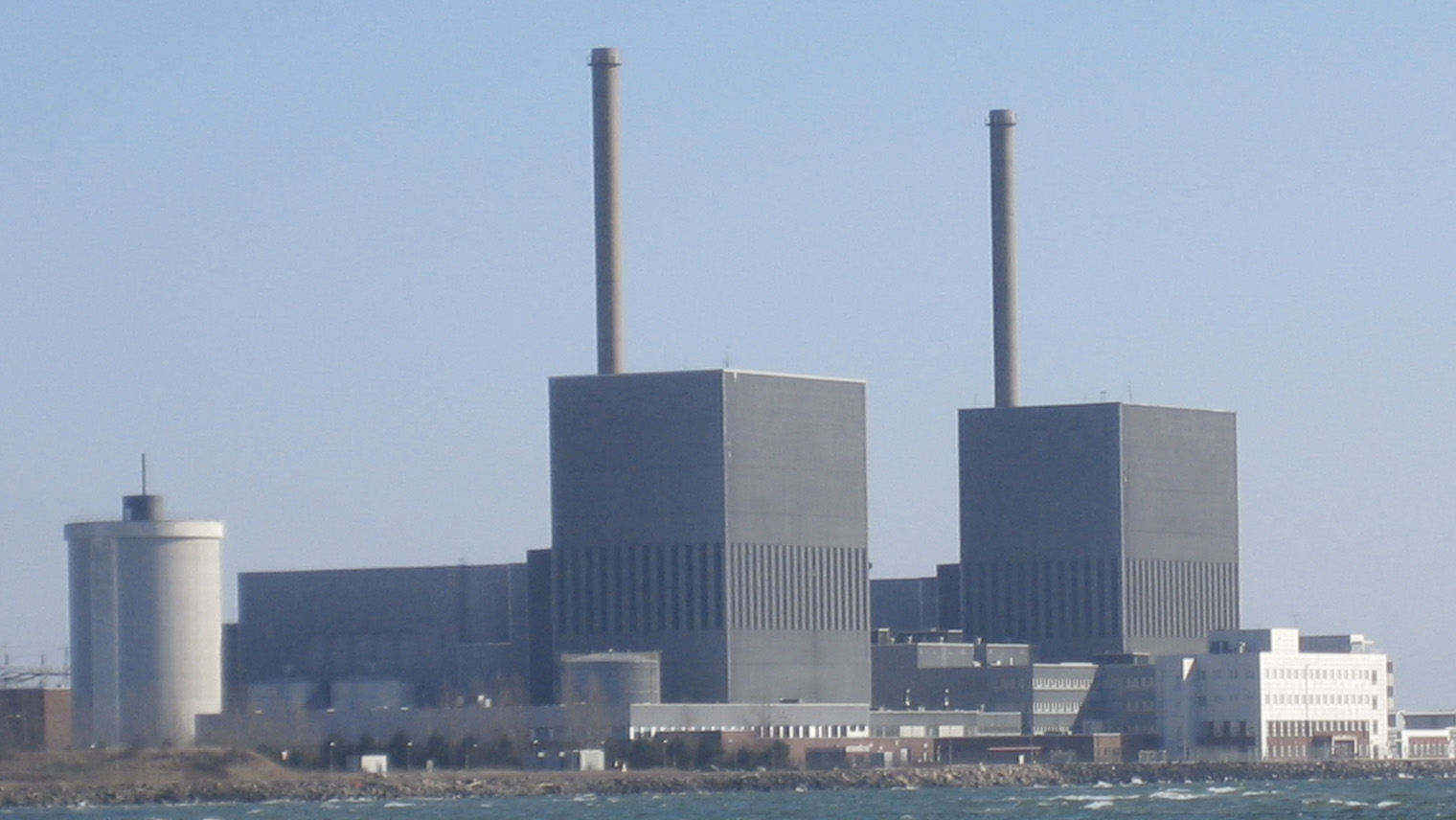
When the state cannot secure something as fundamental as a stable electricity supply, every grand vision for the future becomes hollow. What was sold as idealism has in retrospect become the most costly political mistakes in modern Swedish history.
ALSO READ: Fossil-Free Vehicle Fleet by 2030 – Yet Another Political Fantasy
This is why the debate about nuclear power, hydropower and renewable energy sources has become one of the most charged issues of our time. Not only in Sweden but throughout Europe. Industrial electrification, the transformation of transport, and the energy demands of digitalization are driving up electricity demand at an unprecedented pace — while controllable energy production is being destroyed.
When politics is then formulated as if these correlations are secondary, a deeper question arises — is it just about ignorance, indifference and ideological conviction — or a deliberate strategy to redefine reality and destroy the western world?
The Limits of Symbolic Politics
Amanda Lind (Green Party) is not just an individual or a spokesperson. She is a manifestation of a political culture that for a long time has treated technology and science as negotiable entities – as if reality itself were a matter of values, not facts.
That culture has given applause, headlines, and moral victories, not least from SVT and tax-funded public service. It has also left behind a vulnerable and poorer society.
If this becomes the government basis for Magdalena Andersson (Social Democrats), it would mean in practice that the same thinking that contributed to the energy crisis, price explosions, and strategic uncertainty is once again given power over Sweden’s most fundamental future issues.
Jonas Andersson
It is possible to vote for an aggressive green transition. It is possible to oppose nuclear power. It is possible to demand massive government subsidies for electrification.
But you cannot vote away the need for energy. You cannot legislate away power shortages. And you certainly cannot talk away the laws of physics.
This is why the energy debate in Sweden is no longer about visions or values. It is about something much more fundamental – about whether politics should adapt to reality – or continue to pretend it can replace it.
And it is this perception of reality that could now once again become the very foundation for a left-wing government under Magdalena Andersson this autumn.
ALSO READ: No Parking in the Green Party’s Vision for Stockholm
This is not about the occasional slip of the tongue or rhetorical misstep, but about a political direction that has repeatedly shown it places ideological visions above the actual conditions of the system.
If this becomes the government basis for Magdalena Andersson (Social Democrats), it would mean in practice that the same thinking that contributed to the energy crisis, price explosions, and strategic uncertainty is once again given power over Sweden’s most fundamental future issues.
Voters therefore face not just a choice between parties, but the difficult choice of whether reality exists – or not.
Maybe Amanda Lind doesn’t even exist for real?
Do you appreciate Samnytt?
Hundreds of thousands read Samnytt every week – but only 1 in 100 contribute. Help us continue to deliver investigations and in-depth reports that reveal more of reality.
Without your support there is no Samnytt.
Thanks to our readers, Samnytt has published nearly 34,000 articles that show more of reality – what mainstream media often chooses to hide.
123 083 33 50
Swish any amount
Thank you for reading and supporting Samnytt
Watch the debate between Jimmie Åkesson and Amanda Lind here: