Sweden’s military intelligence and security service, MUST, claims that Russia is systematically manipulating economic statistics to conceal a deeper crisis behind the war economy’s façade. But German economist and Russia expert Janis Kluge is now strongly attacking the Swedish analysis. In an interview with Der Spiegel, he says the claims are either based on misunderstandings—or part of an ‘information war.’
In an interview with the British business newspaper Financial Times, Swedish MUST chief Thomas Nilsson recently painted a bleak picture of the Russian economy. According to Nilsson, Russia has not recovered despite rising oil prices and increased income from the Middle East war.
He claimed that the Kremlin manipulates economic statistics to give the West the impression that sanctions and war costs are not biting. Sweden, according to Nilsson, also has its own intelligence that supports the German intelligence service BND’s conclusion that Russia underreports its budget deficit by the equivalent of around 30 billion dollars.
READ ALSO: NATO chief: ‘Europeans will have to pay the price of the war’
“They still have a systemic problem,” Nilsson told the Financial Times, arguing that Russia’s growth model is unsustainable as the economy is mainly driven by production for the war in Ukraine.
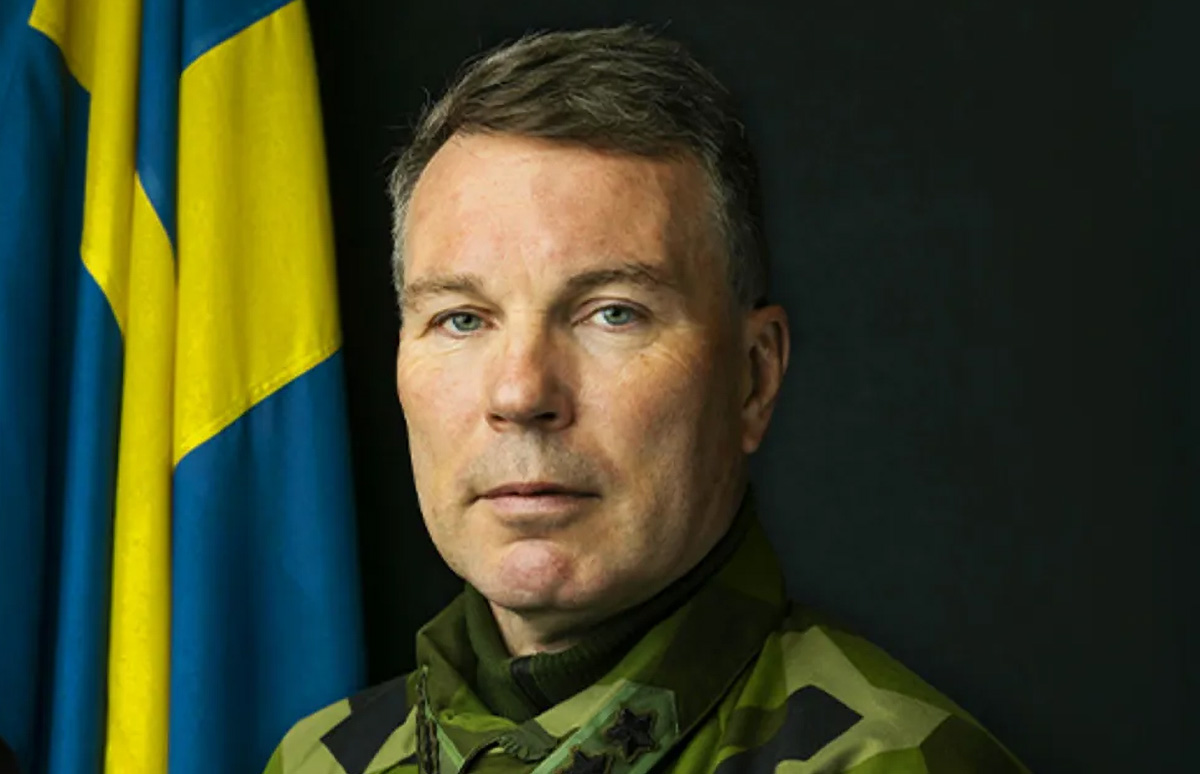
He also claimed that the real inflation in Russia is significantly higher than the official figure of 5.86 percent—closer to the key interest rate of 15 percent. According to Nilsson, several indicators also point to a future banking crisis in Russia.
But German economist and Russia analyst Janis Kluge rejects much of the Swedish analysis. In an interview with Der Spiegel, Kluge says Russian economic statistics are still useful and mainly credible, even if the Kremlin uses certain accounting tricks.
“I see no signs that Russia is systematically falsifying inflation numbers,” he says.
READ ALSO: Researcher: Swedish media and politicians mislead with propaganda about the Ukraine war
He argues that the Kremlin doesn’t even have much incentive to grossly manipulate inflation because Russians themselves notice what prices they pay in everyday life. Kluge also points out that Russian government bonds are not traded as if inflation were anywhere near 15 percent.
“If inflation were really as high as the Swedish intelligence service claims, the interest rates on Russian government bonds would be much higher than they are today,” he says.
“Information War”
When the German newspaper Der Spiegel asks why MUST then claims the opposite, Janis Kluge replies that it could be propaganda.
“Either it’s a mistake or it’s part of the information war.”
Admits Russian “Accounting Tricks”
At the same time Kluge does not dismiss all suspicions of cosmetic measures in the Russian economy. He notes that a lot of economic data has been classified since the invasion of Ukraine, and that Moscow probably uses various accounting techniques to make public finances look better.
Kluge says there are public signs that expenditures have been shifted between budget years and between different parts of the public sector to reduce the federal deficit on paper. However, he argues this is not the same as the entire official statistics being fabricated.

“No Collapse – but Clear Stagnation”
According to Kluge, Russia is rather in a period of stagnation rather than acute economic collapse. He points to grim business surveys, declining investments, and high interest rates that are slowing the economy. Above all, Russia suffers from a labor shortage, which limits growth.
“The Russian economy is not facing a collapse,” he tells Spiegel.
At the same time, he admits that the situation is becoming increasingly problematic for the Kremlin in the long run, as an economy without growth will struggle to finance both the state and the war in Ukraine.
The Oil Boom Gives the Kremlin Breathing Room
Kluge also emphasizes that Russia has temporarily benefited greatly from rising oil prices following the conflict between Israel, the USA, and Iran. According to him, the price of Russia’s Urals oil exports rose from around 45 dollars per barrel in February to 95 dollars in April.
This reportedly gave Russia about ten billion dollars more in oil revenue just in April compared to February. These extra revenues can temporarily reduce the budget deficit and postpone the need for cuts, he says—but do not solve the structural problems in the economy.
Sanctions Hurt—but Not Everywhere
Kluge points out several sectors in trouble. The coal industry has been hit hard by European sanctions, as Europe was previously the main market for Russian coal. The construction sector is also squeezed by high interest rates, and the automotive industry is losing ground to Chinese competitors.
But at the same time, he believes the Western world exaggerates the image of a Russia on the verge of economic collapse. The difference between the Swedish intelligence assessment and Kluge’s analysis illustrates the growing debate over how hard sanctions are actually hitting the Russian economy—and how much of the information war is now also being waged with economic figures.