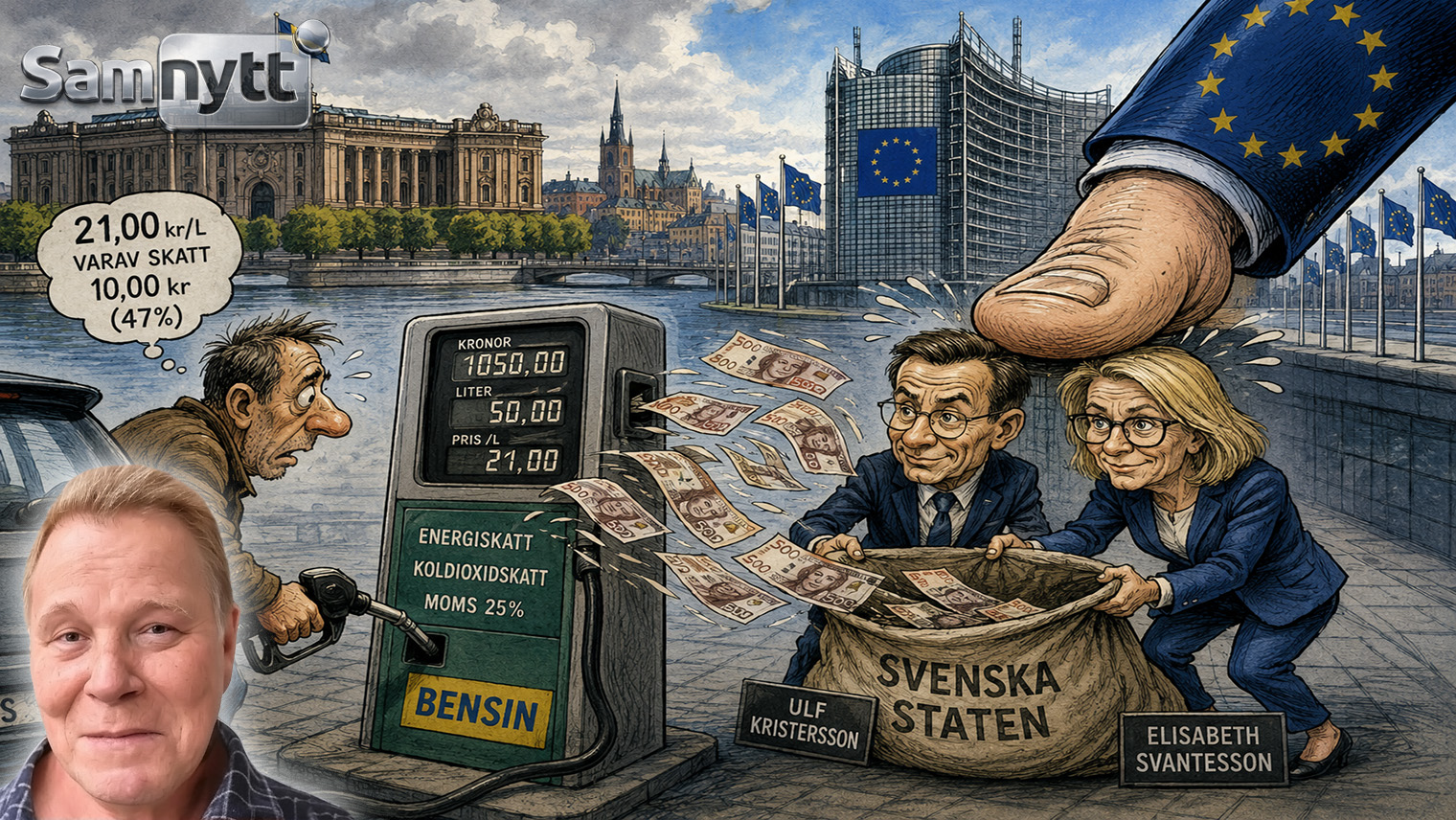
EDITORIAL • Sweden has some of the world’s highest fuel prices despite tax cuts. At the same time, gasoline in large parts of the USA costs almost half as much—even though the :censored:6:cdd6bbaa89: oil price and :censored:6:cdd6bbaa89: turmoil are the same. The difference is not mainly in the market or the crude oil. It’s in the taxes, the climate fees, and an EU system that in practice limits Sweden’s ability to decide its own fuel taxation.
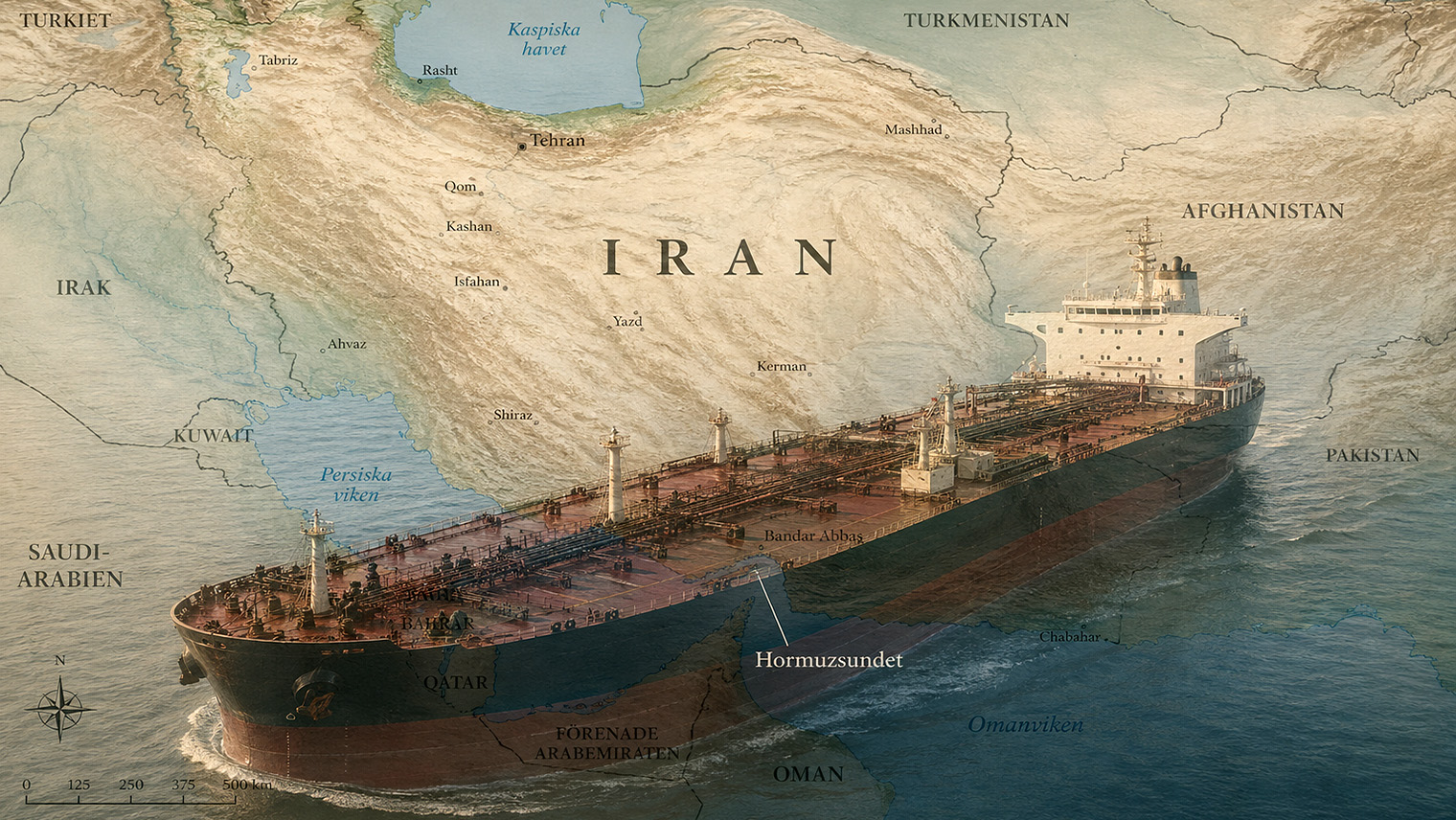
When unrest in the Middle East escalated and world energy markets were once again in shock, oil prices quickly soared :censored:6:cdd6bbaa89:ly. The blockade around the Strait of Hormuz created new uncertainty about transport and access to crude oil. The result was rising gasoline and diesel prices from Stockholm to Los Angeles.
But even though the crude oil is the same for all countries, the price at the pump was far from identical. In several US states, gasoline prices are about 11–13 SEK per liter. In Sweden, the price still sits at around 21 SEK per liter despite government tax cuts.
How can the difference be so enormous? Why should Swedes pay so much more than Americans at the pump? The answer is simple: politics.
Half the Price at the Pump Is Tax
In Sweden, the debate over fuel prices has long been conducted as if high prices were a law of nature—mainly caused by war, oil producers, or the ‘world market.’
But the biggest difference between Sweden and many other countries is not the oil. It’s the taxes. Even after the latest Swedish tax cuts, almost half of the gasoline price still consists of various types of taxes and government fees.
When gasoline is around 21 SEK per liter, energy tax, carbon tax, and 25% VAT on top of that together make up about 47–48% of the price at the pump.
For diesel, the share is somewhat lower but still very high. This means, in practice, that the Swedish state earns big money every time fuel prices rise—not just through fixed excise taxes, but also through VAT.
READ ALSO: Green Party: We Must Raise Fuel Prices
And this is where the system becomes particularly provoking for many people. Because in Sweden, you don’t just pay taxes on fuel. You also pay VAT on the tax.
Tax on Tax Feeds the State
Most Swedes know that gasoline is heavily taxed. Fewer know how the taxation actually works.
First, energy tax and carbon tax are added to the fuel. Then, 25% VAT is added on top of the entire amount—including the already imposed taxes. This means the state collects VAT even on its own excise taxes.
So when the oil price rises, not only does the cost to the consumer go up. The state’s VAT revenues also automatically increase. It’s misleading, then, when fuel prices are sometimes described as something the government passively ‘suffers from.’ In reality, high oil prices also mean increased tax revenue.
For ordinary households, the situation looks very different. For rural families with children, for commuters, for freight hauliers or farmers, fuel prices are not some abstract climate policy signal. It’s a direct cost of daily life.
And when diesel rises, it also affects the entire economy—transport, food prices, building costs, contract work, inflation, public transport, and the competitiveness of companies.
Expensive diesel never stops at the pump. It spreads through the whole economy. And the state ensures the burden is twice as heavy.
Comparison with the USA Reveals the Truth
If you compare Sweden and the USA, the differences are almost absurd. In conservative Texas—a state with very low fuel taxation—the total tax share is around 10% of the pump price.
In California—the perhaps most climate progressive and regulated state in the USA—the equivalent share is about 24%. That is still less than half of Sweden’s level.
And this applies even though California has high environmental fees, emissions programs, special fuel requirements, and much stricter climate policies than many European regions.
Yet Swedish motorists are taxed much harder. So the difference is not whether one ‘believes in climate policy’ or not. The difference is about other political choices.
The USA has chosen to keep fuel taxes low because it sees cheap energy as crucial to economic growth, transportation, and competitiveness. Sweden and the EU, instead, have chosen to use fuel prices as a policy tool to change people’s behavior.
It’s a conscious political decision—not a law of nature. Petrol and diesel are not expensive—they are made expensive.
Sweden Can’t Decide for Itself
Another remarkable aspect of the debate on fuel prices is something relatively few Swedes knew before the current blue-yellow government dared to ask the EU for permission to lower the tax—Sweden cannot independently decide how low fuel taxes may be.
The EU’s energy taxation directive sets minimum levels for how little member states may tax gasoline and diesel. So when the Swedish government wanted to cut fuel taxes further, it had to negotiate with the EU and apply for exemptions.
This really should cause more people to react. For taxation has historically been a core of national sovereignty and spared from the EU’s meddling.
The right to tax citizens has always been one of the most fundamental functions of the nation-state. Yet today, Sweden in practice must ask Brussels for permission, hat in hand, to go below the EU’s strict tax floor.
EU Requirements Justified with Newspeak
Formally, this is motivated by classifying fuel taxes as ‘indirect taxes,’ thereby subject to the EU’s harmonization rules for the internal market. But for many people, it appears as a legal construct that in practice leads to the same result.
The room for national action in taxation is limited by supranational rules. For the person at the pump, there is no difference between a tax crown that goes directly to the state and one that goes indirectly. In fact, there’s nothing indirect about it—both crowns take the same path into the treasury.
Proponents of today’s system usually point out that Sweden itself approved the EU rules and that tax decisions still require unanimity among member states. That is legally correct. But it does not change practical reality or the fact that this has (deliberately) been poorly communicated to citizens.
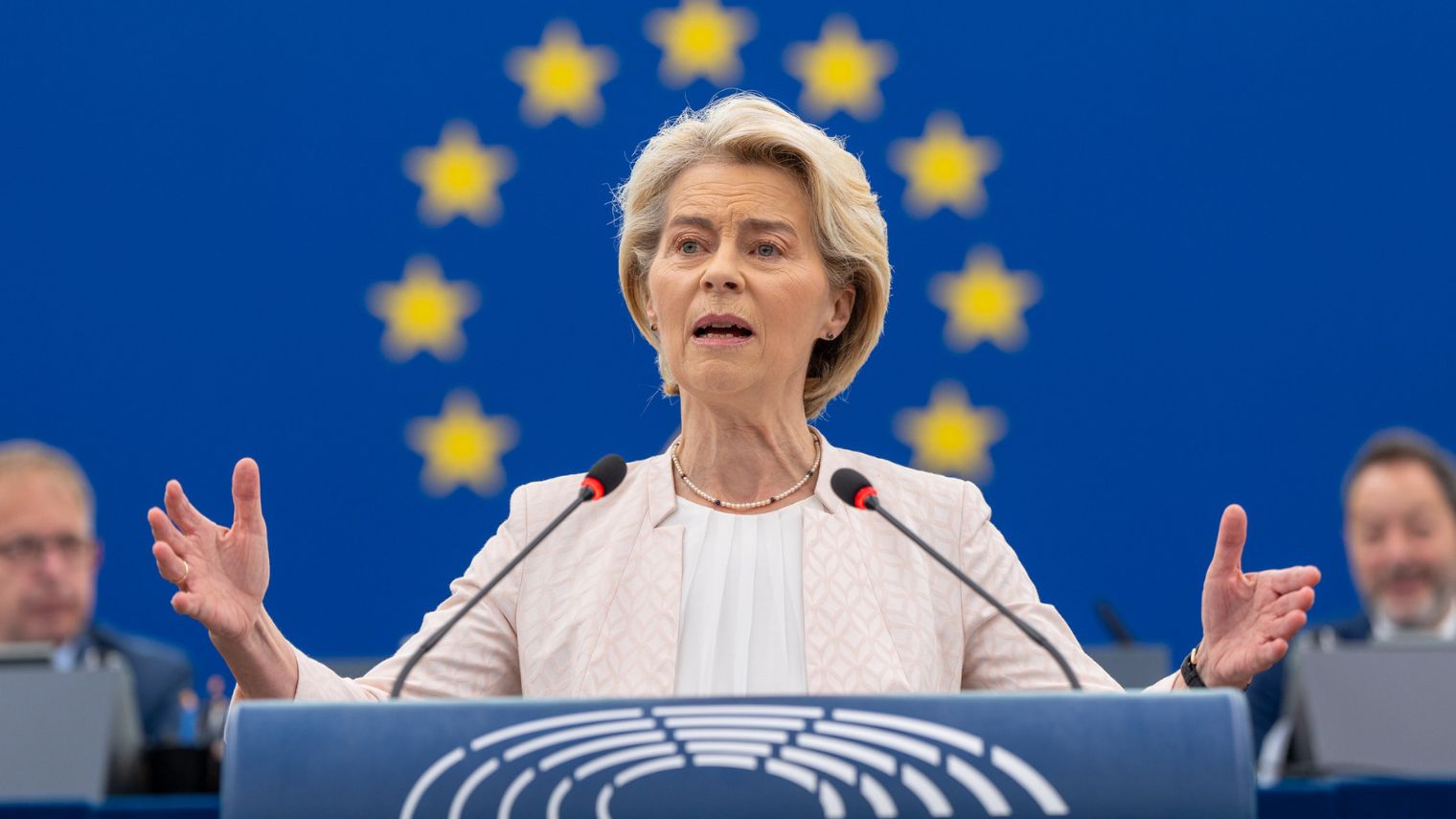
When a member country can no longer even independently decide on the level of key taxes without first gaining approval from EU institutions, national sovereignty has evidently changed. And the discussion often becomes strangely vague.
For while many politicians claim that tax policy is national and sovereign, the same politicians must travel to Brussels and, on bended knee, negotiate how much Sweden can lower its petrol tax.
If the USA Can, the EU Should be Able To
It’s hard to reconcile the two pictures. And the comparison with the USA is interesting here too.
The EU argues that its minimum fuel taxes are needed to prevent the internal market from becoming distorted. The argument is that large differences in gasoline and diesel taxes would create so-called ‘fuel tourism,’ where people and transport companies cross borders for cheaper fuel. Therefore, says the EU, common minimums are needed for how low taxes may be.
At first glance, this sounds reasonable. The problem is that the same conditions exist in the USA—without the federal government needing to micromanage state fuel taxes in the same way.
The USA consists of states with widely different majorities, economic models, and energy policy priorities. California and Texas are, in many ways, as different as Sweden and Hungary.
California runs an aggressive climate policy with high environmental taxes, heavy regulations, and much higher fuel taxes—but still nowhere near as high as Sweden’s. Texas, on the other hand, has low taxes and cheap energy as a competitive advantage. Climate alarmism hasn’t taken root.
This means gasoline prices between US states can be very different—sometimes several SEK per liter. Yet the American internal market works. Trucks keep rolling between states. Companies can compete nationally. People move, work, and shop across state borders without federal authorities imposing minimum taxes on gasoline and diesel.
Of course, people sometimes choose to refuel more cheaply in a neighboring state if they can. But the USA does not consider this a threat to the existence of the union or to the common market.
On the contrary, it is seen as a natural consequence of states having the right to make different policy decisions and bear the consequences. That’s the very core of a decentralized, liberal political system.

That’s why the EU’s reasoning is hard to accept. If the world’s largest federal economy can handle significant differences in fuel taxation without federal minimum taxes, why couldn’t European countries do the same?
Why are tax variations seen as an acceptable expression of regional democracy in the USA—but a threat to the market in Europe? These are questions that deserve much more public debate than they have received.
For in practice, it’s not just about gasoline and diesel. It’s about views on self-determination, on how much economic policy member states should actually control themselves, and on whether EU harmonization has gradually shifted power from national parliaments to supranational institutions further than many voters really understood.
A Hidden Central Planning Agenda
It is worth noting that Sweden today is no longer the world’s most expensive country for gasoline and diesel. After the most recent Swedish tax cuts, several other European countries are higher. But that does not change the main issue.
Even after tax cuts, Swedish fuel prices are still kept up by EU minimum rules for energy taxation. Sweden cannot fully use tax policy to push prices downwards through free competition between member states.
And here, EU logic becomes strange. Competition is usually seen as something positive. If a country manages to offer lower taxes, lower prices, or better conditions, it usually puts pressure on neighboring countries to make their own systems more efficient. Fuel prices would fall throughout the EU. That’s how market economies develop and should function.
But specifically when it comes to energy and fuel, such competition is suddenly seen as a problem. The EU’s argument is that large differences in fuel taxes would create ‘fuel tourism,’ border trade, and competitive distortions. Therefore, common minimum taxes are needed to keep member states at roughly the same levels.
But this, in practice, means that the EU actively limits the ability of countries to compete with lower energy taxes and cheaper fuel. The result is a European system where prices are kept artificially high compared to, for example, the USA.
READ ALSO: Here Fuel Prices Are Always at the Same Low Level
And this raises an uncomfortable but legitimate question—if free competition is usually considered positive within the EU, why not apply the same principle to energy prices? Why is it important that people and businesses can compete on everything from labor costs to corporate tax—but not with cheaper fuel?
It is hard to avoid the conclusion that EU fuel taxes are no longer just about financing roads and infrastructure. They have also become a political tool to make fossil fuels more expensive as part of the Union’s climate policy.
That is probably where the real explanation is. Not that Europe would be unable to handle different tax levels or much lower ones across the continent—the USA proves that major regional differences can exist within a common market without causing the system to collapse. And California shows that aggressive climate policy does not require anywhere near Swedish-level fuel prices.
READ ALSO: EU Yes to Lowered Taxes on Fuel
This is not about Europe being unable to allow and manage bigger differences. It’s about the EU bureaucracy not wanting to. In Sweden, we now have a government that at least does something when fuel prices skyrocket. But it’s servile—they bow and scrape before the Brussels overlords. They don’t dare to challenge in earnest.
Ordinary People Pay the Price
In the end, this is not just a technical discussion about tax rates and EU directives. It’s about ordinary people. About people who have to drive to work because there is no public transport. About small business owners whose transport costs are soaring. About families with children already pressured by high food prices and interest rates. About hauliers and farmers who incur extra costs at almost every stage of their operation.
For big-city politicians, fuel can sometimes be reduced to a symbolic climate issue. But for large parts of Sweden, the fossil-fuelled car and farm equipment are still necessities. Electric options are not yet alternatives for all uses, the technology has progressed but needs at least another decade to mature into a full competitor to the combustion engine.
That is why the fuel issue arouses such strong emotions. People see that the oil price is :censored:6:cdd6bbaa89:—but the taxes are politically decided. And more and more are realizing that if almost half the pump price is tax, it’s not the oil that makes gasoline expensive but politics. And those who look across the big pond realize that another policy is possible.