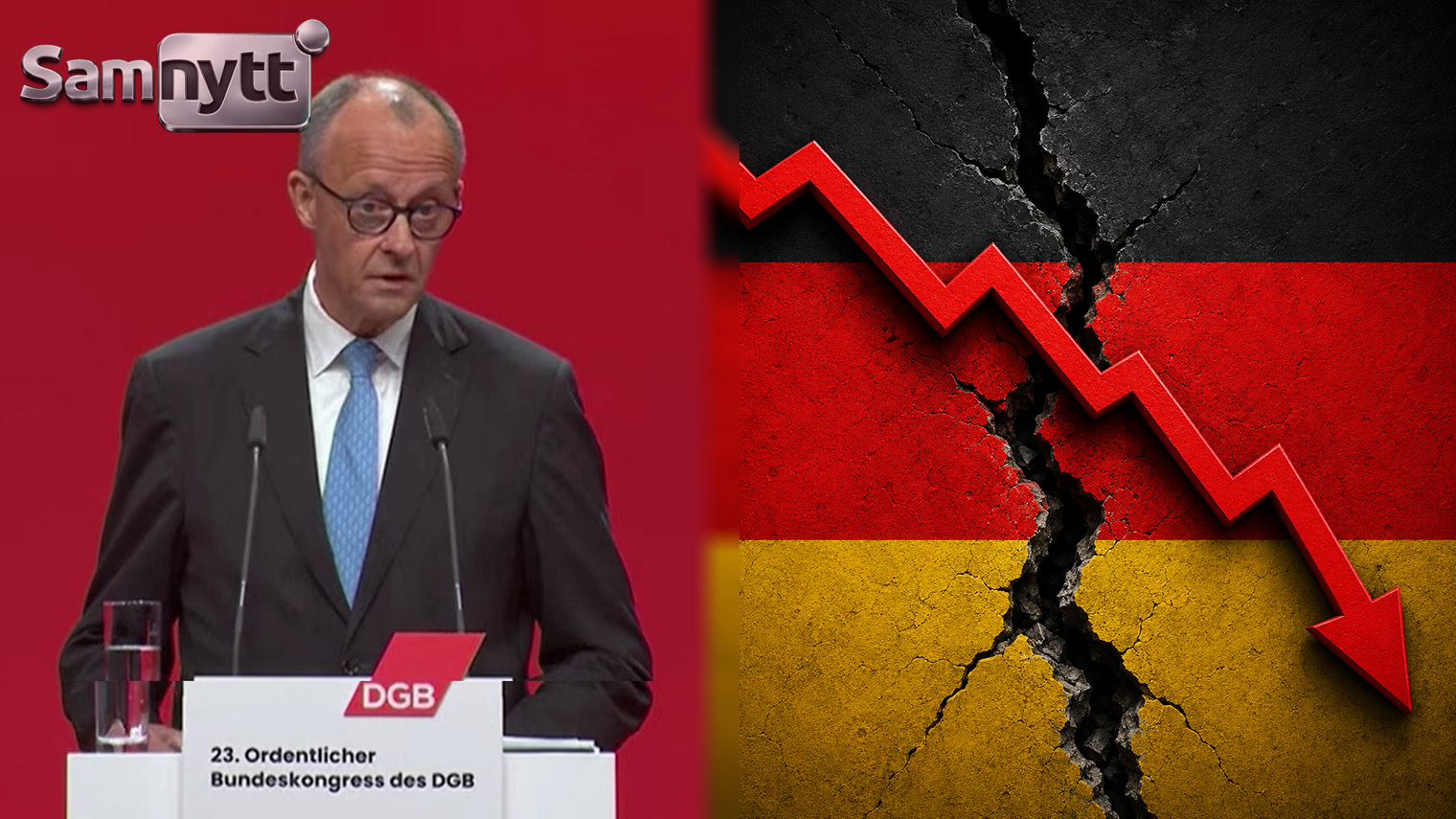
Dissatisfaction is growing in Germany as Chancellor Friedrich Merz speaks of tough reforms, raising the retirement age, and austerity while the economy stagnates and welfare systems are coming under increasing pressure. During a speech before a large trade union congress in Berlin, Merz was met with boos and whistles as he defended the government’s crisis policies. At the same time, AfD continues to strengthen its position in public opinion, while support for the governing coalition plummets.
Germany’s Chancellor Friedrich Merz faced a hostile audience when he spoke on Tuesday before a major trade union congress in Berlin. Delegates interrupted him repeatedly with boos and whistles as he defended planned cutbacks and reforms of the pension system.
Merz declared that Germany can no longer preserve its prosperity without comprehensive changes to the economy and welfare systems.
– We have simply failed to modernize our country. Germany must pull itself together, said Merz.
“It’s Demographics and Mathematics”
The atmosphere became particularly heated when Merz addressed the pension issue and the necessity of savings. In recent weeks, the German government has been divided over how to handle rapidly growing costs.
In his speech, Merz described the pension system as the toughest issue to solve and claimed that the problems are not about ideology but about economic realities.
– This is not malice from me or from the federal government. This is demographics and mathematics, said Merz – which was met with more loud boos from the audience.
Merz also said that the country is now suffering the consequences of failing over a lengthy period to modernize Germany in step with “the major transformative forces,” especially demographics and digitalization.
Economic Crisis and Growing Welfare Problems
The debate comes at a time when Europe’s former economic powerhouse finds itself in prolonged stagnation. The German economy has shrunk several years in a row while industry is being strained by high energy costs, weak competitiveness, and rising social expenditures.
READ ALSO: Germany on the Brink of Ruin – Now Germans Must Work Until 73
After the shutdown of nuclear power and the loss of cheap Russian energy, energy prices have risen sharply, something that has hit German industry and the export sector hard. At the same time, costs for pensions, healthcare, and welfare benefits are rising rapidly.
Immigration and Ukraine Support Eroding the Economy
The so-called Bürgergeld system, the equivalent of welfare assistance and unemployment benefits, cost according to official figures nearly 47 billion euros in 2024. Critics say that extensive migration to Germany has further exacerbated the burden on welfare systems.
READ ALSO: Germany: The Welfare System ‘Can No Longer Be Financed’
Professor Bernd Raffelhüschen, a pension system expert, has previously calculated that immigration entails a long-term net cost of around 6 trillion euros for Germany over the life cycle. He has also warned that immigration will not save the pension system or welfare, but on the contrary will deepen the problems.
READ ALSO: Germany: Welfare Can No Longer Be Financed – Sends 100 Billion SEK Annually to Ukraine
Despite standing at the edge of economic ruin, Germany continues to send billions to Ukraine to sustain the war against invading Russia. This too is increasingly being criticized.
Government with SPD Despite Electoral Collapse
Dissatisfaction is also being directed against the political course Merz chose after the election. Despite the Social Democrats (SPD) achieving a historically weak election result, the CDU chose to form a government with the party.
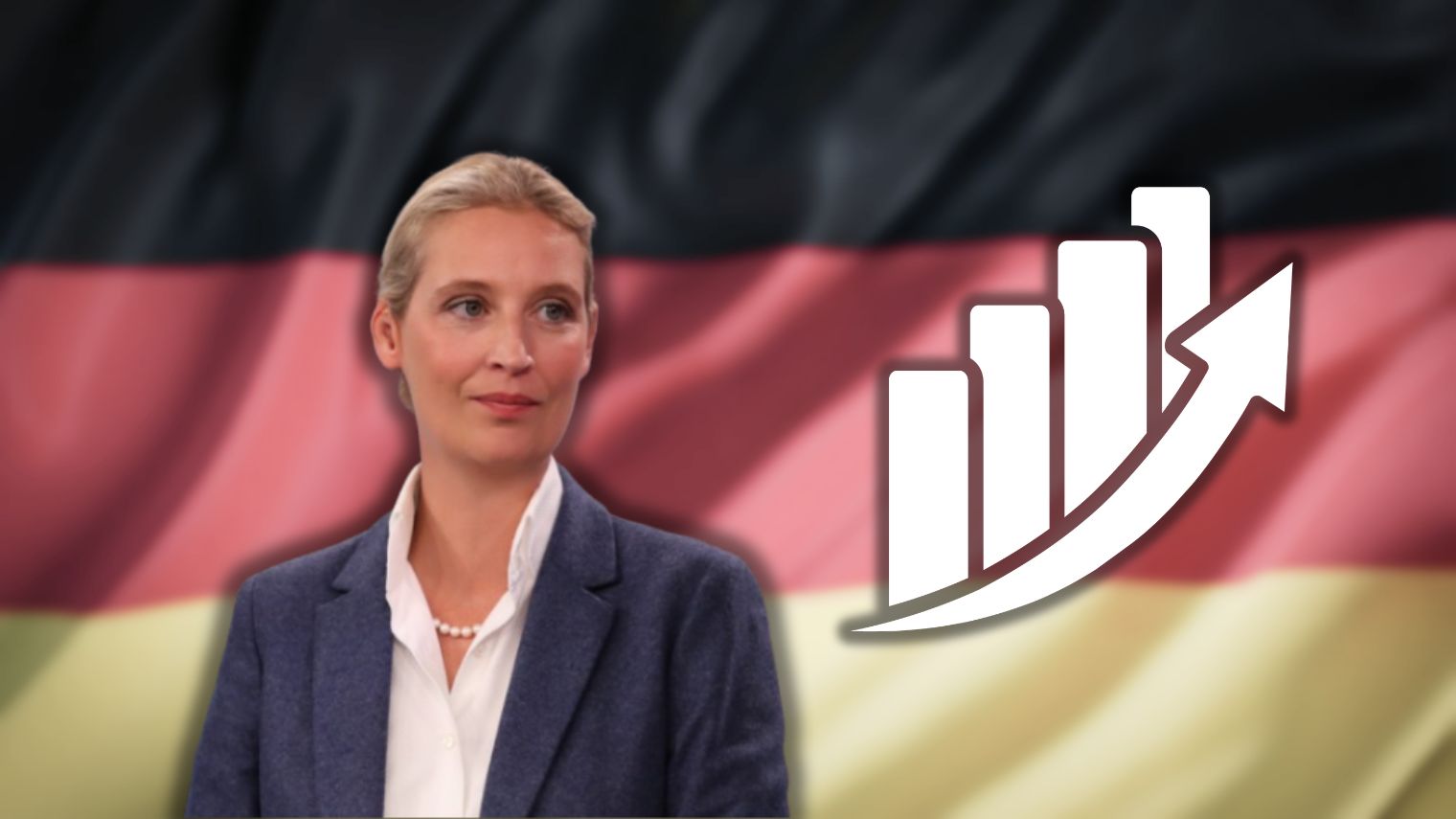
At the same time, the national-conservative Alternative for Germany (AfD) surged and established itself as the largest opposition force in the country. Critics argue that the established parties have ignored voters’ signals on issues such as migration, security, and the economy by continuing to isolate AfD.
READ ALSO: AfD is the Largest Party
In several opinion polls, AfD has now overtaken Merz’s conservative bloc. According to a recently published INSA poll, AfD stands at 28 percent while CDU/CSU has lost support. SPD remains at around 14 percent.
Another recent survey shows that only 13 percent of Germans are satisfied with the work of the CDU-SPD government coalition.
Crucial State Elections Ahead
The pressure on Merz is now expected to increase further ahead of important state elections in eastern Germany in September, where AfD is expected to become the largest party in several regions. Despite fierce criticism, Merz tried in his speech to urge trade unions to cooperate on the reforms.
– We need a common search for ways forward for our country, he said.