Speaking with a so-called suburban dialect in a job interview reduces the chances of being hired. Other factors, such as religion and cultural expressions, are also said to decrease the chances. This is the conclusion of a new report.
For the fourth consecutive year, the report Business Community: Diversity and Inclusion from the Järvaveckan Foundation is published. The data is based on responses from 500 business leaders about their views on diversity in recruitment.
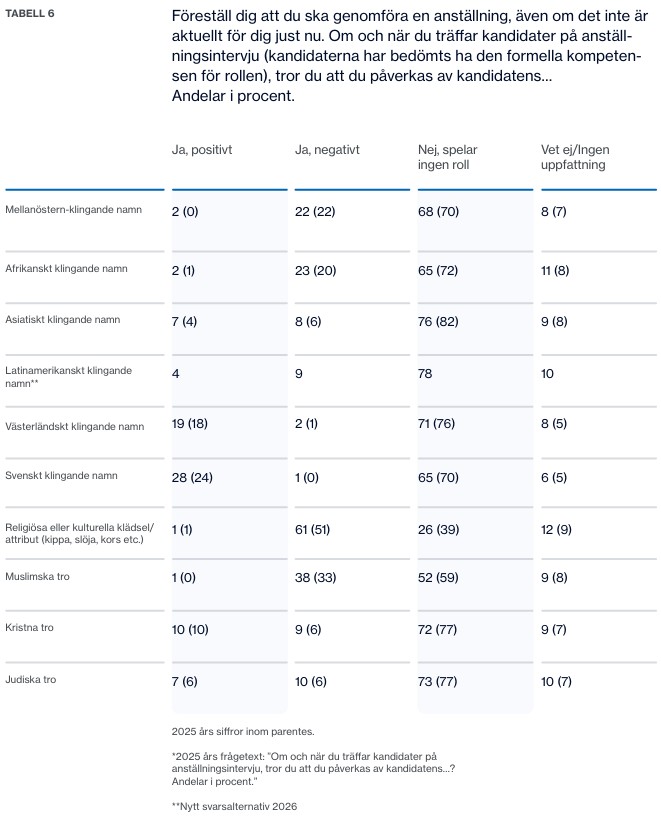
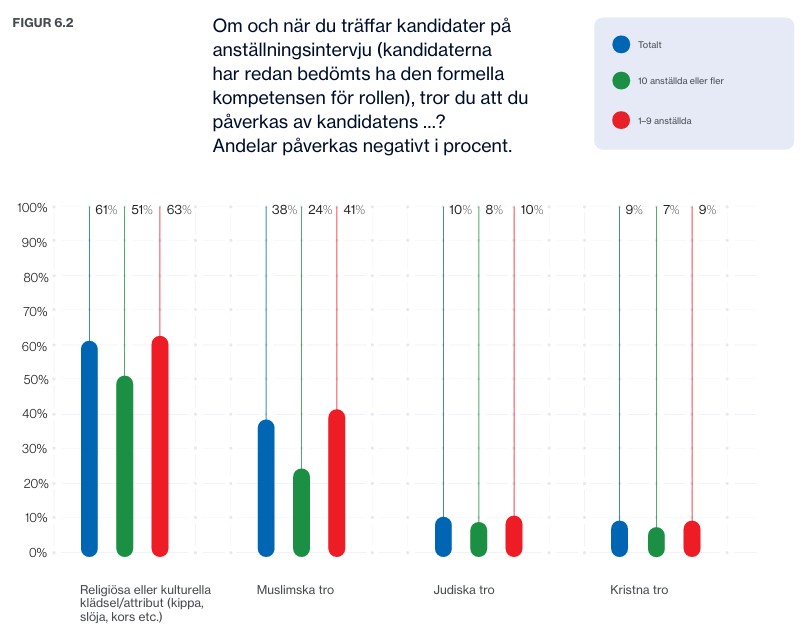
According to this year’s report, negative perceptions linked to “cultural and religious attributes” have become increasingly common during recruitments, with a particularly noticeable increase regarding what are called religious and cultural expressions. Here, 61 percent of business leaders state that such factors negatively affect their impression of a candidate. In the previous survey, the corresponding figure was 51 percent.
Meanwhile, 38 percent state that they would be negatively influenced by a candidate of Muslim faith, and when it comes to names, 23 percent say they are negatively affected by African-sounding names and 22 percent by names of Middle Eastern origin. Names that sound Asian or Latin American have a lesser negative impact.
Discrimination
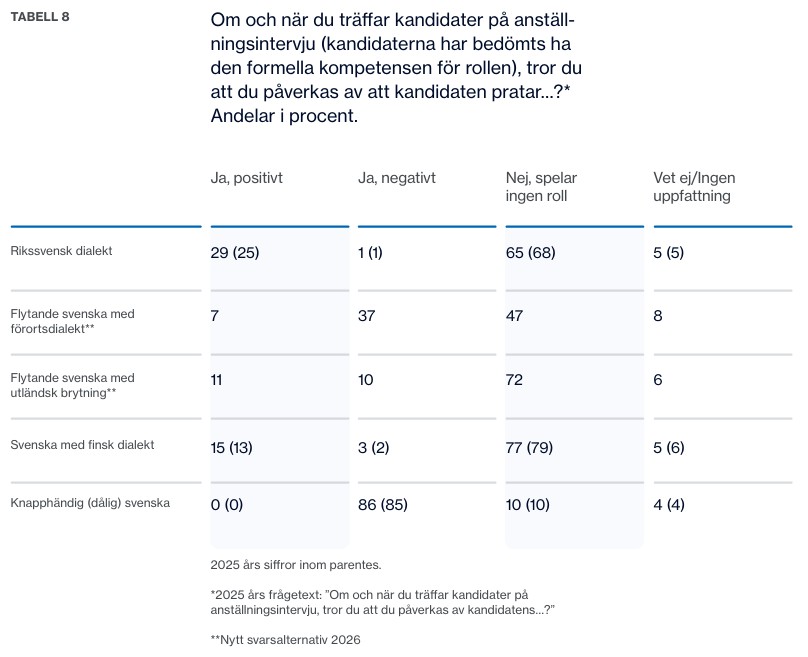
A full 86 percent would be negatively affected by poor or limited Swedish language skills. Additionally, 37 percent state that “fluent Swedish with a suburban dialect” negatively influences their opinion during an interview situation. This angers Ahmed Abdirahman, CEO and founder of the Järvaveckan Foundation, who believes it could constitute discrimination.
– The increase in prejudices is deeply problematic. A person who has made it as far as an interview clearly has the basic qualifications. But at the next stage, the candidate’s image can be negatively affected due to, for example, a suburban dialect or religion. We risk ending up in situations that could potentially be classified as discrimination. This is a development moving in the wrong direction and making integration harder, he says.
Diversity and Inclusion
The report also notes that recruitment largely still happens through personal contacts and informal networks. For those lacking established contacts, this may mean that the route to the job market becomes considerably narrower, it claims—especially for newly arrived immigrants and people with foreign backgrounds.
More encouraging for the Järvaveckan Foundation is that more and more companies are actively working with issues related to diversity and inclusion. Among larger companies, 45 percent state that they are working extensively to strengthen inclusion and diversity, compared to 34 percent last year.
No Adaptations or Prayer Rooms
Only 25 percent believe more legislation is needed in the area of diversity and inclusion to increase their prevalence. An equally large share believe that Sweden needs more low-skilled labor immigration to meet competence needs. Significantly more, 67 percent, think Sweden needs more highly skilled labor immigration.
68 percent of respondents believe that companies should not make adaptations for cultural or religious needs in the workplace. Meanwhile, 21 percent think that flexible holidays—the ability to swap days off on one holiday for another—is reasonable. Only eight percent think access to a secluded room for meditation or prayer should be offered.
“We hope this report contributes to an honest, constructive, and forward-looking discussion about what inclusion truly means and what actions we can take together to ensure the supply of skills that Sweden needs. Combating social exclusion is not just about placing demands on individuals; it is also about making sure doors actually open,” writes Ahmed Abdirahman in the report.
READ ALSO: Researcher: Immigrant Dialect Impoverishes the Swedish Language