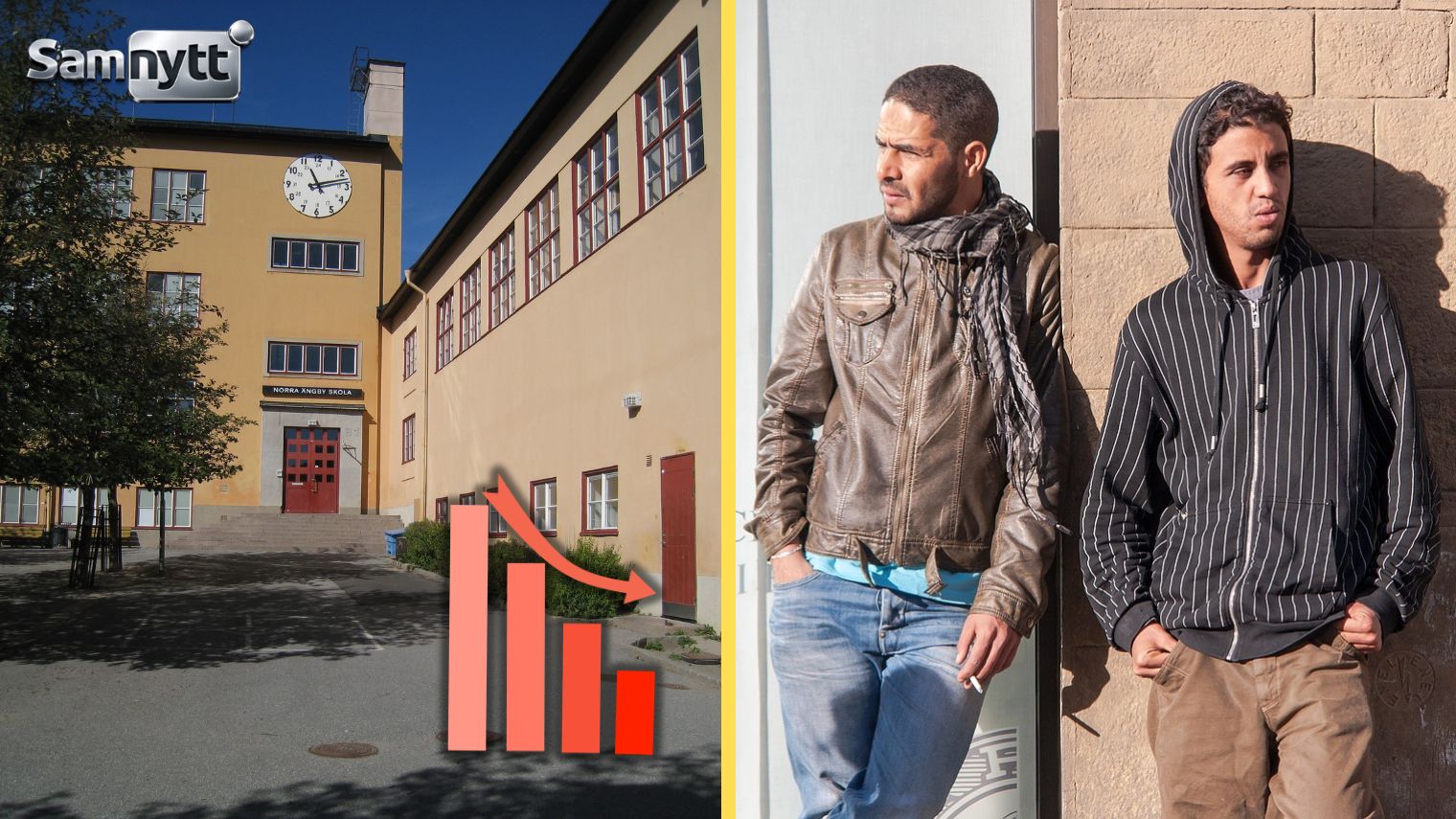
Previous measurements have shown that a quarter of 15-year-olds in Sweden lack basic skills in mathematics and reading comprehension, something that generated headlines and debate. Now it turns out that the situation is actually much worse.
A review of unpublished statistics reveals that the PISA results are more alarming for students with foreign backgrounds than previously thought. Here, it is not one in four, but almost one in two 15-year-olds who lack basic knowledge in the three subject areas tested by PISA.
In the 2022 PISA survey, 45 percent of immigrant students did not reach level 2 in reading comprehension, which is a basic level necessary for further learning. An equally large proportion in the group fell below the baseline in mathematics and science.
A comparison with the 2015 survey shows that the gap between students with Swedish and foreign backgrounds has increased. The latter group is defined as those born abroad or in Sweden with parents from another country.
“Very serious”
Anders Jakobsson is a professor of educational science at Malmö University and has been following the results since the first PISA survey in 2000. As early as 2009, he warned about the situation, and the new figures do not surprise him.
– The negative trend has not reversed since then. On the contrary, the trend is increasing. It is very, very serious, says Anders Jakobsson to Vi lärare.
Another person who is concerned is Anna Smit, a mathematics and science teacher at Särlaskolan, which is located in a so-called socioeconomically disadvantaged area in Borås where about 70 percent of the students have a foreign background.
– It is catastrophic. Teachers and school staff are at their wits’ end today. We would have needed more resources and completely different opportunities to divide students into smaller groups. Today, everyone ends up in my classroom, regardless of needs, language skills, home circumstances, and difficulties. It’s impossible to reach everyone, she says.
The language
The Swedish National Agency for Education believes that one explanation for the situation is that some foreign-born students have spent less time in the Swedish school system. But even when excluding students not born in Sweden, a significant gap remains between Swedish students and those born in Sweden to parents from another country.
Nor can the fact that the group more often comes from so-called socioeconomically disadvantaged homes explain the entire difference.
According to Carina Mood, professor of sociology at Stockholm University who has researched the schooling of children and youth with foreign backgrounds, language may be decisive. If you have a home language other than Swedish and go to schools where many speak the same language, you are surrounded much less by Swedish even if you yourself were born in Sweden, she says. Weaker language development also probably leads to poorer performance in other subjects, in her assessment.
The president of the Swedish Teachers’ Union, Anna Olskog, believes the Swedish school system is broken and must be reformed. For this to happen, she claims, the state must reclaim responsibility for schools and the profit- and market-driven school system must be phased out.
The new normal
Up to 25 percent of schools in the country today can be defined as low-performing. They are characterized by a high proportion of immigrant students and students with special needs, as well as a lower proportion of qualified teachers.
This autumn, new PISA figures will be presented, and Anders Jakobsson is pessimistic.
– The risk is that these figures will become the new normal. Sweden was once a world leader in the compensatory task. Unfortunately, I can’t see us returning there.