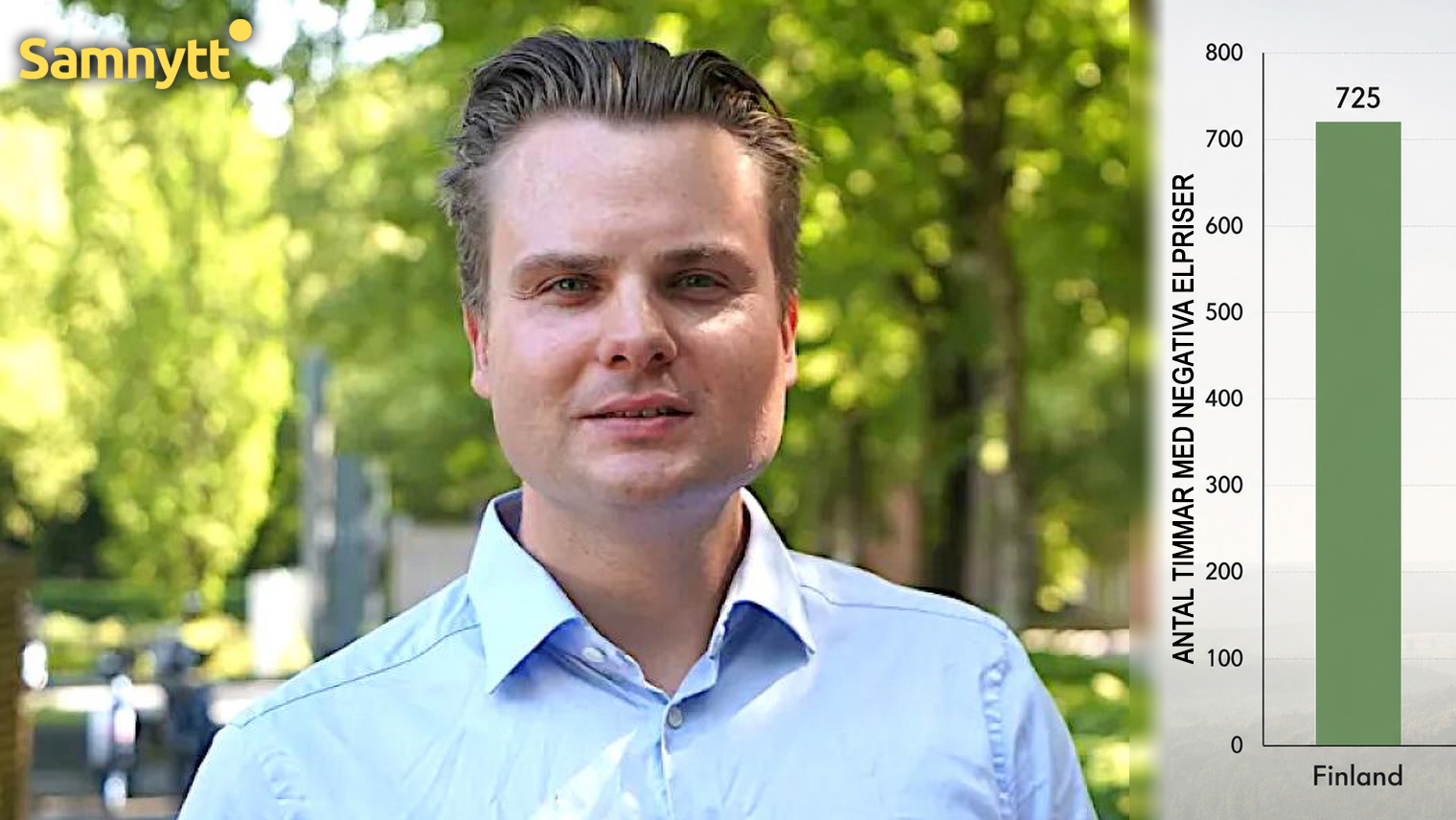
The rapid expansion of wind power in Finland has created a growing economic problem for producers. That is according to Norwegian professor Jonas Kristiansen Nøland, who warns that wind power risks losing all of its market value in less than ten years if the current trend continues. At the same time, he points to Sweden—especially the northern parts of the country—as an example that the same problem is also appearing here.
In recent years, Finland has expanded its wind power at record speed. Production has multiplied since the late 2010s, and the country has often been highlighted as a role model in the green transition. But according to Jonas Kristiansen Nøland, professor of energy conversion at the Norwegian University of Science and Technology, the success has a largely unspoken downside.
In an analysis in Affärsvärlden , he describes how the rapidly growing wind power production has pushed electricity prices down so much that the market is becoming less and less profitable for the producers themselves. When it is very windy at the same time as demand is low, a surplus of electricity develops, causing prices to fall to zero or even become negative.
Record number of hours with negative prices
According to Kristiansen Nøland, Finland had the most hours with negative electricity prices in Europe during 2024. In total, over 700 hours were registered when the electricity price was below zero. The situation means that producers, in practice, have to pay to deliver electricity to the grid, while some electricity consumers instead get paid to use electricity.
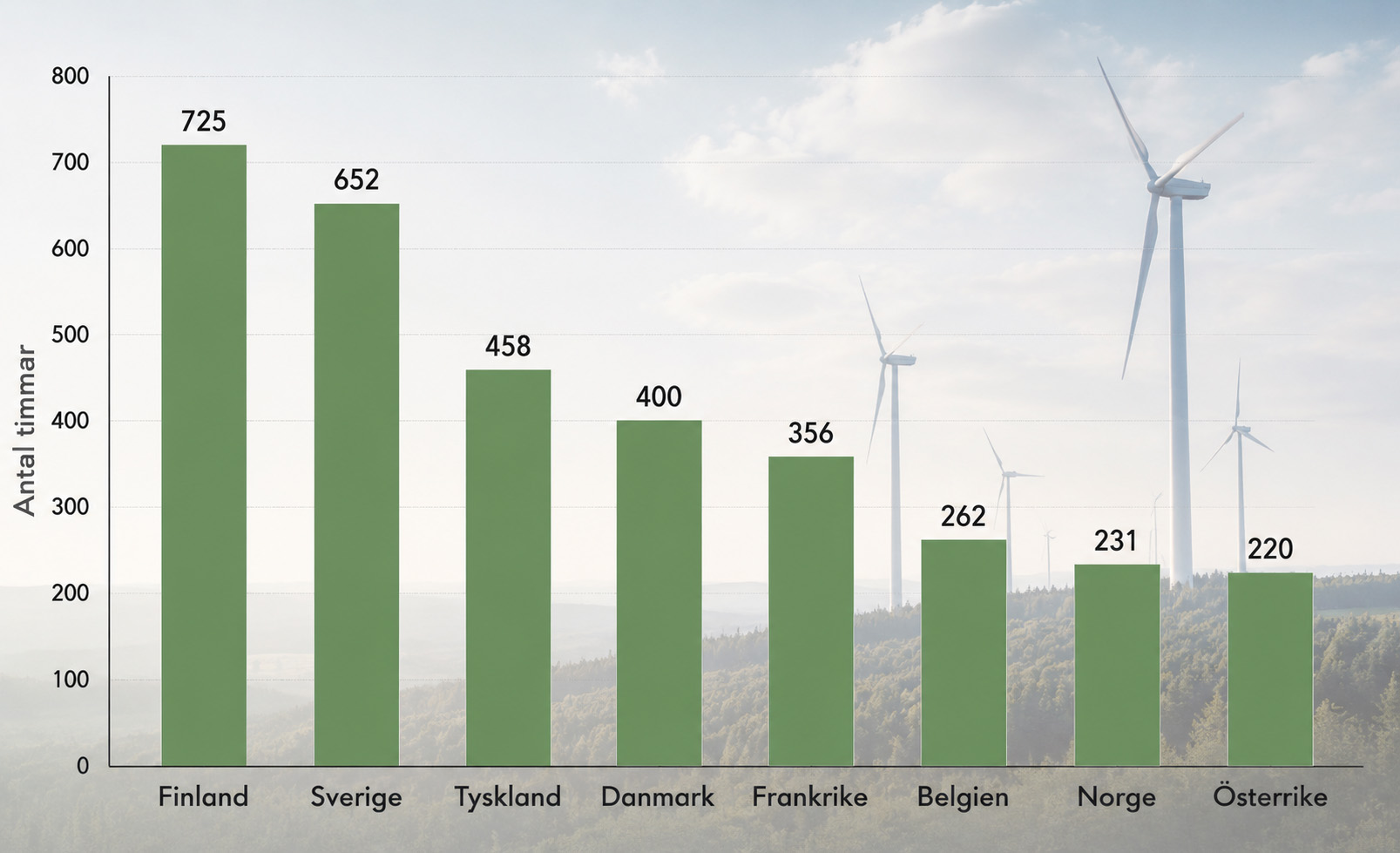
Sweden takes an almost equally worrying second place in the statistics for most hours with negative electricity prices. During 650 hours the same year, prices were below zero, and the number of hours has increased dramatically after 2022 as a result of the aggressive expansion.
The professor argues that this is a clear example of the so-called cannibalization effect—that large volumes of wind power push down the value of its own production. According to him, the market value of wind power in Finland has already been halved since 2019.
He further claims that, on average, wind power companies in 2025 received significantly less payment for their electricity than the general market price. According to Kristiansen Nøland, compensation for wind power was just over half the average price on the electricity exchange, which according to his calculations resulted in billion-euro losses for the sector.
If the planned expansion continues at the same pace, while the market value continues to fall, wind power, according to the professor, risks becoming “worthless” around the year 2035.
“The trend feels like a law of nature”
Jonas Kristiansen Nøland refers to international studies showing that wind power’s market value tends to decrease as its share of the electricity system increases. In Finland, according to him, the drop has been especially sharp.
He describes the development as almost predictable and claims that today’s energy policy focuses too much on installed capacity instead of actual economic profitability.
READ ALSO: Record production and record losses – researchers sound the alarm about a wind power crisis
According to the professor, a substantial increase in electricity demand is required for the system to function long-term. He notes, however, that Finland’s electricity use is still lower than it was about two decades ago, despite the large increase in production.
Doubts about batteries and hydrogen
Kristiansen Nøland also believes that many of the solutions previously highlighted to manage the variations in wind power still do not work in practice.
He considers battery storage inadequate because the storage times are too short to even out longer periods with large fluctuations in wind production. Hydrogen storage, he says, has also proven both expensive and inefficient since large amounts of energy are lost in the process.
As an example, he mentions that the Finnish hydrogen venture eTehdas shut down its operations in 2025 after weak economic results.
Finnish experts: Demand is growing
Not everyone shares this bleak view. Petteri Laaksonen, professor and research director focused on energy transition at the technical university in Lappeenranta, is optimistic that the market will adapt, claiming that this is already happening—although it is not yet visible in the figures.
He points out that the Finnish industry has become better at utilizing the large price differences on the electricity market. Energy companies, for example, use cheap electricity periods to produce and store heat that is later used when prices rise. Laaksonen also notes that wind power has helped reduce the use of coal, oil, and fossil gas in the industry and that the costs for new renewable electricity generation continue to fall.
READ ALSO: Professor: Researchers are wrong about the profitability of offshore wind power
In his view, no companies would continue investing in new wind power if they did not see the possibility for profitability in the long run. Critics, however, argue that profitability comes from government subsidies and interest rate arbitrage with taxpayers as guarantors, not from the business itself being profitable or based on a sound business idea.
Laaksonen also points out that new data centers and other electricity-intensive industries are expected to increase demand for fossil-free electricity in the coming years. However, these sectors have often negotiated deals for extremely low electricity prices, which worsens the profitability problems, as they simultaneously demand more electricity than can be produced or, above all, distributed.
Sweden singled out as the next problem child
Jonas Kristiansen Nøland, meanwhile, claims that developments in Finland are not unique. On the contrary, he describes the country as a warning sign of what is likely to happen in other Nordic countries with rapid wind power expansion.
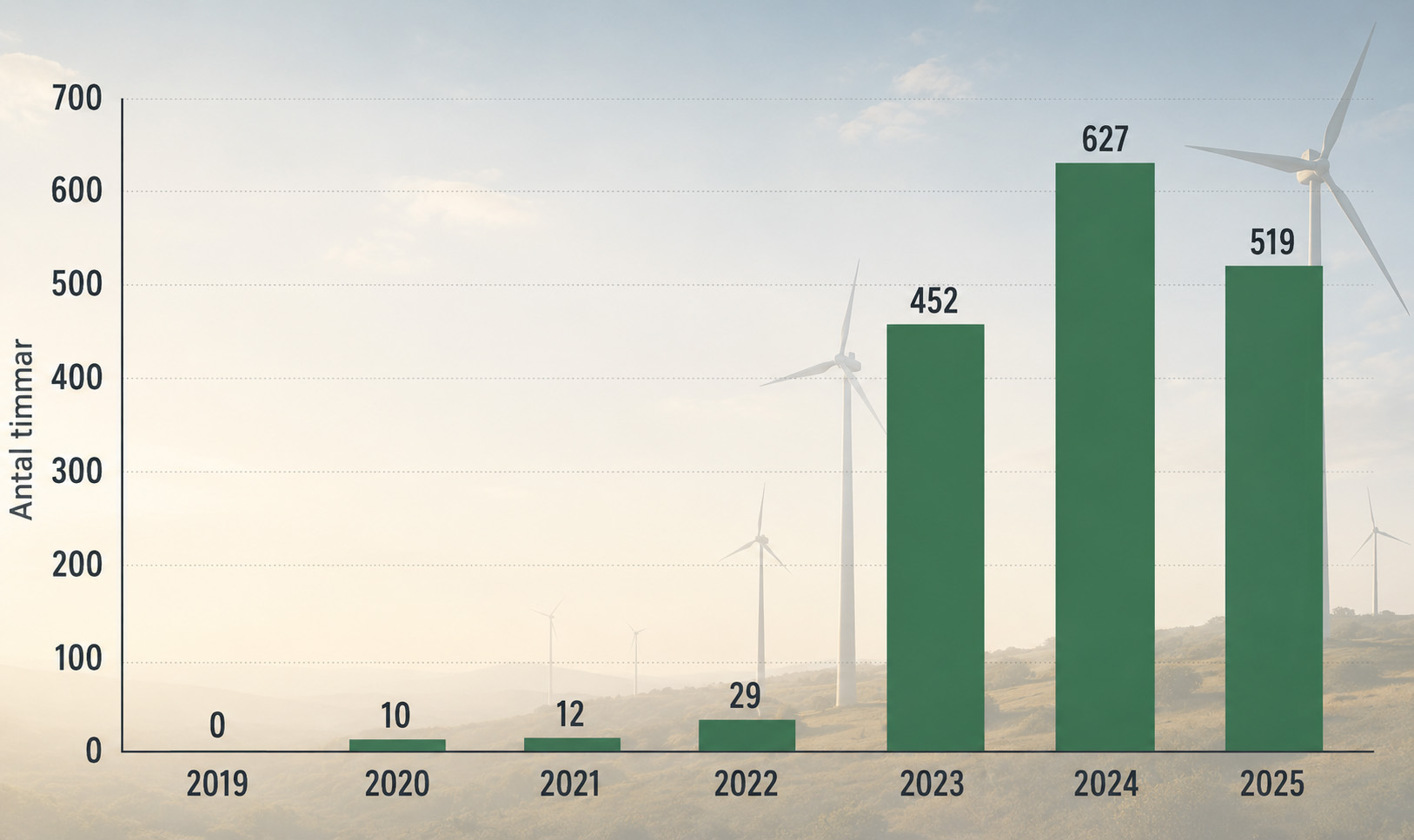
Sweden, in particular, is mentioned as a country where the problems have already become apparent—especially in Norrland, where negative electricity prices have become increasingly common in step with the sharp increase in wind power production.
The Swedish debate about the future of wind power is therefore expected to intensify even further in the coming years—not least regarding the question of how large amounts of weather-dependent electricity production can be combined with long-term profitability and stability in the electricity system.