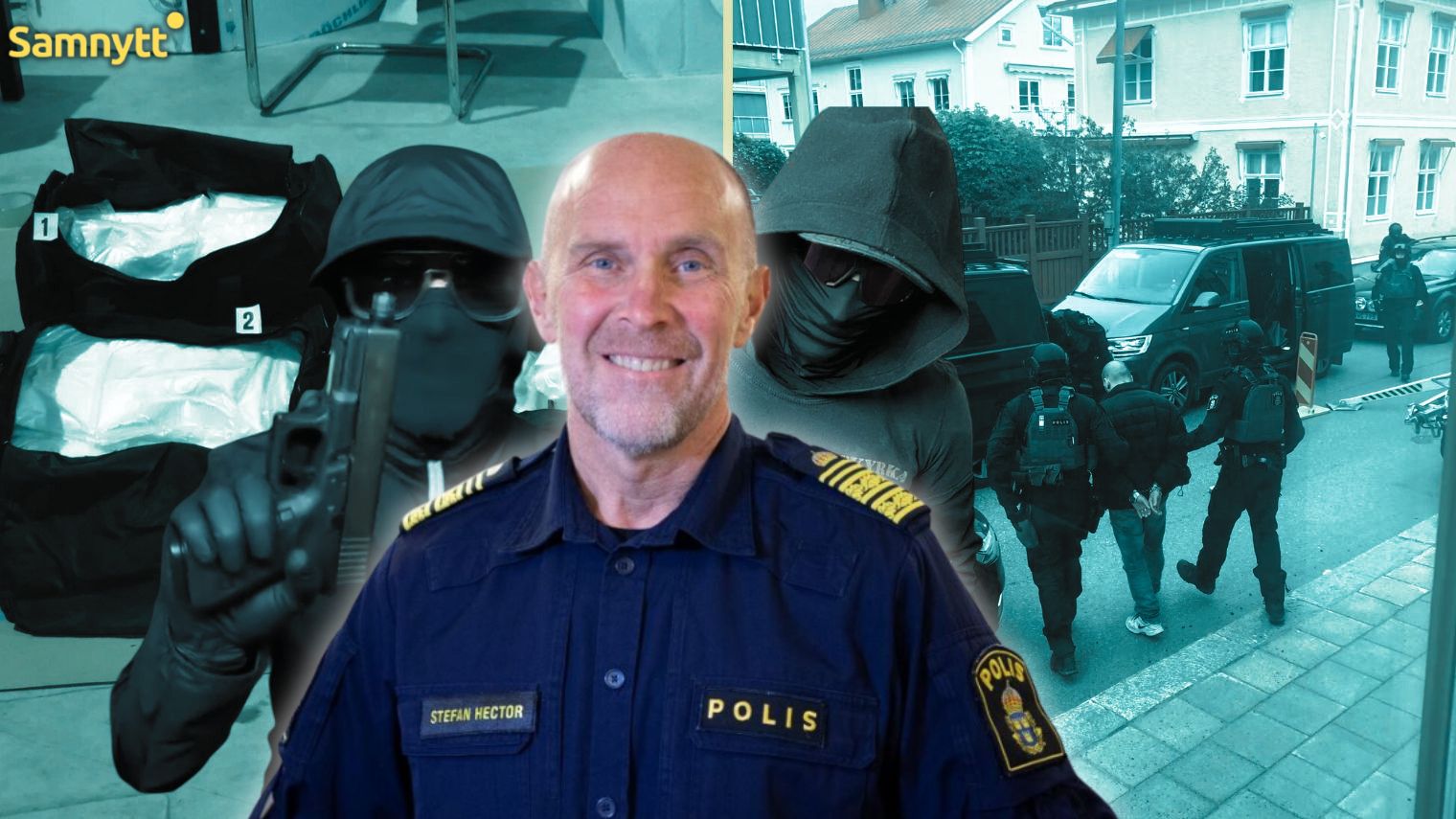
Since the Tidö parties took power in Sweden, something has happened on the gang crime scene. From a country plagued by shootings and bombings almost every week, things have outwardly become noticeably calmer. According to the police chief, the authorities have been very successful in combating the gangs, but at the same time, they are far from crushed—the criminal economy continues to grow.
The intensity of serious gang-related crime has diminished in recent times, and according to police leadership, several of Sweden’s most influential criminal networks have lost strength. Still, the police underline that this development does not mean organized crime has been defeated.
During a seminar in Almedalen in Visby, Deputy National Police Commissioner Stefan Hector described how the police’s work over recent years has significantly weakened the Foxtrot, Dalen, and Rumba networks.
“We have not solved the problem, but we are seeing clear successes right now,” said Hector.
Fewer Fatal Shootings
This development is reflected in the statistics on deadly gun violence. After a record year in 2022, when 63 people lost their lives to shootings, the number of fatal shootings has dropped. In the first two months of this year—January and May—not a single life was lost to gun violence, marking a rare decline.
According to Hector, the progress is due to the police becoming more effective in preventative work. The authorities have become better at linking information from different areas of the organization, such as escapes from care homes (HVB-hem) and communications in encrypted chats where violent crimes are planned.
He says that the three networks that have long dominated severe violent crime have now lost large parts of their operational capacity.
According to the police assessment, both the Dalen network and the Rumba network have essentially been neutralized since their respective leaders, Mikael Tenezos, known as “the Greek,” and Ismail Abdo, known as “the Strawberry,” were arrested in Mexico and Turkey, respectively.
At the same time, the Foxtrot network, led by Rawa Majid, also known as “the Kurdish Fox,” still exists—but wields far less influence than before. Majid has long been alleged to reside in Iran, making it difficult for authorities to reach him.

New Working Methods
The police also highlight changes in working methods as an important explanation for these results. Previous ways of working and organizational boundaries have given way to closer cooperation, while efforts have targeted key figures based abroad, especially in the Middle East and North Africa.
Hector describes this change as a break from old practices where the agency was forced to try methods not previously used.
Regarding the Tidö government’s proposal to lower the age of criminal responsibility, Hector warns there is a risk that criminal networks might begin to use even younger children to carry out offenses. At the same time, he notes that the current system has not managed to halt the trend, and that this issue is ultimately a political decision that the police must adapt to.
Bomb Attacks and Billion-Krona Profits
Even though deadly gun violence has decreased, the number of bombings remains high. Moreover, organized crime continues to turn over enormous sums. Police estimate that the criminal economy generates about 350 billion SEK every year, with around 185 billion SEK being pure profit.
Looking ahead to the next electoral term, Stefan Hector is calling for greater autonomy for the police authority. He wants to see less political micromanagement and legislation that gives police expanded opportunities to use covert, preventive coercive measures.
READ ALSO: Ekeroth: “When there are no shootings, things are going well for the gangs”