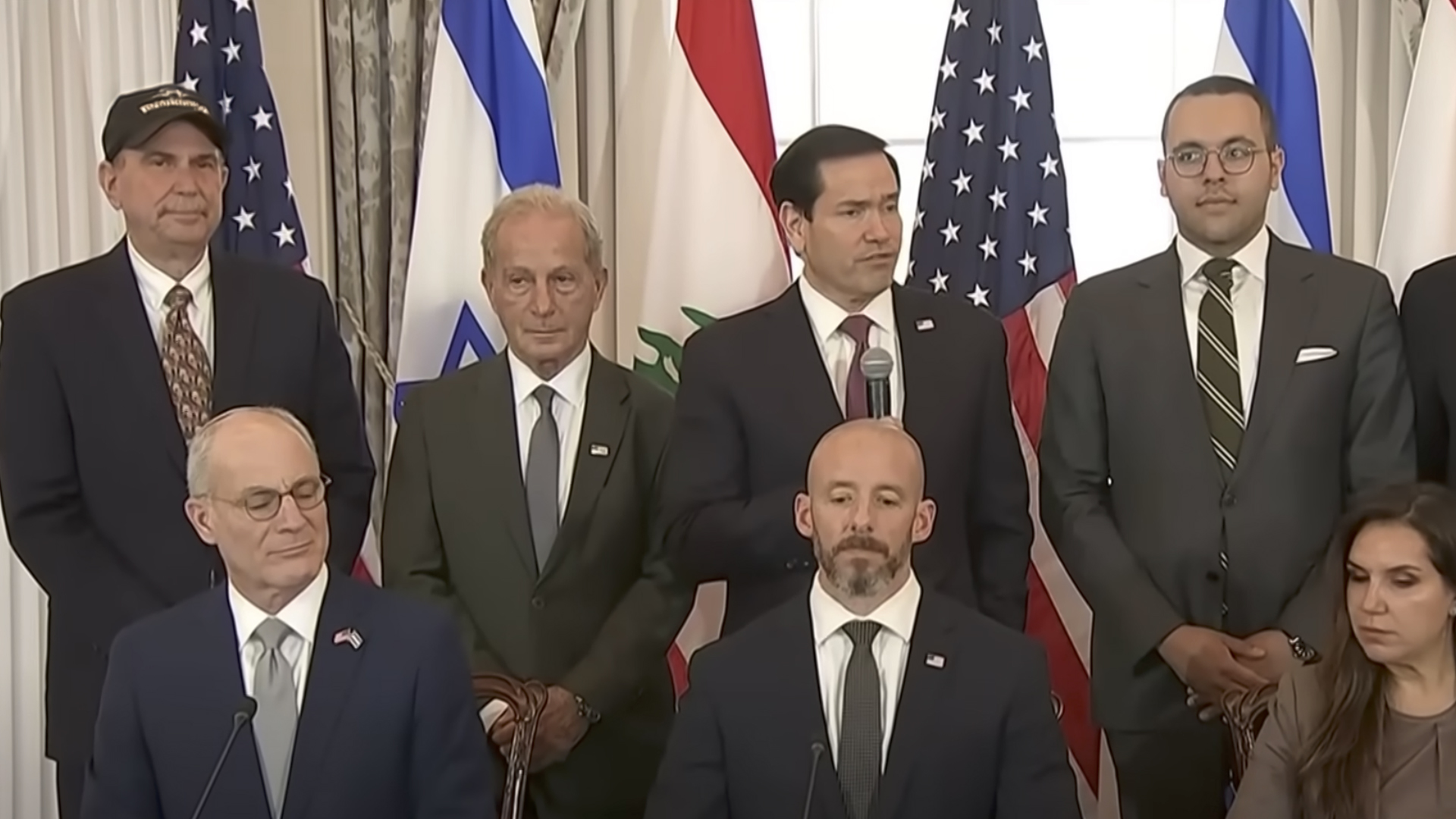
Israel, Lebanon and the United States have signed a framework agreement intended to pave the way for a limited Israeli withdrawal from parts of southern Lebanon. Israeli military remains in the area following Hezbollah’s attacks against Israel and the Iran-backed terror group’s continued military presence along the border.
The agreement was reached in Washington after four days of US-mediated talks. Although it does not mean that Lebanon formally recognizes Israel, it is an unusual and significant diplomatic development. Lebanon and Israel lack normal diplomatic relations and have effectively been in conflict for decades.
US Secretary of State Marco Rubio described the agreement as “the beginning of the beginning” and emphasized that much work remains to be done. According to Rubio, a trilateral military coordination group, led by the US, will be responsible for implementing the agreement.
The agreement means that Israel will initially withdraw from two smaller areas in southern Lebanon. According to Israel, these are outside the original buffer zone set up by the Israeli military to protect northern Israel from Hezbollah’s attacks.
Hezbollah Must Be Disarmed
However, Israel will maintain its security zone as long as Hezbollah is considered a threat. Israel’s ambassador to the US, Yechiel Leiter, stated that the agreement is not based on a fixed timeline, but on concrete progress from the Lebanese army. According to Israel, the Lebanese state must demonstrate that it can disarm Hezbollah and take responsibility for security in the area.
Lebanon’s ambassador Nada Hamadeh described the agreement as a first step towards restoring Lebanon’s sovereignty and territorial integrity, as well as a move towards a permanent end to hostilities.
Israeli Prime Minister Benjamin Netanyahu welcomed the deal but at the same time emphasized that Israel will maintain its buffer zone in southern Lebanon “for as long as necessary.” He described the agreement as a setback for Iran and Hezbollah.
Hezbollah does not support the agreement. A member of parliament from the terror group’s political wing warned that Lebanese authorities will not be able to implement the agreement without risking civil war.
The agreement is therefore seen as a limited but symbolically important first step. It remains to be seen if the Lebanese state has the strength to implement it – and if Hezbollah will accept losing its military grip over southern Lebanon.
Hezbollah Supporters Don’t Want Peace
Following the announcement of the framework agreement, unrest broke out in Beirut. According to Israeli Ynet, Hezbollah supporters took to the streets, waved the terror group’s flags, vandalized property, and clashed with Lebanese security forces.
Images and videos from Beirut reportedly show motorcycle convoys with Hezbollah flags on their way to the city’s airport. Lebanese media reported that the army used tear gas against rioters near the airport. Vehicles were also set on fire during the unrest, before Lebanese soldiers were sent in to disperse the crowd.