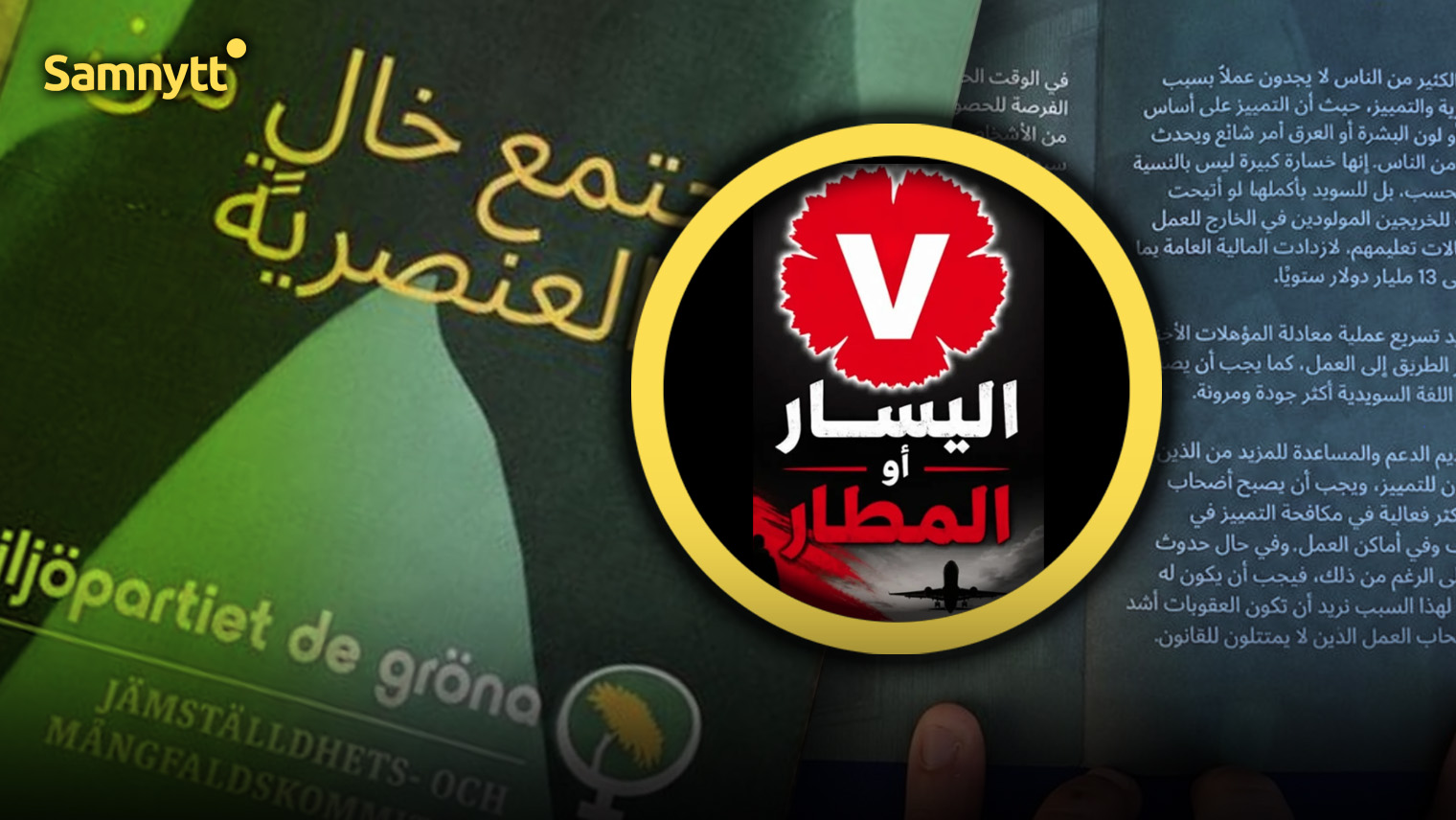
Messages in Arabic are spreading with warnings that immigrants risk deportation if the wrong side wins the Swedish election. A viral post with the Left Party’s logo urges recipients to “vote for V or go to the airport,” while another calls for a vote for the Social Democrats to avoid deportation. Now, questions are being raised about a parallel election campaign that large parts of the Swedish public lack insight into.
On Sunday, Sweden goes to the polls. Party leaders are meeting in debates, campaign cottages are open, and Swedish voters are bombarded with political messages.
But alongside the Swedish-language election campaign, there is another campaign taking place in Arabic. On Facebook, Instagram, TikTok, and other social media, political messages are spreading that a large part of the Swedish-speaking population never sees—and in some cases, it’s a matter of outright disinformation.
Sveriges Radio has highlighted several examples on Wednesday. A viral post uses the Left Party’s logo together with the Arabic message: “Vote for V or go to the airport.” In another post, recipients are urged to vote for the Social Democrats or risk deportation.
Sveriges Radio is clear that this material does not come from the parties’ official accounts but is spread by private individuals. Who originally created the material remains unclear.
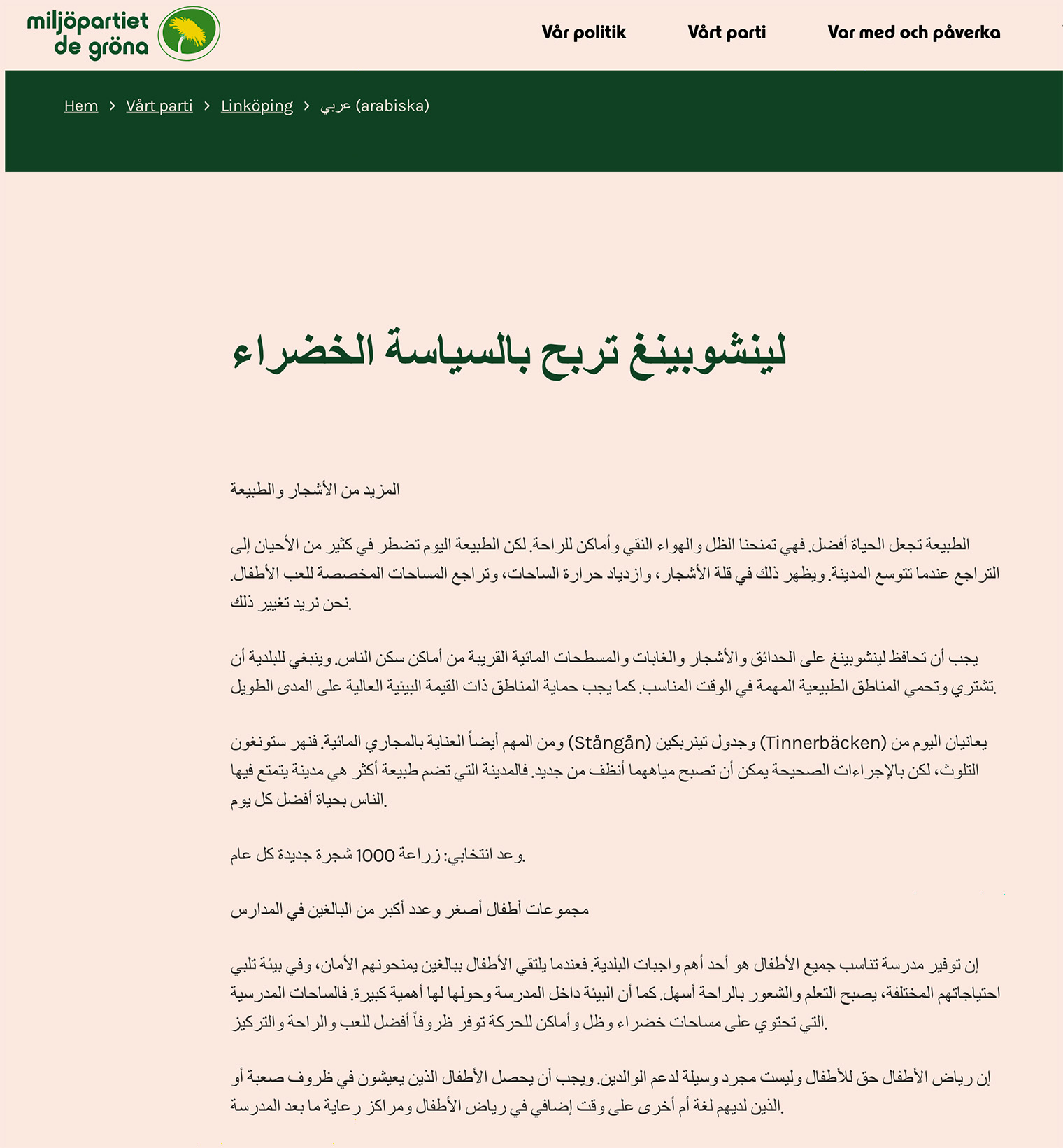
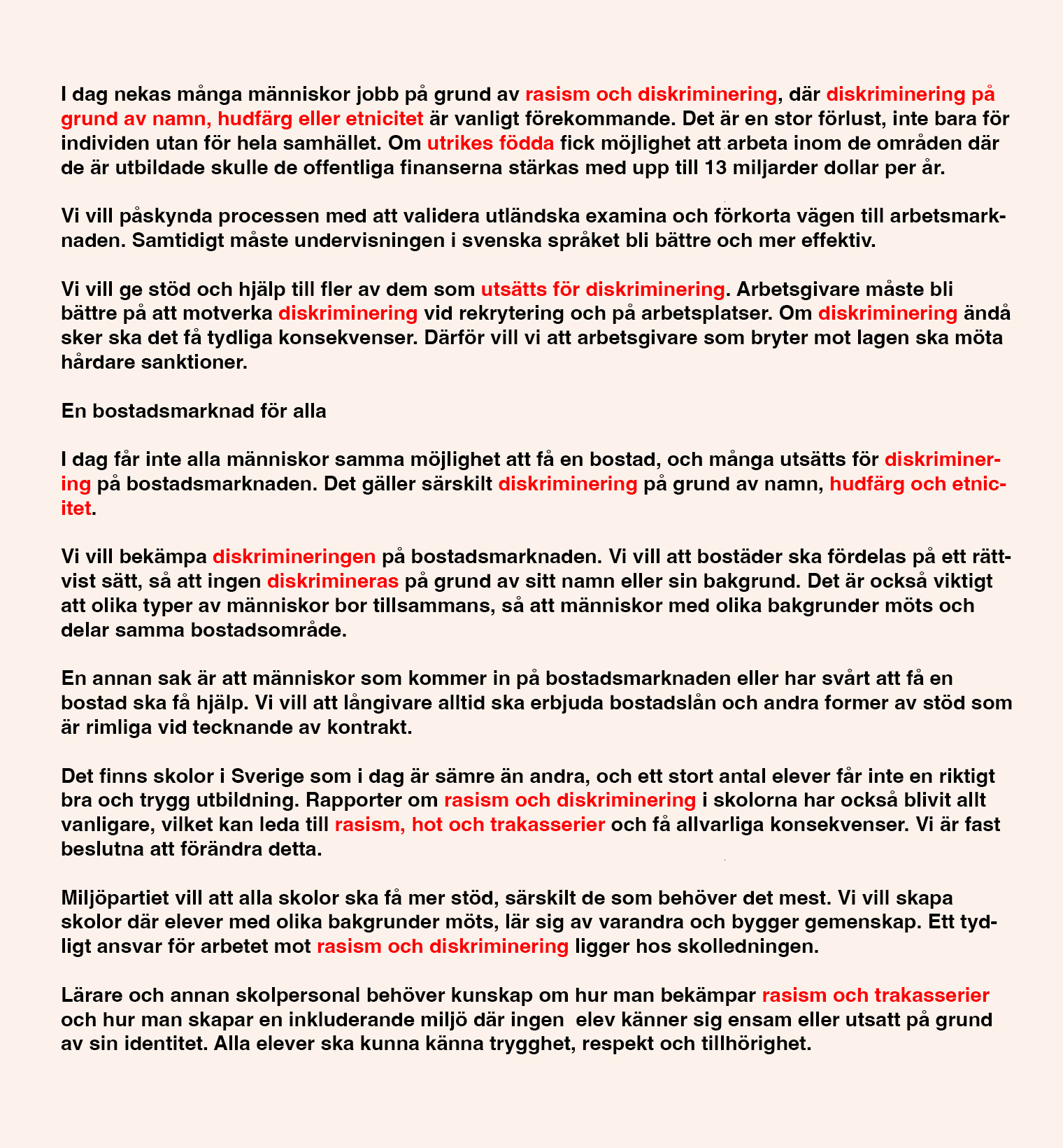
An article on Riks draws attention to an Arabic-language campaign brochure from the Green Party (Miljöpartiet), where racism, discrimination, skin color, and ethnicity run as a common thread throughout the message to voters.
The party describes discrimination against foreign-born people in the job and housing markets, calls for stricter sanctions against employers, and highlights the need for people of diverse backgrounds to live together. Schools are also described in terms of racism, discrimination, and the need for a more inclusive environment.
“People completely believe it”
The fact that these messages are reaching and influencing Arabic-speaking voters is clear from SR’s interviews. 27-year-old Mohamed Saad El Din says he has seen the material on both Facebook and Instagram. He claims the rumor has spread widely among Arabic-speaking voters and that people believe the Left Party is the only political force that can protect their rights.
In SR’s other reportage, 50-year-old Amer says he encounters the same material on several different platforms.
– I see this image everywhere, on TikTok, Messenger, Facebook. I don’t understand anything. We’re afraid they’re going to throw us out, where should we go? he tells SR.
Left Party deputy leader Ida Gabrielsson denies that the party is behind the material. She tells P3 that V would never run such a campaign and that the party tries to intervene when they discover others using the party’s name in this way.
READ ALSO: Here is the Left Party’s Arabic advertising – warning about racism and discrimination
But the phenomenon raises a larger question than who is behind these particular images: What happens when parts of a Swedish election campaign are conducted in a language that large segments of the Swedish public do not understand—and how are false political messages circulating in these spaces discovered?
The Researcher: May Increase Polarization
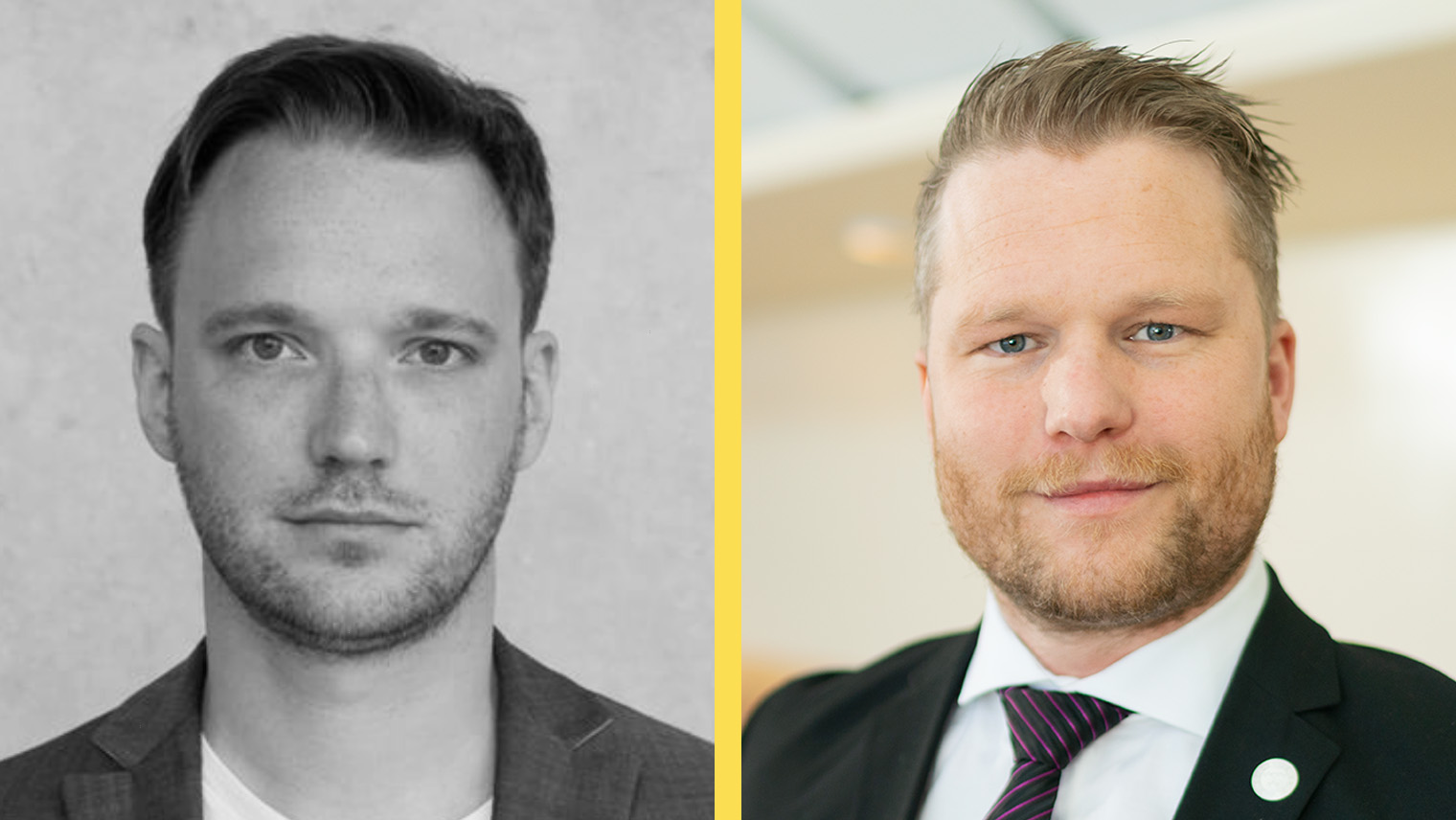
Zeth Isaksson is a researcher in sociology at Stockholm University, one of his focuses is voter behavior and political sociology. In P3’s reportage, he describes the rhetoric as “extremely harsh” and says it creates polarization and is bad for democracy.
Samnytt has also spoken with Isaksson about the phenomenon and the possible consequences of this type of political messaging. He points to two types of polarization.
READ ALSO: Here is the left’s election campaign in Arabic – aiming to win the election with immigrant votes
One is affective—that people develop increasingly strong antagonism toward voters from the opposite political camp. The other is ideological, meaning that people distance themselves further from the opposing side’s political opinions.
– It can lead to polarization. And we have seen that in many different countries, says Isaksson.
He notes that such polarization can have negative consequences for democracy.
When Samnytt asks about the harsh rhetoric also present in the Swedish-language election campaign—where, among others, the Sweden Democrats (SD) have repeatedly been described as a threat to democracy—Isaksson calls for greater caution from all sides.
Different groups in society have different interests. If an Arabic-language election campaign targets people who are Arabic speakers, then they likely have certain specific interests relevant to their group. I do not think that the language itself is necessarily a problem.
Zeth Isaksson, sociologist
He distinguishes between such statements and the much harsher messages now circulating in Arabic, which, according to his description, in some cases claim that people would be dragged through the streets if SD and the government side win the election.
READ ALSO: Police officer Maria Rosander warns of Islamization: “Society is being eaten from within”
– I think the debate would benefit from also clarifying what is meant by a threat to democracy. And that actually goes for all sides. Some moderation in the debate would be good.
“Language itself” not the problem
But Isaksson does not want to go so far as to describe the very presence of an Arabic-language election campaign as a democratic problem.
Isn’t it quite a serious problem if a country has national elections, and there are election campaigns in languages so different from the country’s own language that people in the country have no idea what is being said?
– There are democracies where multiple languages are used. In Switzerland, for example, there are many different languages, so it does not have to be a problem. He continues:
– Different groups in society have different interests. If an election campaign in Arabic targets Arabic-speaking people, then they likely have certain specific interests relevant to their group. I do not think that the language itself is necessarily a problem.
READ ALSO: “Sorry for not speaking Arabic” – the phrase that best sums up Sweden 2026
On the contrary, Isaksson believes that information in other languages can encourage people who have previously stayed far from the ballot box to start voting and get politically engaged.
– The problem is if this is driven by disinformation. And that is not good.
Sveriges Radio itself conducts election coverage in ten languages ahead of the election, including Arabic, Persian, and Somali. The Arabic-language editorial staff reports continuously on Swedish parties and election issues.
The difference is thus central—factual election information and journalism being available in several languages is one thing. Anonymous or private actors spreading false claims about what will happen to people after a certain election result is another.
READ ALSO: Jamal El-Haj wants to strengthen the Arabic language’s position in Sweden
Downplaying the Threat to Democracy
Although Isaksson describes the rhetoric as polarizing, he downplays in his interview with Samnytt the risk that the specific campaign which has now been highlighted would have any major effect on Swedish democracy.
In the last election campaign, the Social Democrats ran highly active campaigns in which they also spread lies in several different languages, including Arabic and Persian. And it is very hard for me as a Swedish official to interpret these texts. So I think it is truly appalling, actually.
Alexander Christiansson, Member of Parliament, Sweden Democrats
Sweden, he argues, has strong institutions and democratic norms that can withstand this type of disinformation.
– I would not say that this has a major effect on democracy.
READ ALSO: Jomshof: El-Haj’s proposal for increased immigration “completely insane”
But at the same time, there remains significant uncertainty. Neither Isaksson nor anyone else currently knows how extensive the Arabic-language campaign really is.
– I do not know how broad the campaign is, he tells Samnytt.
He therefore concludes that he suspects the impact on Swedish democracy is limited. P3’s investigation meanwhile shows that the material has reached Arabic-speaking voters on several of the largest social platforms. Mohamed describes broad dissemination, and Amer says he sees the image “everywhere.”
SD: “In democratic elections, we campaign in Swedish”
Sweden Democrats MP and cultural policy spokesperson Alexander Christiansson gives a much harsher assessment than Isaksson. For him, the problem is not limited to the disinformation currently being spread—the very existence of parallel election campaigns in different languages is, according to him, a sign of a segregated society.
In Sweden, in the public space, we speak Swedish. In democratic elections, we campaign in Swedish in Sweden. Anything else is a sign of the failed segregation and mass immigration that the old parties have promoted.
Alexander Christiansson, Member of Parliament, Sweden Democrats
What is your view of the existence of parallel Arabic election campaigns in Sweden?
– Firstly, it says quite a lot about the times we live in. And it is truly sad, in fact, how segregated and multicultural this society has become. Moreover, it becomes a democratic problem in the end. He continues:
– In the last election campaign, the Social Democrats conducted very active campaigns, also spreading lies in several different languages, including Arabic and Persian. The SD leader continues:
– And it is very hard for me as a Swedish official to interpret these texts. I think it is truly appalling, actually.
READ ALSO: Ekeroth: “Why ignore the risk of election fraud?”
Christiansson also goes further and level further criticism at the Social Democrats and the Left Party. He argues that politicians who do not stick to the truth in order to win elections represent a “domestic democratic threat” and also points to other dishonest methods, such as assisting voters in voting or bussing people to polling stations.
– If you cannot win elections on your own policies, you have to resort to dishonest methods, he tells Samnytt.
SEE ALSO: VIDEO: Here Magdalena Andersson is praised and kissed by a migrant—in Arabic
Alexander Christiansson also describes the development as a kind of parallel election effort and believes that it is difficult to reconcile with efforts to reduce segregation.
– In Sweden, in the public space, we speak Swedish. In democratic elections, we campaign in Swedish in Sweden. Anything else is a sign of the failed segregation and mass immigration that the old parties have promoted.
He emphasizes that, of course, residents should be able to speak any language they like among themselves, but draws a clear line at the public and political sphere.
Thus, Christiansson and Isaksson end up on different sides of the fundamental issue. Isaksson argues that the choice of language itself need not be problematic and that information in multiple languages can increase voter turnout.
Christiansson, in contrast, views the multilingual election campaign as a symptom of the segregation that has developed in Sweden.
We have no idea what is happening in these environments at all, for example when it comes to mosque construction and Islamic communities. And of course that is a threat to us, our existence, and our democracy.
Alexander Christiansson, Member of Parliament, Sweden Democrats
As a concrete example, the SD leader points to Green Party MP Leila Ali Elmi in Gothenburg, who he says is running her campaign in Somali.
READ ALSO: “Allah is great and Somalis are great”—how Leila Ali-Elmi (MP) secured her seat in the Riksdag
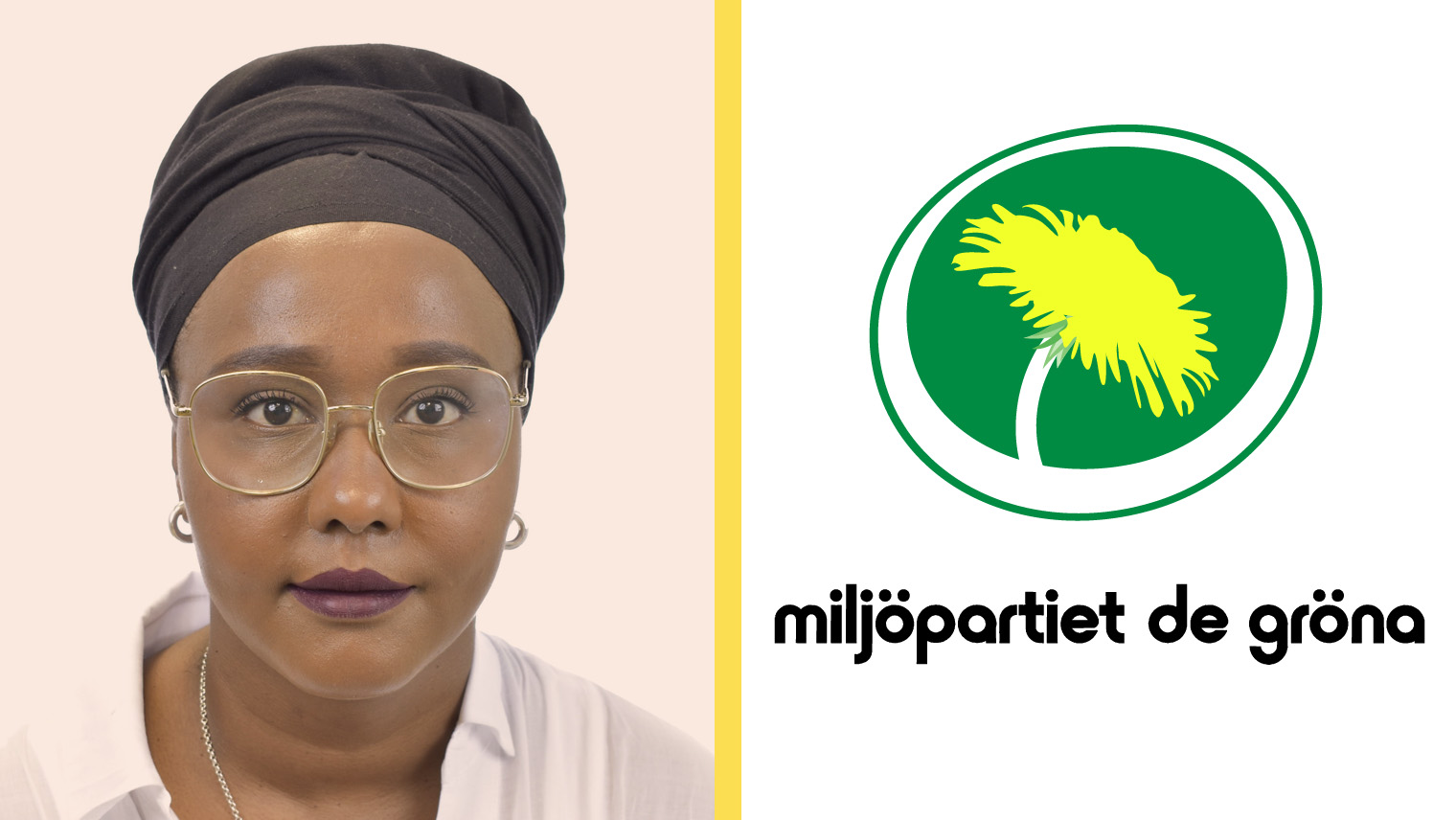
He links this to what he describes as clan voting and sees it as a further example of how the Swedish election campaign has split into parallel linguistic and ethnic environments.
READ ALSO: Green Party’s Leila Ali Elmi wants to map people according to race
For Christiansson, this development is a democratic problem—Sweden has a national election, but voters are, according to him, mobilized through campaigns that large parts of the rest of the population can neither follow nor understand.
Wants Greater Scrutiny of Parallel Environments
Christiansson also calls for much greater scrutiny of the environments where political and religious opinion-shaping is happening in other languages. He believes that Swedish authorities, media, and politicians today have too little knowledge of what is actually communicated there.
READ ALSO: Mona Walter on the Minnesota scandal, Somali culture, and why Sweden is particularly vulnerable
Should there be an investigation into the risk of foreign actors influencing elections in Arabic in Sweden?
– Absolutely. We have no idea what goes on in these environments at all, for example when it comes to mosque construction and Islamic communities. And of course it is a threat to us, our existence, and our democracy. He continues:
– For now, we have legislation that allows foreign financing, but it is high on the agenda to stop that.
Christiansson also wants a broader review of political parties’ contacts, organizations, and financing. According to him, such an investigation should not be limited to the Social Democrats or other left-wing parties.
READ ALSO: INTERVIEW: Mona Walter’s warning to Sweden
– There must be a review, and it should apply to all parties. That’s how it has to be in a democracy: all parties should be reviewed in different ways.
Exactly how such a review would be carried out, however, he cannot answer.
– That’s a legal question that needs to be looked at more closely. I do not really have that expertise.
On Sunday, Sweden is to make a joint decision about the country’s future. But Sveriges Radio’s investigation shows that parts of the election campaign are simultaneously taking place in linguistic environments where false messages can reach thousands of voters without the Swedish-speaking public even knowing what is being said.
The question is therefore no longer whether there is a parallel election campaign—but how extensive it is and who really controls the messages.