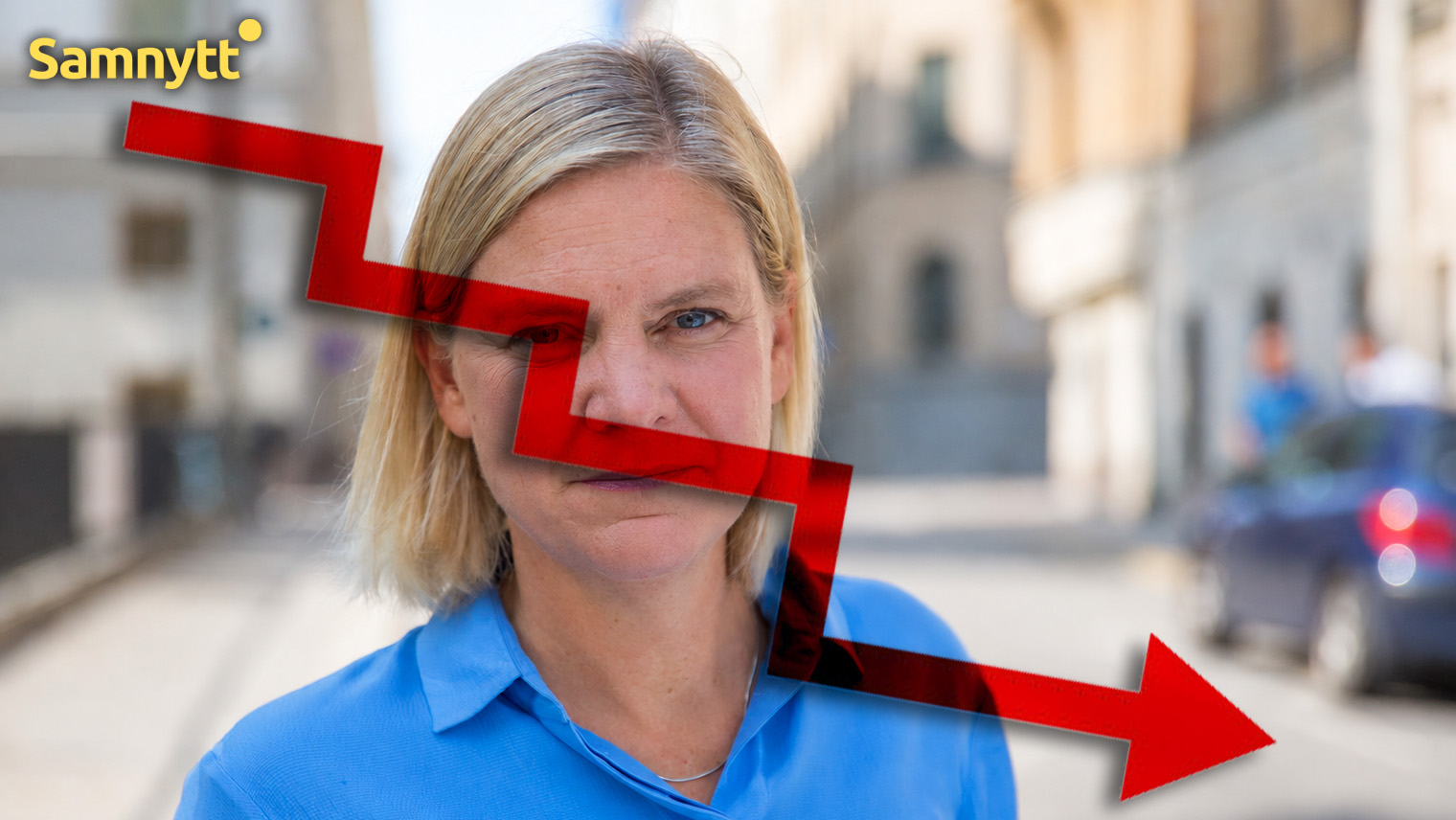
Magdalena Andersson’s previously strong trust ratings have taken a serious hit ahead of the election. The Social Democratic leader drops eight percentage points and is now surpassed by both Ebba Busch and Ulf Kristersson. At the same time, the Tidö bloc party leaders consistently enjoy much stronger trust than the leaders of the smaller parties Andersson might depend on in the event of a change of government.
The Social Democrats’ party leader, Magdalena Andersson, has long maintained a significant lead over her political rivals when voters are asked which party leaders they trust. But with only days left until the election, the picture has changed dramatically.
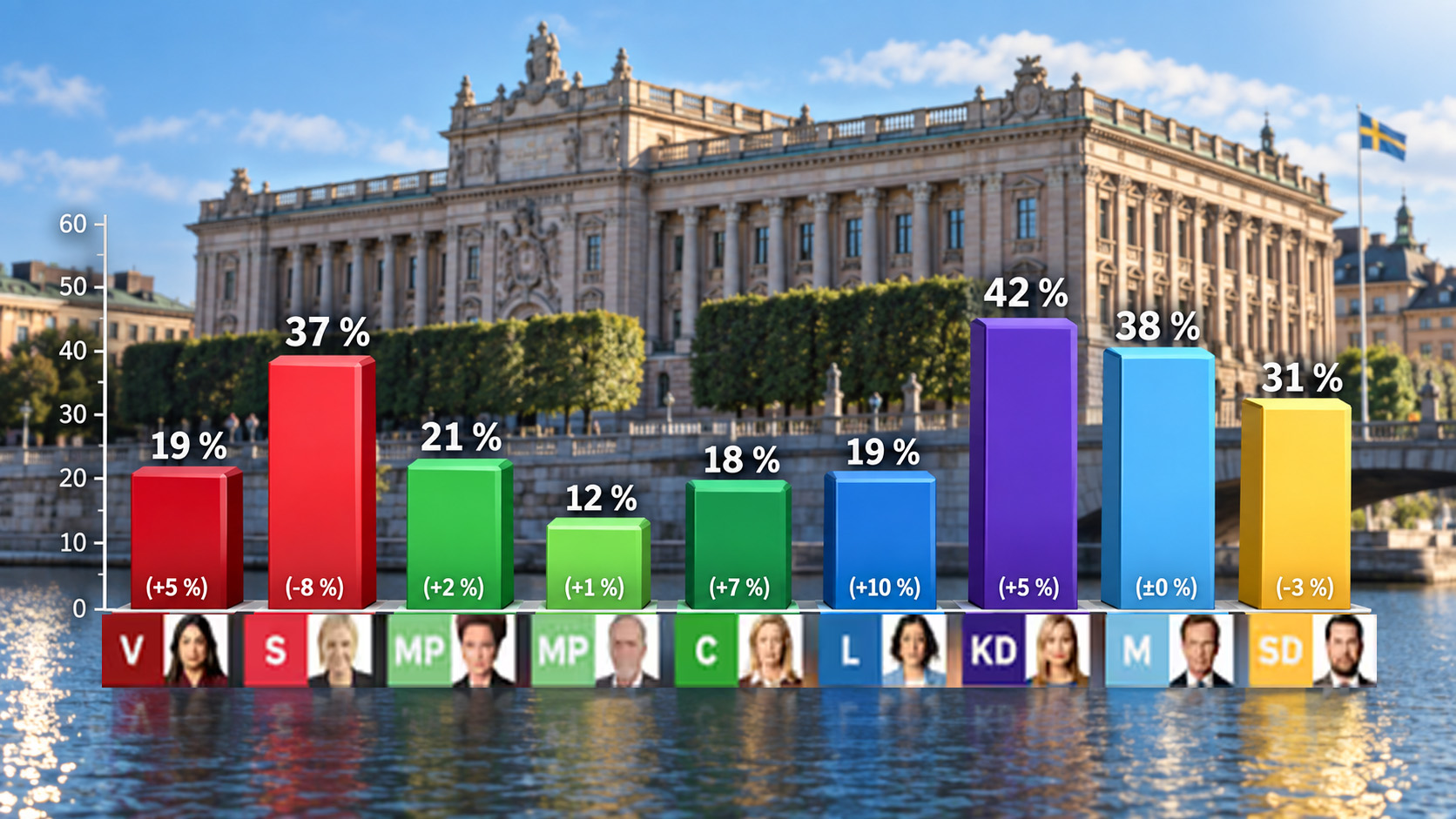
In the latest poll by SVT/Verian, 37 percent say they have quite a lot or very much trust in Andersson. In August, the corresponding figure was 45 percent.
The eight percentage point drop is statistically significant and marks Andersson’s lowest reading so far in Verian’s surveys for SVT. The loss is especially evident among voters on the red-green side.
Busch overtakes both Andersson and Kristersson
This means Andersson is knocked off the top spot. Instead, Christian Democrats’ leader Ebba Busch climbs decisively to the top of the podium. She reaches 42 percent—her highest trust rating ever in Verian’s measurement series.
Prime Minister Ulf Kristersson (M) is recorded at 38 percent, also overtaking Andersson’s 37 percent. But he no longer has the strongest trust within the Tidö bloc. Nor does his party; that position has been held by the Sweden Democrats throughout the parliamentary term and in the election results. His role as prime minister in a new Tidö government is thus on shaky ground.
READ ALSO: Significantly increased trust in Ebba Busch: “Remarkable”
Andersson’s plunge is a clear shift compared to previous election campaigns, when she enjoyed significant personal political capital. Before the 2022 election, her trust ratings, according to Verian, were well over 50 percent, but have now dropped by a full 13 percentage points.
– Magdalena Andersson’s high level of trust has been a strength for the Social Democrats. She has long been in a league of her own, says Per Söderpalm, head of public opinion at Verian, to SVT.
He notes that the gap to several Tidö bloc party leaders has now narrowed considerably and describes it as a clear change from before.
Busch gains trust even among red-greens
Ebba Busch’s rise is not only due to strong support from voters who already sympathize with the government bloc. According to Söderpalm, the Christian Democrat leader has previously enjoyed high trust among Tidö voters, but now she has also strengthened her position among red-green voters. It is this broadening that has lifted her to first place.
At the same time, voters’ assessment of the government has also become more positive. The number who believe the government is doing a good job has increased since August. According to Verian, this improvement is also visible among red-green voters. Söderpalm tells SVT that this may be one reason why public opinion has evened out during the final phase of the election campaign, though several other factors may also play a role.
Big differences between government alternatives
The survey also illustrates a difference between the two potential government blocs. Party leaders within the Tidö cooperation consistently enjoy significantly higher trust than the leaders of several parties from whom the Social Democrats may need support to form a government after the election.
For Magdalena Andersson, this means her previous personal advantage is no longer as obvious compared to the opposition. While both Busch and Kristersson are now ahead of her, her potential partners on the red-green side have significantly lower trust ratings.
READ ALSO: Significantly increased trust in Simona Mohamsson
At the same time, figures are shifting quickly in the final stage of the election campaign. As party leaders receive significant media exposure, debates, and interviews, the changes between two measurements can be greater than during quieter political periods.
This is also evident for the Liberal Party’s Simona Mohamsson, who accounts for the survey’s largest increase at ten percentage points, and her party has also made a recovery with a chance to remain in parliament. The Centre Party’s Elisabeth Thand Ringqvist and the Left Party’s Nooshi Dadgostar are also advancing.
Four days before the election
Despite the positive signals for the government side, Per Söderpalm does not want to conclude that the development in party leader confidence will automatically be reflected in the election outcome.
– There are some positive trends for the government, but it’s hard to know how they will play out in the election, he tells SVT.
According to Söderpalm, Swedish voters still tend to choose parties primarily based on political and ideological considerations rather than which party leader they personally trust the most.
The survey was conducted from September 1–3 among 1,025 people aged 18–84 in the randomly recruited and nationally representative Sifo panel. Participants were asked, among other things, whether they had quite a lot or a great deal of trust in each party leader.