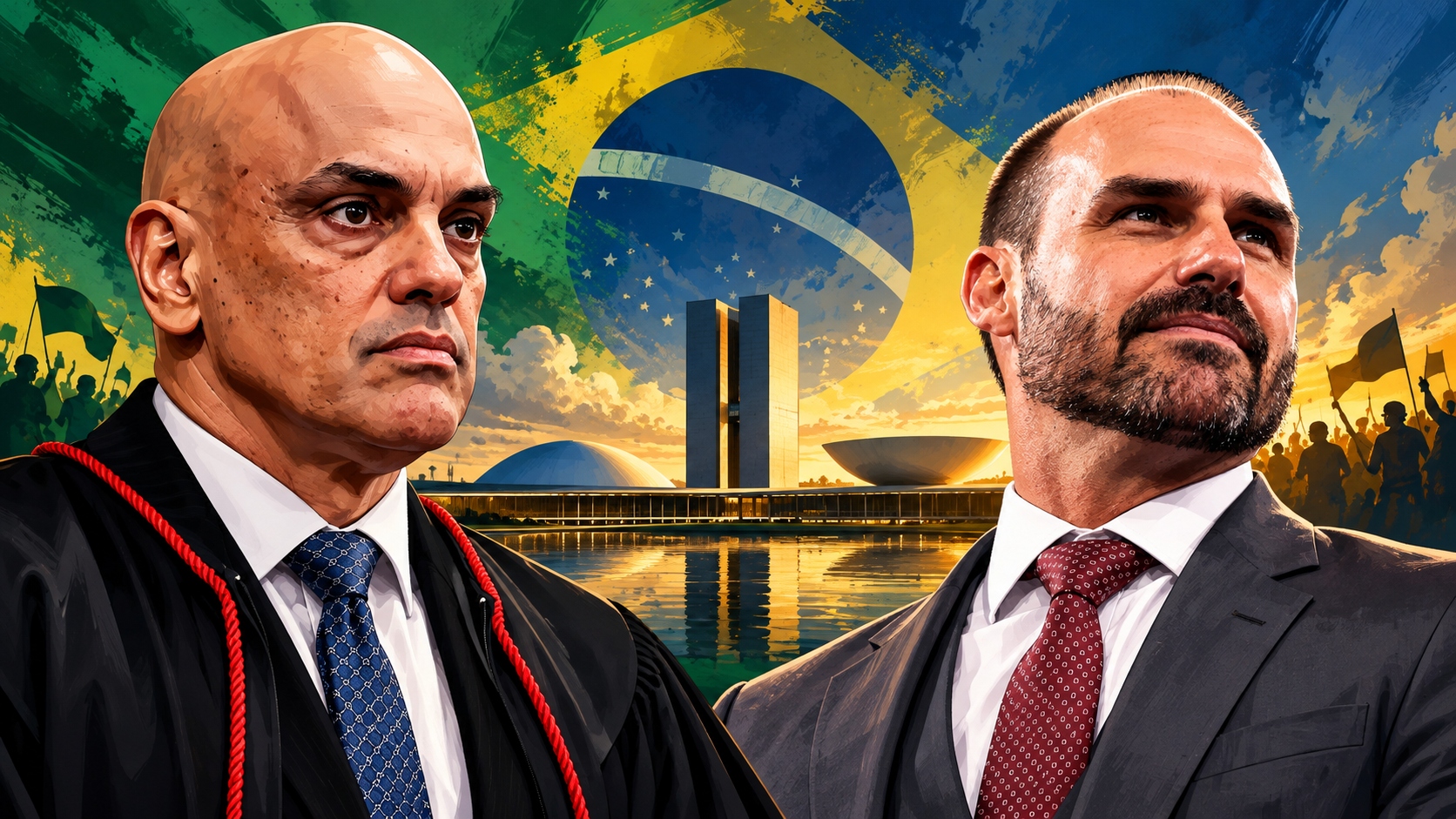
Brazil’s controversial Supreme Court judge Alexandre de Moraes has once again targeted the Bolsonaro family. Just over two weeks before the decisive presidential run-off between socialist Lula da Silva and opposition candidate Flávio Bolsonaro, the judge has issued an arrest warrant for Flávio’s brother Eduardo. Moraes has previously become notorious for far-reaching censorship interventions, blocking Elon Musk’s X, and his central role in the imprisonment of former president Jair Bolsonaro.
On Thursday, Alexandre de Moraes of Brazil’s Supreme Court issued an arrest warrant for Eduardo Bolsonaro, 42, ordering him to immediately begin serving a prison sentence of four years and two months. The judge also ordered the revocation of Eduardo’s Brazilian passport and instructed the federal police to arrest him should he return to the country.
The crime for which Eduardo Bolsonaro was convicted involves attempts from the USA to get the Trump administration to impose sanctions on Brazilian officials, including Moraes himself, as well as economic pressure on Brazil.
According to the court, this constituted improper influence on the legal proceedings against his father, former president Jair Bolsonaro.
READ MORE: Brazil’s former president Jair Bolsonaro, 70, sentenced to 27 years in prison
Since 2025, Eduardo has lived in Texas, where he has built close ties with the American right. He has openly tried to get Washington to react to what the Bolsonaro family describes as political persecution and legal abuses in their home country. That work has now resulted in a prison sentence in Brazil.
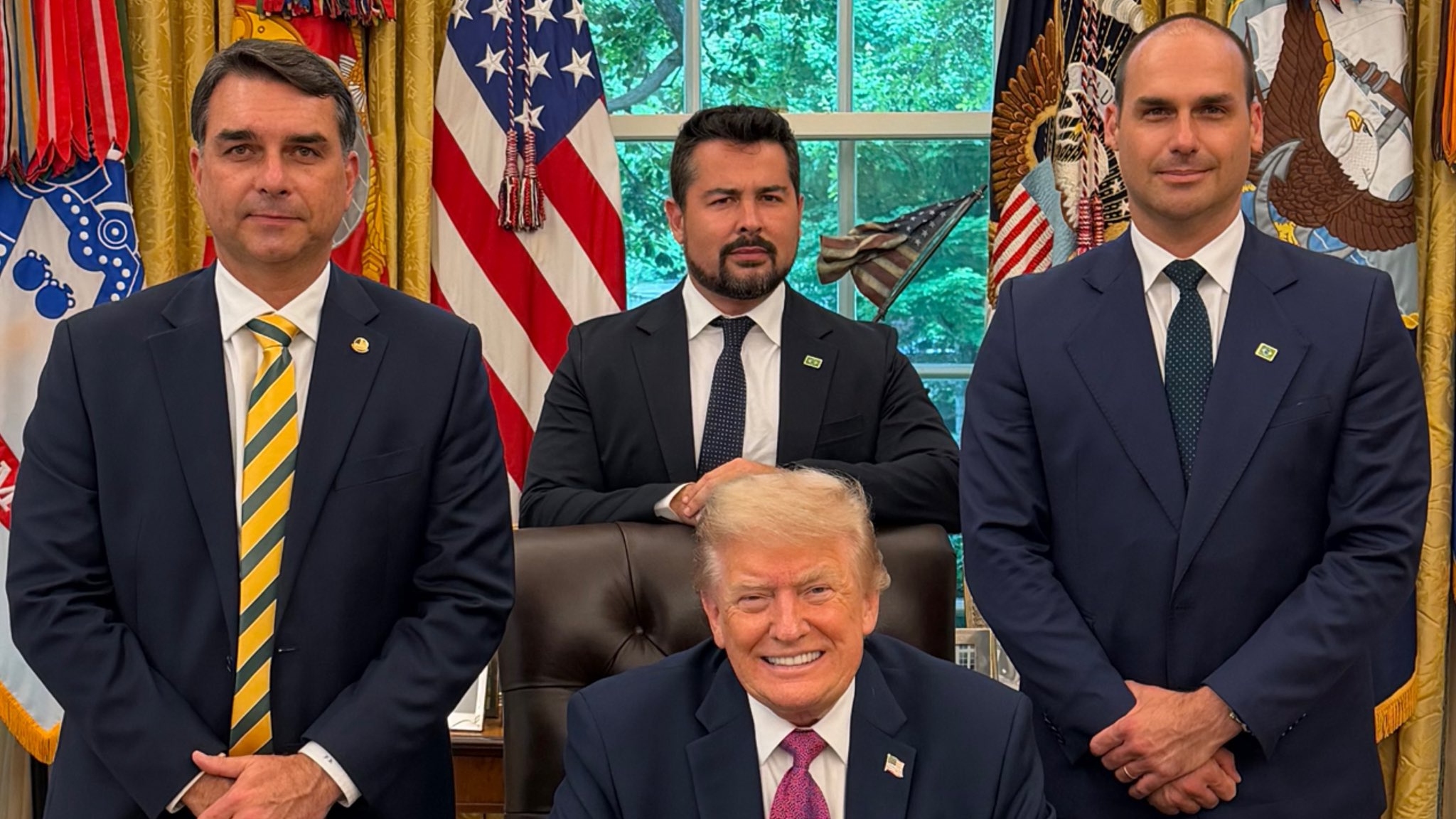
The decision comes at a particularly sensitive time. On October 25, the presidential election will be decided between left-wing president Lula da Silva and conservative Flávio Bolsonaro, who received the most votes in the first round on October 4.
The latter’s brother has been a key contact with the Trump administration and earlier this year helped arrange a meeting between Flávio and Donald Trump at the White House.
According to Associated Press, the possibilities of having Eduardo extradited from the USA are limited. American authorities would need to approve such a request, and according to legal experts, the current crime is not covered by the list of offenses in the extradition agreement.
Moraes – The Judge Who Shut Down an Entire Social Network
For those who have followed developments in Brazil, Alexandre de Moraes is hardly a new name. In recent years, he has become a central figure in conflicts over the country’s freedom of expression, where court decisions have been used to silence accounts, restrict the communication of political actors, and even shut down one of the world’s largest social media platforms.
Samnytt has reported repeatedly on his use of power. As early as spring 2024, the conflict between Moraes and Elon Musk was highlighted after the judge demanded that X block a number of user accounts, including those linked to the Brazilian right.
When Musk refused to comply without further discussion, the conflict escalated. Moraes threatened X’s local legal representative with arrest, and the company chose to shut down its Brazilian operations. The judge then decided to block the entire platform in Brazil.
The intervention affected millions of ordinary users and went even further. Anyone attempting to circumvent the ban using, for example, a VPN, could be fined 50,000 Brazilian real per day – equivalent to around 100,000 Swedish kronor at the time – according to the court’s decision.
ALSO READ: Elon Musk lashes out as X is censored in Brazil—strikes back at judge
Samnytt reported then on how journalist Michael Shellenberger warned that Brazil was taking another step in an authoritarian direction. Musk accused Moraes of censorship, and even Starlink became involved in the conflict when its assets in Brazil were frozen.
President Lula, at the same time, backed Moraes and defended the actions taken against X. What was presented by the Brazilian power apparatus as measures against disinformation, in practice allowed a judge to make an entire communication platform inaccessible to the population and to threaten people with financially devastating fines if they tried to circumvent the block. The ban was lifted only after X agreed to several of the court’s demands.
Ankle Monitors, Censorship, and 27 Years in Prison
Moraes has also played a crucial role in the legal process against Jair Bolsonaro, who lost the 2022 presidential race to Lula and was subsequently accused of involvement in plans for a coup to prevent the transfer of power.
The process has been marked by a series of far-reaching interventions. Bolsonaro had his passport seized, was banned from using social media, and was subjected to restrictions limiting his contact with both political allies and family members.
In July 2025, Moraes also ordered the former president to wear an ankle monitor. The federal police conducted searches of his home and political office. He was also prohibited from having contact with his son Eduardo, who was already working in the USA to draw international attention to his father’s situation.
Samnytt described these developments in the article Lula Government’s Witch Hunt Against Bolsonaro – Ankle Monitors, Censorship, and Searches.
In September of the same year, Jair Bolsonaro was sentenced to 27 years and three months in prison for, among other things, attempting a coup. Moraes led the investigation behind the case and played a prominent role in the trial. Bolsonaro has consistently denied attempting to stage a coup.
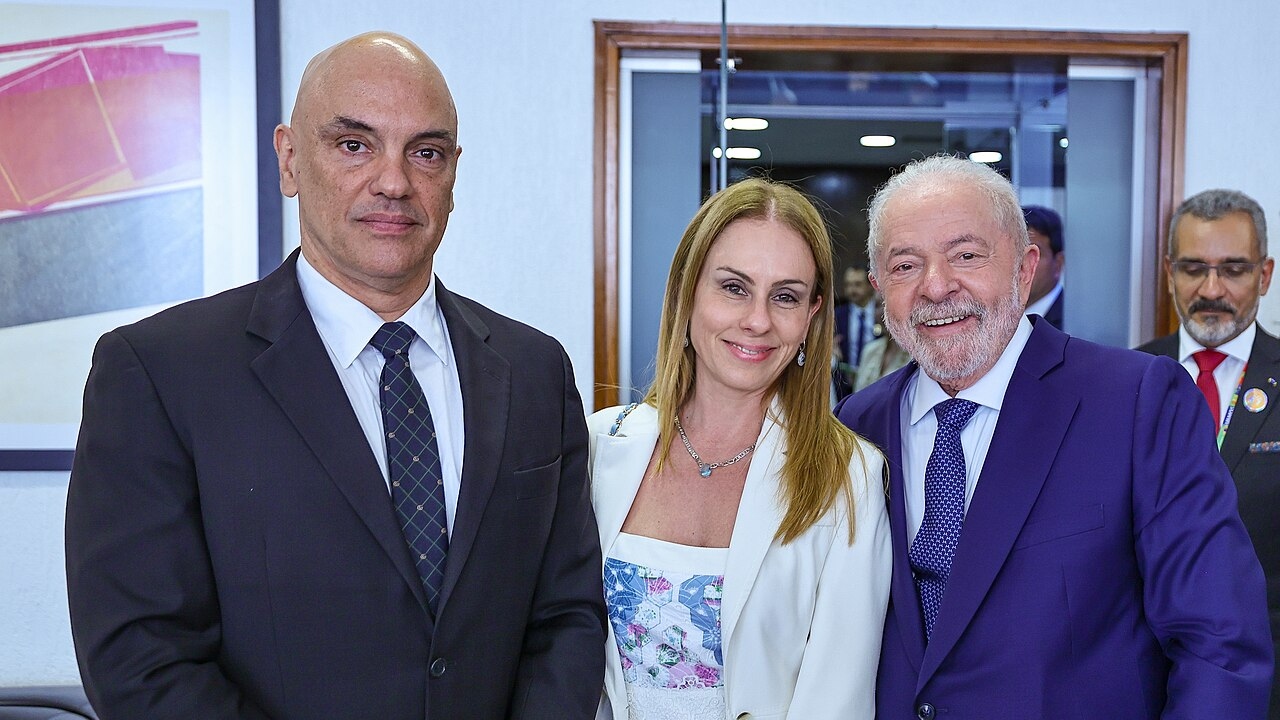
His supporters have described the process as an attempt to eliminate the left’s main political opponent, while the court has argued that the measures were necessary to protect the democratic order.
Regardless of how one views the allegations against Bolsonaro, the concentration of power by Moraes has become an increasingly contentious issue. The same judge who ordered censorship of political accounts and blocked X has played a central role in the investigation against the former president, imposed restrictions on him, and now issued an arrest warrant for another family member.
A Growing Opposition Against Lula and Moraes
Developments in Brazil have also sparked widespread public protests. In September 2024, tens of thousands of demonstrators gathered in São Paulo to protest against censorship, judicial overreach, and the political developments under Lula.
Samnytt reported on the protests, where Jair Bolsonaro voiced fierce criticism against Moraes and urged the country’s Senate to intervene.
The conflict also unfolds against the backdrop of Lula’s own history. The current president was previously convicted of corruption and money laundering and spent 580 days in prison before the rulings were later overturned on procedural and jurisdictional grounds by the Supreme Court. The decisions made it possible for him to return to politics and eventually win the presidency in 2022.

Lula’s supporters assert that the previous corruption cases against him were legally uncertain and politicized. The Bolsonaro side, in turn, argues that the same legal system that enabled Lula’s political comeback has since used exceptionally harsh measures against his main opponents.
Moraes was appointed to the Supreme Court as early as 2017, before Lula’s return to the presidency, but in recent years he has become a symbol of the use of power that the Bolsonaro movement accuses of political persecution. His role has also been questioned regarding new corruption allegations in 2026, including those connected to the high-profile Banco Master scandal.
New Crackdown Just as Lula’s Power is Challenged
Moraes has now targeted yet another Bolsonaro. Eduardo has been convicted for his attempts to get a foreign government to pressure Brazilian decision-makers. The court’s justification is that he thereby tried to prevent or influence the administration of justice, but from the opposition’s perspective, the same actions are seen as an attempt to alert the world to the abuse of power in Brazil.
This is also a conflict that has caught the attention of the United States. The Trump administration has used both tariffs and sanctions in its relationship with Brazil, citing the treatment of Bolsonaro and the actions of Brazilian courts. Moraes himself has been subject to American sanctions.
ALSO READ: Ekeroth: “DN’s pathetic defense of Brazil’s dictatorial leftist rule”
The new arrest warrant thus reinforces the image of an ever-deepening conflict between Brazil’s judiciary and its largest opposition movement. Jair Bolsonaro is in prison, Eduardo Bolsonaro has had his passport revoked and risks being arrested if he returns to his home country, while Flávio Bolsonaro faces a decisive presidential duel with Lula.
For critics of Moraes, it is above all the recurring pattern that raises concern: far-reaching censorship, extensive legal restrictions, and prison sentences against representatives of the same political movement, while the court defends the interventions as necessary to protect democracy.
On October 25, Brazilians will go to the polls again. Not only will the question of who should govern the country be at the center, but also the growing conflict over the judiciary’s power, freedom of expression, and the treatment of the political opposition.
???? MORAES JUST ISSUED AN ARREST WARRANT AGAINST ME
This comes after Moraes allegedly attempted to negotiate a deal with a member of our party (PL) to avoid impeachment, following the right’s victory in securing a majority in the Senate
Only @FlavioBolsonaro’s election can save Brazil from this dictatorship
On October 25, vote 2️⃣2️⃣
— Eduardo Bolsonaro???????? (@BolsonaroSP) October 8, 2026