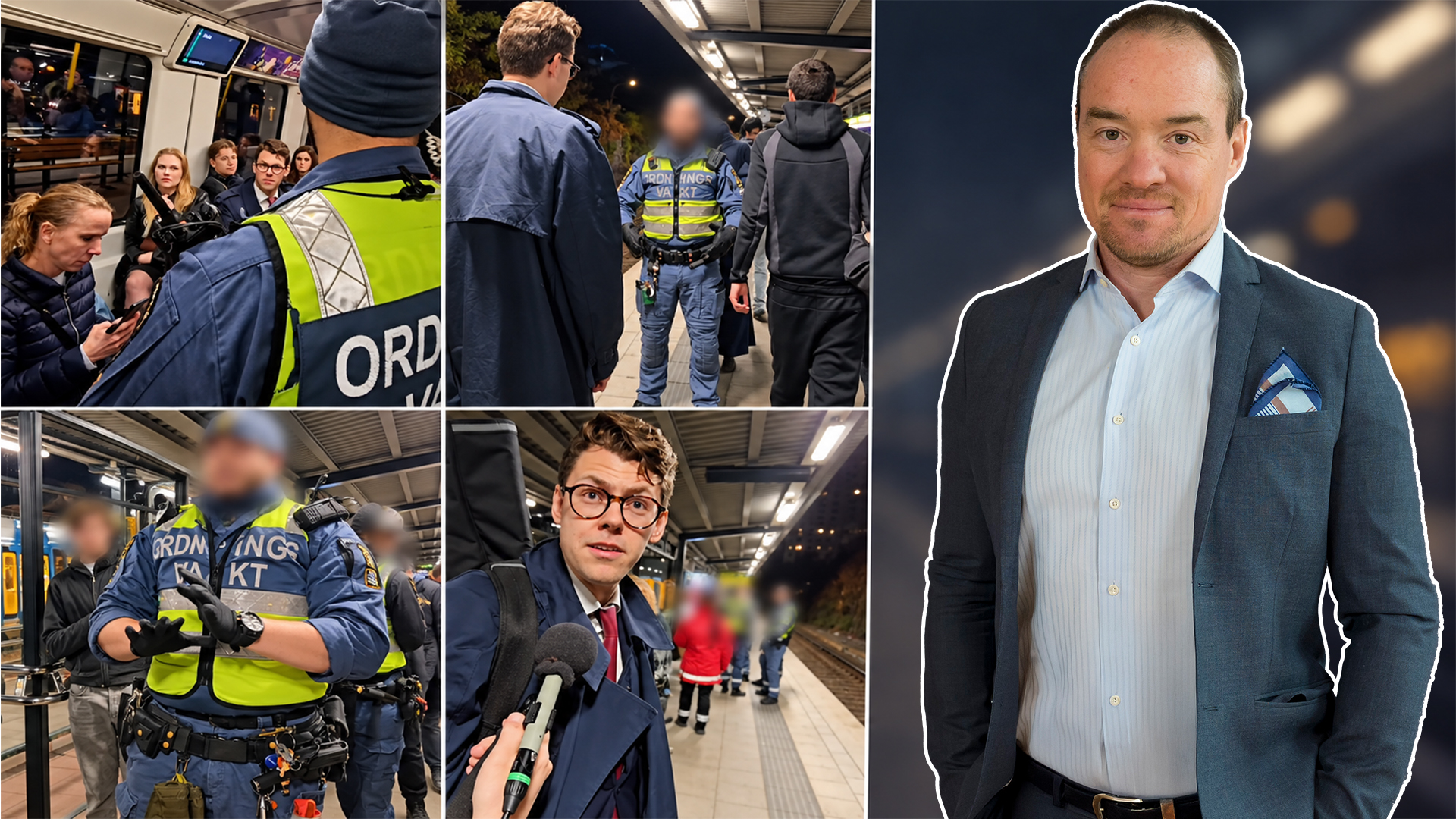
EDITORIAL • The anarcho-tyranny has struck again in this poor country. The latest incident happened to a musician in the Stockholm subway, where ten security guards and four police officers intervened against the “public disturbance.” A perfect example of the definition: “a dysfunctional state where the government is anarchically hopeless at dealing with larger issues but ruthlessly tyrannical in enforcing petty matters.”
Some of you may know the musician Willian Sundman Sääf, who has made a name for himself recently by playing classic Swedish troubadour songs on the subway. It’s beautiful—and harmless.
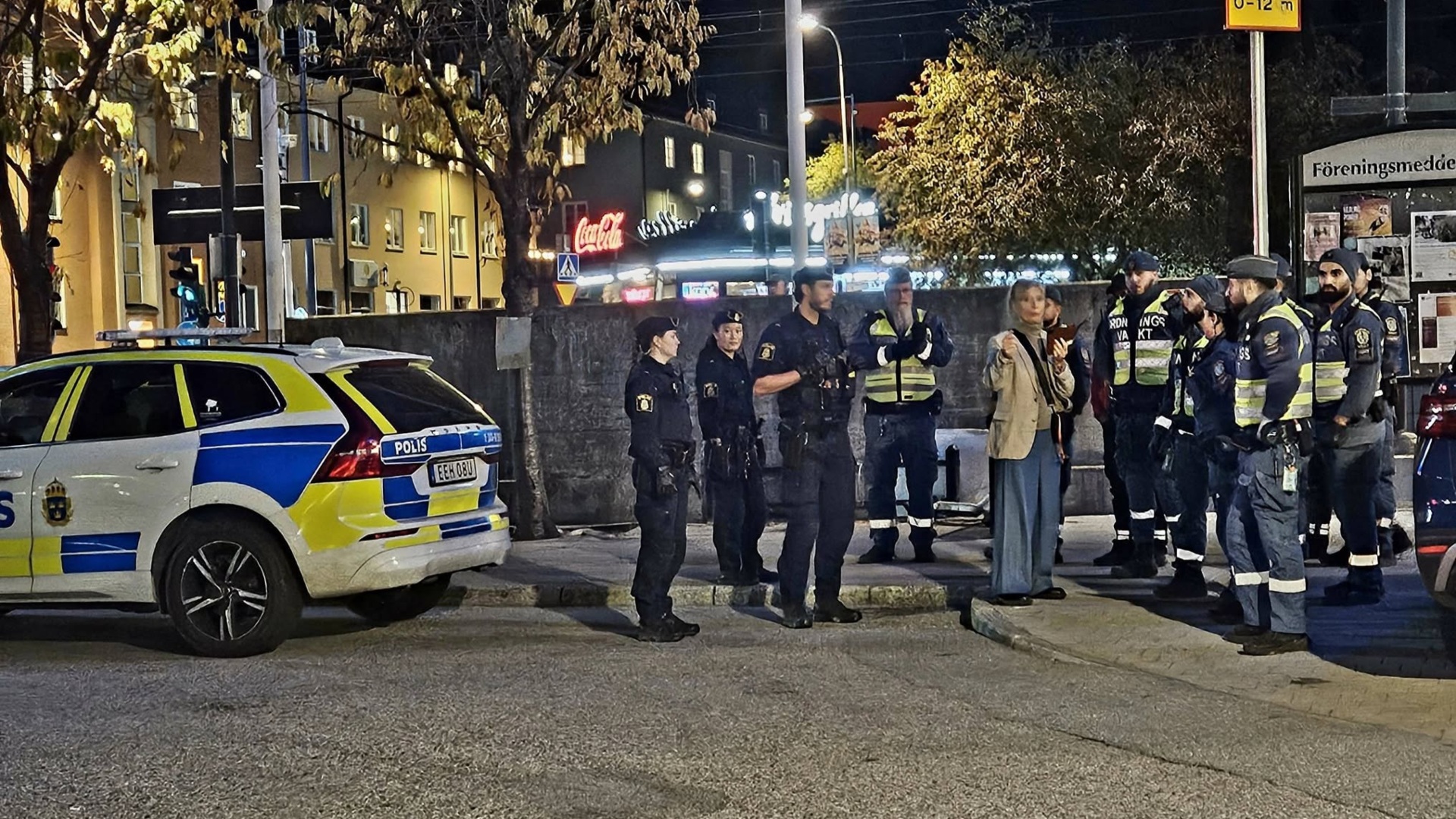
But when Sundman sat on the subway yesterday, a team of security guards intervened, followed by police officers—a total of fourteen (!) people according to Sundman. Lena Moberg-Lindblad described it like this:
A group of people planned to ride with him. Up on the platform there were 2 security guards who approached William and said he wasn’t allowed to play and “disturb” other passengers. Everyone in the group had to get off the train. No one had even unpacked any instrument yet.
On the platform, more security guards arrived who were quite aggressive and said everyone in the group had to leave the station. The guards called the police, who came to the platform. With both guards and police, everyone was made to leave the station. Incoming trains did not stop at Alvik due to “public disturbance,” according to the speakers. No one in the group was disturbing at all.
There were 6 police officers and 6 security guards on site.
To get a better picture of what it was like, you can watch the videos Sundman posted on his Instagram account:
The Difference Between Music and Music
Indeed, there is a point to having rules of order in our shared spaces. I, and many others, would quite rightly not accept if someone started playing an Islamic prayer song or French gangster hip-hop loudly in the subway. Such things should be stopped. But there is a difference between music and music, and between different types of performances.
It’s possible that some might be disturbed by his music being played in public transportation. I find it hard to believe there would be very many, and above all, I suspect it’s specific groups who might dislike it. But mainly, I am convinced that people love it.
Above all, it is a living cultural contribution made by someone doing something that has deep Swedish cultural significance. The songs played resonate with the Swedish soul, history, and culture.
It is in this light that the intervention by about 12–14 police officers and security guards becomes so utterly bizarre.
Grotesque Imbalance
This is where we have ended up: In a Sweden where serious criminals can turn entire residential areas into their own domains, where people are shot and bombed, and where the authorities repeatedly show themselves incapable of upholding even the most basic order. But when a Swedish folk musician takes out his instrument and performs a few songs from our shared cultural heritage, suddenly there are resources. Then, security guards and police can be mobilized in a force that almost brings to mind an intervention against a dangerous violent criminal.
This grotesque imbalance is the very core of anarcho-tyranny. The state is weak where it should be strong, and strong where it should show good judgment. It is unable to get tough with those who seriously threaten people’s safety but shows much greater verve against those who are easy, peaceful, and harmless to intervene against.
And perhaps the most distressing is what it says about our society’s relationship to its own culture. What previously was obviously Swedish, popular, and appreciated is at risk of being treated as a public order problem in public space. This is because a rigid set of rules and its equally rigid enforcers seem unable to distinguish between real disturbances and that which actually enriches our shared life.
One wonders what the police really thought deep down about their work that day.
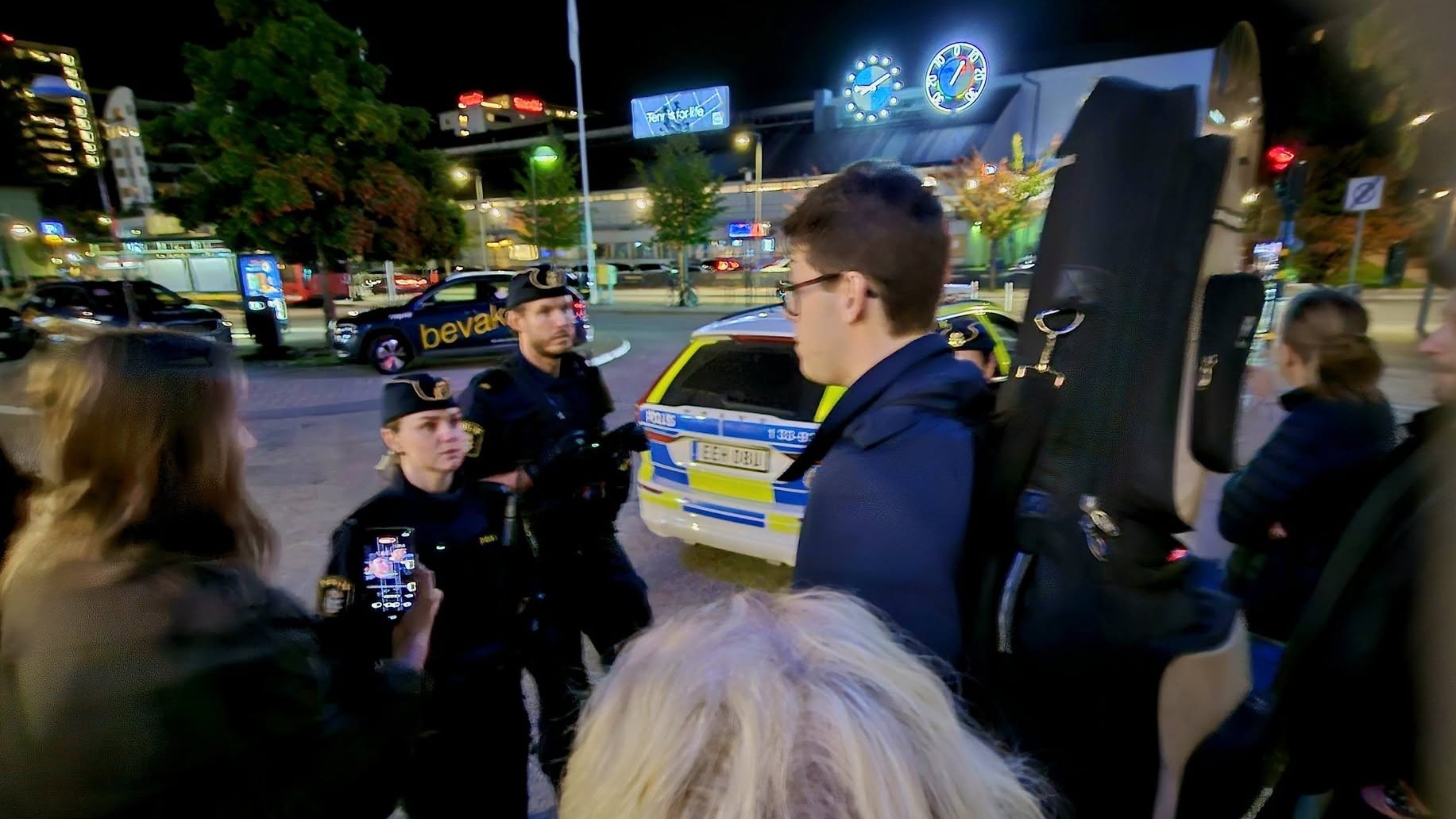
Of course, not every subway car should become a concert hall against the wishes of passengers. But there must still be some degree of proportionality, a sense of situation, and common sense without having to call in half the police force?
A society that cannot protect its citizens from violent criminals but can mobilize a minor task force against a musician has lost something much more important than order in the subway. It has lost the ability to distinguish between what truly threatens society and what is worth defending.
And perhaps that is exactly why this seemingly minor event is so telling. For while anarchy is allowed to spread where authorities are truly needed, tyranny flexes its muscles against a man with an instrument. That is anarcho-tyranny in a nutshell.