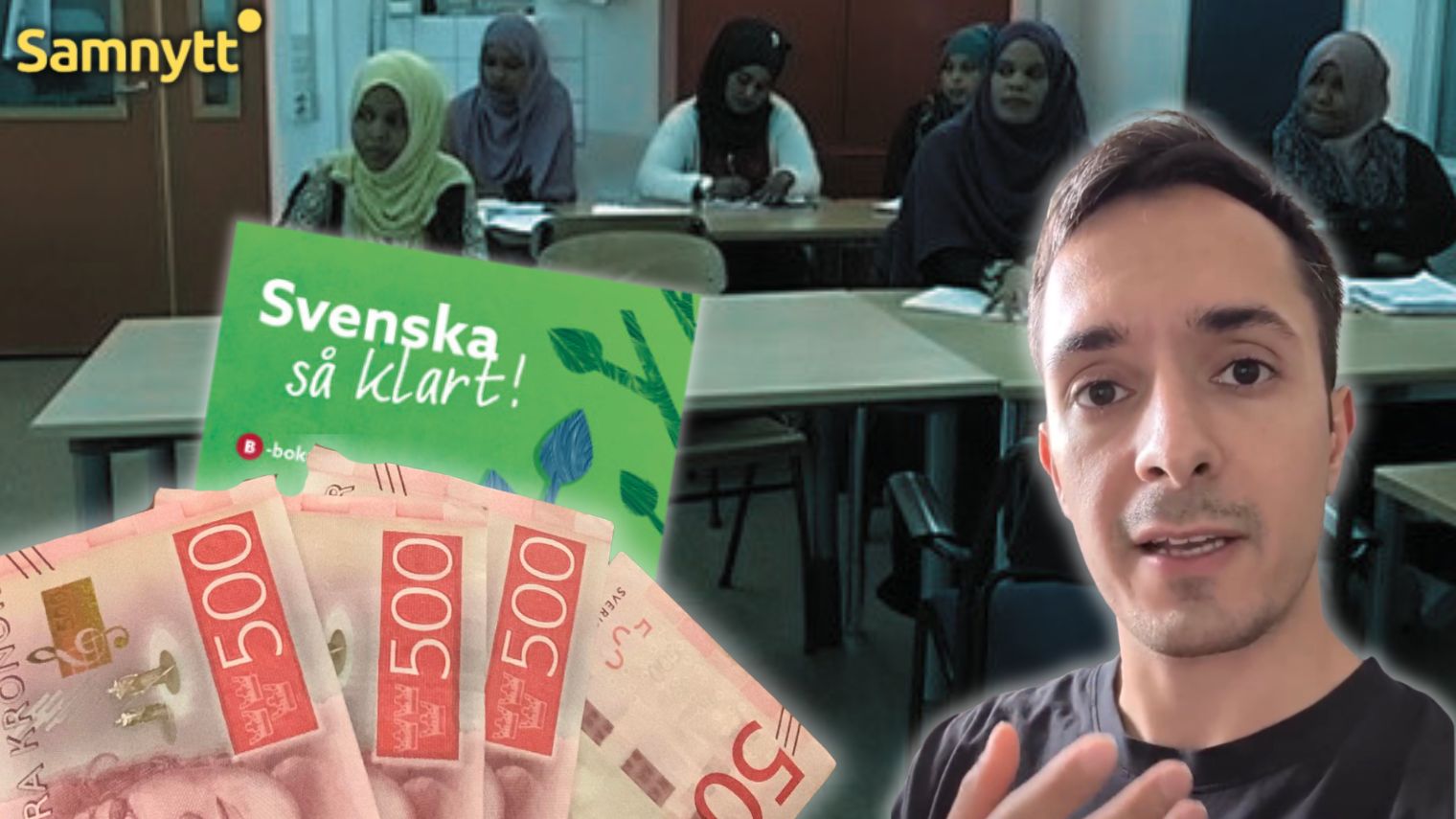
Swedish for Immigrants, SFI, is a basic language education program intended to provide adult migrants with knowledge of the Swedish language and society. The goal is for participants to be able to use Swedish in everyday life and at work, as well as potentially continue with further studies. But how effective is it really, and what does it cost taxpayers?
Last year, 107,000 people studied at SFI, compared to 115,000 the year before. In 2025, just over half—52 percent—passed, while 44 percent dropped out. This pattern has remained pretty much the same over the past ten years.
Among students who started SFI in 2018, 37 percent had not passed any course at all by 2022, meaning many leave the system without full SFI competence or remain stuck in the program for a long time.
READ ALSO: SFI teacher: Hardly any low-educated immigrants learn Swedish
Figures from the National Agency for Education show that students can remain in the program for several years. Some combine studies with work or take breaks, and repeated interruptions make the study period often drag out significantly. Reasons for dropping out include work, relocation, family or health reasons, but also “unknown causes.” In the long run, over a third lack a passing grade in any SFI course.
Besides the fact that the system does not seem particularly effective, it is also very costly for taxpayers. The average annual cost is between 130,000 and 150,000 SEK per student. SFI costs taxpayers around 10–16 billion SEK per year, while nearly half of the students drop out and throughput has remained largely unchanged for over a decade.
Reforms Underway
Because almost half drop out each year, the same student can often generate costs over several years.
From 2026, the biggest change to SFI in many years will be introduced. A new three-year limit will be put in place to reduce long study periods and increase throughput. At the same time, a major reform is underway in which the government wants to tighten quality requirements, strengthen the responsibility of municipalities, and adapt education more closely to the labor market.
Criticized by Local Party
In Norrköping, the local Östgötapartiet has highlighted the problems with SFI in the municipality. In a video clip that has attracted considerable attention, party leader Okan Karakas explains what they have found and how they are questioning the money flows:
SD Part of the Problem
Okan Karakas tells Samnytt that this problem is happening right under the noses of responsible politicians, and he also includes the Sweden Democrats in Norrköping among them.
– High absenteeism and personal reasons account for nearly 80 percent of all dropouts in SFI in our municipality, and despite this dire situation that we present in our investigation, the municipality, as far as I know, does not register more detailed information on what each individual personal reason actually is.
READ ALSO: Iido from Somalia has studied SFI for 16 years – can barely make herself understood in Swedish
How is this even possible, or even tolerated by those responsible politicians, asks Karakas.
– Here I would have forced the officials to make a more thorough breakdown regarding what these personal reasons are—it should be clear if, for example, the person is returning to the home country they claim to have fled from, or if the person has chosen to take parental leave instead of focusing on their studies.
The examples Karakas mentions in the clip are people who are registered in course 1A for several years. Course 1A is for those who have virtually no previous education, meaning that the majority (if not all) are illiterate. The content SFI covers in course 1A is at such a basic level it can be compared to what preschool teaches small children. For example, it involves sounding out very simple words.
READ ALSO: Every other foreign-born person in ‘vulnerable areas’ lacks basic reading comprehension
– Not being able to manage course 1A after several years leads me to ask: What is the plan for these people? How is someone who after several years still cannot pass course 1A supposed to support themselves economically? Surely the idea is not that we should be forced to provide for these people for the rest of their lives?
– People who obviously do not want to, or try hard enough to, become part of the society they have come to? No, that doesn’t work—I do not want to support them. Those who clearly do not want to be part of society must return to their home countries or go somewhere else, he states.
123 083 33 50
Neither Left Nor Right
Östgötapartiet is a relatively newly formed local party that has been active in Norrköping since 2022. They push for issues they believe improve everyday life for the municipality’s citizens, focusing on core municipal services by cutting back on things the municipality should not waste money on.
READ ALSO: Government introduces three-year limit in SFI
The party also makes it clear that they belong to neither the left nor the right and ‘don’t care what box we might be associated with.’
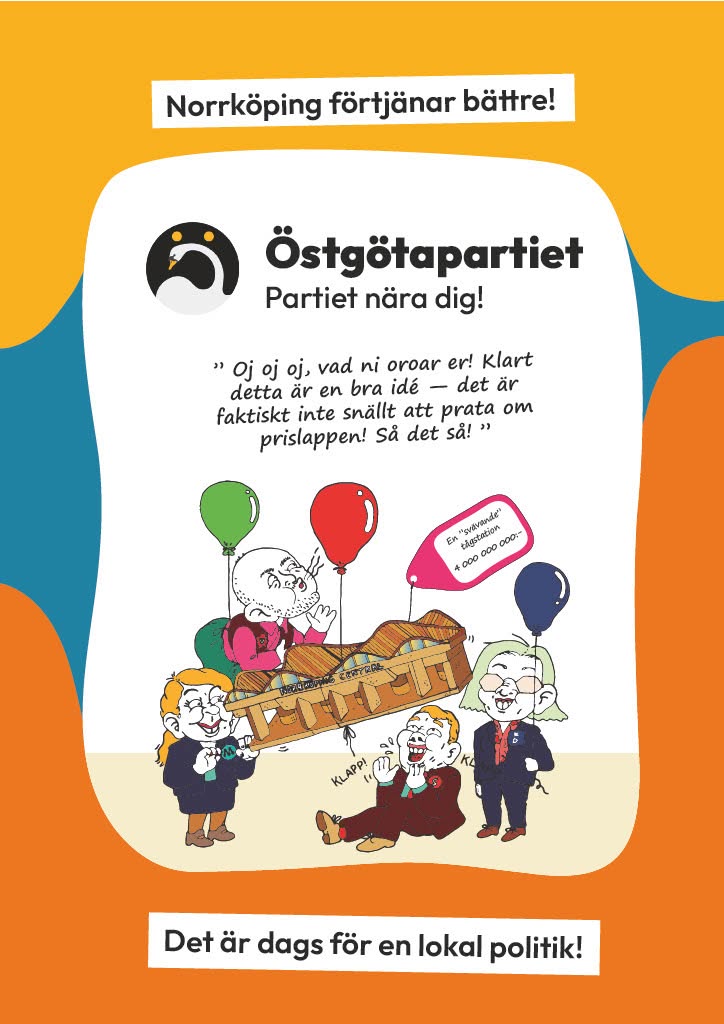
Okan Karakas holds the top spot for Östgötapartiet in both the municipal election in Norrköping and the regional election for Östergötland, as well as tenth place on Örebropartiet’s parliamentary list.
READ ALSO: Novus: Örebropartiet surges in our poll
123 083 33 50