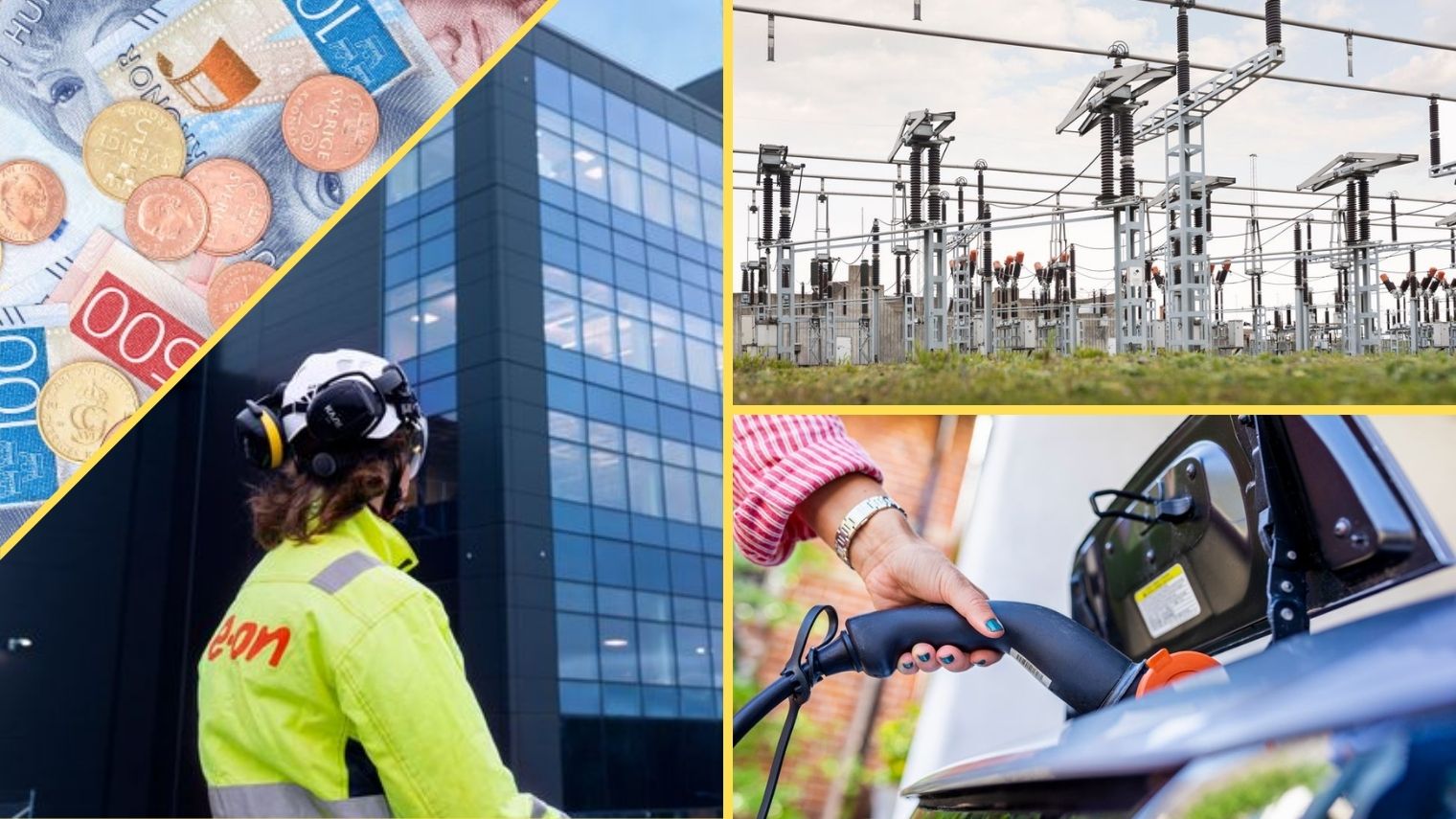
Just as Vattenfall and Ellevio recently announced, the energy group E.ON will also soon raise the electricity network fee for its customers. According to E.ON, this is being done with reference to the so-called climate transition.
When Vattenfall and Ellevio customers received news at the end of November that their electricity network fees would be raised, the main reason cited was large investments in the power grid, but also the “transition”.
“With your electricity network fee, you help create the conditions for a safe, fossil-free, and electrified Sweden,” Vattenfall wrote to its customers.
READ ALSO: Power grid fees increase sharply: ‘Crucial for the transition’
Now that it’s E.ON’s turn to do the same, they write among other things that “Sweden is in the midst of a climate transition where demand for electricity is growing rapidly, more customers want to connect to the grid, and more renewable electricity production must be accommodated”.
To meet these needs, they are reinforcing power grids across the country and will therefore raise the network fee at the turn of the year. The adjustment ranges between zero and 5.2 percent depending on geography and contract form.
– Sweden is transitioning and replacing fossil fuels with electricity. Right now, we have connection requests to E.ON’s power grid alone that correspond to 2.5 times the electricity consumption of the entire country on a cold winter’s day. We are expanding and reinforcing the grids more than ever before to meet the demand from society and our customers. This is necessary so as not to become a bottleneck when Swedish households and businesses want to adapt and cities want to grow, says Gustav Wengen, Head of Customer and Market at E.ON.
According to Wengen, a fossil-free Sweden is not possible without a robust power grid capable of handling society’s demand for electricity. He claims that investing in the grid now creates societal benefits in the form of lower emissions, increased productivity, and more jobs.

Energy Tax and VAT
Furthermore, E.ON writes that grid investments are financed through network and connection fees, which are the only sources of revenue for the electricity network operations, while also noting that about half of what customers pay consists of energy tax and VAT.
A large part of E.ON’s grid is located in sparsely populated areas with more meters of power lines per customer and higher operating and maintenance costs. Combined with higher costs in the main grid and high costs for network losses in southern Sweden, this is said to affect the fee level.
– It is our responsibility to ensure that the power grid can more quickly anticipate, adapt to, and recover from disruptions. Our customers must have access to a resilient and robust grid with the capacity to both deliver electricity and withstand increasingly harsh weather conditions. The network fee ensures that the grid can meet the demands now and in the future to drive development toward an electrified society and strengthen Sweden’s resilience, says Gustav Wengen.
READ ALSO: Vattenfall: Electricity prices are too low