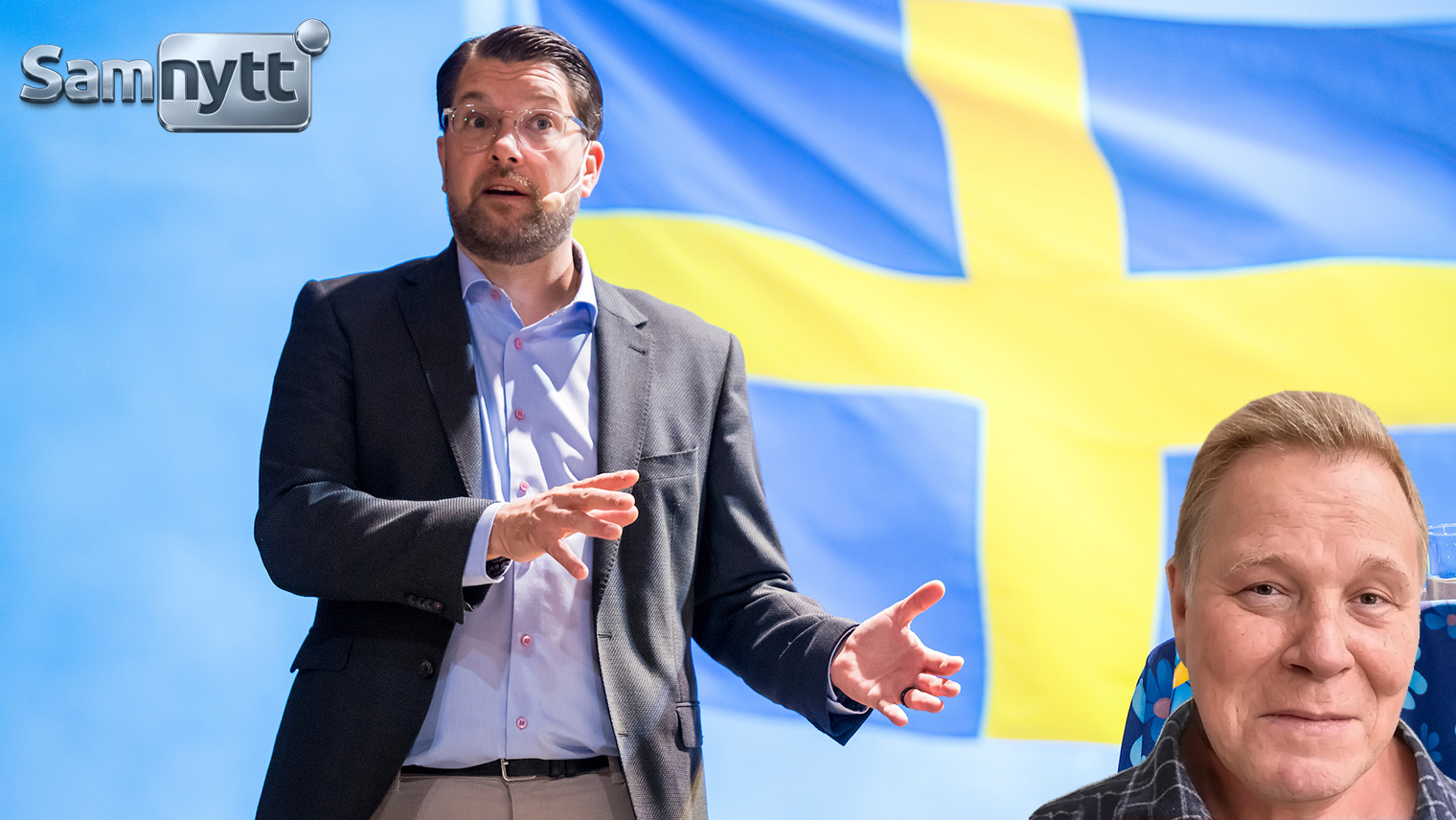
EDITORIAL • The latest opinion poll from SVT/Verian confirms something that has become increasingly clear during this parliamentary term – the gap between the Tidö parties and the red-green opposition is significant. The difference is around ten percentage points, and the Liberals’ numbers are also below the parliamentary threshold, which in practice makes the gap even larger. It is time for the Sweden Democrats (SD) to let go of their loyalty to the right and challenge the Social Democrats on their own turf.
Historically, there are few – if any – examples in modern Swedish politics where a government coalition has made up such a large deficit in an election year. If the Tidö parties interpret the situation as a temporary dip in the polls, they risk missing the strategic problem. This applies especially to the Sweden Democrats.
The Social Democrats’ bar in the graphs towers above the other parties’ like a high-rise in an area of townhouses or detached houses. This aptly symbolizes the big red party’s recently introduced forced-mixing policy. And just as that is an initiative that needs to be stopped, Sweden’s political skyline more generally needs a different, more balanced profile.
The Sweden Democrats continue to consolidate their position as the largest party on the blue-and-yellow side, ahead of the Moderates, and in the event of another electoral victory, SD has been promised ministerial posts and significantly greater direct influence over government power than today. This is fundamentally a huge success compared to the situation just a few years ago.
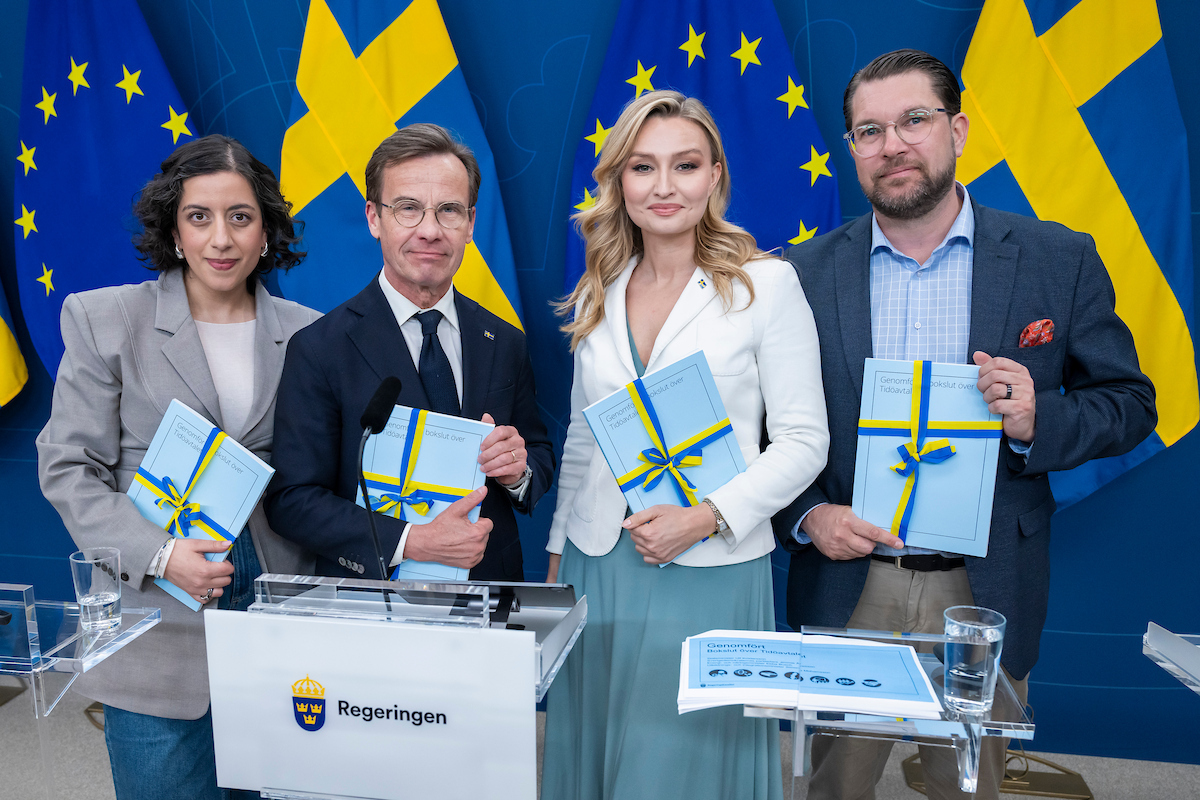
But only those in the winning team get ministerial posts, and SD, according to the polls, no longer appears to belong to that team even if their own performance is strong. At the same time, there are signs that SD’s growth has leveled out.
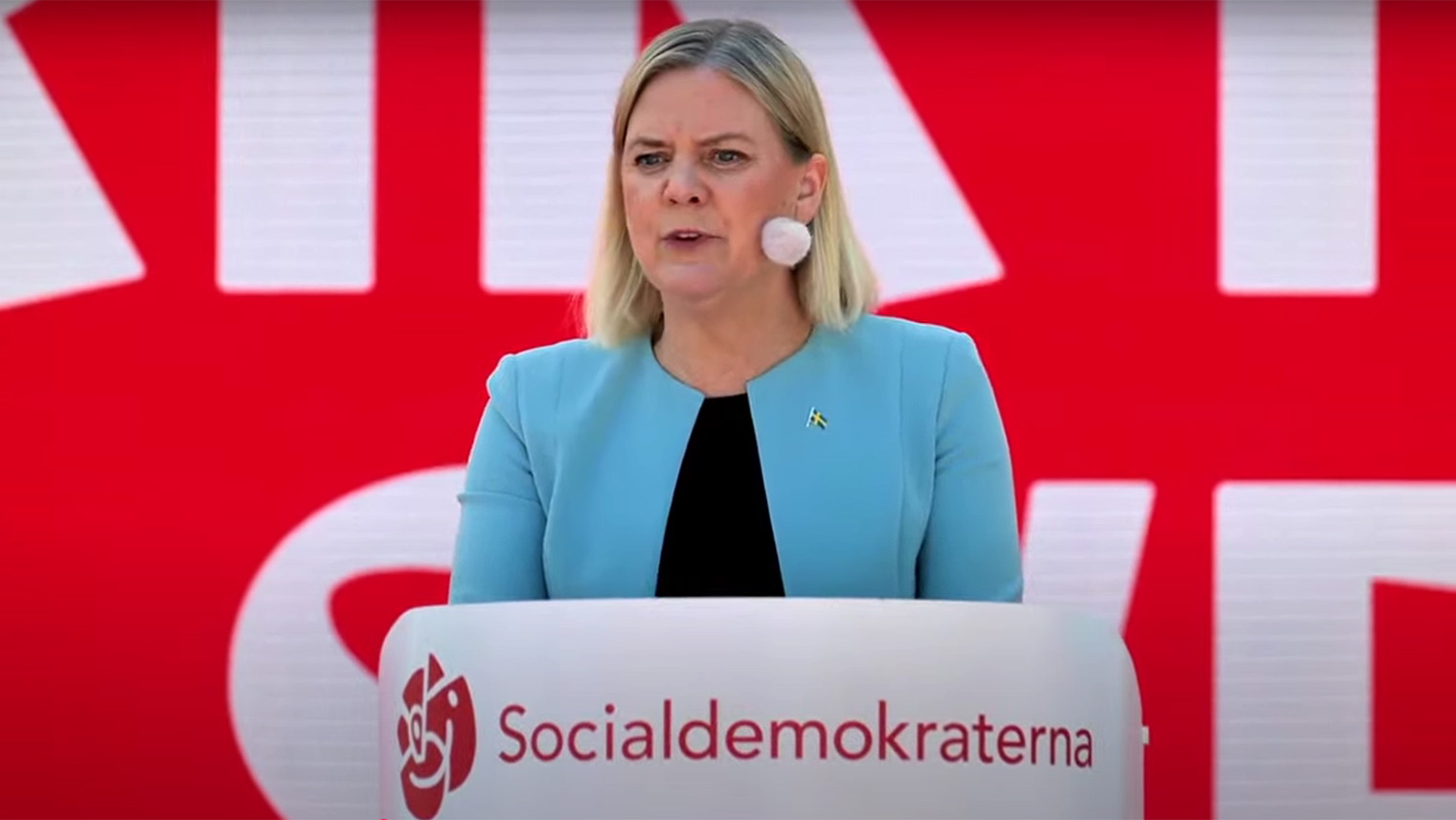
The party continues to gain some voters from the Moderates and Christian Democrats, but the major flows of voters from the Social Democrats seem to have stopped, and Magdalena (Andersson) is still securing well over 30 percent of the electorate. And that’s where the question of the future is decided. For SD cannot become a truly governing party by only competing with the Moderates for the same center-right voters. In the long run, the Social Democrats’ dominance must be broken.
No Longer the Party Between the Blocs
It was long SD’s strength that it stood between the blocs. The party combined a critical stance on immigration and nationalism with a social conservative welfare policy that appealed to large groups of workers and LO voters who felt the Social Democrats had abandoned them. Many voters saw SD as an alternative both to the left and to the market-liberal right.
But the Tidö cooperation has changed the party. It has been necessary, and in large parts successful. Sweden needed a new political paradigm after decades of irresponsible migration policies. SD has also demonstrated an ability to govern and contributed to making issues like migration, crime, and national cohesion into self-evident parts of the public debate.
At the same time, the price has been that the party, in the eyes of many voters, has become just another party on the right wing. What used to be an independent opposition party is today often perceived as a support party for the Moderates. The profile that once made SD unique has been partly muted by Tidö discipline and the compromises that come with being part of a government coalition.
Back to the Center in Opposition
This limitation must disappear after a possible change of government. SD then needs to once again be truest to itself and resume competition for Social Democratic voters – especially women. That is where the party’s greatest weakness lies today.
For many years SD has been highly successful among men in the LO collective. But women, especially those working in health care, social care, education, and the public sector, are still significantly more skeptical. Here, the Social Democrats have a strong advantage.
Many on the right misunderstand why this is. Female voters do not vote primarily based on ideological labels but on the stability and security of everyday life. Issues such as health care queues, elderly care, children’s school environments, safety on public transport, and working conditions in the welfare sector carry great weight. Crime and migration also play a significant role – but often through how these problems impact daily life in tangible ways.
Here, SD still has an opportunity. The party should continue to focus on core issues such as crime, migration, and integration. But the focus must be more clearly tied to security, women’s safety, and the functioning of welfare services. The connection between high migration costs and cutbacks, understaffing, and a strained public sector needs to be made clearer and more concrete.
It is not enough to talk about tougher penalties and more police. SD must also talk about the nursing assistant running between alarms at retirement homes, the nurse leaving health care from exhaustion, and the teacher who can no longer maintain order in the classroom. And the party must offer solutions that go further than the Social Democrats’.
Those who have worked a whole life and then fall ill, become worn out, or suffer a work injury must feel that SD is on their side. People who have built the country should not feel left behind while large resources go to integration projects, the benefit system, and inefficient migration.
However, some sharp edges in the rhetoric may need to be further softened. SD calls itself Sweden-friendly in a mirroring of the critics’ epithet of xenophobic. But not all voters hear the friendly tone; some perceive it as more hostile.
Here lies an opening for a more developed social conservative welfare project – a project where economic security for working Swedes is combined with a strict migration policy and clear demands for responsibility and cohesion.
Not Mechanical Quotas, but More Women
At the same time, SD must understand the importance of representation and symbolic values. The party is right in principle to oppose gender quotas and to insist on competence ahead of gender. But if SD wants to grow among female voters, more female representatives need to be highlighted. Like it or not, the reality is that politics is not just about policy issues but also about recognition and trust.
This should not be understood as a call for mechanical gender rotation on ballot papers, but rather that the party should actively develop and highlight more female names that can populate future parliamentary groups, ministerial positions, and leading roles within the party that can attract more female voters and persuade them to stop voting for the left, as women do today to a much greater extent than men.
Winning Stockholm Creates a Winning Profile
Another key strategic issue is Stockholm. That the red-greens have gradually strengthened their grip on the capital – and this applies equally to the city center and the excluded suburbs – is not just a local problem but also an important symbolic issue. A party that wants to become a governing force cannot be weak in the country’s economic, cultural, and media center. But Stockholm requires partly different priorities compared to the rest of the country.
This is about housing issues, safe public transport, functioning metropolitan environments, schools with order and quality, and policies that attract urban families with children and professionals without losing popular roots. SD has long had a tone that mainly appeals to small towns and the countryside. To win Stockholm, a more urbanized profile is required. This is not about abandoning the party’s core, but about broadening it.
The Corridors of Power – Not Just in Parliament and the Government Offices
Finally, SD must understand that Social Democratic power is not built solely on election results. For decades, an entire network of institutions, organizations, and cultures was built up around the Social Democratic hegemony – trade unions, study associations, parts of academia, the public sector, cultural institutions, the Tenants’ Association, adult education, the church, and a range of other organizational actors.

To genuinely challenge the Social Democrats therefore requires more than just winning individual elections. It means long-term efforts to build alternative environments, ideas, and social structures that can support a new political landscape. And to seriously dare to do something about agency activism and other deficiencies in impartiality where such should not exist.
If SD continues only as a nationalist support party for the center-right, the Social Democrats will likely remain Sweden’s natural governing party for the foreseeable future. But if SD manages to combine nationalism and security with a credible welfare policy aimed at working women and LO voters, Swedish politics can be transformed at its core.
This is where the real battle for the future lies. Denmark, Germany, France, the Netherlands, Italy, Belgium, Austria, and most recently the local elections in Britain show that it is possible to drastically reduce and nearly wipe out social democracy. It can be done here as well.