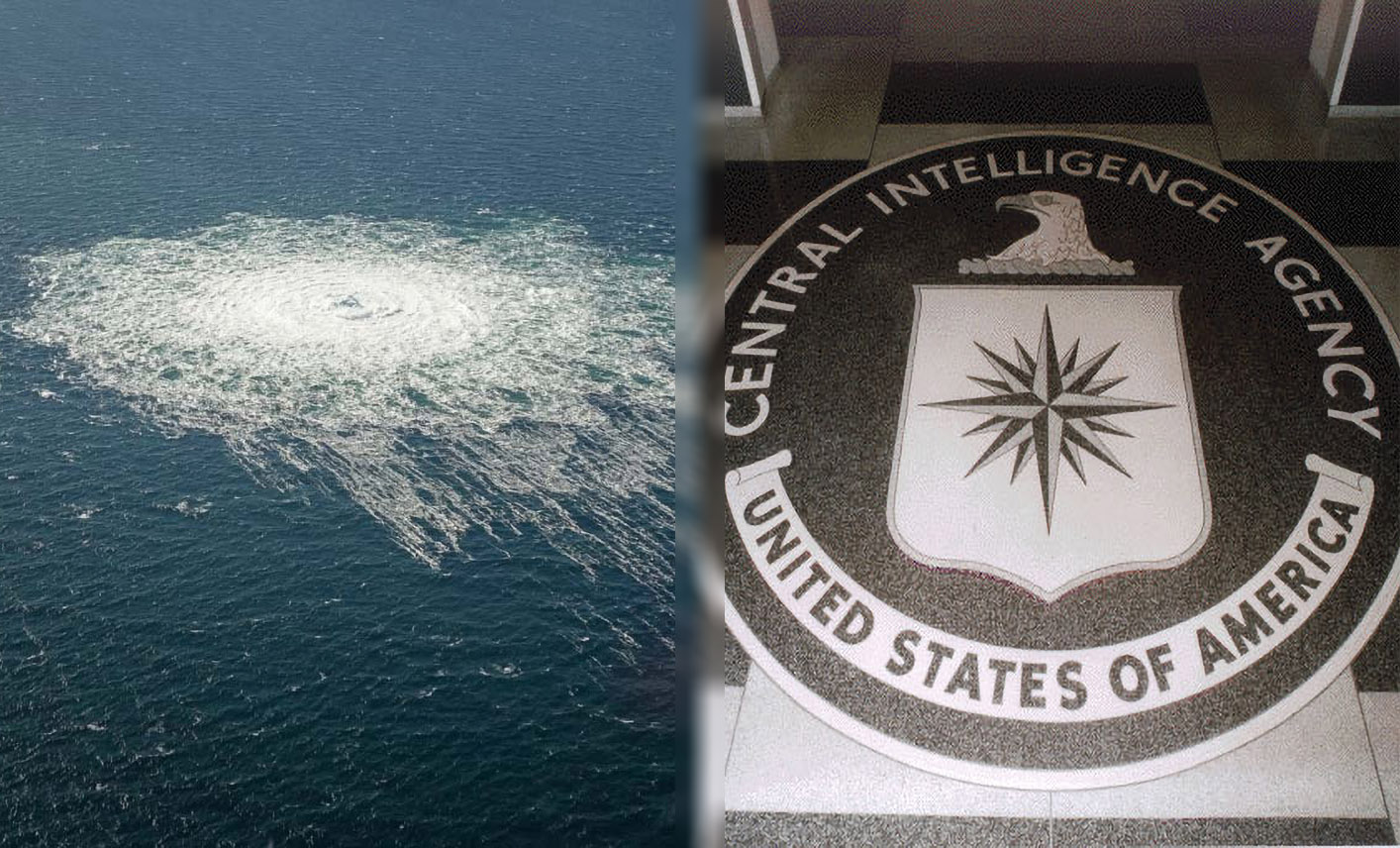
The American intelligence agency CIA was informed of the sabotage plans much earlier than previously known – and initially did not oppose them. This is reported by the German newspaper Der Spiegel.
According to the information, meetings were held in Kyiv in the spring of 2022, shortly after Russian forces failed to capture Ukraine’s capital, between representatives from the CIA and Ukrainian experts in sabotage. The parties knew each other from prior cooperation spanning several years.
READ ALSO: US paper: Zelensky approved the attack on Nord Stream
At one of these meetings, the Ukrainians reportedly presented a bold idea: to blow up the Nord Stream gas pipelines which transported large quantities of Russian gas to Germany, thereby helping to finance Russia’s war. According to insiders, the American participants reacted positively to the proposal.

Several additional meetings are said to have followed, where details about the operation were discussed. According to these sources, the CIA was informed of the plans much earlier than previously disclosed. American representatives at this stage were perceived as at least open and interested negotiation partners.
The CIA, however, rejects the claims and calls them “entirely false,” without specifying what exactly is incorrect.
The sabotage and suspicions of state involvement
The attack was carried out in September 2022. A group of several people sailed a rented yacht, “Andromeda,” in the Baltic Sea and placed explosives by the pipelines near Bornholm. The explosions destroyed three of the four pipelines.
READ ALSO: Here is the Ukrainian terrorist arrested for the Nord Stream attack
According to German investigators, who among other things arrested the Ukrainian commando soldier Sergej Kuznetsov, the operation was “highly likely” state-controlled—with links to Ukraine. This makes the information about the CIA’s early knowledge particularly sensitive, not least for the German government, which has simultaneously been one of Ukraine’s largest supporters.
The network behind the operation
Sergej Kuznetsov is linked to Roman Tjervinskij, an experienced operator in covert missions and sabotage. Tjervinskij previously worked for Ukraine’s security service SBU, and later in military intelligence.

After 2014, an elite unit within the Ukrainian intelligence service was developed with support from the CIA. The unit carried out operations against pro-Russian groups, including targeted killings. The cooperation with the US is described by former members as close and long-lasting. After the Russian invasion in 2022, parts of this network are said to have regrouped within Ukraine’s special forces.
The plan takes shape: “Operation Diameter”
The idea of striking against Nord Stream had existed earlier, but gained new urgency in spring 2022. The pipelines were seen as strategically important for Russia and as a political lever over Europe.
Ukrainian planners began developing a concrete sabotage plan: divers would place explosives on the seabed, at depths of up to 80 meters. Various routes, vessels, and technical solutions were analyzed. The operation was given the codename “Diameter.”
READ ALSO: He is the Ukrainian wanted for the Nord Stream attack
According to reports, the plan was approved by Ukraine’s then-Commander-in-Chief Valerii Zaluzhnyi. Not, however, by President Volodymyr Zelensky, who according to sources was not informed.
CIA’s role – from interest to distancing
During the planning phase, contacts between the Ukrainians and the CIA reportedly continued. According to Ukrainian sources, technical details were discussed, and the Americans initially indicated that the idea was doable.
One source describes the message from the American side as: “This is good, it fits.” Some Ukrainians also got the impression the US could provide financial support.
READ ALSO: Now the US can buy Nord Stream
Later, however, the stance changed. In early summer 2022, the CIA reportedly conveyed that it could not support the operation—especially not financially. No clear motivation was given.
Other information from US security circles indicates Washington rather saw its role as supporting Ukraine in general, not approving attacks on the infrastructure of allies.
Warnings and leaks
In June 2022, according to the reports, the Dutch intelligence service MIVD received information about the plans via a source in Ukraine. The Netherlands warned both the CIA and the German intelligence service BND.
The CIA is said to have then forwarded the information to Germany: a Ukrainian commando was planning an attack with the help of divers and a sailboat.
READ ALSO: He is the Ukrainian officer singled out for the Nord Stream attack
German authorities were reportedly initially skeptical, partly because the specified date for the attack passed without anything happening. In reality, the operation had simply been postponed.
After this, the US is said to have actively tried to stop the plans. A CIA representative in Kyiv was, according to information, in contact with the Ukrainian presidential office and called for the operation to be aborted. The military leadership was also informed that the plans had been exposed. But the warnings were ignored.
The execution
Even after the US withdrew its support, the group continued. Funding was arranged through a private Ukrainian sponsor, who reportedly covered the majority of the roughly $300,000 needed for equipment, the boat, and explosives.

On September 7, 2022, the sailboat departed from Warnemünde, Germany. On board were seven people, including divers and a captain. Serhij K. is suspected of having played a leading role.
READ ALSO: Aftonbladet: “Nonsense” to believe the US sabotaged Nord Stream
On September 26, seismographs registered strong explosions in the Baltic Sea. Gas bubbled up over large areas, and three out of four Nord Stream pipelines were destroyed.
Picture remains unclear
Despite detailed testimonies, the question remains how to interpret the CIA’s early contacts. Was it an attempt to gather information rather than support the plans? Or did it take time for the information to reach decision-makers in Washington?
What is clear is that, according to these reports, the US knew about the plans much earlier than previously known—and only later tried to stop them.
READ ALSO: AfD: Zelensky should pay for the Nord Stream attacks