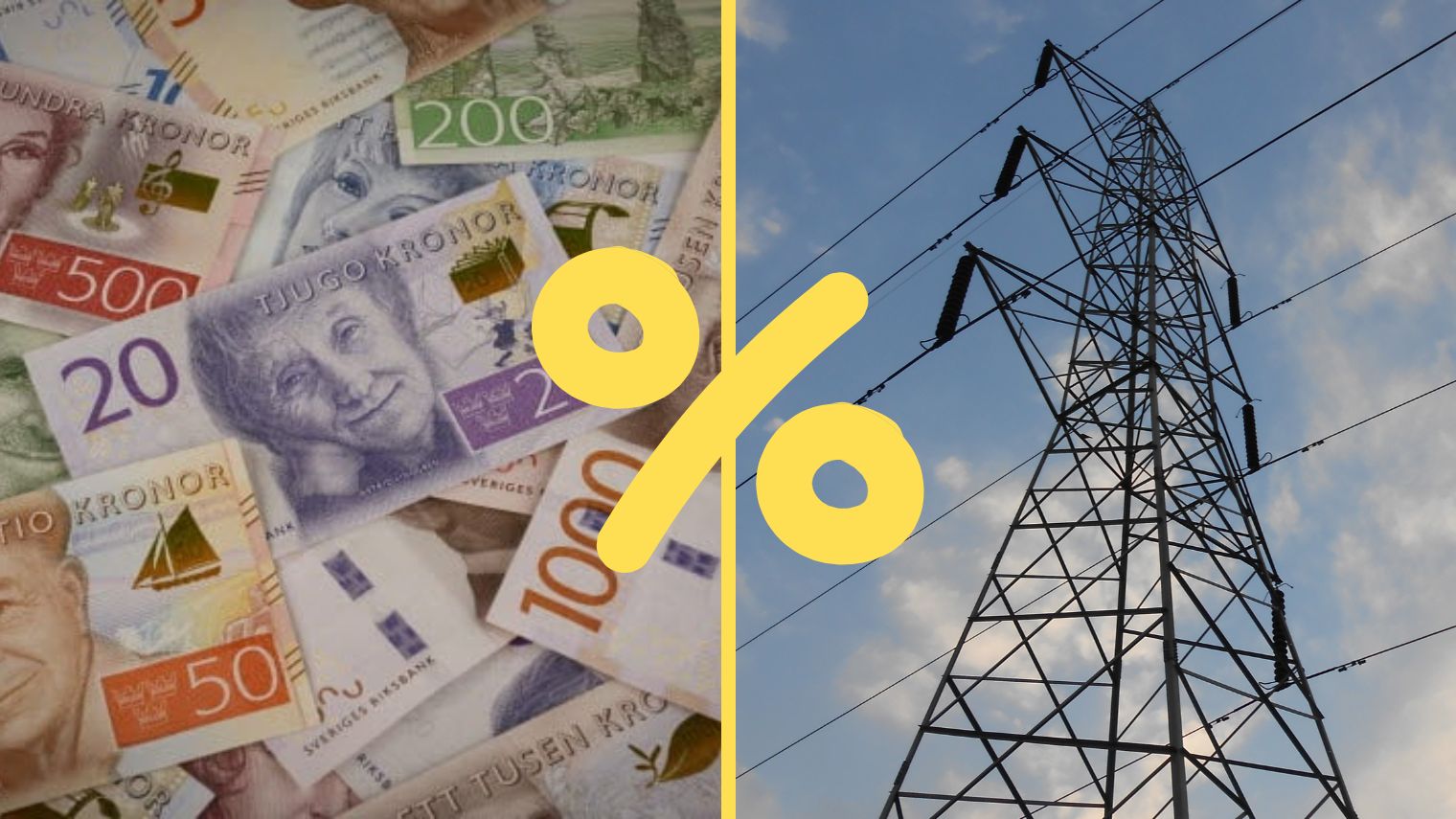
Since 1990, the electricity tax has increased by over 600 percent. During the same period, the consumer price index (CPI) has risen by 110 percent. It is becoming increasingly clear that politicians have chosen the electricity tax as a good cash cow for the state, experts argue.
This week, electricity prices soared again, exceeding five kronor per kilowatt-hour in areas 3 and 4. The volatile prices have caused concern about something as fundamental as power supply among the country’s small businesses.
According to André Nilsson, an expert on environment, climate, and infrastructure at Företagarna, many want to connect to the electricity grid, switch from fossil fuels to electricity, or expand their businesses but have been denied due to the neglected electricity system.
READ ALSO: Red-green electricity prices soar – up 20%
Since the 1950s, companies engaged in industrial production have been able to get a discount on electricity tax, down to the EU minimum level. That businesses competing in a :censored:6:cdd6bbaa89: market have been granted a lower electricity tax has been wise, Nilsson says, but he notes that today most businesses are :censored:6:cdd6bbaa89:ly exposed to competition, yet, in principle, only industry and agriculture benefit from low electricity tax.
– It creates a very strange market distortion, where especially small businesses are hit very hard since they do not get access to the low electricity tax that the industry has, he says to Tidningen Näringslivet.
Dangerous Concern
According to a survey from Företagarna, the proportion of small business owners worried about electricity prices has risen to 61 percent. A year ago, the corresponding share was about 50 percent. Anxiety among business owners is serious, Nilsson points out, as it leads to hesitation to invest or hire.
The high electricity tax also counteracts the so-called green transition and electrification, he argues.
– It’s reasonable to ask: If we want to be at the forefront, why do we have such high taxation on something so important?
It’s clear that the electricity tax has become lucrative for the state, he concludes.
Back to the Same Level
At the turn of the year, the electricity tax was reduced and the government chose to pause indexation.
– Of course, that’s positive, but one should remember that this government ran on the promise of lower electricity tax and the debate was very heated at the time.
– But now, as we close the books on this parliamentary term, we can state that the electricity tax is back at the same level it was in 2022. So there really hasn’t been any tax reduction when comparing 2022 and 2026.
Calls for Reduction
Nilsson is now calling for a reduction of the electricity tax to the EU minimum for all companies, something that would ensure all businesses have the same conditions to run a competitive operation.
Even the Confederation of Swedish Enterprise is advocating the EU minimum level.
– To accelerate the green transition and strengthen the competitiveness of businesses operating in Sweden, the energy tax on electricity needs to be lowered to the EU minimum, says tax lawyer Robert Lönn.
READ ALSO: Green Party: No new nuclear power with us in government