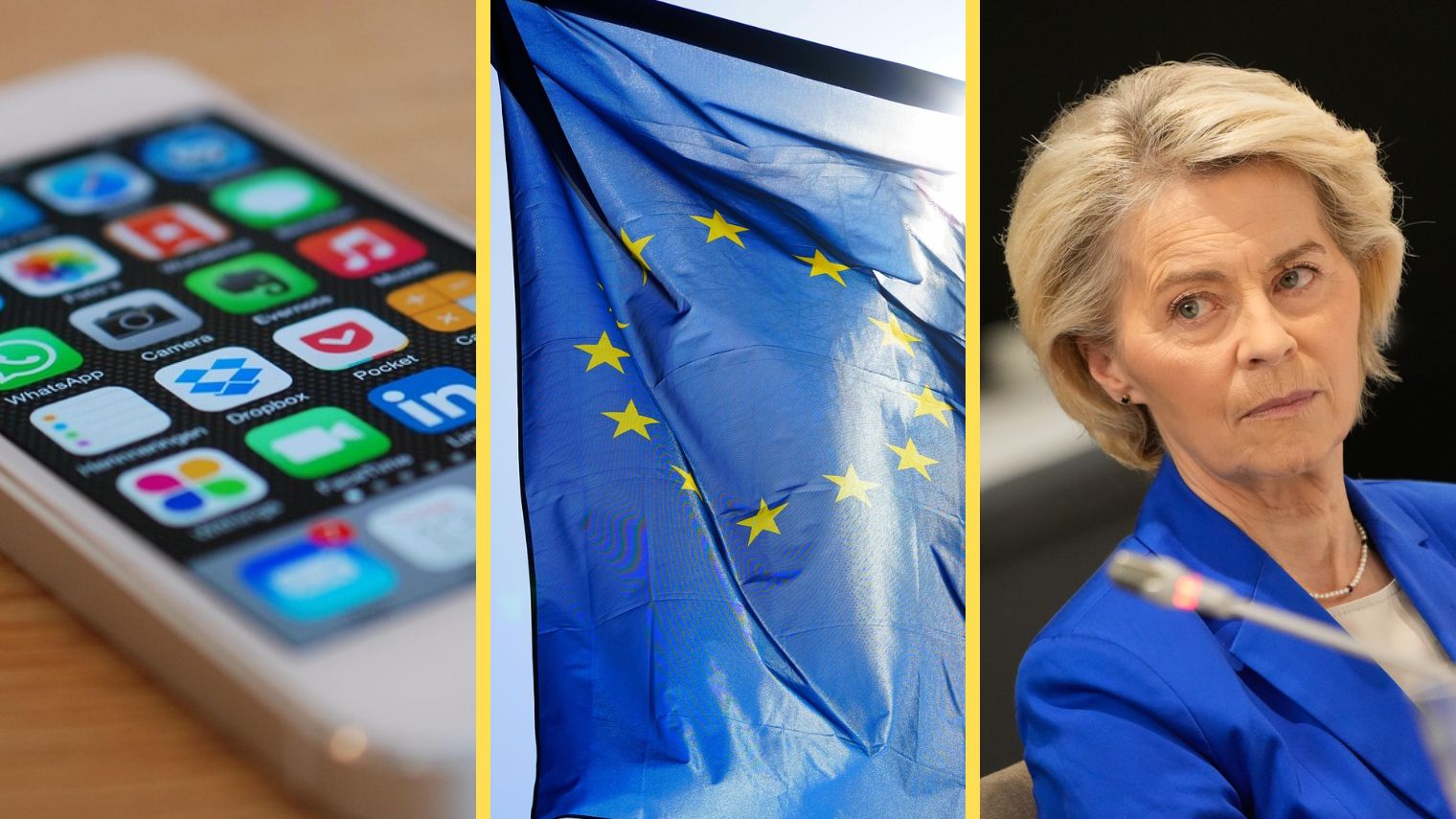
This week it became clear – to use social media, EU citizens will be required to verify themselves with a special app developed by the European Commission. This is being done under the pretense of protecting children, but critics fear it will be used for increasingly intensive and intrusive surveillance of everyone.
The Mini Wallet app is already being tested in France, Spain, Italy, Denmark, and Greece. Eventually, it is intended to be integrated into the EU’s new digital wallet. The app and the digital wallet are said to be able to confirm age without disclosing other personal data, and you only need to identify yourself once – when you install the app.
This is significantly better than in other countries where certain platforms have chosen to use third-party providers for age verification that collect copies of ID documents and biometric data, notes Henrik Alexandersson, journalist and social commentator with expertise in the subject.
If you look at what’s making its way through the EU decision-making apparatus right now, age checks are likely to have a broader application than “just” social media. With GDPR, DSA, and Chat Control 2, there is now a legal basis for member states to restrict access to anything that could in any way be considered inappropriate for minors in each country.
Alexandersson warns that the potential for unforeseen and undesirable consequences is significant, and he believes that a future “where you have to beep your way through life and everything you do must be approved by machines feels a bit dystopian.”
????The European Age Verification App is ready and soon available for citizens to use.
It is our duty to protect our children in the online world, just as we do in the offline world. Because children’s rights in the EU come before commercial interest.
????https://t.co/2aFXcpQkXW pic.twitter.com/V9eGE0bGH4
— Digital EU ???????? (@DigitalEU) April 15, 2026
Accounts Linked to Personal ID Number
While the EU moves forward with its app, similar requirements are being introduced in Turkey. There, every social media account will soon be linked to the Turkish equivalent of a personal identification number.
A couple of weeks ago, Justice Minister Akın Gürlek stated that :censored:6:cdd6bbaa89: platforms have accepted the system and that a three-month transition period begins once the law has been adopted by parliament. Accounts that remain unverified will be shut down.
ALSO READ: EU launches investigation – wants Grok off the European market
Gürlek claims that anonymous accounts function as engines for disinformation and harassment.
– “If someone insults others or conducts a smear campaign online, they must face the consequences,” he says.
The rules require users to provide their TC Kimlik number, the unique 11-digit number assigned to every Turkish citizen at birth, linked to government databases containing names, birthdates, family information, and biometric data.
Extensive Censorship
Since 2007, the Turkish state has blocked more than 1.26 million websites, and just in 2024 the authorities restricted about 17,000 X accounts, 75,000 posts, and tens of thousands of items on YouTube, Facebook, and Instagram.
Article 217 of the penal code imposes prison sentences of up to three years for spreading information considered misleading, with harsher punishments for anonymous posts. Anonymous accounts were one of the last spaces where Turkish citizens could express political opinions without having to identify themselves.
In 2007, South Korea tried an almost identical system. However, the country’s constitutional court unanimously struck it down in 2012, finding no significant decrease in harmful content, while the real name databases became targets for massive breaches affecting 35 million citizens. Instead, users migrated to foreign platforms.
ALSO READ: Government: More can be surveilled without clear ties to criminals