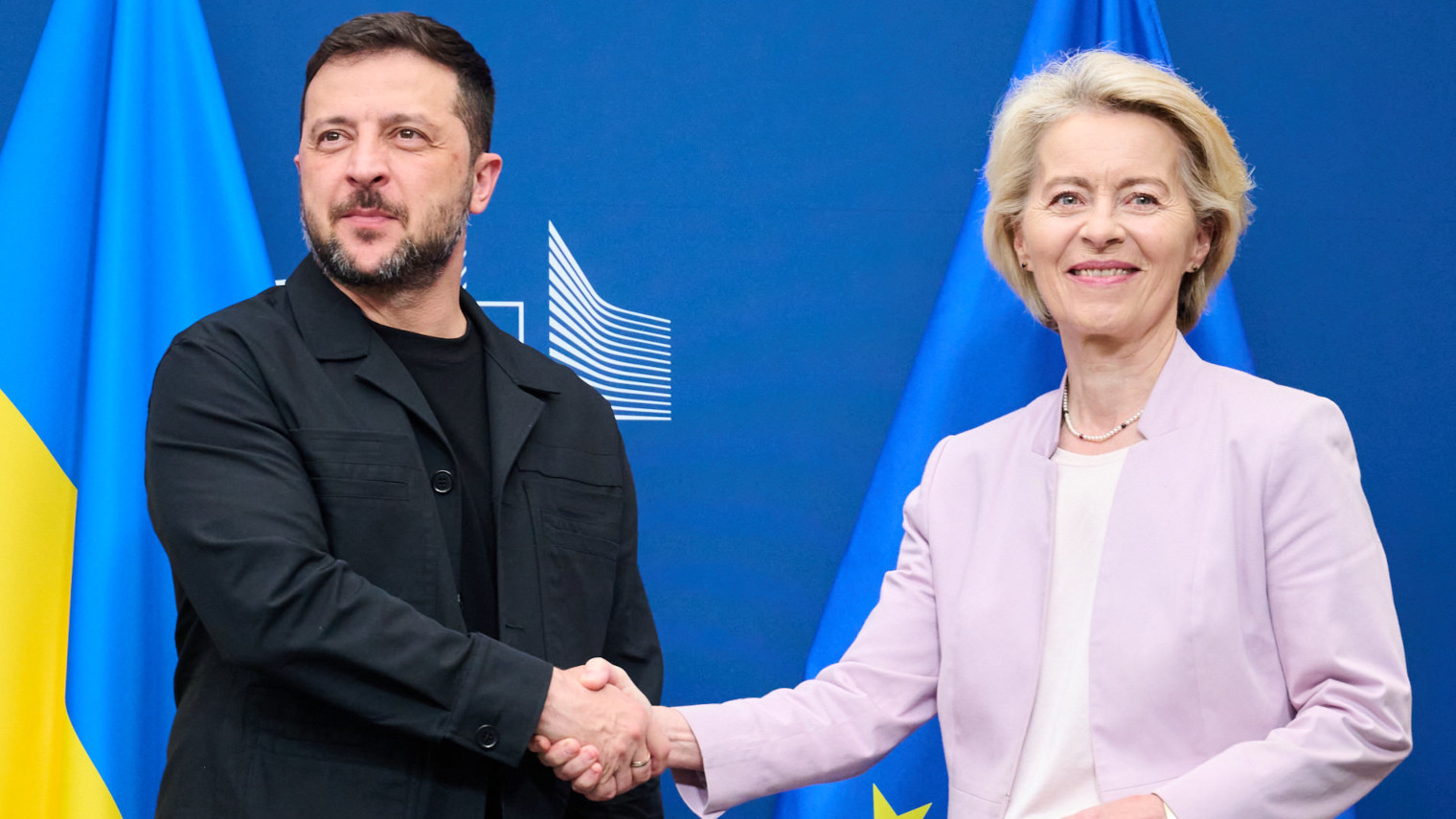
No peace settlement is yet in sight in Ukraine following Russia’s invasion in 2022—and the war is now entering its fifth year. On Wednesday, it was confirmed that the EU will open up a loan of approximately 1 trillion SEK to Zelensky’s government. In practice, the risk is borne by EU taxpayers and future generations. In theory, Ukraine is expected to repay the loan, but how this will happen remains unclear, given the unpredictable course of the war and the country’s already deep dependence on the EU as an economic lifeline to keep the state running.
The EU has given preliminary approval for a first disbursement under the extensive emergency loan to Ukraine, which totals 90 billion euros, just over 1 trillion SEK. This is reported by the news agency Reuters.
The decision became possible after Hungary’s outgoing Prime Minister Viktor Orbán withdrew his veto, which had previously blocked the entire arrangement.
Hungary’s blockage has been linked to oil deliveries from Russia via the Druzhba pipeline, which supplies both Hungary and Slovakia with oil. Shortly before the Hungarian election, Ukraine stated that the pipeline had been damaged in an attack attributed to Russia.
The claim was questioned by both Hungary and Slovakia, as the countries were not allowed to conduct inspections. At the same time, Brussels and other member states chose either to remain low-key or criticize Hungary for using the veto as leverage, after first approving the massive loan.
But Orbán’s government has refused to approve the large EU loan before the oil flow was restored and has also insinuated that Ukrainian President Volodymyr Zelensky may have used the situation before the election to create a crisis.
READ MORE: Kristersson furious as Hungary blocks nearly 1 trillion to Ukraine: “Blackmail—unacceptable”
Ukraine’s President Volodymyr Zelensky stated on Tuesday that the pipeline had been repaired, and shortly afterwards AFP reported that oil was once again flowing through the system. Once the oil deliveries were restored, Hungary chose to drop its opposition, meaning Ukraine will receive the funds in May or June.
The current package is part of the EU’s broader support to Ukraine, with 60 billion euros allocated to military aid and 30 billion euros for budget support of the civilian economy.
The financing is arranged by the EU raising funds secured by its joint long-term budget. The plan is for Ukraine to eventually repay the loan, theoretically using potential war reparations from Russia.