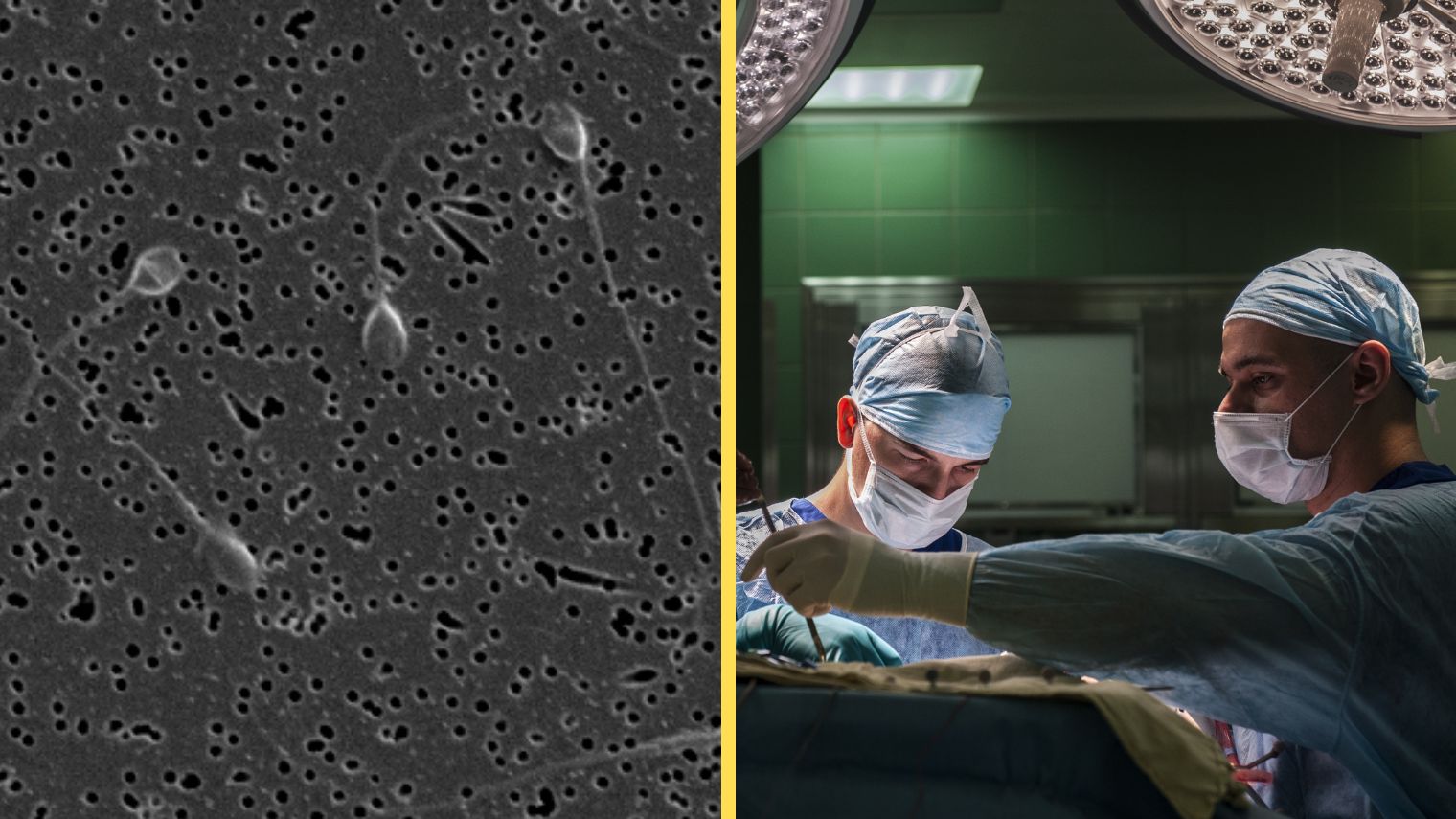
Men with severely reduced fertility run a greater risk of developing several types of diseases over their lifetime, and new research now shows that the same group of men are also more likely to develop colon and rectal cancer as well as thyroid cancer. These are the conclusions of a new Swedish study.
The connection between male infertility and increased risk of disease is a relatively new field of research within reproductive health. Previous studies have shown a clear link between lower male fertility and the risk of conditions such as diabetes, cardiovascular disease, metabolic disorders, cancers of the reproductive organs, and shortened lifespan.
Men who completely lack sperm in their semen are at the highest risk for several serious diseases, while men with good sperm quality, on average, live longer. This has led researchers to discuss whether male fertility can serve as an early warning signal for general health.
“Reproductive ability is connected to a person’s genetic makeup. One theory may be that if something goes wrong on a genetic level—which can manifest as reduced sperm quality—other systems in the body may also be affected, increasing the risk for disease,” says Angel Elenkov, Associate Professor and researcher at Lund University as well as chief physician at the Center for Reproductive Medicine, Region Skåne.
ALSO READ: Researchers debunk the myth of 10,000 steps for better health
Other factors such as how genes are regulated and influenced by the environment and lifestyle, as well as lifestyle factors like overweight, smoking, alcohol use, and physical inactivity, are also linked to poorer sperm quality.
“It has previously emerged that men with severely reduced fertility have an increased risk of developing testicular and prostate cancer. Therefore, in our study, we wanted to investigate whether there is also a connection to other forms of cancer,” says Michael Kitlinski, medical student and research participant at Lund University.

Twice the Risk
Using registry data, the researchers analyzed information from over 1.1 million Swedish men who had their first child between 1994 and 2014. Of these, 14,540 became fathers with the help of an assisted fertilization method used in cases of severe male infertility. All were cross-checked with the national cancer registry, which showed a significantly increased risk for colon and rectal cancer as well as thyroid cancer for the men who became fathers via this method.
“They turned out to have almost twice the risk of developing colon and rectal cancer and a threefold risk for thyroid cancer, compared to men who achieve fatherhood naturally,” Michael Kitlinski continues.
More Research Needed
Even though the relative risk is higher among those who have undergone the treatment, the absolute risk on a population level is low, and cancer is rare in this age group. The researchers also emphasize that it is not fertility treatment itself that causes cancer.
“Most men undergoing a fertility examination are between 30 and 35 years old. The purpose is to help them become fathers, and afterwards there is no follow-up of their health. Considering that especially colon and rectal cancer, but also thyroid cancer, are diseases increasing among younger people, these findings are important from a public health perspective because they could be prevented through early screening,” says Angel Elenkov.
The next step is to further specify the risk groups through identification of biomarkers, genetic mutations, epigenetics, and environmental factors, with the aim of better understanding which groups would benefit from preventive health check-ups.
ALSO READ: Study: Meat not dangerous for health – may protect against cancer