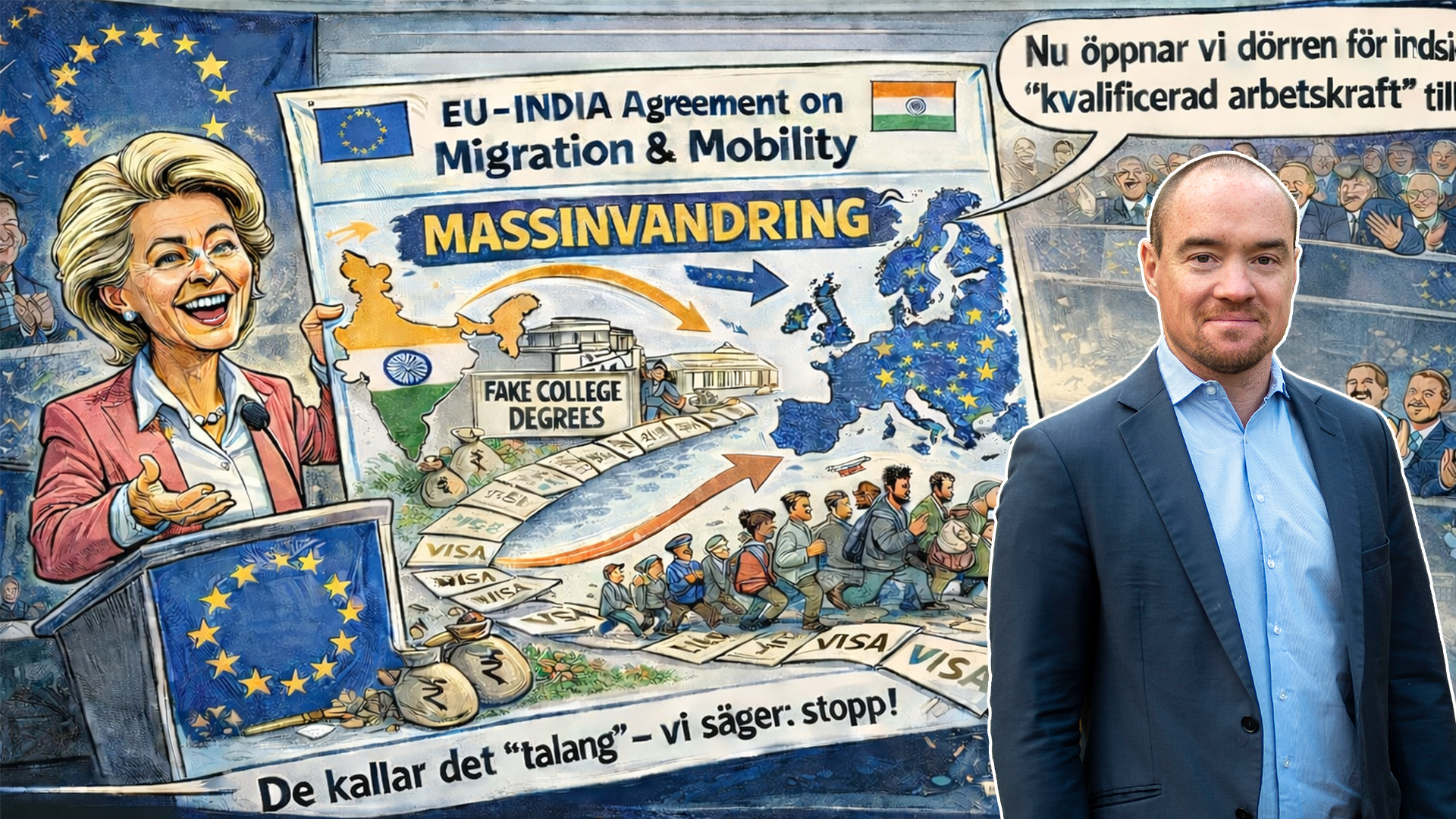
EDITORIAL • Ursula von der Leyen is standing in New Delhi sounding like a headhunter looking for staff, not like someone leading a union in deep crisis. She calmly explains that the EU will now make it easier for students, researchers, seasonal workers, and highly qualified individuals to move here, and then announces the launch of the EU’s first Legal Gateway Office in India—a sort of one-way door opener for Indian “talent” to help them straight into Europe.
It’s the same old tune every time. First comes the glossy packaging with words like “orderly,” “legal,” and “skills.” Then, a whole apparatus is built to make the flow permanent, and in the end, the member states are left holding the bag and have to “manage” it all. This time, it sneaks in under the shadow of a major trade agreement that lowers tariffs and opens markets—but where freedom of movement for people suddenly is just as natural a part as anything else.
NEW – EU signs an “agreement on mobility,” with India facilitating “the movement of students, researchers, seasonal and highly skilled workers,” and launches the “first EU Legal Gateway Office in India” to support Indian talent moving to Europe.” pic.twitter.com/rSGEEIV2nQ
— Disclose.tv (@disclosetv) January 27, 2026
Those who defend this, of course, say: no, no, it’s just a framework. Sure—according to the joint text between India and the EU, they “welcome” wide-ranging cooperation on mobility and “praise” this pilot office meant to support workers, starting in the IT sector. They promise that everything will comply with national authority and domestic legislation—that classic phrase meant to reassure us at home. Yet, at the same time, they are laying the foundation for more tracks, faster processing, recognition of degrees, circular routes, and a big ambition for “safe, regular, and orderly migration”—for both the highly educated and seasonal workers.
It’s not binding on paper, but it drives things forward in practice. Once Brussels has set up a hub, established a language, and created a prestige project, it becomes everyday reality for the next generation. And in the EU, everyday reality almost always means: more movement, more exceptions, more barriers being pulled down.
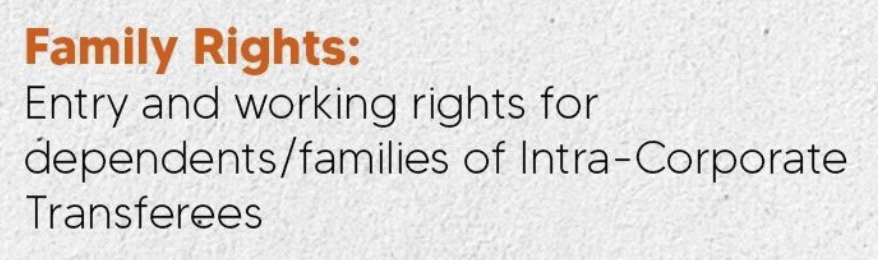
This all becomes embarrassingly clear when India’s Prime Minister Narendra Modi shares a photo on X talking about “entry and work rights for family members” of those who come here on work permits.
The fact that our own politicians are almost hiding the migration aspect and are only talking about the free trade element—however bad it may be—says a lot. The mainstream media are all but silent on this as well.
Our Own Are Affected
We now need to speak plainly about class and competition, as this is something the EU elite never want to mention. When they open up to “highly qualified” immigration, it is not von der Leyen’s friends who are affected. It’s Europe’s own young people—newly graduated engineers, economists, IT professionals, nurses—who are already struggling with housing shortages, low starting salaries, and a job market where “shortage” often just means a lack of cheap labor.
Build this Legal Gateway machine, and employers will get exactly what they want: a bigger pool of labor, stagnant wages, more leverage in negotiations. It is naïve to think that it’s just about filling gaps. It’s about permanently importing competition that pushes down conditions.
And when Swedish politicians pretend that “qualified immigration” is something completely different from mass immigration, they’re shutting their eyes to how it really works. Mass immigration version 2.0 doesn’t always mean rubber dinghies and asylum. It can just as well be an EU-approved pipeline for labor, neatly packaged as “talent.”
Inviting Fraud
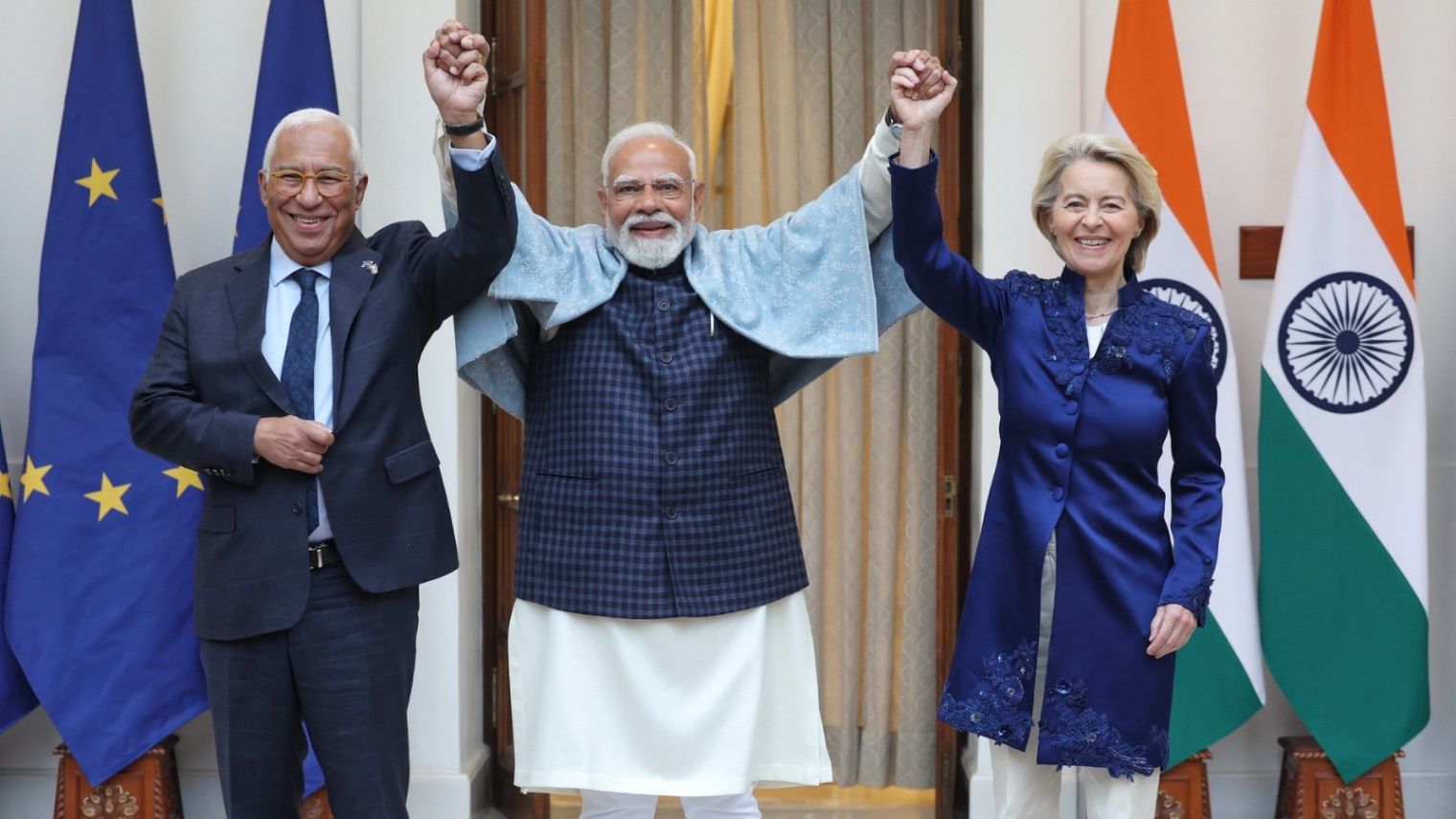
Then there’s the really difficult issue that no one in Brussels wants to touch: control. Time and time again, there are revelations about fake degrees and degree fraud from foreign studies and visa applications. Indian media have reported on networks of agents selling forged documents that look real. When the EU wants to make mobility easier and streamline recognition of qualifications, it requires an insanely strong control system—not just a PR office called a one-stop hub. Otherwise, you invite exactly the sort of fraud already causing chaos in other Western countries: documents that pass the first check, and problems that only emerge once people are already here.
That’s why it’s good that the Sweden Democrats say no. When Ludvig Aspling goes out and takes a stand against fast-tracks and exceptions, and SD in the EU promises to vote no to the migration part in the European Parliament, it sounds like opposition to Brussels should: clear and straight to the point.
It’s also a reminder of how lonely that resistance often is. While ordinary Europeans see the consequences of decades of failed migration policy, the Moderates, Liberals, and Christian Democrats in Sweden talk as if qualified immigration is a risk-free jackpot—and as if Brussels is always right.
The EU Is Part of the Problem
The conclusion is simple: The EU does not solve the problems from the immigration we already have—segregation, parallel societies, crime, a disintegrating sense of community, and a growing gap between people and power. Yet the reflex is always the same: more mobility, more programs, more facilitation.
Von der Leyen boasts about a deal that will openly make it easier for more people to move here. This is political migration with the EU stamp of approval.
And when the next crisis comes—when voters wake up, jobs are under pressure, control fails—we’ll hear the same old story: no one could have suspected, the system was abused, we need more EU to fix it.
No. What we need is for someone to put their foot down before yet another “well-meaning” mobility engine becomes impossible to stop. The Sweden Democrats are right to say no. The question is who else will dare to, before Europe’s youth and Europe’s cohesion are made to pay the price.