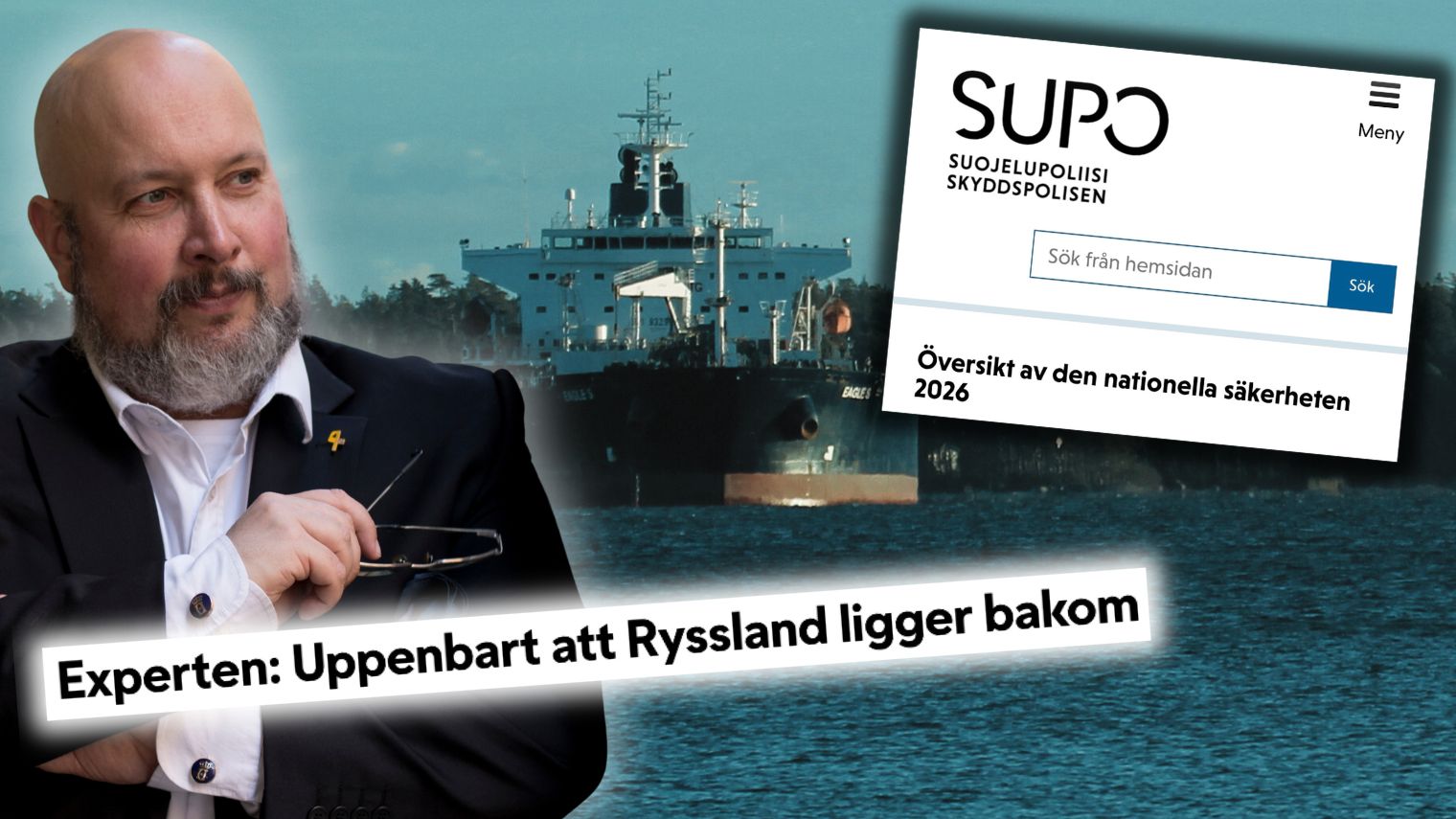
Finland’s security service SUPO dismisses theories that Russia is behind the repeated cable damages in the Baltic Sea in recent years—claims that have been implied by both politicians and the media. According to SUPO, the background to these incidents is much more mundane than many media outlets and politicians have portrayed to citizens in each country.
In recent years, media coverage has alleged that vessels from Russia’s so-called shadow fleet have deliberately dragged anchors along the seafloor, sabotaging undersea cables. This has led to extensive speculation, focusing attention in one direction. However, journalists have been far quieter about what the various investigations have actually concluded.
One person who has appeared frequently in Swedish establishment media to assert that he knows exactly what is happening on the Baltic Sea floor is Centre Party commentator and self-proclaimed security expert Patrik Oksanen, who by day is a lobbyist at the strongly pro-NATO think tank Fri värld.
READ ALSO: Centre Party NATO-lobbyist attacks Samnytt
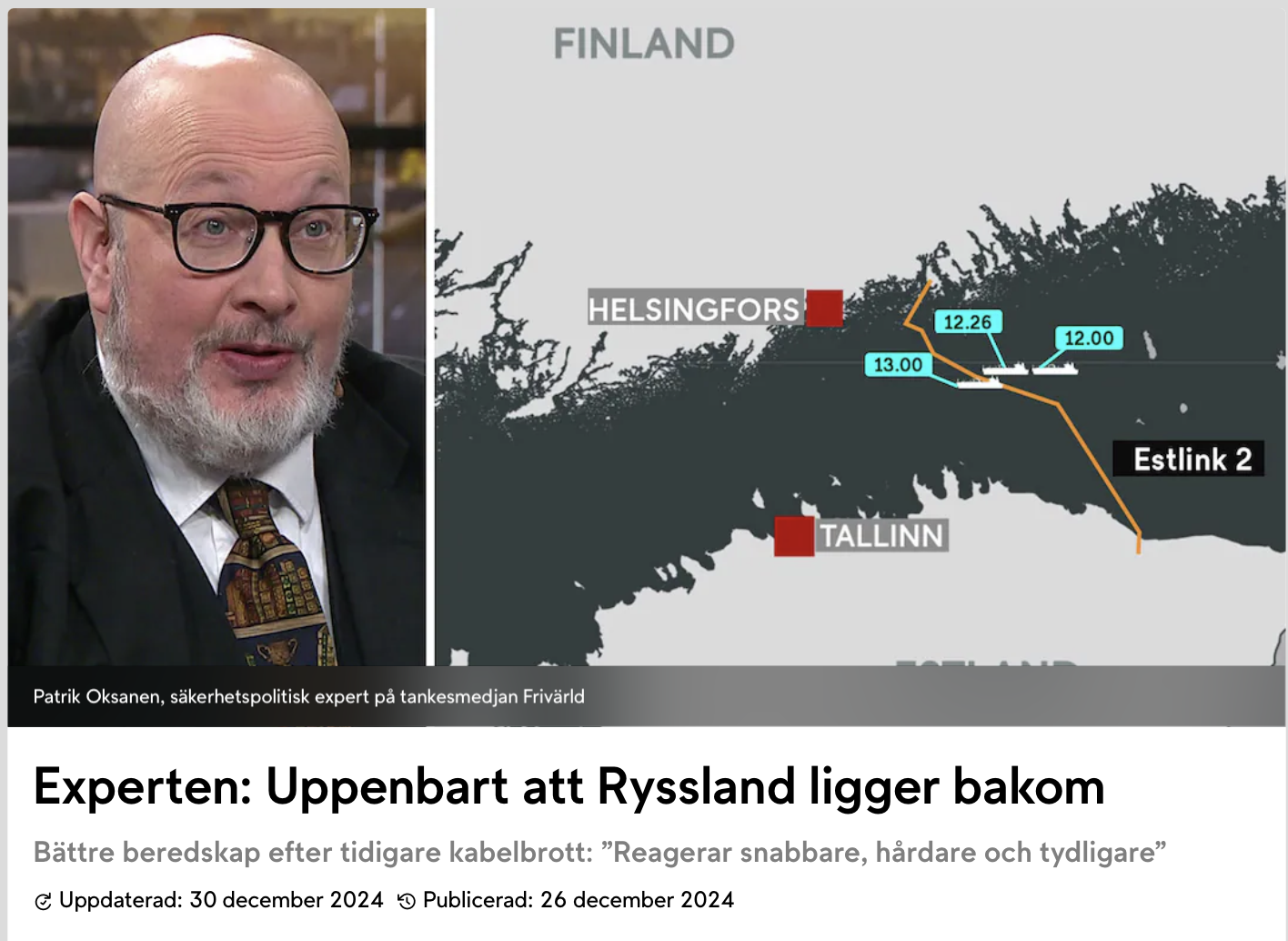
For example, in an interview with TV4 on December 27 last year, Patrik Oksanen spoke as if he had access to intelligence information and knew exactly what had happened regarding the cable breakages on the seafloor.
For him, it was simply obvious that Russia was behind the incidents on the seafloor “to create a psychological effect.” But he has never presented any evidence for this.
– This has to be seen in light of the expanded and increasingly intense Russian sabotage campaign ongoing against large parts of Europe, Oksanen said in the TV4 broadcast.
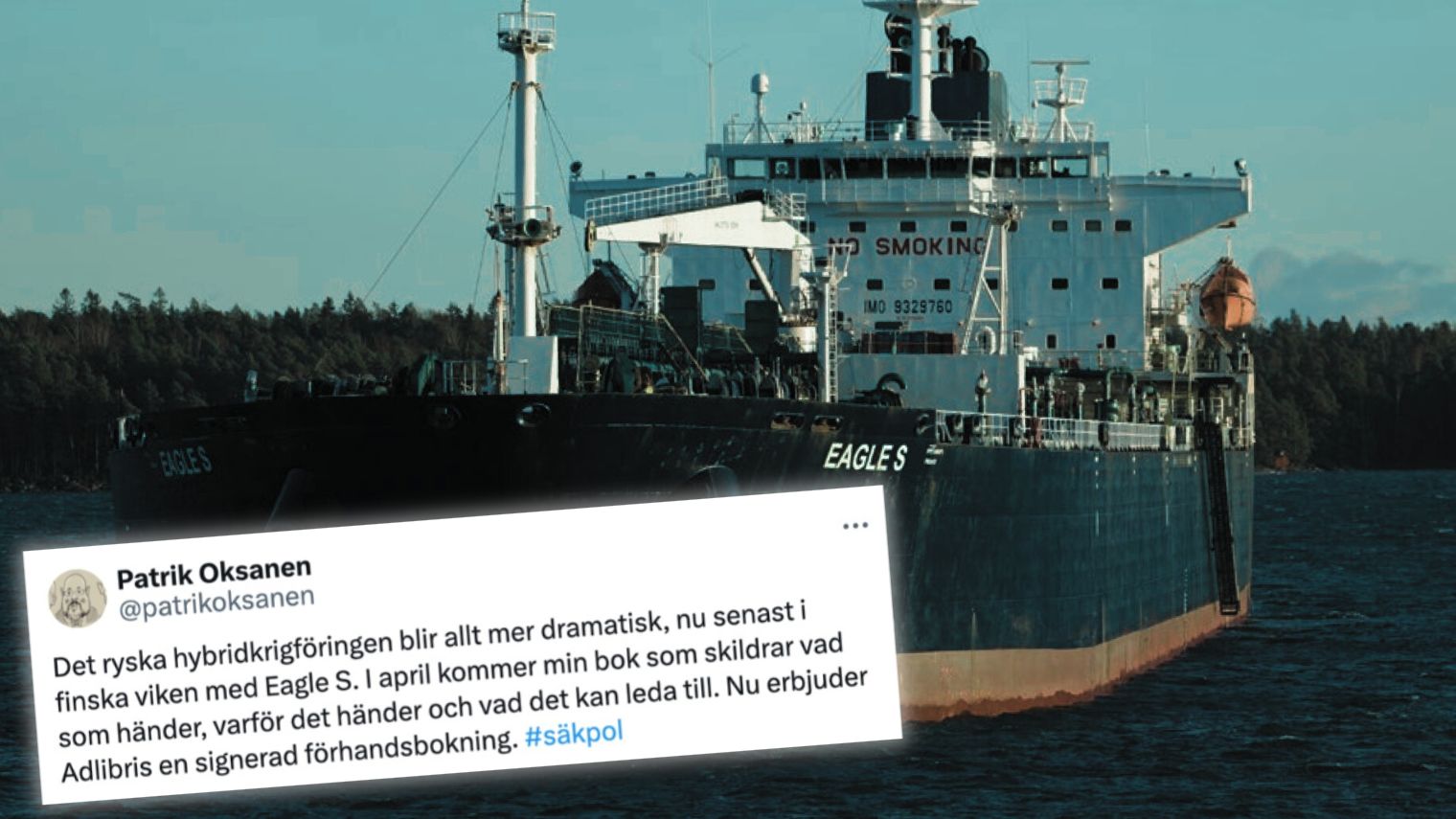
Instead, Oksanen has continued building narratives based on his speculations, which has led to a book released in conjunction with several media appearances where he described how, in his view, the situation with the cable breakages in the Baltic Sea played out.
In this way, he has been able to capitalize on a threat scenario that he himself has helped paint in several media outlets. “In April my book describing what is happening will be released,” he writes, referring to the Adlibris bookstore, where a “signed pre-order” can also be made.
This Viewpoint Widely Shared Among Intelligence Agencies
On March 10 this year, the annual security report from Finland’s security service, Skyddspolisen (SUPO)—the Finnish equivalent of Sweden’s Security Police (Säpo)—was presented, having investigated further incidents. SUPO has now explained the situation in the Baltic Sea.
SUPO’s director Juha Martelius emphasizes that there is a lack of evidence for the claims circulating that Russia is behind sabotage in the Baltic Sea.
– Our view has been that there has not been any intentional Russian state activity behind this. This view is widely shared within the European intelligence community, Martelius told the Finnish magazine Suomen Kuvalehti.
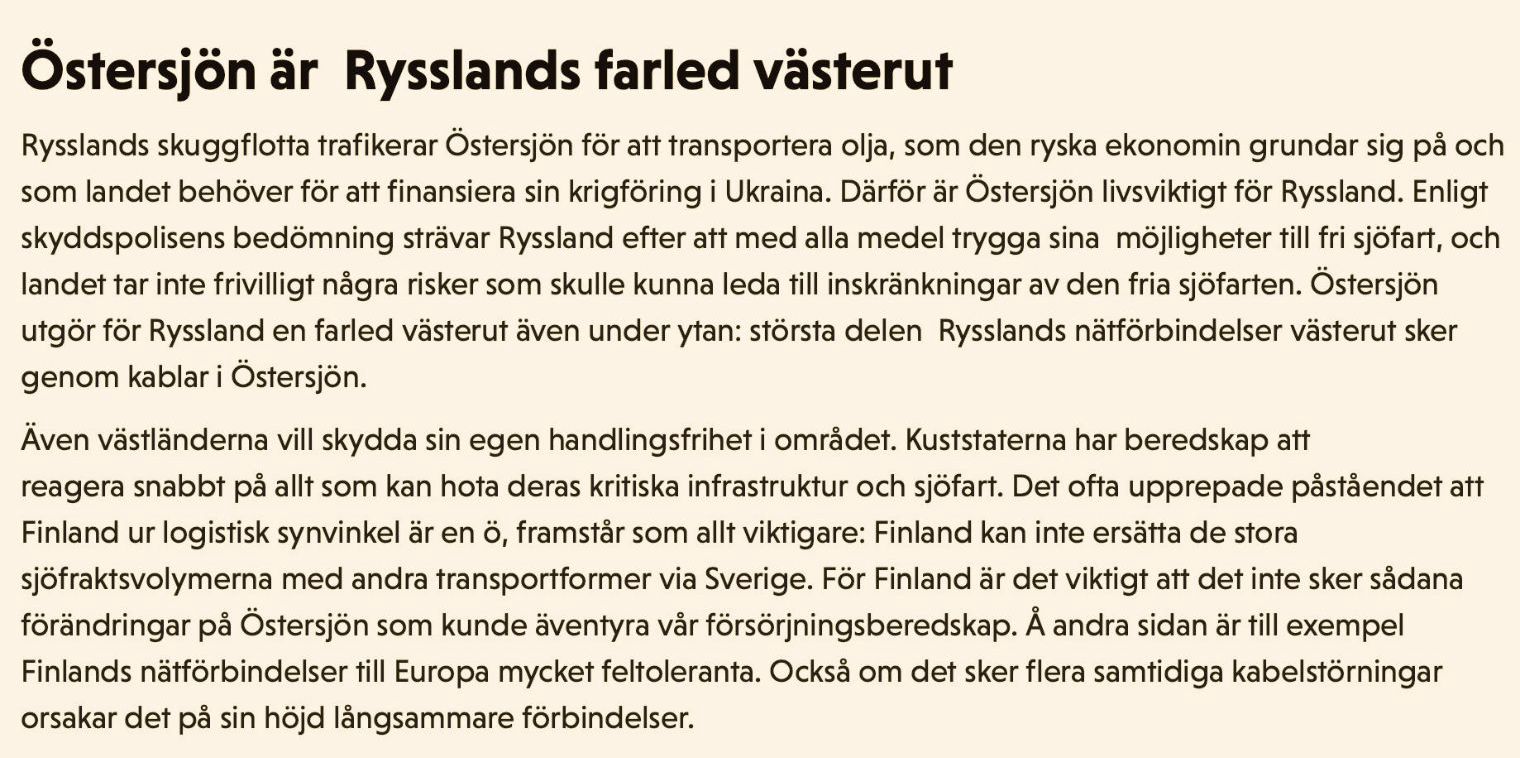
In its annual report, Skyddspolisen notes that Russia does not voluntarily take risks that could restrict free navigation:
Already last year, SUPO chief Juha Martelius took steps to nuance the image of Russian influence against Finland. One example is the high-profile breaches into waterworks in the summer of 2024. According to SUPO, this was never a Russian operation, and the Finnish police also found no evidence pointing to that—something Suomen Kuvalehti has highlighted.
According to the Finnish security service SUPO, the cable damages are mainly due to the Baltic Sea being trafficked by ships from Russia’s so-called shadow fleet, which is used to circumvent Western sanctions. The vessels are often in poor condition and crewed by people from other countries with inadequate training.
– There are several factors that speak against Russia having a motive, says SUPO chief Juha Martelius.
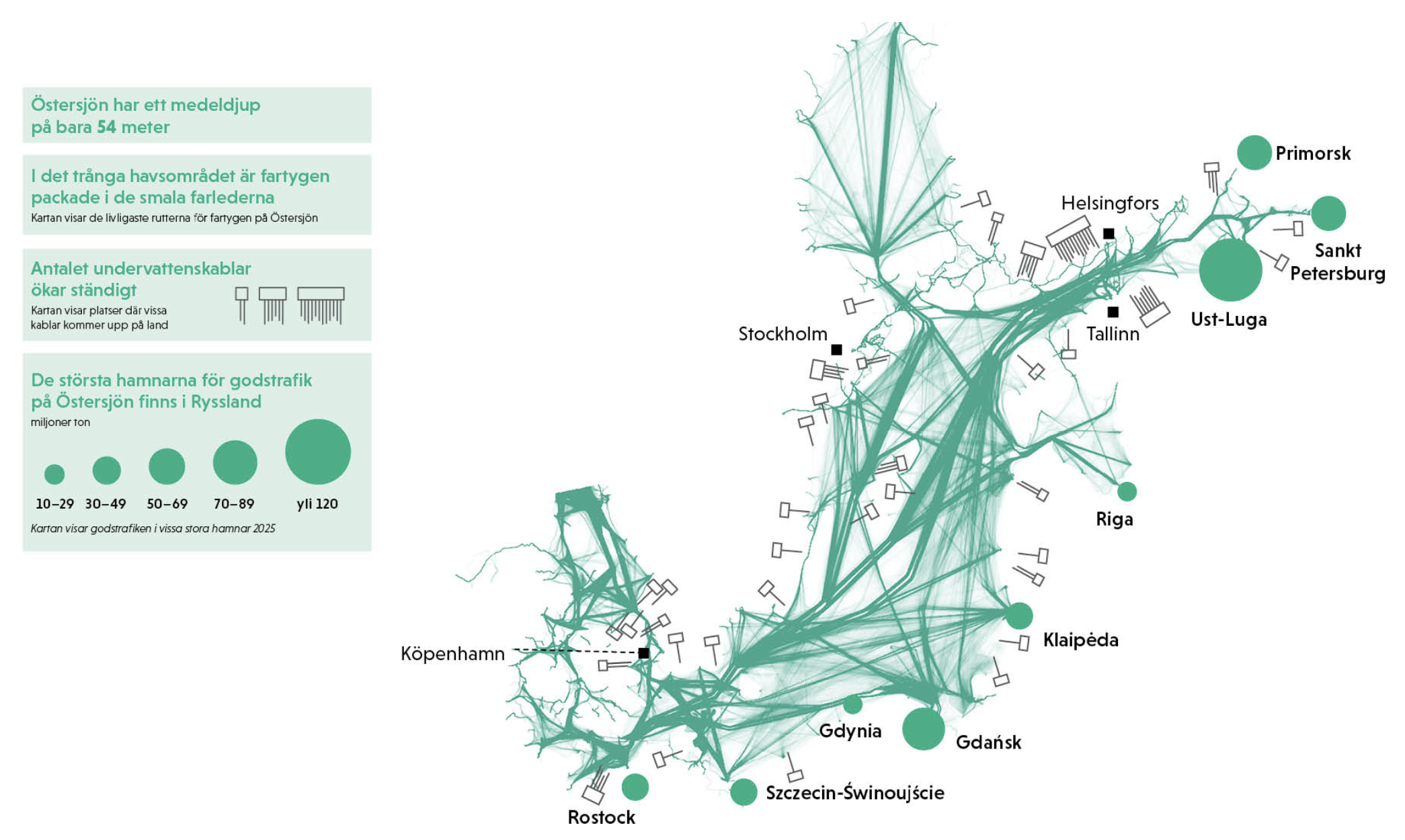
The Baltic Sea is also strategically important for Russia, as oil shipments via tankers finance the country’s economy and its war in Ukraine. Disruptions in traffic would therefore be contrary to the nation’s interests, claims the Finnish security service.
In December 2024, Finnish authorities boarded the vessel Eagle S, whose anchor had damaged several cables:
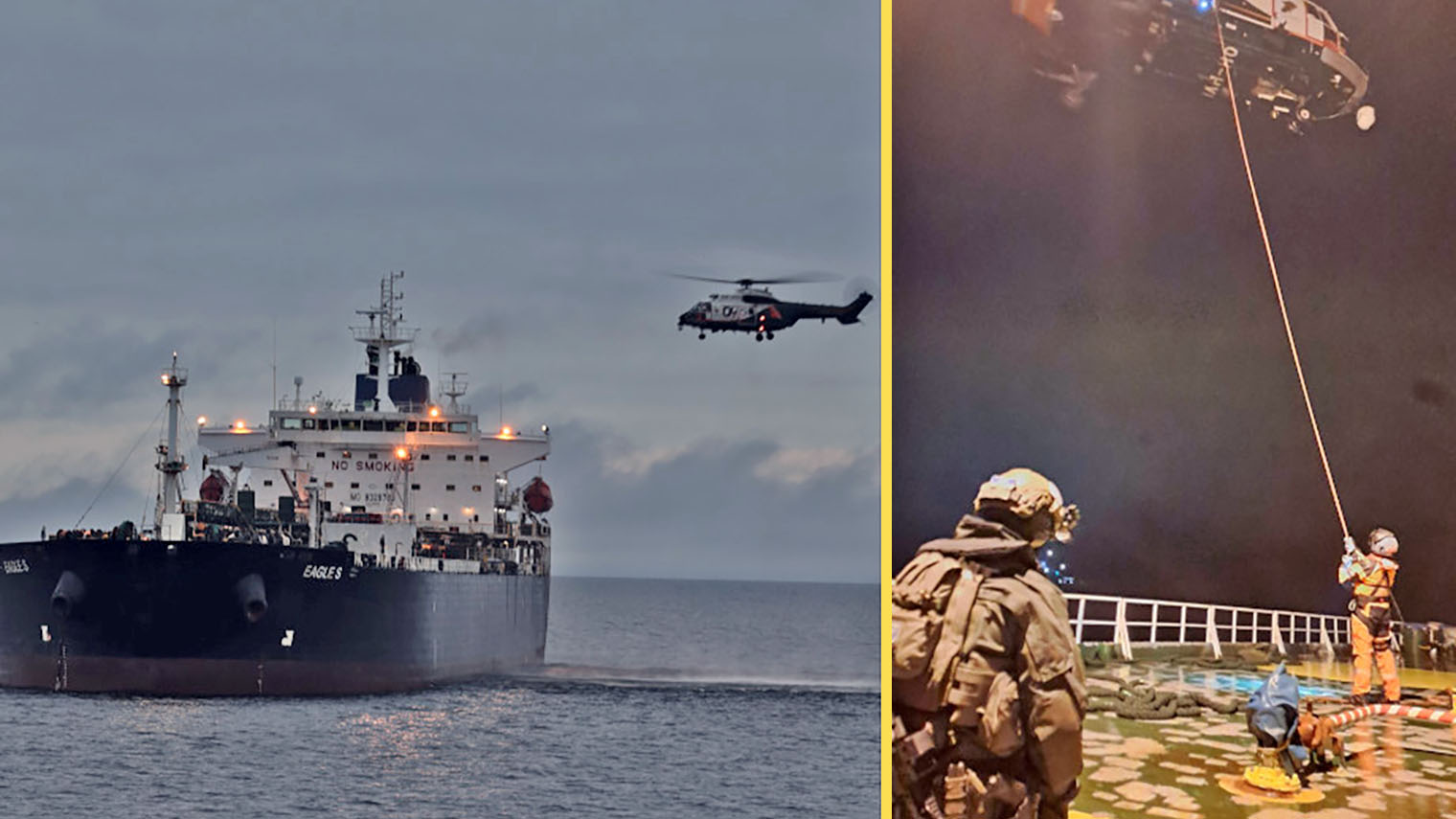
After the increased inspections by European NATO countries, which stop and board vessels, Russia has begun placing military personnel on these ships.
– This is a way to ensure that these captains do not enter Finnish territory. It also acts as protection against enforcement actions if it is known that the vessel has armed security personnel on board, Martelius told Suomen Kuvalehti.
According to Martelius, cable damage on the seafloor is not a new phenomenon. He points out that ship anchors have damaged cables in the Baltic Sea throughout the 2000s, although many previous incidents were never reported. Only now, as attention to security in the region has increased in step with the changed security environment, have the events received greater notice.
READ ALSO: US Newspaper’s Intelligence Sources: “Sabotages” in the Baltic Sea Are Accidents
According to SUPO, cable damages of this type have occurred over a long period, and recent incidents remain essentially at a normal level.
– I believe it’s an overly simplistic analysis to claim that Russia simply wants to cause problems. Russia’s main motive is to preserve the ability to transport oil from the Gulf of Finland, says Juha Martelius.
“It’s not justifiable to undertake risky actions that also result in negative consequences for Russia, just to create confusion,” the Finnish security service writes in its report.
At the same time, SUPO also points out that even Russian underwater infrastructure has been damaged in connection with the cable incidents—something not widely reported in establishment media.
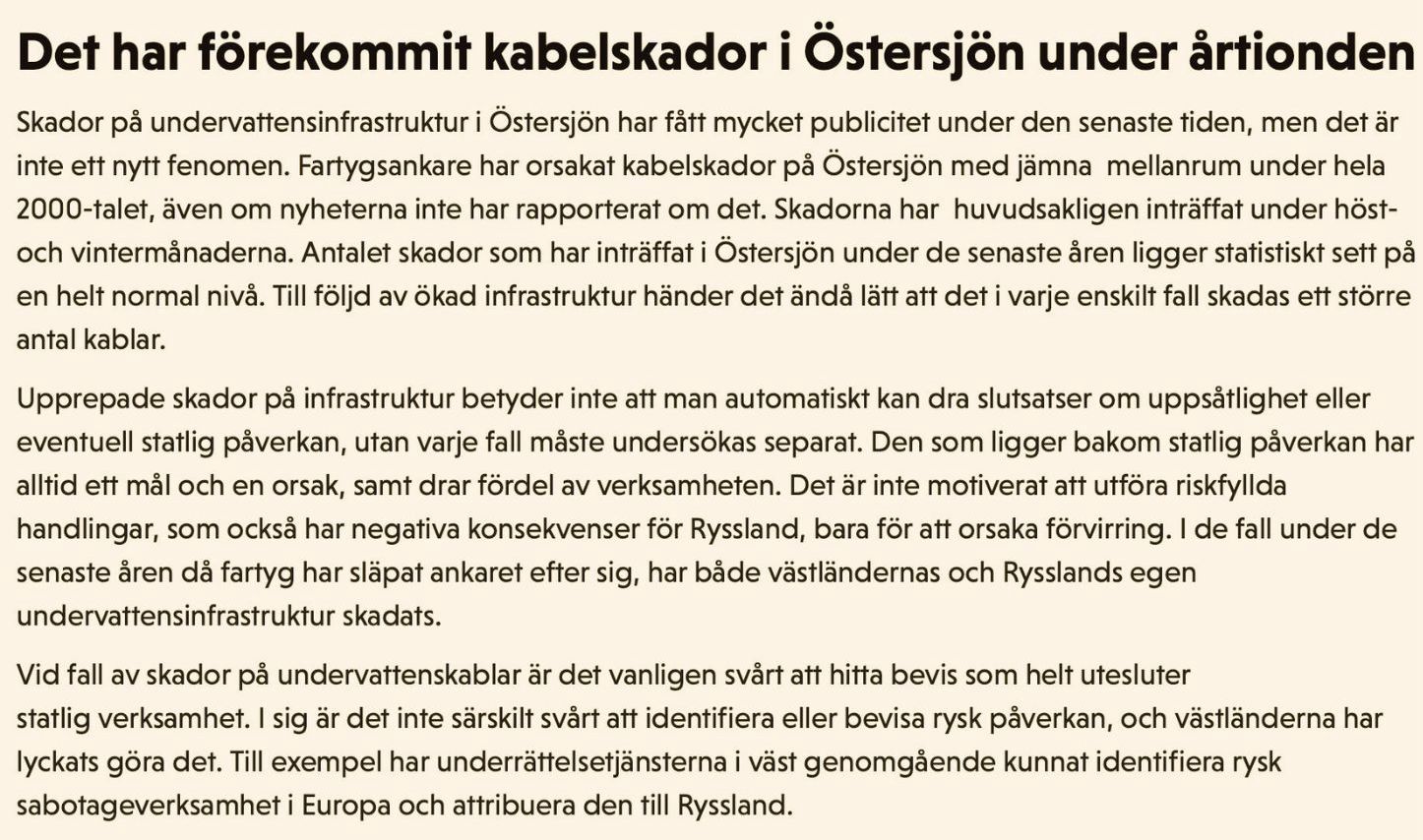
Furthermore, the problem of damage to undersea cables has been known for many years and has attracted attention even outside the EU. For instance, in 2008, American ABC News reported on this issue.
Damage to undersea cables is hardly uncommon—more than 50 repairs were undertaken in the Atlantic alone last year, according to the marine cable repair company Global Marine Systems.
– ABC News
Swedish Prosecutor: Bad Weather and Technical Failures
Back down to the bottom of the Baltic Sea and turning to Sweden. At the end of last year, Samnytt highlighted the outcome of an investigation by the Swedish Prosecution Authority into a cable break in the Baltic Sea—where suspicions also initially centered around possible Russian sabotage.
READ MORE: Security expert’s Russian sabotage theories in the Baltic Sea—were accidents
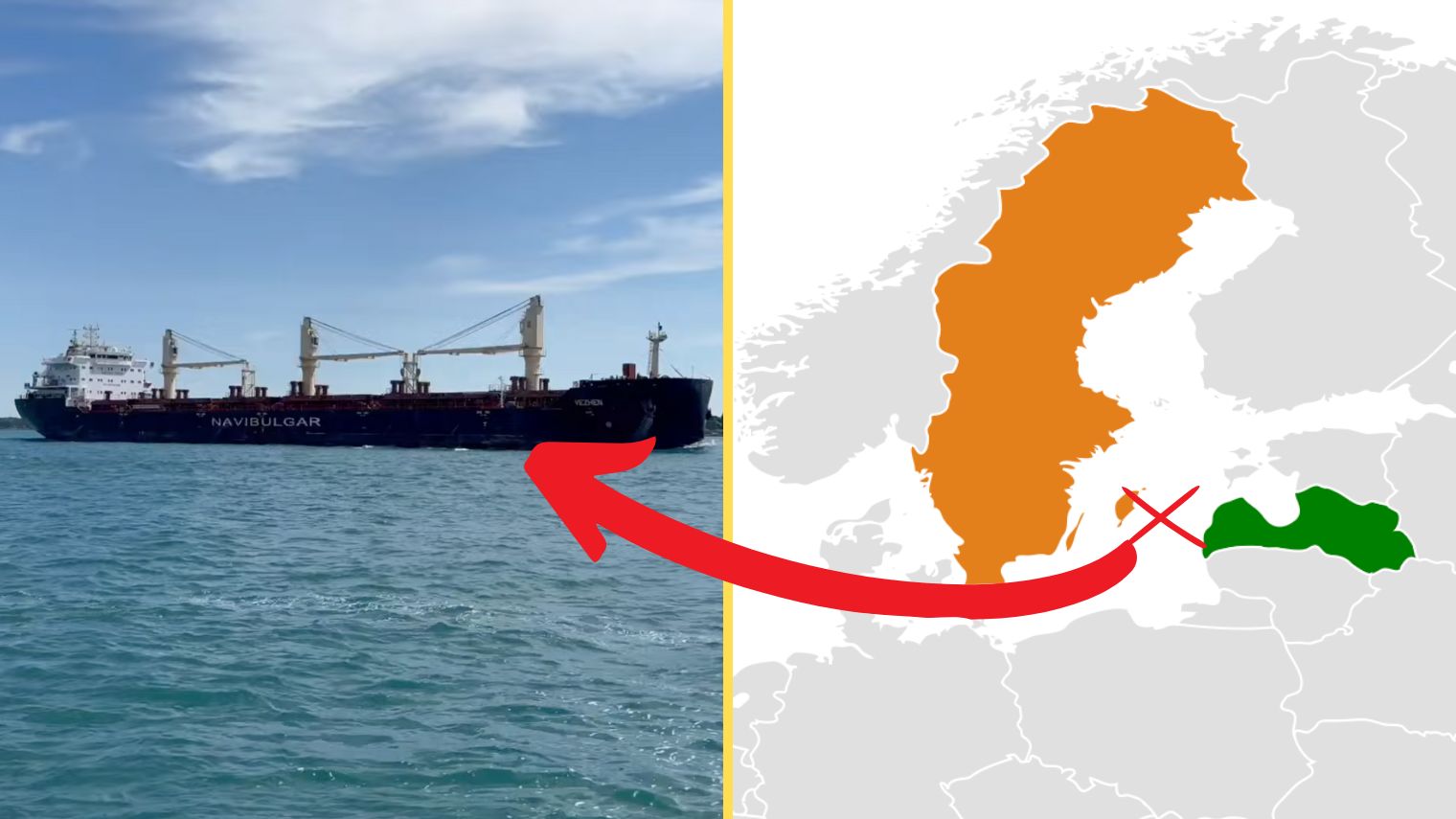
On January 26, 2025, damage was discovered on the communication cable running between Latvia and Gotland. The incident quickly aroused suspicions of Russian sabotage, and the Malta-flagged cargo ship Vezhen, which had previously left Russia and was in the area at the time, was soon seized. The seizure was lifted on February 3, but the investigation continued.
In October last year, Mats Ljungqvist, prosecutor at the National Security Unit, announced the outcome of the cable break investigation. The findings are in line with the Finnish security police’s report: it was due to technical failures as well as bad weather.
READ ALSO: Nord Stream prosecutor: “Not logical” for Russia to be behind
– Through a rapid, efficient, and coordinated effort by the Swedish Security Service, Police Authority, Coast Guard, and Armed Forces, the causes of the cable break have been determined, said Ljungqvist, continuing:
– The investigation clearly shows that the cable break was caused by a combination of harsh weather, technical failures, and suspected inadequate seamanship on the vessel in question.
Continues as “Expert” Despite Being Repeatedly Wrong
The accuracy of Patrik Oksanen’s security policy assessments is at least questionable. Both the latest statements from the Swedish Prosecution Authority and the annual report from the Finnish security service SUPO show, after extensive reviews, a different picture—clearly contradicting his claims, which are often made shortly after some incident is reported in the media.
This is not the first time Patrik Oksanen has been wrong, but despite this, Svenska Dagbladet continues to publish his columns year after year, where he persistently presents new theories that closely border on conspiracy theories.
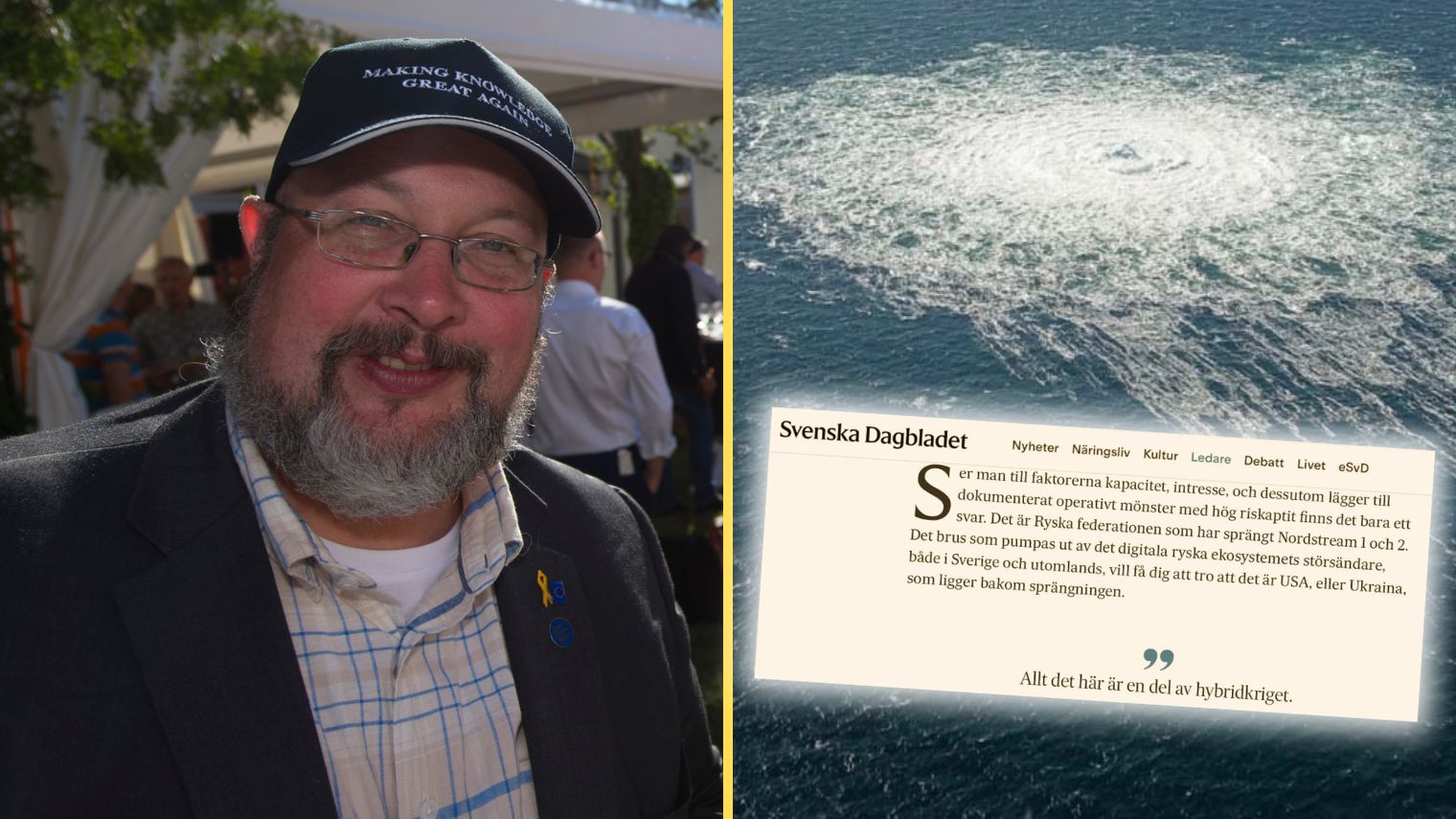
He continues to be invited as a security expert to establishment media and is engaged as a speaker, including by municipalities, to act as an expert on the security situation in Europe. One of his major speculations in recent years concerned the sabotage of the Nord Stream 1 and 2 gas pipelines in September 2022—which, according to him, only Russia could have been behind.
“All evidence points to Russia,” he insisted, putting forth his theory about what had happened on the seafloor before the gas had even stopped bubbling up—a theory he then continued to develop in his column in Svenska Dagbladet.
“If you look at the factors of capability, interest, and also add a documented operational pattern with high risk appetite, there is only one answer. It is the Russian Federation that has blown up Nord Stream 1 and 2. The noise being pushed out by the Russian digital ecosystem’s jamming, both in Sweden and abroad, wants you to believe that it is the USA, or Ukraine, behind the bombing.“
– Patrik Oksanen SvD 2022.
Silent About What Has Been Revealed
The problem for the security expert is that all individuals sought in Germany for suspected involvement in the sabotage are Ukrainian citizens. According to German authorities, several have returned to Ukraine, while others have hidden in EU countries that refused to extradite the suspects to Germany—something that can be seen as problematic given the seriousness of the allegations.
READ ALSO: Italy and Poland refuse to extradite suspected Nord Stream saboteurs to Germany
In addition to all suspects being Ukrainian citizens, both major US media citing intelligence sources and prominent German media citing judicial sources have pointed to Ukraine.
The findings on arrested Ukrainian suspects in the Nord Stream investigation, however, have been completely ignored by the so-called security expert, who has not devoted more time to the subject. Nor does the latest security report from Finland’s Skyddspolisen in March appear to have piqued his interest.
Oksanen consistently chooses to disregard what the investigations actually reveal, likely because it doesn’t fit the borderline conspiratorial narratives that his analyses systematically build upon.
Anyone wanting to delve deeper into the Finnish security service’s report on the situation in the Baltic Sea can find the file here: Skyddspolisen’s report
READ ALSO: Researcher: Swedish media and politicians mislead with propaganda about the war in Ukraine
Do you want Samnytt to survive?
Hundreds of thousands read Samnytt every week—but only 1 in 100 contribute. Help us continue delivering investigations and in-depth reporting that shows more of reality.
Without your support, there is no Samnytt.
Thanks to our readers, Samnytt has published nearly 34,000 articles showing more of reality—what establishment media often chooses to hide.
123 083 33 50
Swish any amount
Thank you for reading and supporting Samnytt